






Kostel svatého Prokopa (Běhařov) Church
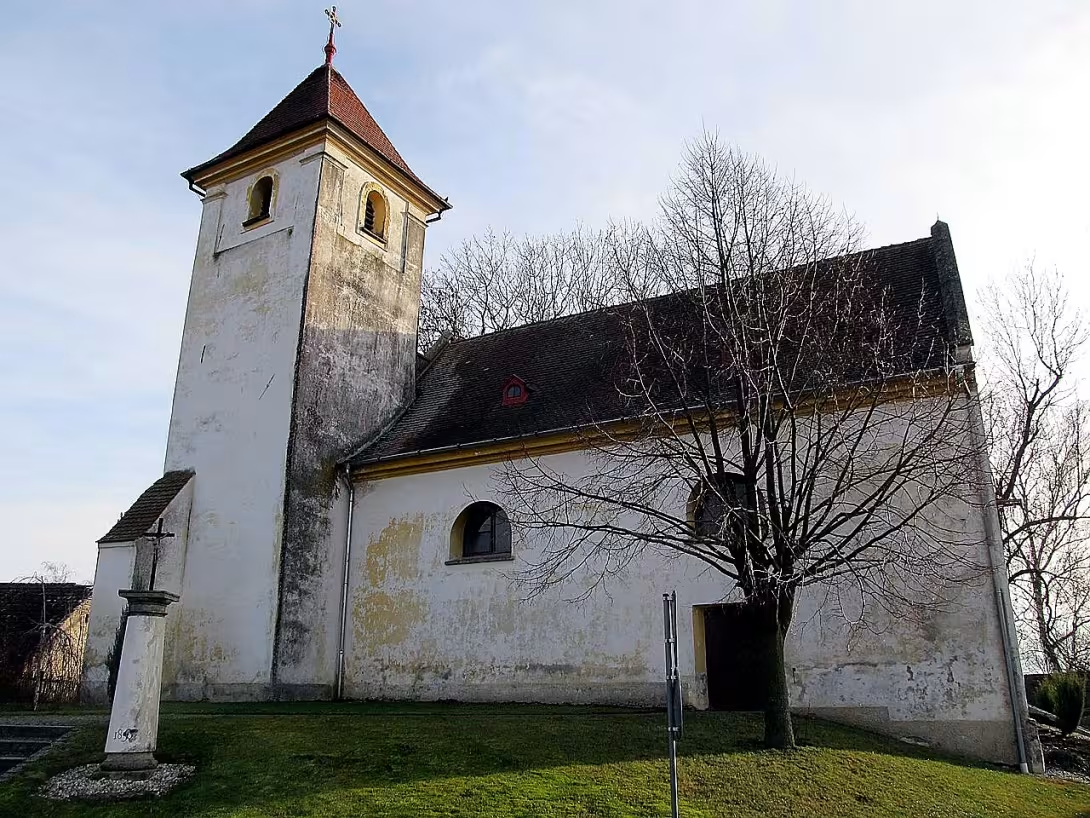
The church is located at the southern edge of the village baits in Běhařov in the district of Klatovy, next to the wall of the cross-country chateau. It is a building that bears the testimony of more than 700 years of history - from late Gothic until today.
The original church was built in the second half of the 13th century. The first written mention of it dates back to 1353, when it was already firmly established in Běhařov. An ancient Gothic building with part of the presbytery in the form of a cross vault and a triumphant arch long resisted time. Around 1616, however, it was hit by a massive fire that completely destroyed it. On its foundations, a new building grew in the Baroque style, which was the architectural language required at the time.
The Baroque new building was not possible without further modifications. In 1693, the church tower was raised, giving the church its distinctive appearance. The next test was in 1777 when another devastating fire broke out. Subsequent repairs and modifications were carried out in 1789. As if there was a special curse on the church - after more than a century, a third fire happened in 1911. Yet the community reopened it in 1912.
It is an architectural building connecting Gothic elements to a group of baroque forms. The church ship closes the presbytery with three-sided conclusion and arcade. The rectory tower with the backrest stands out at the northeast corner. The facade of the tower part breaks the pilaster with the Roman heads. The ship has a more modest expression - it is dominated by crown realms and two windows with semi-circular enchantments. The main entrance is closed to segment. There are three entrances to the church. Sacristy is facing east, the first floor is adjacent to the orator with staircase.
In the interior there are three altars, the main one being dedicated to St. Prokop. The statue of St. Paul is placed in the triumphant arch. In the priesthood, the tombstones of the House of Hubati from Kotnov and J. Jáchym Schmiedgräbner from Lusteneg were preserved.
Since 24 March 1964 the church has been registered as a cultural monument. His facade was reconstructed in the second half of the 20th century. In 2005, the stairway at the west entrance and paving the access path was repaired. In 2025, the municipality issued a public collection to repair it, proving that Běhařov is also currently managing its historical treasure.
Then and now
Drag the slider to compare how the landmark may have looked when it was built with the view today.
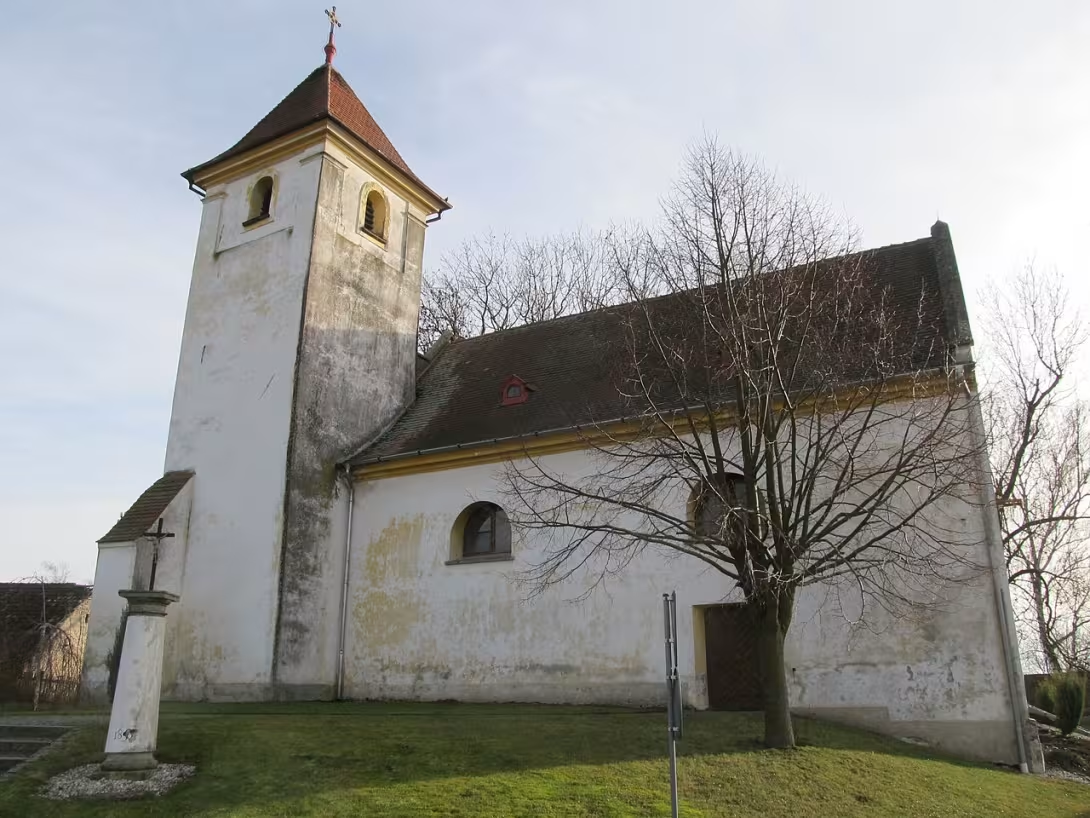
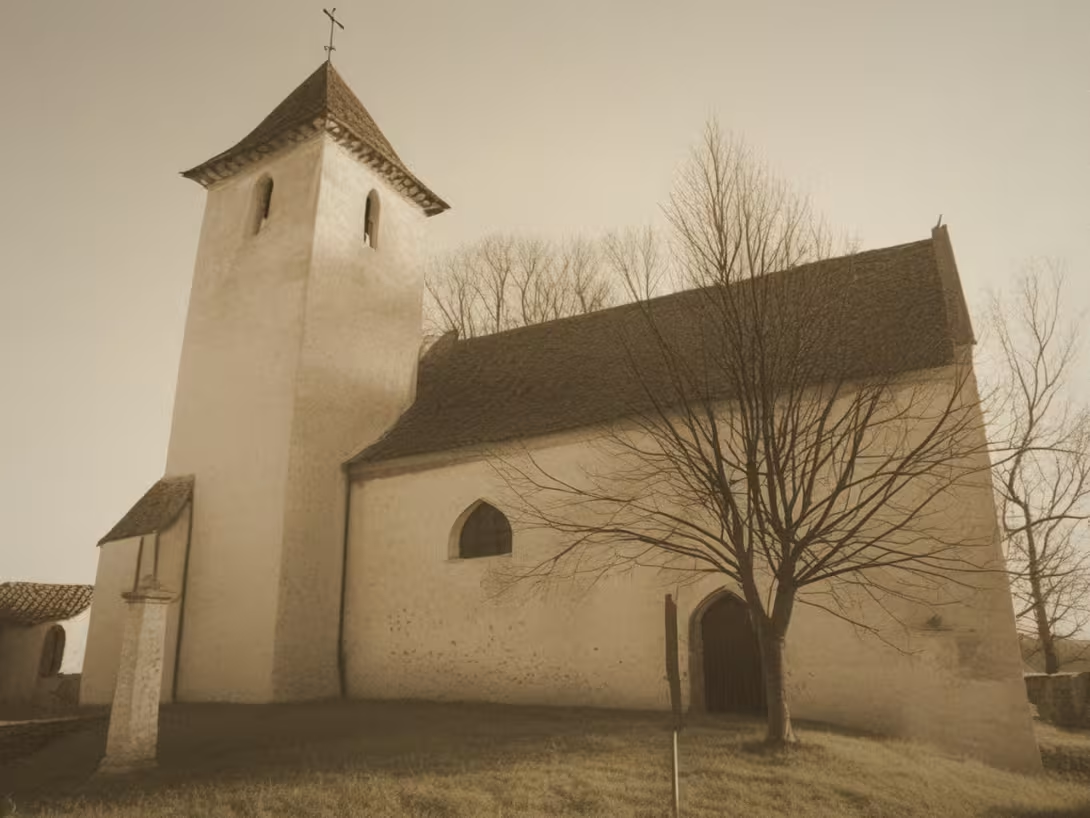
The historical appearance on the left is an AI-generated visualisation and serves as inspiration only.
Historical milestones
- 1353
- First written mention of the church.
- 1616
- The destruction of the original Gothic church by fire and the creation of a Baroque building.
- 1693
- Increase the church tower.
- 1777
- A shrine fire that led to other building modifications in 1789.
- 1911
- Last church fire.
- 1964
- Writing the church into a list of cultural monuments.
Architectural development
The original Gothic church from the 2nd half of the 13th century was replaced by a Baroque building after the fire in 1616. She survived a part of the presbytery with a cross arch and the disposition of the ship. In 1693 the tower was increased, after the fire in 1777 followed further modifications. The last fire in 1911 led to reconstruction in 1912. The facade was restored in the 2nd half of the 20th century and in 2005 the staircase and access roads were repaired.
Historical events
- 1353
- First written mention of a church that was originally Gothic.
- 1616
- The fire of an older Gothic building, followed by a baroque new building.
- 1964
- Listed on the list of cultural monuments.
Owners
Farnost Běhařov, municipality Běhařov
Points of interest
- The church was built in the second half of the 13th century and the first written mention of it dates back to 1353.
- The construction went through three devastating fires - between 1616, 1777 and 1911, each requiring extensive renewal.
- In 1693 the church tower was increased, thus gaining its distinctive appearance.
- The church combines Gothic elements with baroque forms such as the cross vault of the presbytery and Baroque facade.
- In the interior there are three altars, the main one being dedicated to St. Prokop.
Guide
This guide is narrated by a synthetic voice generated by artificial intelligence.
Show guide text
This text was created by artificial intelligence and has not been editorially reviewed. It may contain inaccuracies.
The Church of Saint Prokop stands on the southern edge of the village square in Běhařov in the Klatovy region. Its grounds border the wall of Běhařov Castle. The church's present appearance is Baroque, but its roots reach much deeper into the past. It has been a cultural monument since March twenty-fourth, nineteen sixty-four.
Originally, a Gothic structure from the second half of the thirteenth century stood on this site. The first written mention of it dates from thirteen fifty-three. Around sixteen sixteen, it was ravaged by an extensive fire, and after it, a completely new church was erected. Nevertheless, something from the Gothic period was preserved: part of the presbytery with a ribbed vault, the triumphal arch, and also the floor plan of the nave. In sixteen ninety-three, the tower of the Baroque new building was heightened.
Fire returned to the church several more times. Another devastating fire came in seventeen seventy-seven, and in seventeen eighty-nine, structural modifications followed. The church burned for the last time in nineteen eleven, and a year later it was reopened. In the second half of the twentieth century, the façade underwent renovation. In two thousand five, the staircase at the western entrance was repaired and the access path was paved. In twenty twenty-five, the municipality announced a public collection for further repairs to the church.
The church nave is closed by the presbytery with a three-sided termination and an arcade. The structure includes a prismatic tower with a buttress at the northeast corner. Pilasters with cornice capitals divide the tower's façade at the corners. The nave's façade, by contrast, is plain, featuring only a cornice and a pair of windows with a semicircular archway. The main entrance is segmentally vaulted, and three entrances lead into the church in total. The sacristy faces east. At the level of the first floor, a gallery was added, to which a staircase vestibule leads.
Inside, there are three altars, the main one being dedicated to Saint Prokop. A statue of Saint Paul is set into the broken triumphal arch. In the presbytery, a tombstone of the Hubaty family from Kotnov and Jáchym Schmiedgräbner from Lusteneg has been preserved.
Tips for visitors
The best time to visit the church of St. Prokop is in the morning when light is soft and the interior radiates a calm atmosphere. If you want to escape the crowds, avoid weekends and summer holidays. The church is ideal for walking in autumn months when the surrounding landscape is growing on colors and creating a harmonious contrast with ancient construction.
The location is also available by car on the road from Pilsen towards Běhařov. For public transport travel is the nearest stop in the centre of Běhařova, from where the church is accessible by foot. Check the current connection and time tables in the traffic search engine.
When visiting, wear a comfortable shoe because the church and its surroundings offer several interesting places to visit. In the interior you can meet smaller steps or terrain inequalities. Prepare a macro lens for photography to capture details of baroque details and gothic elements. Also remember the camera cover if you plan outdoor photos in rainy weather.
The best places for photography are the entrance portal of the church with its Baroque statues and windows with gothic vaults inside. Sunlight falling from the east side in the morning or the west side in the afternoon creates ideal lighting. For interesting contrasts it is recommended to photograph the church from around where its tower and facade are projected into the surrounding countryside.
In the vicinity of the church is worth visiting Běhařov Chateau, which adjacent to the church wall and offers a rich history and picturesque garden. It is advisable for families with children to visit a chateau where children can discover historical interiors and a garden full of animals.
For families with children, a visit to the church of St. Prokop is interesting due to its historical importance and picturesque architecture. Children can see the Gothic vaults and Baroque statues that can impress them with their appearance. In the vicinity of the church you can play on a small playground or relax in the garden of Běhařov Chateau.
Frequently asked questions
Can the monument be visited?
Religious buildings are usually open mainly during services; at other times a visit is normally arranged with the parish or the operator. We have not verified specific times.
Where is the monument?
Location: Běhařov, Plzeňský kraj. The map on this page shows the exact spot.
Why is the monument protected?
It is listed in the Central List of Cultural Monuments of the Czech Republic as a cultural monument (register no. 14572/4-2730).
For kids
Imagine going back to the past. Instead of buses, carriages ride, and instead of computers, people write letters with their hands. This place is in our country, the county where we live. It's a small village with the church of St. Prokop.
The church of St. Prokop is like a rock in the middle of the village. He's been standing here since long ago and his stone walls see everything that's going on around him. Who lived here? It was people who worked in the fields, kept cattle and grew trees. These people prayed in the church of St. Prokop and tried to be good.
Businesses nearby
Do you run a restaurant, accommodation, shop, museum, rental, wellness or other visitor service near this monument? Show yourself directly to the people heading to it — this is how they will see you in the app and on the web:
Nearby
- Baroque chateau with historical interiors and garden.
- Protected land with rich flora and fauna.
Accommodation nearby
Themed route
Thematic cruise route: Baroque Běhařov and its natural treasures
1. Church of St. Prokop Baroque church with richly decorated interior and historic fresco. It is worth a visit for its architecture and connection with the Běhařov Chateau, located just a short walk away.
2. Běhařov Castle Neighbouring Baroque chateau with picturesque garden and historical interiors. It is an ideal place to walk and learn regional history.
3. Natural Reserve Black Forest Around three kilometres from the centre, this protected area is located with a variety of flora and fauna. Suitable for relaxing and observing nature.
The route is logically arranged to start at the main destination and continue to be interesting in the surroundings. The trip thus links cultural heritage to nature.
Seasonal recommendations
Spring: In the spring, the Church of St. Prokop in Běhařov appears in a special atmosphere, when the surrounding nature is revived by flowering bushes and trees. The sunny days provide gentle lighting to the church, which emphasizes architectural details. At this time it is advisable to visit a monument in the early afternoon, when crowds are still avoiding and nature offers the most beautiful views. It is recommended to wear clothes suitable for mild weather, with the possibility to add a hat or umbrella in case of unexpected springs.
Summer: Summer is an ideal time to visit the Church of St. Prokop because warm weather offers the best conditions for exploring its historic walls and surrounding green spaces. The sun illuminates the church so that it emphasizes its architectural beauty while nature is in full power. More visitors may appear in the main summer season, so we recommend arriving at the monument earlier in the afternoon. Hot clothes and protective crepe are essential for comfortable time.
Autumn: In autumn, the Church of St. Prokop is transformed into a place with a melancholy yet calm atmosphere. The changes in colours of trees and shrubs bring a new view of church architecture, while sunny days are shorter and warmer. At this time it is best to visit the memory in the early afternoon, when the crowds avoid it and when the weather is still favourable. It is recommended to wear warmer clothes with the possibility to add an umbrella or coat in case of rain.
Winter: The winter visit to St. Prokop Church offers a unique atmosphere where the church is surrounded by snow and ice. Sunshine days illuminate the building in a strange way, creating a romantic view of history. This season the opening times are often shorter and visitors are rarer, which allows a more peaceful exploration of the sights. You must choose warm clothes with protective features against cold and moisture such as a hat or umbrella, especially in case of freezing days.
Visualizations and artistic views


The visualisations are generated by artificial intelligence and serve as inspiration.
Photos from the area
Real photos taken near the monument


Zdroj a licence jsou uvedeny u každého snímku.
Atmosphere of the place
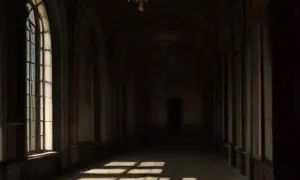
This atmospheric visualisation of the place and period was generated by artificial intelligence. It is not real footage of the location.
Tips from visitors
No tips yet. Be the first!
Log in and add your tip.
Sources and literature
Photos: Krabat77 / CC BY-SA 3.0 — Wikimedia Commons. The author and licence also appear when you hover over the image.
Faktickým podkladem tohoto textu byl článek na Wikipedii, jehož autory jsou přispěvatelé Wikipedie. Článek je dostupný pod licencí CC BY-SA 4.0.
Location on the map
More monuments – Běhařov
Show all in the municipality

Příběhy a pověsti
Legendy, pověsti a příběhy spjaté s touto památkou
Fotografie návštěvníků
Zatím žádné fotografie. Buďte první, kdo přidá fotografii z návštěvy!
Log in a přidejte svou fotografii nebo hodnoťte.
Za ověřenou návštěvu v aplikaci získáte víc bodů — poznáme podle GPS, že jste na místě.
Reviews and comments