






Sýpky Granary
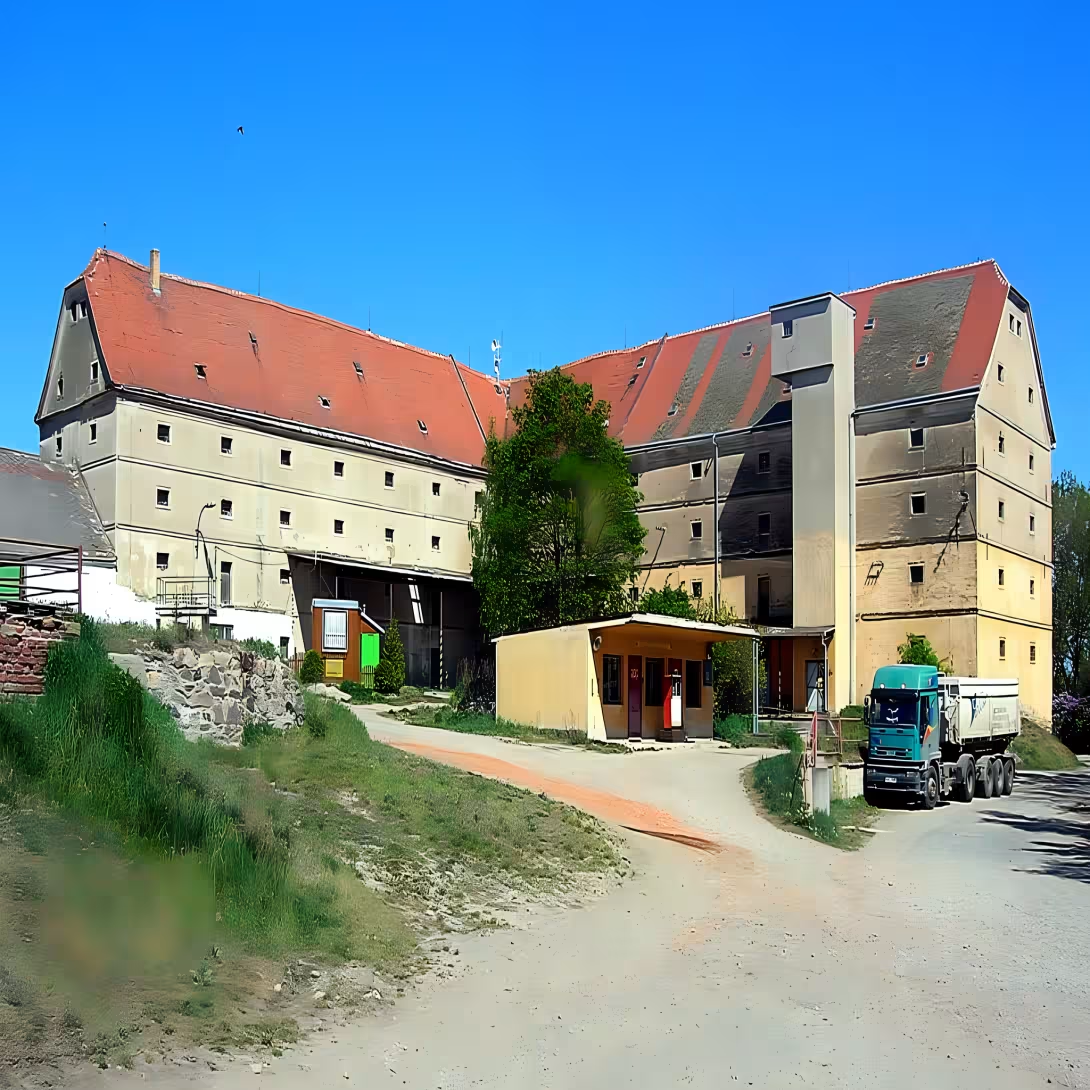
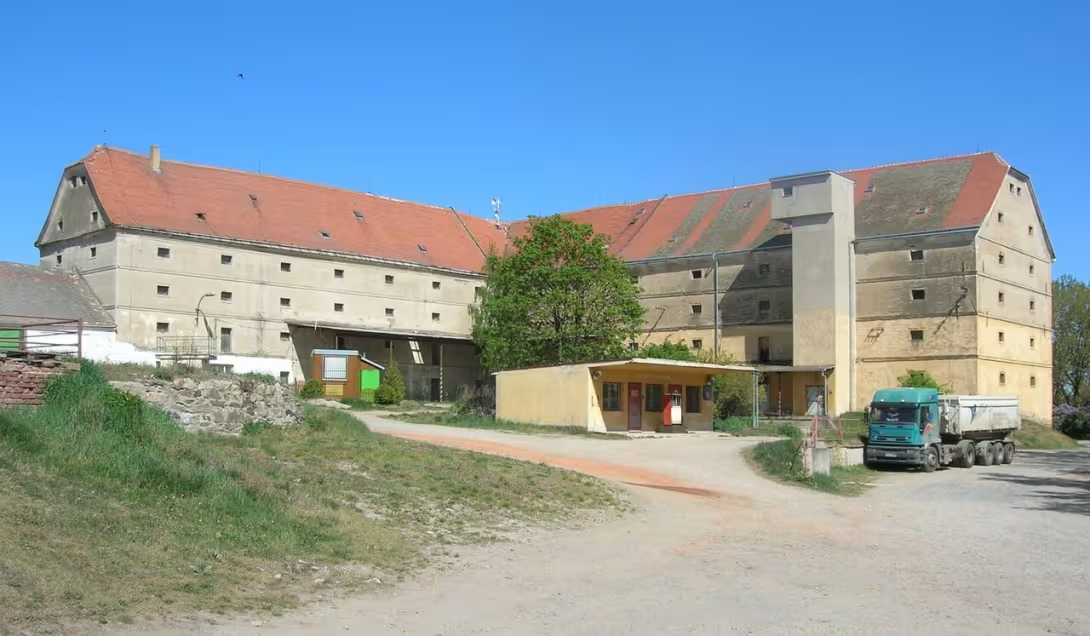
Sýpky in Jaroměřice nad Rokytná are a cultural monument from the middle of the 17th century, originally built as a central military supply room. It is located in the village Jaroměřice nad Rokytnou and is remarkable by its historical significance, architectural features and long history associated with the family of Questenberg. This monument takes a key place in Central European history, especially in the context of the Thirty Years' War and the Baroque period.
The granite was built by the first Questenberg owner Jaroměrec Gerhard Questenberk in 1642. This timeframe was linked to the Thirty Years' War, which affected its completion until 1648. The granary was designed to store supplies and produce gunpowder, making it a strategic military object. Under the rule of Gerhard, the successor of John Antonín was completed only by its eastern wing, which was heading from southwest to northeast.
Architecturally, the granary is remarkable for its rugged and technical performance. The ground floor has a vaulted vault supported by thick pillars, while the floor is held by strong oak columns with carved heel and header. Both oak and fir wood were used for the beam, which contributed to its technical goods and to ensuring stability. The stones are the frames of doors, windows and arches on which the year is carved with the initials of Gerhard Questenberg.
The possession of the granary went through several stages. After the Questenberg family, they became a warehouse for the Economic Cooperative. In 1723 they were rebuilt and rebuilt after damage initiated by Jan Adam Questenberk. Tobiáš Gravani by designing a new wing at a right angle to the original building contributed to its expansion and modernization.
The cultural value of the granaries was recognised already in 1958 when they were officially classified as a cultural monument. Their historical and architectural features ensure their preservation and remind visitors of a significant period of Czech history.
Today, granaries in Jaroměřice above Rokytna are an accessible cultural monument that attracts historically curious tourists. Their preservation and classification as a cultural monument underlines their importance not only to the local population but also to the wider public. The visit to these shops offers a unique opportunity to become familiar with rich history and architectural features from when these structures were key to defence and economic needs. Their visit is a reminder of the importance of preserving historical monuments for future generations.
Then and now
Drag the slider to compare how the landmark may have looked when it was built with the view today.
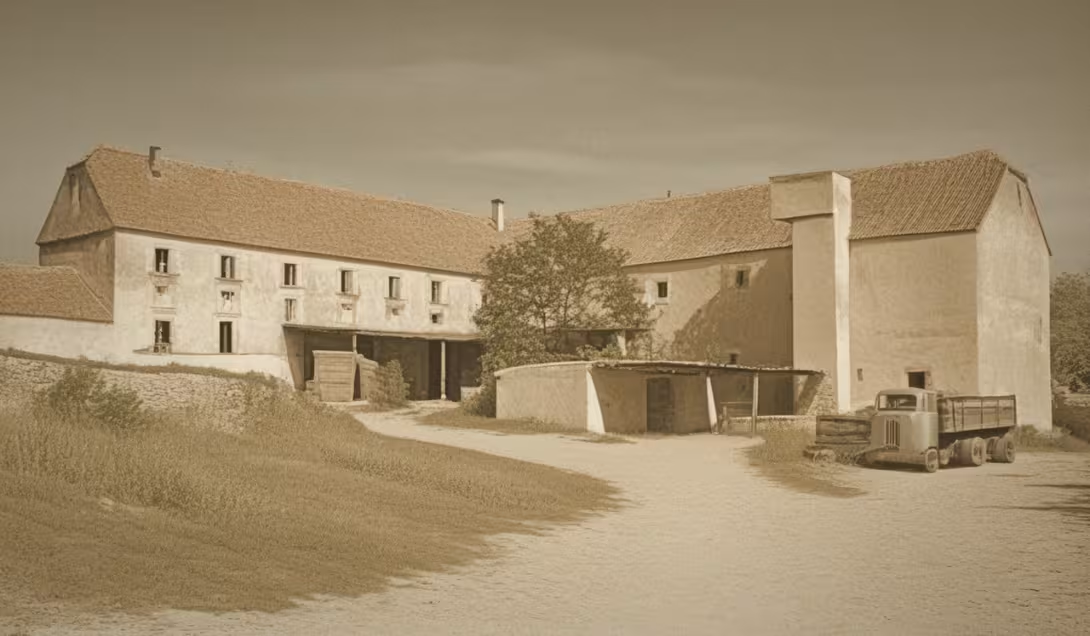
The historical appearance on the left is an AI-generated visualisation and serves as inspiration only.
Historical milestones
- 1642
- Start of construction by Gerhard Questenberg
- 1648
- Completion of the Eastern Wing
- 1723
- Reconstruction and reconstruction after damage to the building
- 1958
- Classification as a cultural monument
Architectural development
The original building was expanded in 1723 with a new wing designed by Tobias Gravani. The construction includes a vaulted ground floor on pillars and patrols with oak columns. Oak and fir wood were used for technical stability.
Historical events
1642: Construction start by Gerhard Questenberg. 1648: Completion of the east wing. 1723: Reconstruction and reconstruction after damage to the building. 1958: Classification as a cultural monument.
Owners
The Questenberg family, later the Economic Cooperative.
Points of interest
- Originally built as a central military supply facility in the mid-17th century. - The granary was built by Gerhard Questenberk in 1642 and its completion lasted until 1648. The building was used to store supplies and produce gunpowder. - The floor is held by strong oak columns with carved heel and head. - In 1723 Jan Adam Questenberk initiated reconstruction and reconstruction after damage.
Guide
Show guide text
This text was created by artificial intelligence and has not been editorially reviewed. It may contain inaccuracies.
Welcome to Jaroměřice nad Rokytna. At this point, when you put on headphones and open your eyes to history, you are standing in front of an object that, at first glance, may seem more modest than the surrounding castle, but its importance for regional history is immense. There are granaries in front of you, a building that has preserved its original form for centuries. This is not a romantic castle with towers, but a functional, massive structure that was once the heart of the military logistics of this estate. Look at her weight, the way the building docked in the ground. This building is not just a wall and a roof, it is a monument to the time when survival, defence and military supplies were being discussed in these parts. The atmosphere here is quiet but charged with the energy of history that has been pulsating here since the mid-seventeenth century.
Let's move back a few hundred years in time to understand why this building was created. Sýpky was built in 1642, at a time when Europe was suffering from a 30-year war and the Jaroměřice region was not far from the conflict. The initiator of the building was Gerhard Questenberk, one of the most important native of this family, which was based here. Its aim was not to build a residential palace, but to provide a safe place to store supplies and produce gunpowder. It was a central military supply, a key element of the defense system of the estate. The construction took place quite quickly, already in 1648 the eastern wing was completed. Imagine what it was like when there were hammers and saws around here at the time, and what it was like when dust bags and supplies started flowing in here for the troops. This building was vital to the survival of the Questenberg family and their crews.
Now pay attention to architectural details that appear right under your nose. Sýpky is not a building that is trying to attract spectacular decoration. Its beauty lies in technical design and functionality. Notice the massive walls, which must be strong enough to withstand any blow or fire, which was the number one risk for powder storage. If you look at a structure that is visible or documented in historical sources, you will see that the floor is held by strong oak columns. These columns are not only supporting elements, but also have aesthetic value, as they are equipped with carved base and header. The oak wood was a symbol of strength and strength at the time, which is why it was chosen for such an important part of the construction. Tobiáš Gravani, which is listed as an architect, has ensured that the construction is not only functional but also durable. It is thanks to this quality technical design that the object has preserved in such a preserved state until today.
The history of this building is not completed with the completion of the construction in 1648. The Questenberg family has settled here and used the building for generations. There was a fundamental change in the eighteenth century. Jan Adam Questenberk, another important member of this genus, has let the granary spread by a new wing. This extension proves that demand for storage space and production capacities has been increasing or that the needs of the estate have changed. Among the personalities associated with this place are Jan Antonín Questenberg, who was a well-known commander and politician. Although his name is often associated with combat and diplomatic actions, his influence was also reflected in the economic background that these granaries represented. It was a place where a force was born that allowed the family to retain power and influence in the region.
The interesting thing for a visitor to realize is that this building survived not only time, but also war conflict. In 1723 the building was rebuilt and rebuilt after damage. That means the granary wasn't always in the condition you see today. The history of buildings is often marked by fires, lightning or military actions. The fact that such a structure has been preserved here is the result of careful maintenance and repairs that have been going on for centuries. Until 1958, when the building was classified as a cultural monument, it probably still served its original purpose or was used as an economic object. It was only with this date that attention began to be paid to its historical importance and protection.
Imagine what it was like to hear oak beams squeaky and dust bags rustling in here last night. Sýpky was a place where ordinary work mixed with tension of war. Every bag that came in could decide the fate of the battle. And even though there is peace here today, you can imagine what it was like for a soldier to come here, to bring in supplies, to bring in workers to produce gunpowder. This building witnessed how the understanding of security and defense changed. Today you will no longer make dust and store supplies for the army, but you still feel the weight of history here.
Take another look at the facade. Note how the building relates to the surroundings. Sýpky is not an isolated object, but part of the Jaroměřický castle complex. Their location and orientation were of strategic importance. They were built to be easily accessible to the supply, but also protected from the enemy. This functionality is visible today, even if we no longer perceive military threats. The construction is massive, solid, without unnecessary ornaments that could be vulnerable or unnecessary. It's an architecture that speaks the language of practicality and strength.
Finally, I would like to tell you that you are facing a unique example of the 17th and eighteenth century Central European military architecture. Sýpky in Jaroměřice nad Rokytna are not only an old building, but a living monument which reminds us how important logistics and supplies were for the survival of states and families. The Gerhard Questenberk that built it, and the Jan Adam Questenberk that expanded it, left behind a work that survived centuries. Thanks to the quality design and the oak columns holding the floor, this building has been preserved in the form we can imagine.
Now that you know what's in front of you, allow yourself a moment of silence. Feel the atmosphere of this place. You will understand that history is not only in books, but also in stones and wood that surround you. Sýpky is where time slowed down. Here you can feel the weight of the years that have taken place here. I hope this audio guide helped you better understand the importance of this place. N
Tips for visitors
The best time to visit the granaries in Jaroměřice nad Rokytna is autumn when the surrounding forests and fields are covered with golden leaves. This period offers not only beautiful views, but also milder temperatures for long walks around the Baroque area.
Parking can be found near the sights. For those who want to use public transport, bus and tram connections are available. We recommend checking the current options prior to termination.
When visiting granaries, remember to bring sun protection and plenty of drinking, especially if you plan to walk around the surrounding area. The pictures from the monument can be captured without professional equipment, but a good camera or mobile with interesting options can enrich your photo.
Photography of the granaries will offer the best effects in the midday hours when light is fine and sunlight supplies the buildings with color. Also remember to try some of the granary interiors that are often lit by natural light.
The Baroque area of Jaroměrec nad Rokytna, which offers visitors the opportunity to explore other historical monuments and beautiful architecture. For families with children it is ideal to visit the area where children can play on green areas and enjoy a quiet time in nature.
Businesses nearby
Do you run a restaurant, accommodation, shop, museum, rental, wellness or other visitor service near this monument? Show yourself directly to the people heading to it — this is how they will see you in the app and on the web:
Nearby
Baroque complex Jaroměrec nad Rokytna.
Accommodation nearby
Themed route
Thematic cruise route: Baroque area Jaroměřice nad Rokytna
1.Sýpky - * Type: * Historical monuments - * Why is it worth a visit: * Sýpky in the village Jaroměřice nad Rokytnou are a fascinating example of historical warehouses that bear witness to the rich past of local agriculture. Their architectural structure and preservation await discovery.
2. Baroque area Jaroměrec nad Rokytna - * Type: * Historical and Cultural Complex - * Why is it worth visiting: * This complex offers a view of the rich Baroque architectural elements that characterize the area. It's the perfect place for those interested in history and art.
3. Church of St. Gilji - * Type: * Religious object - * Why is it worth visiting: * The church is a key part of the Baroque area and attracts attention to its architecture and historical significance. It's a place where you can enjoy peace and beauty.
4. Square - * Type: * Public area - * Why is it worth visiting: * The square is the heart of the village where history and the present meet. It is an ideal place for relaxation and sightseeing.
5. Nicholas Pond - * Type: * Local nature department - * Why is it worth a visit: * Although it is slightly distant from the main area, the Mikuláš pond offers a quiet opportunity to look at the natural beauty of the area and enjoy a moment in peace.
This route allows you to discover not only historical monuments but also natural beauty surrounding Jaroměřice nad Rokytna.
Seasonal recommendations
In the spring, the historic granaries are surrounded by fresh green and fine, awakening light. The atmosphere is fresh and calm, which allows you to see the details of architecture without interference. We recommend taking layered clothes because morning cold can be accompanied by afternoon heat. Ideal is the visit to the morning when the light is brightest and visitors have not yet started to move massively around.
The summer season brings intense sun to Jaroměrec above Rokytna and full bloom of surrounding vegetation. Historic buildings in summer are monumental and air is saturated with heat. Due to higher traffic and high temperatures, it is best to arrive at the beginning of the operating time to ensure a more peaceful tour. Remember light clothes and plenty of fluids for pleasant movement around.
Autumn moons turn the area of granaries into a varied palette of gold and brown shades, which perfectly contradict the historical mass of buildings. The morning mist gives the place mystery and melancholy touch. For a comfortable walk we recommend fixed shoes and laminated jacket because temperatures can be fluctuating. The best time to observe details is in the afternoon when the low sun highlights the structure of the walls.
In winter, especially in advent time, granaries work in silence and quiet, often under white snow cover. The lighting is weaker and the days are short, which creates a rough but very dignified appearance of the monument. It is necessary to prepare for the frost and choose very warm clothes and quality shoes. Due to shorter opening times it is recommended to plan a visit around noon when the light is the most.
Visualizations and artistic views


The visualisations are generated by artificial intelligence and serve as inspiration.
Photos from the area
Real photos taken near the monument


Zdroj a licence jsou uvedeny u každého snímku.
Tips from visitors
No tips yet. Be the first!
Log in and add your tip.
Sources and literature
Fotografie: Nostrifikator / CC BY-SA 3.0, rozlišení zvýšeno umělou inteligencí — Wikimedia Commons. The author and licence also appear when you hover over the image.
Faktickým podkladem tohoto textu byl článek na Wikipedii, jehož autory jsou přispěvatelé Wikipedie. Článek je dostupný pod licencí CC BY-SA 4.0.
Location on the map
Příběhy a pověsti
Legendy, pověsti a příběhy spjaté s touto památkou
Fotografie návštěvníků
Zatím žádné fotografie. Buďte první, kdo přidá fotografii z návštěvy!
Přihlaste se a přidejte svou fotografii nebo hodnoťte.
Za ověřenou návštěvu v aplikaci získáte víc bodů — poznáme podle GPS, že jste na místě.
Reviews and comments