



Tábornická škola v Lipnici nad Sázavou Building
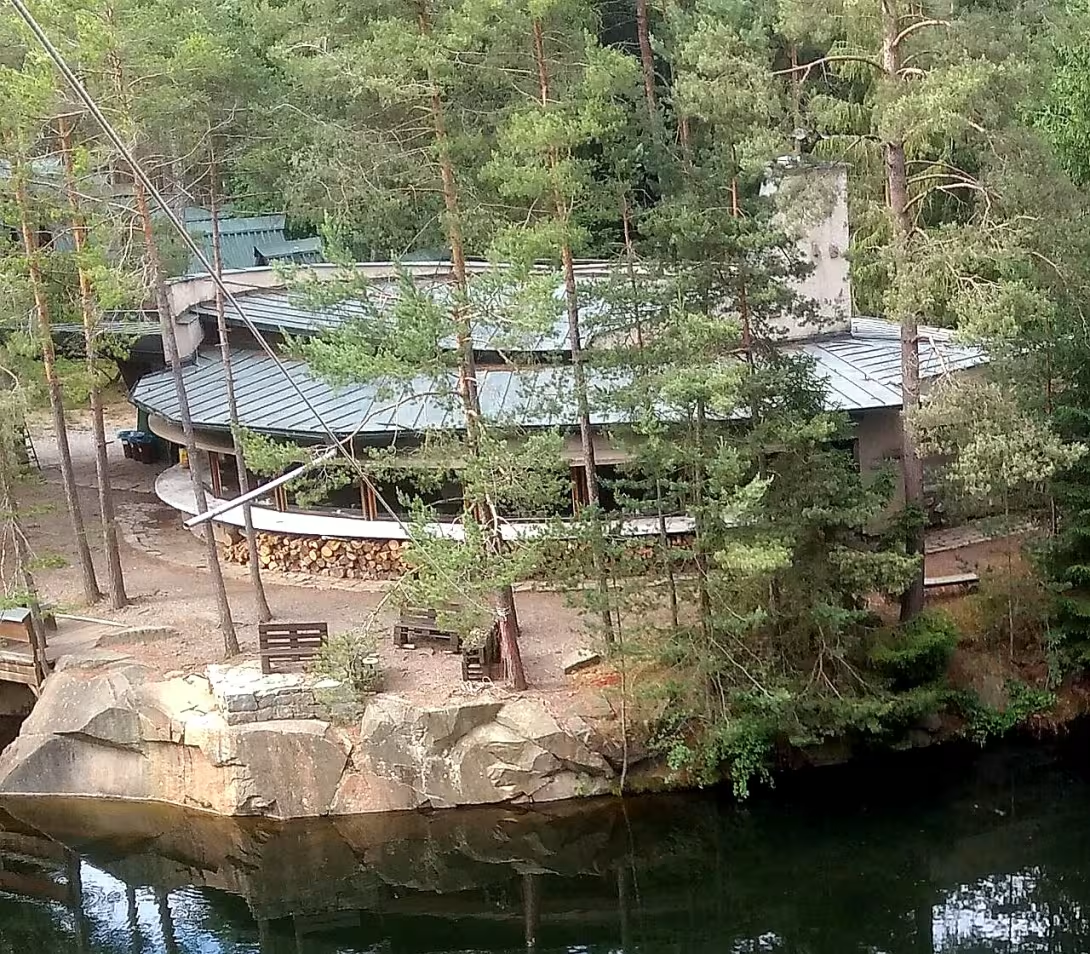
Tábornická škola v Lipnici nad Sázavou is a unique recreational object built between 1965 and 1969. It represents one of the few preserved examples of organic architecture in the former Czechoslovakia. The building is located in a forest environment near the flooded quarry of Crest IV. In 2022, a proposal was made for her declaration of cultural heritage.
The building was founded in the 1960s when efforts began to emerge from the dogmas of socialist realism in Czechoslovak architecture. The architects Jaroslav Vaculík and Antonín Svoboda were then looking for inspiration in the western modern directions that emphasized the connection of the building with nature. The project was founded in 1965 for the Czechoslovak Youth Association and the construction took place until 1969. The school was launched in June 1970 and served as a background for the Lipnice Holiday School courses.
The architectural design is based on the principles of the golden section and the logarithmic spiral, which is reflected in an almost oval plan. The construction combines full bricks, quarry stone and concrete. The supporting part of the roof consists of a wooden round. The outside appearance is complemented by grey birzolite plaster with singularly exiting stones and wooden linings. In addition to the main building are also cabins of tent shape, located in the arch opposite the main entrance, and other smaller operating buildings in the same style.
The interior of the main building is divided into a common room with a dining room, on which the rooms, kitchen, office and operating facilities follow the fans. The fireplace is the dominant element of the common room. It is accessed from all sides thanks to a central conical receding wall with a arched hole. The chimney of the fireplace leads to an overhead tower with windows. This solution is an architectural reference to the Notre Dame du Haut chapel by Le Corbusier. The inner walls are white painted and there is a stone coming out, the floor is covered with red-brown ceramic tiles.
The proposal to declare the construction a cultural monument underlines its importance in the context of modern architecture. The building is located near the castle Lipnice. Thanks to planting in the forest landscape at the flooded quarry, visitors can learn about the unique example of organic construction. Visiting this place allows you to see the creative thinking of architects who tried to connect modern aesthetic principles to the natural environment in the 1960s.
Then and now
Drag the slider to compare how the landmark may have looked when it was built with the view today.
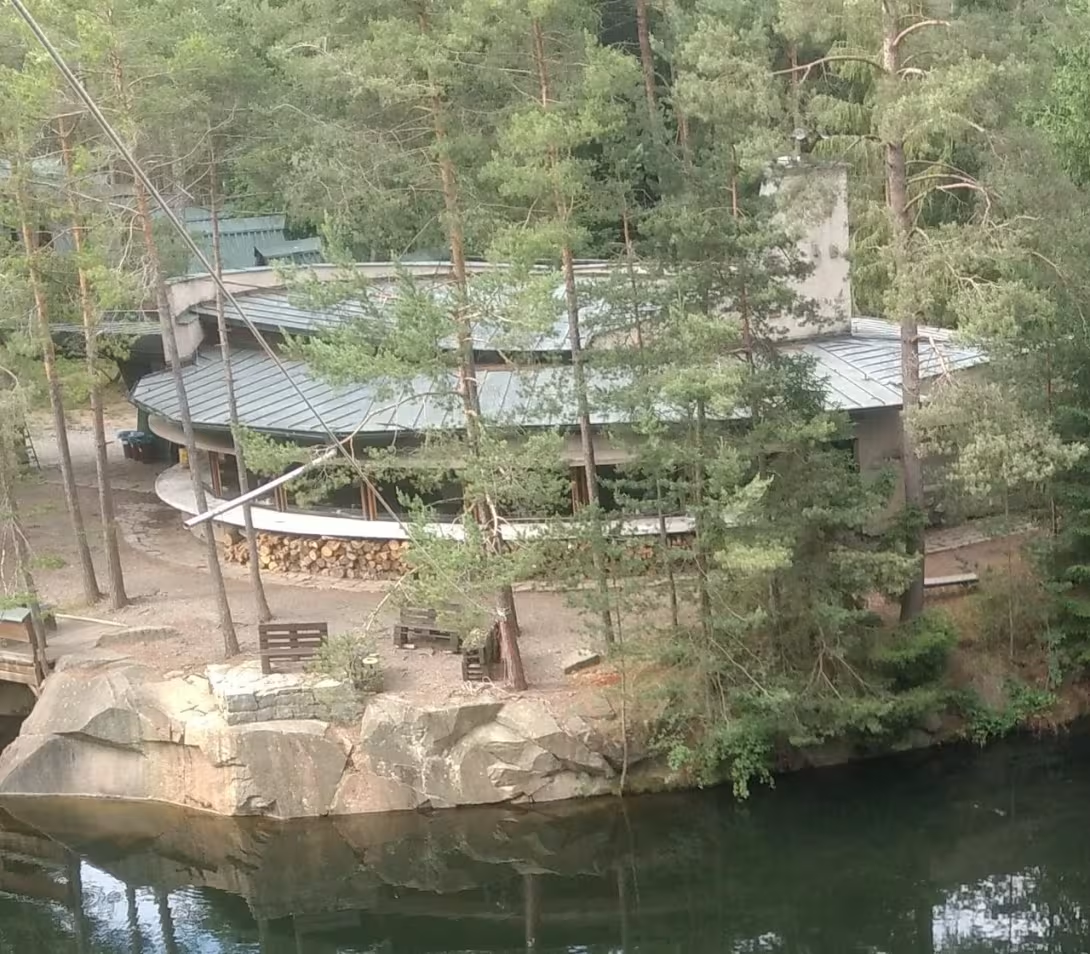

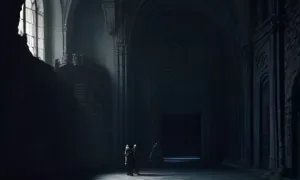
The historical appearance on the left is an AI-generated visualisation and serves as inspiration only.
Historical milestones
- 1965
- The creation of the project by Jaroslav Vaculík and Antonín Svozou.
- 1970
- Setting the building up.
- 2022
- Submission of a motion for a cultural monument.
Architectural development
The building has an almost oval plan based on a logarithmic spiral. The construction combines full bricks, quarry stone and concrete, with wooden round forming the supporting part of the roof. The outside appearance is complemented by birzolite plaster and wooden linings.
Historical events
1965: Creating an architectural design. 1965-1969: Construction of the building. 1970: Opening in June. 2022: Proposals for a cultural monument.
Owners
Czechoslovak Youth Union
Points of interest
- The object is one of the few preserved examples of organic architecture in the territory of the former state. It was built between 1965 and 1969. - The architectural design is based on the principles of the golden section and the logarithmic spiral, which is reflected in an almost oval plan. - The dominant element of the common room is the fireplace, which is accessible from all sides through the central wall. The chimney of the fireplace leads to an overhead tower with windows. - In addition to the main building, the cabins of the tent shape are located in the arch opposite the main entrance. - In 2022, a proposal was made to declare this building a cultural monument.
Guide
Show guide text
This text was created by artificial intelligence and has not been editorially reviewed. It may contain inaccuracies.
Welcome to Lipnice nad Sázavou at the unique monument, which became an icon of organic architecture in the territory of the former Czechoslovakia - Tábornský school. You stand in front of a building whose elegant line and harmonious integration into the forest environment will capture you immediately. The view of the oval plan creates a sense of peace and harmony with nature, which is possible thanks to architectural design according to Le Corbusier principles.
Let's dive into the history of this noble building. The creation of the Tábornicke School between 1965 and 1969 was the work of architects Jaroslav Vaculík and Antonín Svoboda who inspired the organic architecture and aesthetic principles of Le Corbusier. Their aim was to create a recreational object that would not only serve as a place to relax and meet, but also as proof that architecture can be a part of nature. The building was put into operation in 1970, which was an important moment for the region and for the architecture of the then Czechoslovakia.
Now pay attention to the details you may notice. The architectural design of the Camp School is full of innovative elements. The dominant element of the common room is its unique shape, which is based on the principle of gold cutting and logarithmic spiral. This design approach is reflected in an almost oval plan of the building, which gives the whole building a sense of ease and harmony with the surrounding environment.
Although specific historical figures associated with the Camp School are not known, their work speaks for itself. Architects Vaculík and Liberty have created something that goes beyond common understanding of architecture as a mere building - it becomes a place for meeting people with nature and between themselves.
The unique nature of the Camp School in the context of its architecture. It is one of the few preserved examples of organic architecture in the territory of the former Czechoslovakia, which makes it not only a monument to architectural innovation, but also a witness to the historical period.
Now that you have fallen in love with the Camp School, we will invite you to explore its cozy spaces and its natural surroundings. Look up at the trees that hug the building or walk past the flooded quarry where it is situated. Every step can reveal new beauty and remind you of the importance of integration of architecture with nature.
Thank you for your visit to Camp School. We hope that this guide inspired you to further discover and appreciate the unique architectural works of our region. God!
Tips for visitors
The best time to visit is during sunny days from spring to autumn when organic architecture of the building in the surrounding nature excels. We recommend arriving in the morning when the light is ideal for capturing the details of the construction. Take with you fixed shoes to move in the field and the camera because the building offers unconventional views and interesting shadows. For families with children, the location is a great destination for a trip connected with the exploration of architecture and nature in the surroundings.
Frequently asked questions
Can the monument be visited?
The building is in use (offices, a school, shops and the like). The interior is generally accessible only during operating hours and tours are not usually offered; we have not verified the details. You can see the exterior from the street.
Where is the monument?
Location: Lipnice nad Sázavou, Kraj Vysočina. The map on this page shows the exact spot.
Why is the monument protected?
It is listed in the Central List of Cultural Monuments of the Czech Republic as a cultural monument (register no. 1999998463).
Businesses nearby
Do you run a restaurant, accommodation, shop, museum, rental, wellness or other visitor service near this monument? Show yourself directly to the people heading to it — this is how they will see you in the app and on the web:
Events nearby
Zdroj akcí: otevřená data měst a obcí ČR (Národní katalog otevřených dat) a kalendář akcí Národního památkového ústavu.
Nearby
Zatopený lom Hřeben IV, obec Lipnice nad Sázavou, hrad Lipnice.
Accommodation nearby
Themed route
1. Lipnice Castle, a historical building, offers visitors a tour of ancient walls and beautiful views. 2. The village Lipnice nad Sázavou, a local settlement, allows a quiet walk around the sights. 3. Tábornická škola v Lipnici nad Sázavou, an educational centre, serves to teach camp traditions and skills. 4. The flooded quarry Crest IV, a natural water area, represents a place to relax in nature.
Seasonal recommendations
Spring: In the spring season Tábornická škola v Lipnici nad Sázavou is surrounded by a living flower that brings to the environment color and freshness. Sun rays are projected through new tree leaves, creating beautiful lighting for photography. This time of year is ideal to visit because the crowd is less than in the summer. It is recommended to wear clothes suitable for mild weather, such as sweaters and short gloves, which allow you to adapt to a stale morning and warmer afternoon hours.
Summer: Summer is the culmination of the Camp School, where the atmosphere is full of energy and life. The environment takes on heat and sunlight, creating ideal conditions for exploring historical monuments on outdoor walks. Due to the high return, it is advisable to visit the school earlier in the afternoon to avoid long fronts before entering. It is recommended to wear light clothes and protective sunglasses as well as enough drinking drink to ensure comfort during the whole day visit.
Autumn: Autumn brings the Camp School in Lipnice nad Sázavou into a pink and yellow shade, when tree leaves gain color. The atmosphere is calmer and milder, which allows relaxed walks around historic places without unnecessary crowd pressure. Due to colder days, it is advisable to dress in several layers that allow quick adaptation to temperature changes during the day. The best time to visit is afternoon hours when the warm sun is still present and fewer people visit the memory.
Winter: The winter season offers the camp school in Lipnice nad Sazavou a calm atmosphere where the weather is cold and snow sheets can add romance to the environment. The warm clothes, including the shirt and hat, are essential to the comfort of the visit. Visitors are advised to come earlier in the afternoon to have sufficient time to explore and use reduced opening times without risk of loss on the visit program.
Visualizations and artistic views


The visualisations are generated by artificial intelligence and serve as inspiration.
Photos from the area
Real photos taken near the monument


Zdroj a licence jsou uvedeny u každého snímku.
Tips from visitors
No tips yet. Be the first!
Log in and add your tip.
Sources and literature
Photos: Vvendigo / CC BY-SA 4.0 — Wikimedia Commons. The author and licence also appear when you hover over the image.
Faktickým podkladem tohoto textu byl článek na Wikipedii, jehož autory jsou přispěvatelé Wikipedie. Článek je dostupný pod licencí CC BY-SA 4.0.
Location on the map
More monuments – Lipnice nad Sázavou
Show all in the municipality

Příběhy a pověsti
Legendy, pověsti a příběhy spjaté s touto památkou
Fotografie návštěvníků
Zatím žádné fotografie. Buďte první, kdo přidá fotografii z návštěvy!
Log in a přidejte svou fotografii nebo hodnoťte.
Za ověřenou návštěvu v aplikaci získáte víc bodů — poznáme podle GPS, že jste na místě.
Reviews and comments