



památník Jaroslava Haška Museum building
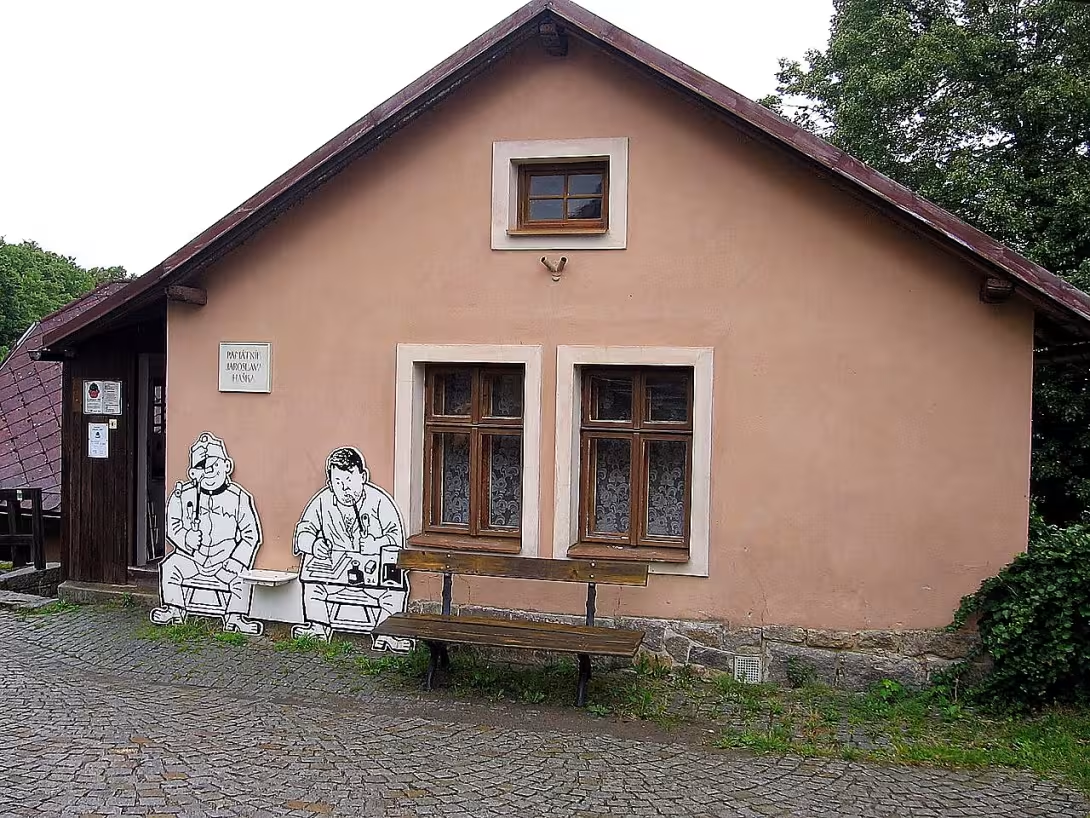
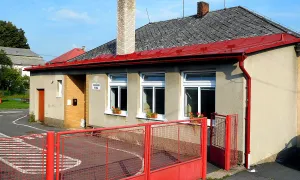
Jaroslav Haška Memorial in Lipnice nad Sazavou is a museum located in a house where the writer spent the last years of his life and died here in 1923. The building is protected as a cultural monument of the Czech Republic. It represents an authentic environment in which a significant part of the author's work was created. The administration of the building is provided by the Museum of Highlands in Havlíčkov Brod.
Jaroslav Hasek came to Lipnice nad Sázavou in summer 1921 with his friend, painter Jaroslav Panuška. Before buying the house number 185, which lies below the local castle, he lived almost a year in the inn U Česká korona. In the purchased and subsequently repaired building, he lived only one room with his other wife Shura. It was here that he dictated the text of his most famous novel The Destiny of the Good Soldier Shvek to the scribe K. Stephen. The memorial exhibition was opened in 1959 and in 1983 it was reinstalled and expanded with new exhibits.
The construction is a typical example of a rural development in the early 20th century. The interior preserves the simple layout of the rooms in which the literary lived and is supplemented by modern exhibition panels. In the residential area there are period furniture: table with seven chairs, bed, wardrobe, stove and dishes.
The building was originally owned by Jaroslav Hašek, after his death he switched to state administration. Today, the memorial is managed by the Museum of Highlands in Havlíčkov Broda, which further enriched the exhibition in recent years. The writer is buried in a local cemetery where the tombstone stands in the shape of an open book. Two statues of Jaroslav Haška can be found in the village; one stands opposite the memorial and the other at the inn U Česká korona, which is currently owned by the writer's grandson Richard Hašek.
The tour starts on the first floor. The Panels represent the stages of Hašek's life, such as his role as editor and anarchists, or the establishment of the Party of Mild Progress within the limits of the law. The exhibition contains period photographs, manuscript samples and an extensive collection of translations of Švejk into many world languages. Personal items include umbrella, hat, harmonica, bottle, pint and most valuable exhibit - Hashka's watch. There are also replicas of the Austrian-Hungarian uniform and women's dresses from the Dadaistic trip. Interesting is the mobile wooden grave of the writer, the work of sculptor R. Dvořák from 1983. The entrance part of the museum reminds of the history of festival of humor and satire, which took place in Lipnice since 1959 in the amphitheatre under the castle.
Jaroslav Haška Memorial offers a unique insight into the final stage of life by one of the most important Czech authors. Visiting this place allows direct contact with the environment, which shaped the form of the world famous Švej. It is such a valuable goal for everyone interested in Czech literary history.
Then and now
Drag the slider to compare how the landmark may have looked when it was built with the view today.
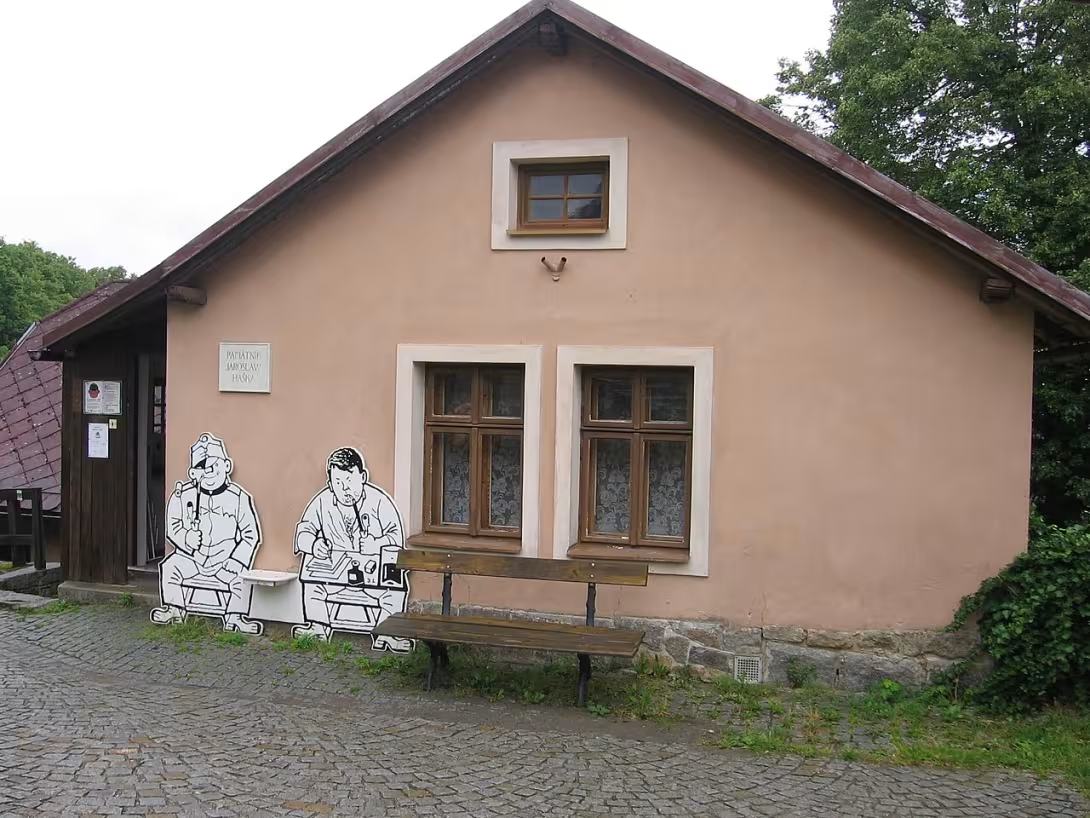

The historical appearance on the left is an AI-generated visualisation and serves as inspiration only.
Historical milestones
- 1921
- Jaroslav Hasek comes to Lipnice nad Sázavou.
- 1923
- Jaroslav Hašek is dying in the house.
- 1959
- Opening a memorial display in the house.
- 1983
- Reinstallation of exhibition and installation of mobile wooden grave.
Architectural development
The original residential house under the Leipzig Castle was modified for museum purposes in 1959. The interior preserves the simple layout of the rooms where the writer lived, supplemented by modern exhibition panels. The building is a typical example of a rural development in the early 20th century.
Historical events
1921: Jaroslav Hasek moves to Lipnice nad Sázavou. 1923: The death of a writer in a cottage. 1959: Opening a memorial exhibition for the public. 1983: Reinstallation of the exhibition and addition of new exhibits.
Owners
Jaroslav Hašek (since 1921), then state administration under the Museum of Vysočina in Havlíčkov Brod.
Points of interest
- The writer Jaroslav Hašek spent the last years of his life in the house where the museum is today and died here in 1923. - In one room of this building, the author dictated his most famous novel about a good soldier typist. - Personal items displayed in the monument include umbrella, hat, harmonica, bottle, pint and watch. - There are two sculptures of a writer in the village, one opposite the monument and the other at the inn. - The interesting thing is the mobile wooden grave of a writer created by a sculptor in 1983.
Guide
Show guide text
This text was created by artificial intelligence and has not been editorially reviewed. It may contain inaccuracies.
Welcome to Lipnice over Sazavou. Stop for a second and take a deep breath. You are standing right in front of a small, inconspicuous house, which at first glance looks like an ordinary building, but for every lover of Czech literature and humor it is a place with an almost sacred atmosphere. Look at this humble building that stands before you. It is here, in this quiet corner, where one of the most influential and controversial writers of our country, Jaroslav Hasek, spent his last days. Feel the calm surrounding this place, and imagine how a man lived here over a century ago, who was able to perform the absurdity of the world with an incredible joke and irony.
Let's go back in time together now. It's nine hundred twenty-one. It is this year that Jaroslav Hasek comes to Lipnice nad Sázavou. He was probably looking for a escape from the hustle and bustle of big cities, peace and opportunity to devote himself to his ideas in an environment close to him. This house became his last port. Hasek spent his final years here, which were full of writing, contemplation, but also meeting friends. Unfortunately, in this house, where we now feel such a room, Jaroslav Hasek died in the year nine hundred twenty-three. It is this tragic but also the natural finality of his life that makes this place a monument that welcomes us today.
Now pay attention to the building itself. As you may have noticed, this is no magnificent palace or monumental building. The architects of this house have remained in oblivion, which is perhaps very symbolic in this case. Hashek was not a man of great gestures or pompas, so he was completely in complete agreement. Look at the facade and see the simplicity of the lines. Note that the house is protected as a cultural monument of the Czech Republic. This means that the State recognised its extraordinary value, not for its architectural uniqueness, but for its historical and spiritual link to the personality of Jaroslav Haška. The house is today carefully managed by a local museum, which ensures that the true form of this place is preserved so that the visitor can feel as if the writer had just gone into the next room and will return to us with some funny story.
When we move on, it's important to remember who was involved in this place. Jaroslav Hasek was not a loner, although he sought peace. There were people around him who understood and supported him. Among the names associated with this monument are Jaroslav Panuška or Zdeněk Matej Kujeň. And we must not forget Joseph Lada, whose drawings have given the character of Hashka's creation the face we know today. Imagine these men sitting at the table, discussing politics, literature, and how the world is sometimes incredibly ridiculous.
And this is where we come to the most important. In one of the rooms of this building there was a thing that changed Czech literature forever. It was here that the author dictated his most famous novel about the good soldier Shvezek. Imagine the painting: Hashek sits in a chair and tells stories about Schezek, his incredible optimism and how he discussed the bureaucratic machine of the army with total apparent naivety. It's fascinating to think that the words that the world knows today were first heard in these walls. Sweat is not just a literary figure, it's a symbol of resistance to the madness of war and power, and it all started or was finished here in this little house in Lipnice.
In order to preserve this memory for future generations, a memorial exhibition was opened for the first time in the year nine hundred and fifty-nine. However, the museum did not stop at the first arrangement. Over the years the exhibition has been modified and reinstalled several times to better tell the story of the writer. A major milestone was the year of nine hundred eighty-three, when there was another major exposure adjustment. It was this year that a very unusual object, a mobile wooden grave, was placed in the premises. It's an element that may seem disturbing at first glance, but in the context of Hashka's irony and his view of death, it's a very fitting detail that makes us think about the fleeting of life and what remains of us.
Now I want to impress you with something that's really personal in the memorial. If you go in, you won't just see books and papers. You'll see things Jaroslav Hasek actually used. Among the personal items that are displayed here, you will find his umbrella, hat or harmonica. Imagine him playing some funny tune on that harmonica to distract sadness or boredom. And then there's one other thing that's very typical of Hasek, and that's a bottle and half a bottle. These objects aren't just ordinary things, they're fragments of his identity. They tell us about a man who loved simple joy, who was not afraid to be himself and who could find joy even in the smallest things, even though life often betrayed him.
If you look at this house again, you'll see it differently, right? It's not just a building made of stone and wood anymore, but it's a place where the tragedy of the end of life has been intertwined with the genius of the literary work. It's a place where the silence of Lipnice nad Sázavou meets the noisy laughter of Schezek.
Now, let's invite you to take that final step. Remove the headphones or keep them in your ears and slowly enter. Go through the rooms where Hasek lived and formed. Note the details, feel the smell of the old house and let the world of Jaroslav Hasek consume you. Explore the exposure, stop by his personal effects and try to imagine what he would say to you today if he were standing here with you. I wish you an inspirational tour, and I hope that this little house with great history will interest you as much as it did thousands of visitors before you. I bid you farewell and wish you the rest of the day in Lipnice nad Sázavou.
Tips for visitors
The best time to visit is during the working week in the morning, when you avoid larger groups of tourists and can easily see the exhibition in the house where the writer lived out his days. Weekends get busier. Take comfortable shoes to visit the museum, because the terrain around the monument and the castle is hilly. Interior photography is possible for private purposes, the best light for outdoor photos is captured during sunny days in the afternoon. In the immediate surroundings we recommend visiting the majestic castle Lipnice, a local cemetery with a unique tombstone in the form of an open book or amphitheatre under the castle. Stop for refreshments at the historic inn at the Czech Crown. For families with children the visit is suitable as a simple walk in history. Children can enjoy stories about the famous writer and his work, with the connection of the museum with the nearby castle offering the ideal program for the whole afternoon.
Frequently asked questions
Can the monument be visited?
Some buildings of this kind are open for guided tours, others serve another purpose or are privately owned. We have not verified whether and when this monument is open – please ask the operator.
What are the opening hours and admission?
We have not verified the opening hours or admission. Current information is published by the operator.
Where is the monument?
Location: Lipnice nad Sázavou, Kraj Vysočina. The map on this page shows the exact spot.
Why is the monument protected?
It is listed in the Central List of Cultural Monuments of the Czech Republic as a cultural monument (register no. 1000138287).
Businesses nearby
Do you run a restaurant, accommodation, shop, museum, rental, wellness or other visitor service near this monument? Show yourself directly to the people heading to it — this is how they will see you in the app and on the web:
Events nearby
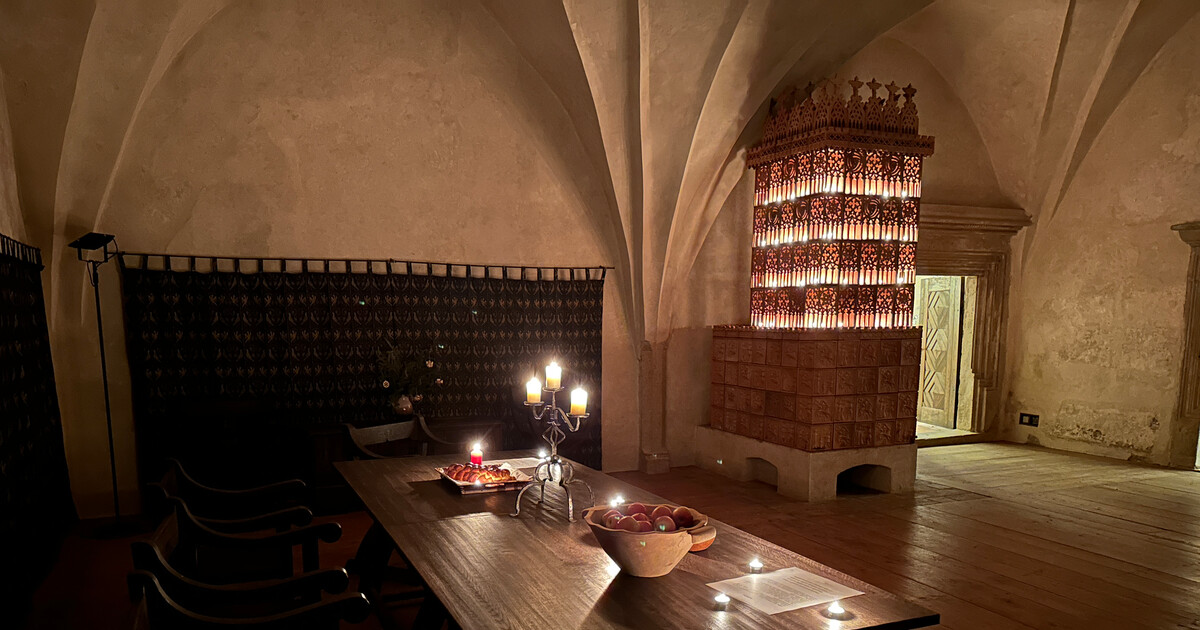
Zdroj akcí: otevřená data měst a obcí ČR (Národní katalog otevřených dat) a kalendář akcí Národního památkového ústavu.
Nearby
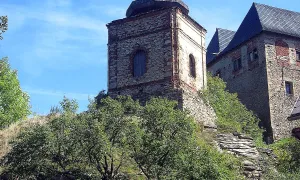
Hrad Lipnice, hostinec U České koruny, místní hřbitov s náhrobkem ve tvaru otevřené knihy, amfiteátr pod hradem.
Accommodation nearby
Themed route
Thematic cruise route from Lipnice nad Sázavou
1. Jaroslav Haška Memorial (museum) - Type: cultural monument - Why is it worth visiting: This monument is dedicated to one of the most famous Czech writers, Jaroslav Haška. The museum offers a view of his life and work, which is an ideal beginning to understand the cultural importance of the village.
2. Castle Lipnice - Type: historical monument - Why is it worth visiting: The castle is located near the museum and is one of the oldest castles in Bohemia. His views on the surrounding landscape are stunning, making the visit very rewarding.
3. Amphitheater under the castle - Type: cultural facilities - Why is it worth a visit: This amphitheater is an ideal place for relaxation and knowledge of local culture. Here are various events that bring impressions of folk traditions and artistic performances.
4. Guesthouse at the Czech Crown - Type: gastronomic point - Why is it worth visiting: The inn offers traditional Czech cuisine and is a great place to relax after a trip. Here you can enjoy food and drink while watching a live show of folk dances.
5. Local cemetery with headstone in the shape of an open book - Type: historical and cultural point This unique tombstone is dedicated to Jaroslav Hašek. His design reflects his passion for books and literature, which adds a deeper understanding of the personality of the writer.
This route offers a comprehensive view of the cultural heritage Lipnice nad Sázavou with emphasis on the life and work of Jaroslav Haška.
Seasonal recommendations
Spring: In the spring period památník Jaroslava Haška is not only decorated with flowers, but also with sun rays that equip the historic building in warm light. Flowers and trees are beginning to bloom, giving space special beauty and life. It is advisable to visit a monument at the end of spring when we are still avoiding crowds. Good time to walk is noon, but we recommend light clothes with the possibility to add a warm shirt or sweater in case of cold spring winds.
Summer: The památník Jaroslava Haška has become a popular place for visitors looking for shelter from the sun heat. Long days and warm evenings offer ideal conditions for walking around gardens and exploring museums. The best thing is to come to the beginning of the day to avoid the biggest crowds. You should be equipped with short dresses and sunglasses, but you must not forget drinking water.
Autumn: Autumn brings freshness and new colors to Lipnice nad Sázavou. The leaves of the trees turn green to yellow, orange and red, which provides a beautiful background to visit the Jaroslav Haška monument. The atmosphere is calm and welcoming, ideal for a relaxing walk. The recommended time to visit is this afternoon when we avoid crowds. Clothes should be mild and ready for colder weather - short jacket or warm shirt is always suitable.
Winter: The winter visit to Jaroslav Haška Memorial offers unique views of the historic building, which is characterized by its gray and peaceful appearance. Snow can add romance to the environment, while colder weather limits the time for walks to a shorter period during the day. Hot clothes, including hat and gloves, are essential for a comfortable stay outside.
Visualizations and artistic views


The visualisations are generated by artificial intelligence and serve as inspiration.
Photos from the area
Real photos taken near the monument


Zdroj a licence jsou uvedeny u každého snímku.
Tips from visitors
No tips yet. Be the first!
Log in and add your tip.
Sources and literature
Photos: Jik jik / CC BY-SA 3.0 — Wikimedia Commons. The author and licence also appear when you hover over the image.
Faktickým podkladem tohoto textu byl článek na Wikipedii, jehož autory jsou přispěvatelé Wikipedie. Článek je dostupný pod licencí CC BY-SA 4.0.
Location on the map

Příběhy a pověsti
Legendy, pověsti a příběhy spjaté s touto památkou
Fotografie návštěvníků
Zatím žádné fotografie. Buďte první, kdo přidá fotografii z návštěvy!
Log in a přidejte svou fotografii nebo hodnoťte.
Za ověřenou návštěvu v aplikaci získáte víc bodů — poznáme podle GPS, že jste na místě.
Reviews and comments