



Tasnovice (hradiště) Hillfort
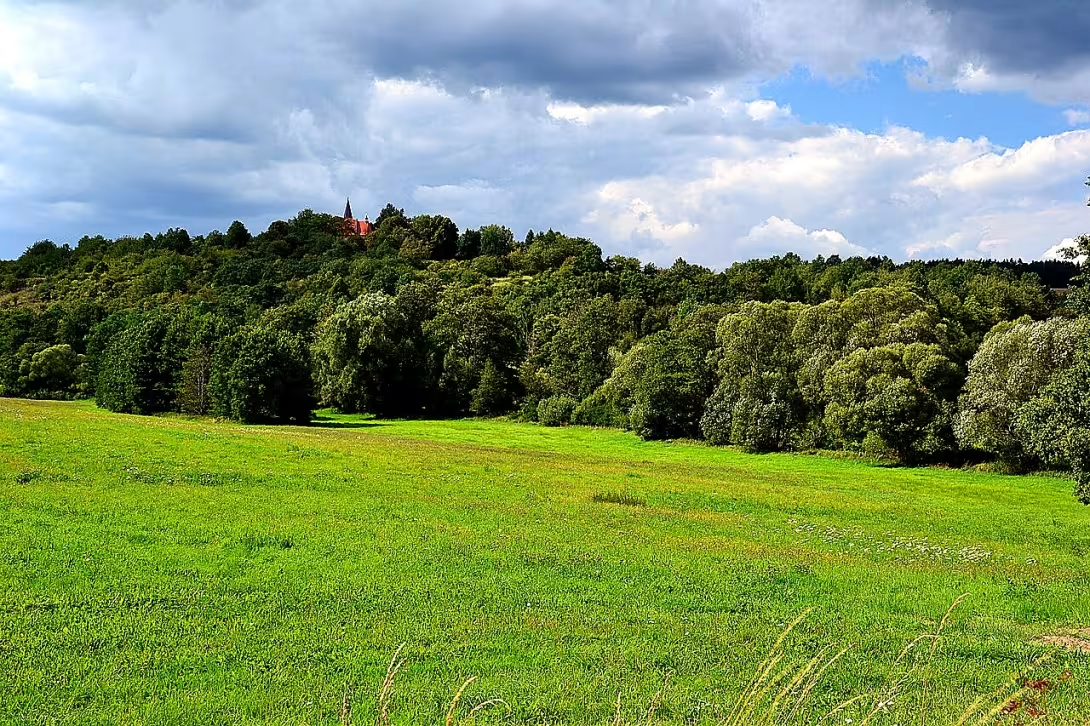
Tasnovice are an extensive early medieval castle on Svatovavrínecký hill northwest of the same-name village in Domažlice district. A location of 13 hectares is protected as a cultural monument. It is an important document of settlement from the 8th to 10th centuries, the strategic importance of which was closely linked to the operation of the railway business path.
There are few reports of the oldest history of the place. A prehistoric settlement is being considered, but cannot be more accurately determined on the basis of the available findings. The demonstrable early medieval settlement began in the 8th century. The formation of the castle was linked to the need for control of the Greek path, which at that time represented a key artery for economic and cultural exchange between the forming Czech Principality and the Bavarian Centre in Řezna.
The building form of the castle is three-piece and uses the natural protection of the hill, which runs around Radbuza River from two sides. The total length of the walls was nearly three kilometres. The highest part of the hill occupies approximately a circular acropolis, the fortification of which was preserved in the form of a wall. Two other walls were protected on the more accessible east side of the fort; a significant wall has been preserved in the middle, only the terrain edge has been preserved in the outer. Lighter fortification of the type of palisade was probably used in places with steep slopes. In the heart of the acropolis was built in the 12th century the Romanesque church of St. Vavřinec, which was later early Gothic rebuilt.
The archaeological research carried out between 1984 and 1988 by Jaroslav Bašta and Dara Baštová focused on the trench space behind the second valley. The survey revealed that the wall was created in two construction phases. The findings of ceramics from the beginning of the 9th to the second half of the 10th century confirm the intensive use of the site in the early Middle Ages.
The castle area is now freely accessible on a blue marked tourist route leading from Tasnovice to Mířkov. The visit offers an opportunity to become acquainted with the extensive system of medieval fortifications and historical importance of the Řežská Trail. The preserved terrain relics of the walls and the presence of the church of St. Vavrnice make this monument an important destination for those interested in archaeology and early medieval history.
Historical milestones
- 8th Century
- The beginning of the early medieval settlement of the castle.
- 12th century
- Construction of the Romanesque church of St. Lawrence in the castle area.
- 1984-1988
- Archaeological research of the site focused on trench after second wall.
Architectural development
The fort was composed of three parts with a total length of walls of almost three kilometres. The fortification of the acropolis was supplemented by two other walls, with probably palisades used in places with steep slopes. In the heart of the acropolis was built in the 12th century a Romanesque church, which was later early Gothic rebuilt.
Historical events
The early medieval settlement of the site began in the 8th century. In 1984- 1988, systematic archaeological research was conducted under the leadership of the Bashtová husbands.
Points of interest
- The fort is situated on an area of 13 hectares and is protected as a cultural monument. - The strategic importance of the site was related to the control of the Greek path, which was a key artery for the exchange between the Czech Principality and the Řezn. - The building form of the castle is three-piece and uses the natural protection of the hill, which runs around Radbuza River from two sides. The total length of the walls was nearly three kilometres. - In the heart of the acropolis was built in the 12th century the Romanesque Church of St. Vavríce, which was later early Gothic rebuilt.
Guide
Show guide text
This text was created by artificial intelligence and has not been editorially reviewed. It may contain inaccuracies.
Welcome here, on Saint Vincent's Hill. Right now, you're standing in a place that keeps secrets from itself for centuries. Look around you. At first glance you may see only mild inequalities of terrain, greenery and quiet landscape, but under your feet and in the surrounding area there is a vast early medieval castle in Tasnovice. Feel the air and silence of this place, which was once full of hustle, the voices of people and the sounds of everyday life in the days when the order of the early Middle Ages was formed. You are standing in an area that is situated on an entire 13 hectares, which makes it truly a dominant element of this landscape.
Let's go back in time together now. Imagine it's the eighth century. It is at this time that the settlement of this hill begins. Why here? The answer lies in the very position. Look down towards the Radbuza River. Water was the key to survival and orientation in ancient times, but for the inhabitants of the castle the river was primarily a natural barrier and also a water route. The Saint Vincent's Hill offered a strategic advantage that no one had overlooked at the time. From this elevated point it was possible to control the surroundings and to see the arrival of foreigners in time, whether they were friendly traders or enemy troops.
But the key to understanding the importance of Tasnovice is something much wider than just local defense. This fort was closely linked to the operation of the Greek strategic trail. Try to imagine this path as one of the major arteries of that time. It was an important business and diplomatic journey that linked the Czech Principality to Bavarian Řezn. Travelers, buyers and envoys carried not only goods, but also news, the drive of faith and political agreement. Tasnovice worked here as a checkpoint, as a guard who oversaw the safety and passage through this key route. It was a place of power where the paths of two different worlds crossed.
Now pay attention to the construction of the castle itself. Although time has erased many details, archaeological knowledge allows us to reconstruct its shape in the mind. The fort is not just a simple castle, but a complex system. Notice how the natural protection of the top has been used. The architects of that time, whose names we don't know today, but we still feel their craft here, designed a three-piece fortification. That means the road to the centre of the castle was not easy. The assailant had to overcome several levels of defense, making the place a real fortress.
At the highest and safest point of the complex there was an acropolis. This is where the most important part of the settlement concentrated. And the acropolis is where something crucial happened in the twelfth century. At that time, the Romanesque church of St. Lawrence was built here. Imagine how the outline of this sacral space began to be drawn in the landscape. The advent of Christianity and the construction of the church meant that the castle was no longer full of military and administrative functions, but also became a spiritual centre. The Romanesque style with its simplicity and monumentality added a new dimension to the site and showed that Tasnovice remained an important point in later centuries.
If we want to talk about the people who helped us rediscover this place, we need to mention personalities like Jaroslav Bašta and Dara Baštová. It's because of their work and their passion for history that we know about the castle so banyak. Archaeology is not only about finding treasures, but about patient reading in the country. There was intensive archaeological research here between 1984 and 1988. Scientists then focused, for example, on a detailed survey of the trench behind the second wall. Now, the moat may seem like a simple hole in the ground, but for an archaeologist, it's an archive. In the sediments and findings in these trenches, information is encoded about how the castle was maintained, what weapons were used here or what objects people lost here. Every find was a piece of puzzle that helped compose a picture of life in the early Middle Ages.
Stop for a moment and think about one interesting thing. The entire area of 13 hectares is today protected as a cultural monument. It is fascinating to realize that this place was not just an isolated castle, but probably a living organism where various layers of society were mixed. From soldiers guarding the Greek trail, to craftsmen, to cunts and clerics in the Romanesque church. Tasnovic's secret lies in their ability to adapt. Since the eighth century, when the first fortification was established here, until the twelfth century, when the first prayers in the church of St. Vavrnice were called, this place served as a bridge between regions and epoch.
If we asked what was most important to the people of the castle, it would probably be the control of the road. Imagine the feeling of power when you see a caravan from Bavaria from the top of the acropolis. You knew who was coming, what was coming, and whether his coming was welcome. This strategic position has turned the Tasnovs into a key hub in the early Middle Ages network.
Now that you know the story of this place, I suggest you continue to explore the premises. Take a slow walk around the perimeter of the castle, feel the terrain and try to imagine the moat and moat that once surrounded this center of power. Take a look at the surrounding landscape and imagine how thousands of years ago, people wandered along the Greek path, invariably, what awaits them beyond the horizon.
Tasnovice is not just a set of archaeological data, it is a testament to human desire for safety, trade and faith. I hope this short trip to history has helped you see more in this country than just grass and trees. Let yourself now lead by your curiosity and discover the details of this fascinating place at your own pace.
Thank you for coming through the history of Saint Vincent's Hill with me. I wish you a pleasant rest of the journey and many other discoveries in our beautiful landscapes. Goodbye.
Tips for visitors
The best time to visit is spring or autumn, when vegetation is lower and the terrain of the fort on Svatovavrínecký hill is clearer. In the summer months the site may be overgrown, making it difficult to observe archaeological terrain inequalities.
Use regional connections to travel by public transport, the current timetables of which are checked in the connection search engine.
For your trip, take a solid footwear suitable for the field, plenty of fluids and snacks, because there are no refreshments stalls in the immediate vicinity of the archaeological site. For better understanding of history we recommend to pack binoculars.
The golden hour is ideal for photography shortly after sunrise or before sunset, when the oblique light highlights the ramparts and terrain breaks of the castle. The best pictures are taken from elevated places overlooking the Radbuzy Valley.
In the vicinity you can visit the church of St. Vavrnice, which is closely connected with the location or take a walk along the Radbuzy river. For families with children the trip is suitable as an undemanding nature and historical walk where children can discover traces of ancient settlement in the landscape between the municipalities of Mířkov and Štátara.
Frequently asked questions
Can the monument be visited?
This is an archaeological site. Often there is little to see on the ground and the land may be private. We have not verified access.
Where is the monument?
Location: Tasnovice, Plzeňský kraj. The map on this page shows the exact spot.
Why is the monument protected?
It is listed in the Central List of Cultural Monuments of the Czech Republic as a cultural monument (register no. 1000148144).
Businesses nearby
Do you run a restaurant, accommodation, shop, museum, rental, wellness or other visitor service near this monument? Show yourself directly to the people heading to it — this is how they will see you in the app and on the web:
Events nearby

Zdroj akcí: otevřená data měst a obcí ČR (Národní katalog otevřených dat) a kalendář akcí Národního památkového ústavu.
Nearby
Obec Tasnovice, řeka Radbuza, vesnice Štítary, kostel svatého Vavřince, obec Mířkov.
Accommodation nearby
Themed route
Church of St. Lawrence (Type: Sacral monument) - A tour of the historic building. Tasnovice (hradiště) (Type: Archaeological site) - The main destination of the trip in the village Tasnovice, which reveals traces of ancient settlements. Radbuza (Type: River) - Walk near the flow. Shields (Type: Villages) - Visit to this nearby settlement. Mířkov (Type: Villages) - End the route in this location.
Seasonal recommendations
At the castle Tasnovice you will be welcomed in the spring months by the awakening nature and fresh green vegetation. The lighting is delicate and less sharp than in summer, which creates ideal conditions for observing archaeological structures in soft light. We recommend wearing layered clothes because the morning cold can quickly rotate with afternoon heat. Thanks to the lower attendance, you will enjoy peace and space for concentration.
The summer season brings intense sunlight to the archaeological sites and full of the bloom of the surrounding vegetation. The atmosphere is lively and warm, but high temperatures can be challenging. Don't forget the headgear and plenty of fluids to ensure comfort during a walk along the rugged terrain.
Autumn Tasnovice offers a fascinating view thanks to the golden and brown shades of leaves and morning fog that cover the surrounding landscape. The atmosphere is thoughtful and calm, which perfectly matches the history of this place. It is advisable to prepare waterproof shoes and a warmer layer of clothing because the moisture in the ground may be higher. The best time to visit is in the afternoon when the low sun highlights the shapes of the ridge and archaeological details.
In winter, the castle is very raw and lonely, which underlines its historical importance. If you come during the snow season, the view of frozen soil can be very impressive. The lighting is weak and the days are short, so plan a visit in clear noon hours. The necessity is very warm and wind-resistant clothes, because there can be a significant draught in the open area of the castle.
Visualizations and artistic views


The visualisations are generated by artificial intelligence and serve as inspiration.
Tips from visitors
No tips yet. Be the first!
Log in and add your tip.
Sources and literature
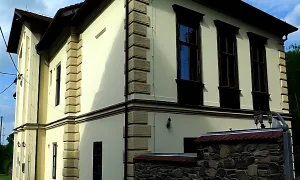
Photos: Petr Kinšt / CC BY-SA 3.0 — Wikimedia Commons. The author and licence also appear when you hover over the image.
Faktickým podkladem tohoto textu byl článek na Wikipedii, jehož autory jsou přispěvatelé Wikipedie. Článek je dostupný pod licencí CC BY-SA 4.0.
Location on the map
More monuments – Tasnovice
Show all in the municipality

Příběhy a pověsti
Legendy, pověsti a příběhy spjaté s touto památkou
Fotografie návštěvníků
Zatím žádné fotografie. Buďte první, kdo přidá fotografii z návštěvy!
Log in a přidejte svou fotografii nebo hodnoťte.
Za ověřenou návštěvu v aplikaci získáte víc bodů — poznáme podle GPS, že jste na místě.
Reviews and comments