



Toušeň Castle ruin
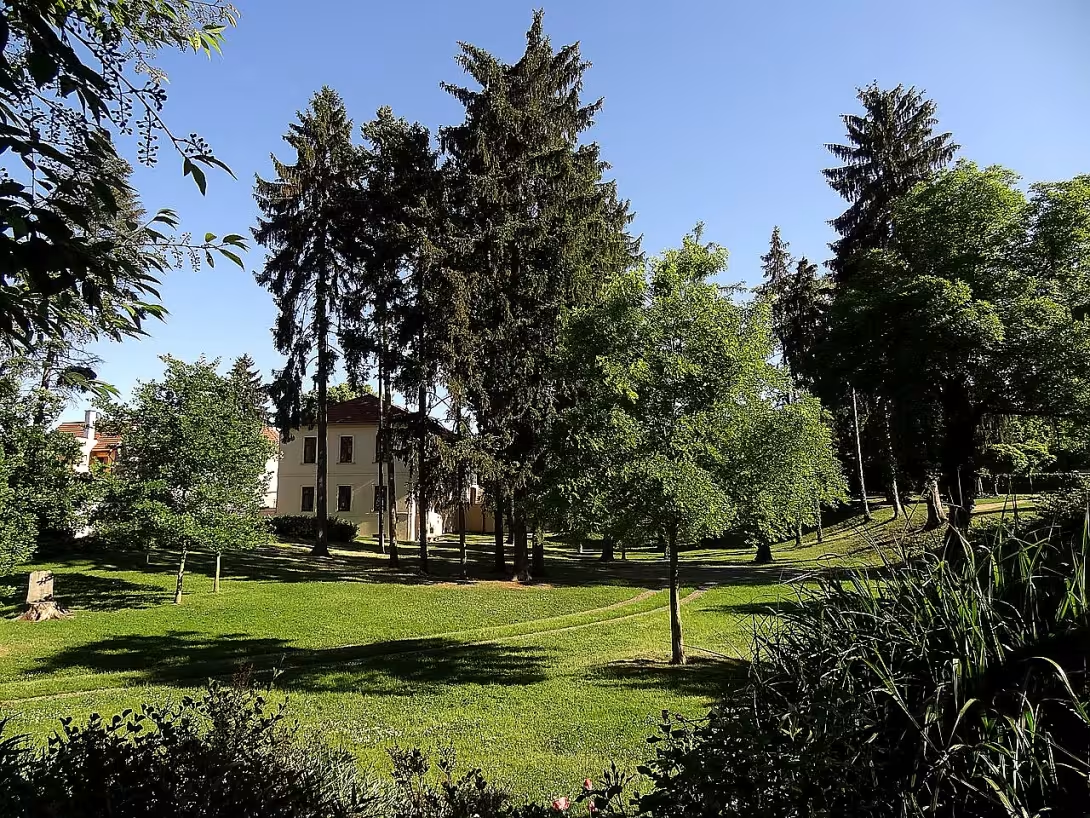
Objekt se nedochoval — na místě dnes nestojí. Následující text popisuje jeho historii, ne současnou návštěvu.
Toušeň is an extinct castle in the city of Spa Toušeň in the Prague-East district. Its remains have been protected as a cultural monument since 1966. The building was built at the end of the 13th century on the left bank of the Elbe and gradually turned from the Gothic residence into a Renaissance castle.
Archaeological research confirms the existence of the castle at the end of the 13th century, when Toušeň belonged to Queen Guta. At that time, the Přemyslová government was the highest in Czech countries, and a Gothic culture flourished in Europe, which wished to establish fortified settlements. The first written mention of the castle dates back to 1370, when it was purchased by Moravian Margrave Jan Jindřich. Before that, the object was in the arrest of masters from Michalovic or Prague townspeople.
The construction form today resembles only archaeologically exposed remnants of masonry and an off-road hint of trench. The oldest phase included round castle core with tank. The perimeter wall was built later. In the sixteenth century, the building underwent a generous reconstruction into a Renaissance castle.
The owners included a number of prominent personalities and families such as Queen Guta, masters of Michalovice, Jan Jindřich Lucemburský, king of Jiří z Poděbrad, Oldrich Hogwarts, Jan Pašek z Vratu, Adam Lev of Rožmitál, Kunrat District of Krajk and Adam mladší z Valdštejna. After the extinction of the masters from Michalovice won the castle Jiří z Poděbrad and his sons sold it to Oldřich Bradač. In 1518, the Prague Patricij Jan Pašek z Vratu bought the building, which initiated Renaissance modifications. In 1536, Kunrat County added him to the Brandy estate. From 1606 to 1607 the castle served as the residence of Adam Jr. from Valdštejn.
During the Hussite wars in 1421, the castle was captured by the army of Pražani after three days of siege, while the crew was free to leave. In 1563, the castle burned down in a city fire. It was subsequently repaired but no longer inhabited after 1607. The final demise of the building came in 1639, when the remains were dismantled by Swedish soldiers for fortification at Staré Bloslav. Parts of the masonry were still visible in the field in 1873, but then disappeared.
Today, the site is an important archaeological site, which resembles the transformation of a medieval residence into a Renaissance residence. Visiting a place in the garden near the house No. 87 offers the opportunity to become acquainted with the history of the lost monument, whose importance is evidenced by the monument protection. Despite the absence of above-ground buildings, this place remains an important witness to regional history.
Historical milestones
- 1370
- The first written mention of the castle when buying it by Jan Henry.
- 1421
- Conquering the castle with a army of freshmen after a three-day siege.
- 1639
- The dismantling of the remains of the castle by Swedish soldiers to build fortifications.
Architectural development
The oldest construction phase included round castle core with tank. Later, a perimeter wall was built. In the 16th century, the building was generously converted into a Renaissance castle.
Historical events
In 1421, the castle was conquered by a army of freshmen during Hussite wars. In 1563, the castle burned down in a city fire. In 1639, the remains of the castle were dismantled by Swedish soldiers to build fortifications.
Owners
Queen Guta, lords of Michalovice, Jan Jindřich, Jiří z Poděbrad, Oldřich Bradač, Jan Pašek z Vratu, Adam Lev of Rožmitál, Kunrat District of Krajk, Adam mladší z Valdštejna.
Points of interest
The remains of the castle have been protected as a cultural monument since the year one thousand nine hundred sixty-six. - The castle was built at the end of the 13th century on the left bank of the Elbe River and gradually turned from the Gothic residence into a Renaissance castle. - In the year one thousand four hundred twenty-one, the castle was captured by the army of the Pražans after three days of siege, and the crew was free to leave. - The final demise of the construction came in a year of six hundred thirty-nine, when the remains were dismantled by Swedish soldiers for fortification at Old Bloslav. - The oldest phase of the castle included round castle core with water tank.
Guide
Show guide text
This text was created by artificial intelligence and has not been editorially reviewed. It may contain inaccuracies.
Welcome to the place where time seems to be stopped, yet in every grain of sand and every stone you feel the constant movement of history. You're standing at the Toušeň archaeological site. Look around you and pay attention to the surrounding countryside for a moment. You are on the left bank of the Elbe River, in a place that has witnessed ups and downs, strength and decay for centuries. Even though there are no high walls or impenetrable gates in front of you today, imagine in your mind what this place looked like when it was the heart of this area. Feel this atmosphere of silence, but it carries the echoes of ancient events.
Let us now move further into the past together to understand how this story began. Toušeň was not always a silent remnant in the landscape. Its roots go back to the end of the 13th century. At that time, when Europe formed into its medieval forms, a seat was established here to serve as a solid base and protection for this strategic place by the river. The first clear clues that history has left in our written records appear in the year 1,000, three hundred seventy. This is when we mention the castle for the first time in documents in connection with its purchase by Jan Henry. Imagine that time when the castle became a symbol of power and property that brought prestige and security.
Now pay attention to how the face of this place changed over the years. If you look at the distribution of space, you can feel the rotation of different epoch. Toušeň was not a static place. It was a living organism that adapted to the needs of its owners. Originally, it was a Gothic mansion, which contains an idea of rugged, sharp lines and a fortress that was intended primarily to prevent attacks. Over time, however, the needs of the nobles have changed. The castle turned into a Renaissance castle. This transformation meant a transition from clean defense to more elegance and comfort. It became a residence which served as a residence for important noble families. Even though you don't see these architectural details anymore, in the very structure of the place, the effort to combine strength and beauty is felt.
However, the history of this place is full of not only peace, but also great drama and personalities that have left their mark. There were people in these rooms whose names are now written in textbooks. Here we can remember John Henry of Luxembourg, who controlled the castle at the time of its flowering. Other important figures such as Jiří z Poděbrad or Adam mladší z Valdštejna appear in these events. Feel the presence of these names as an invisible thread that connects today's visitor to an ancient power game.
But history is not only about kings and nobles, it is also about conflicts that change the world. Imagine now the moment when the calm of this landscape suddenly broke. It's one thousand four hundred twenty-one. Tensions floating above the Elbe banks, which can almost be felt on the skin. After a tireless and exhausting three-day siege, the army of Prague finally conquered the castle. Imagine the noise, the chaos, and the tireless effort to keep the wall at a time when the fate of the castles was decided in bloody battles.
However, the biggest exam for Toušeň brought later time The fire that struck the castle in the 16th century followed a gradual decline. And then came the most painful chapter. In the seventeenth century, precisely in the year of the thousand and six hundred thirty chianas, something happened here that finally broke the castle. Swedish soldiers who moved in these countries did not see a seat in Toušni, but a source of material. They dismantled the remains of the castle so they could build their own fortifications. What has been built for centuries has been broken down in a short time for the needs of war. This moment meant the end of the castle as a living mansion and the beginning of its existence as an archaeological site.
You may now ask why this place is so important, seeing only its remains today. The answer is in its value as a memory. Since the year one thousand nine hundred sixty six, this site has been protected as a cultural monument. It's the way we value what's left of our ancestors as a society. Even though there are only fragments, they are fragments of truth about how people lived, how they fought and how they built.
Here is one interesting thing that can make you think. Think about how fragile everything you build is. The castle, which was supposed to last forever, was dismantled like an ordinary stone. Yet he's still standing here, in a sense, because we're still telling his story. Toušeň is not just a pile of stone by the river, it is a reminder of fleeting and at the same time a proof of human effort.
Now, please, continue to search this place. Feel the calm of the surrounding nature, which slowly and tirelessly takes back the space that once belonged to the people. See the surroundings, feel the atmosphere, and try to find a reflection of those who once lived here, fought and ruled. Thank you for sharing this story with us. We wish you a pleasant walk in the footsteps of history.
Businesses nearby
Do you run a restaurant, accommodation, shop, museum, rental, wellness or other visitor service near this monument? Show yourself directly to the people heading to it — this is how they will see you in the app and on the web:
Nearby
Městys Lázně Toušeň, řeka Labe, město Stará Boleslav.
Visualizations and artistic views


The visualisations are generated by artificial intelligence and serve as inspiration.
Photos from the area
Real photos taken near the monument


Zdroj a licence jsou uvedeny u každého snímku.
Tips from visitors
No tips yet. Be the first!
Log in and add your tip.
Sources and literature
Photos: MartinVeselka / CC BY-SA 4.0 — Wikimedia Commons. The author and licence also appear when you hover over the image.
Faktickým podkladem tohoto textu byl článek na Wikipedii, jehož autory jsou přispěvatelé Wikipedie. Článek je dostupný pod licencí CC BY-SA 4.0.
Location on the map





Příběhy a pověsti
Legendy, pověsti a příběhy spjaté s touto památkou
Fotografie návštěvníků
Zatím žádné fotografie. Buďte první, kdo přidá fotografii z návštěvy!
Log in a přidejte svou fotografii nebo hodnoťte.
Za ověřenou návštěvu v aplikaci získáte víc bodů — poznáme podle GPS, že jste na místě.
Reviews and comments