



Třebechovický betlém Castle
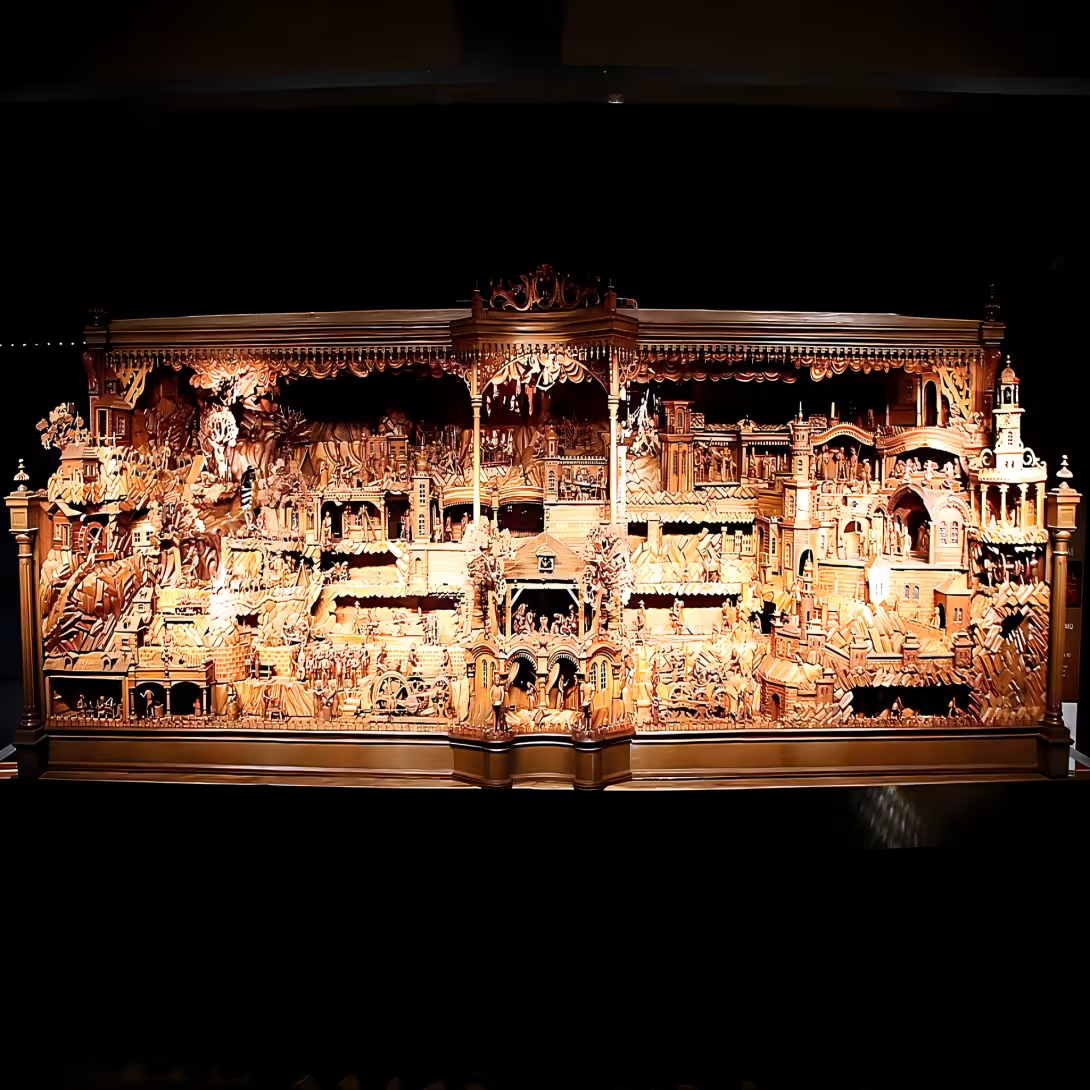
Třebechovický betlém, also known as Proboštěch's Bethlehem, is a fully branded mechanical nativity, which resembles the artistic enthusiasm of a small Czechoslovak town. Bethlehem is the creation of three key persons: Josef Probošt as the chief initiator, the carver of Josef Kapucian, who made up figures, and Josef Frimle, the axe, who set him in motion. In 1999, Bethlehem was declared a national cultural monument of the Czech Republic.
The formation of the betel dates back to 1882, when Josef Probošt with his friends started carving small manger as a gift for his wife. Creative activity developed gradually - the manger created by the year 1885 then Probošt decided to expand to a whole with ambitious dimensions. He allegedly explained to his supporters that he wanted to create a nativity so beautiful that they would come to see it from Vienna. The first professional advice was for local carver Jan Krištof. He gradually approached the old carver Josef Kapucian, who was lured by his offer of food and accommodation. Capucian, aged and almost deaf returned from travel around the world, received it and began carving figures. Probošt himself focused mainly on scenography, landscape, architecture, solutions to structural problems and coordination of work.
Over time, he devoted himself to creating a growing range of local people. When the office moved to Probošt'ovice, the so-called "betlémách" - various craftsmen and workers from Třebechovice, from the song Jan Kupka to the seam of Dónek Černý to the railway man Jan Sedlák. These creators have developed an informal tradition: interested in joining the group had to bring fresh bread, knitting sausage and bottles of liquor. They all contributed ideas for new characters and looked for patterns in books and postcards, especially in the illustrated Czech Bible by Karl Bellmann. High ambitions caused both ridicule and support in the city.
After Probošt's death in 1926 he fell into the nativity of the nativity. His family put him in the old shed. In the early 1930s, Probošt's daughter Anna and her husband decided to sell the nativity. They were interested in puppeteers, Prague merchants and Thomas Batya. However, sales did not take place for a long time. The situation was helped by a young Czech teacher František Skřivan, who learned about the nativity from pupils. He and his friends saved him - on 13 July 1934 he was purchased for the Czechoslovak Church by the factory Jaroslav Burdych for CZK 15 225.
Today the nativity owns the city of Třebechovice pod Orebem. Since 2013 it has been located in a newly built building in the Třebechovice Museum of Bethlehem, where it is still accessible to the public as a witness to the rich local creative tradition.
Then and now
Drag the slider to compare how the landmark may have looked when it was built with the view today.
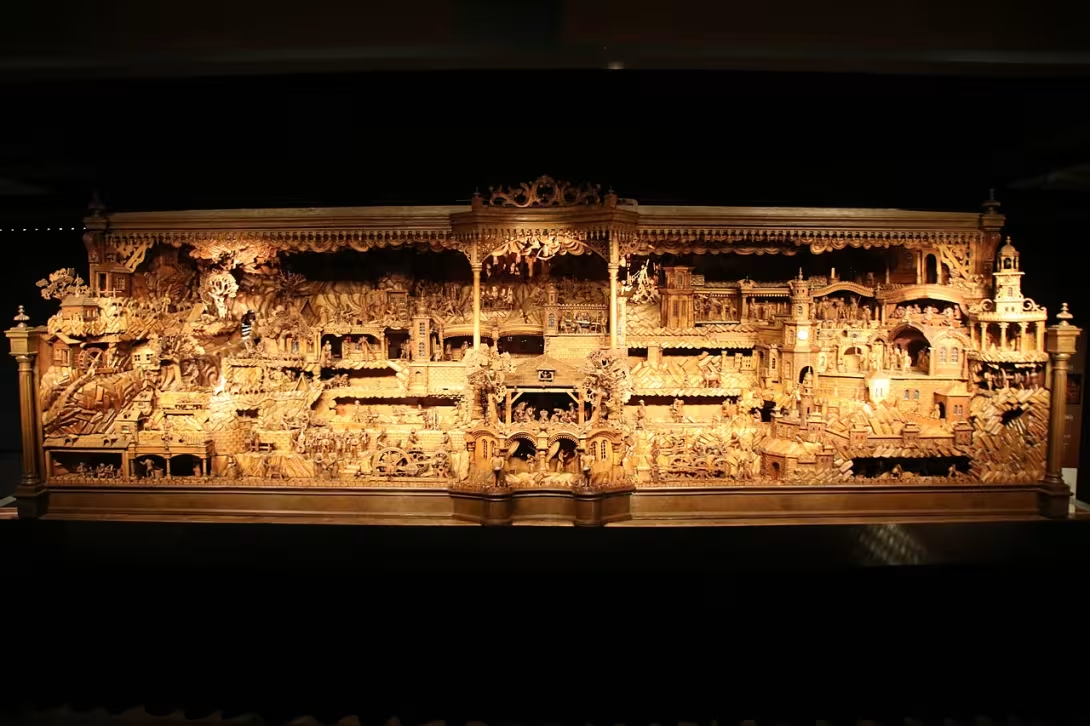
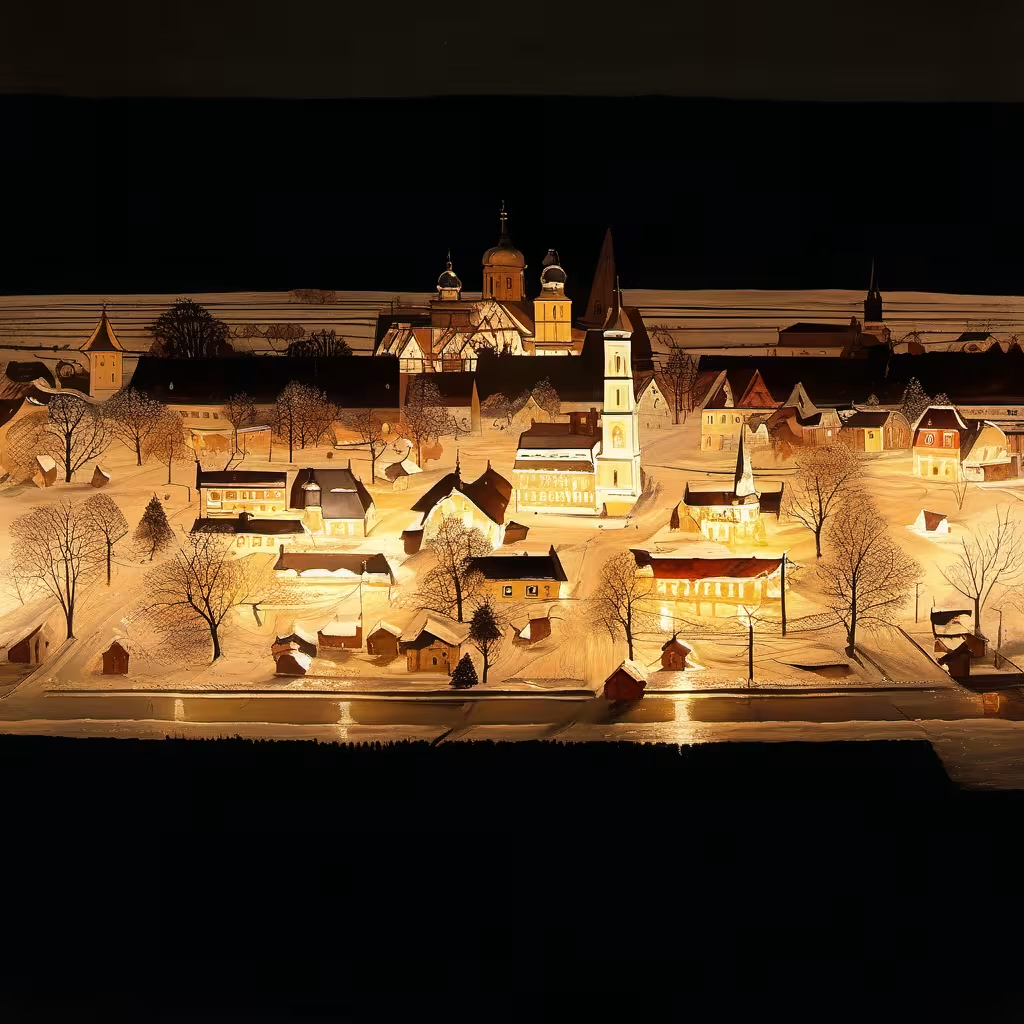
The historical appearance on the left is an AI-generated visualisation and serves as inspiration only.
Historical milestones
- 1882
- Beginning of manger production as a gift for the wife of Josef Probošt.
- 1885
- Donating the first manger to the wife; subsequent extension to the whole nativity.
- 1926
- The death of Josef Probošt; the nativity disappeared in the family shed.
- 1999
- Declaration for a national cultural monument.
Architectural development
Bethlehem is all-rusted, composed of tens of thousands of wooden parts. It was created gradually in the shed and later in the skylight where the "nativity" were gathered - local craftsmen and citizens. Mechanical elements allow the movement of characters and scenes. Since 2013, Bethlehem has been located in a newly established museum of Bethlehem in Třebechovice pod Oreb.
Historical events
- 1882
- The beginning of the creation of the nativity by Josef Probošt as a gift for his wife, later extended to extensive nativity.
- 1926
- The death of Josef Probošt; the nativity disappeared into oblivion after a sales failure.
- 1934
- Bethlehem bought Jaroslav Burdych for the Czechoslovak Church of Hussite and saved him from extinction.
- 1999
- Declaration for a national cultural monument.
Owners
- 1882-1926
- 1934
- 2013- present
Points of interest
- Bethlehem was created in 1882 as a small manger by Josef Probošt as a gift for his wife.
- In 1999 it was declared a national cultural monument of the Czech Republic.
- It was made up of three key personalities: Josef Probošt (initiator), Josef Kapucián (figure carver) and Josef Friml (axe that set the nativity in motion).
- Bethlehem was originally located in the Probošt'Ost (Proboštov), where "Bethlehem" met - local craftsmen and workers who contributed ideas and materials (e.g. bread, liquor).
- In 1934 the nativity was saved from sale and bought by the Czechoslovak Church of Hussite factory Jaroslav Burdych for CZK 15.225.
Guide
This guide is narrated by a synthetic voice generated by artificial intelligence.
Show guide text
This text was created by artificial intelligence and has not been editorially reviewed. It may contain inaccuracies.
The Třebechovice nativity scene, also known as the Probošt nativity scene, is an entirely wooden mechanical nativity. It was created by Josef Probošt, Josef Kapucián and Josef Friml. It was being made from the year 1882 until Probošt's death in 1926. In 1999 it was declared a national cultural monument. Today it is owned by the town of Třebechovice pod Orebem and since 2013 it has been housed in the new building of the Třebechovice nativity scene museum.
It all started quite modestly. Josef Probošt began with the help of friends to carve a nativity scene as a gift for his wife, and in 1885 he gave it to her. Then he decided to expand the nativity scene to include the entire Christmas story. He allegedly ordered his tools all the way from Vienna and asked the local wood carver Jan Krištof for advice. He wanted a nativity scene that would be the largest and most beautiful in the world, so that the emperor himself would come to see it.
Later he brought in wood carver Josef Kapucián to collaborate, who had returned from his travels around the world, now aged and almost deaf. In exchange for food and lodging, he took on the carving of figurines. Probošt himself created only a few little figures. He mainly took care of the landscape, architecture, construction and organization of the work. After finishing the biblical part, his conscience troubled him because he was neglecting his farm, and he interrupted the work for a time. Then he got the idea to also portray the ordinary life of Třebechovice residents and became completely absorbed in the creation.
A group of so-called nativity builders gathered around the nativity scene. Among them were a shoemaker, a farmer, a road worker, a carpenter, a cooper, a weaver, a butcher and a young railroad worker. Anyone who wanted to join had to bring a loaf of fresh bread, a large braid of sausages and several bottles of liquor. The nativity builders brought ideas for new figurines and looked for models in books about ancient art, on postcards of Renaissance sculptures and in illustrated Czech bibles. The entire nativity scene was set in motion by saw miller Josef Friml.
After Probošt's death, the family put the nativity scene away in an old shed. There were several interested buyers, among them Tomáš Baťa because of the shoemaker's workshop, but the sale never happened. It was only saved by a young Czech language teacher František Skřivan. He learned about the nativity scene from students who played with the carved figurines under their school desks. On July 13th, 1934, Třebechovice factory owner Jaroslav Burdych bought the nativity scene for the Czechoslovak Hussite Church for fifteen thousand two hundred twenty-five crowns.
Frequently asked questions
Is Třebechovický betlém open to the public?
Yes, Třebechovický betlém is open to the public. The tour is possible throughout the year, except for the maintenance period, which is announced on the website of the monument.
How do I get to the place by car / public transport?
The car can be reached in front of the castle Trebechovice. Public transport (urban public transport) is available in Jičín and other bus connections that stop outside the castle.
How much is the entrance fee and is it paid on the spot?
Payment is made at a place where you can also purchase souvenirs.
Is the tour suitable for children and seniors?
Yes, Třebechovický betlém is suitable for families with children and seniors. The tour is disabled, so you can visit it with a wheelchair.
How long does the tour take?
The tour of Třebechovický betlou takes approximately 1-2 hours, depending on the level of interest and number of visitors.
What are the opening times and booking is required?
The Třebechovický betlém is open to the public from 9:00 to 5:00. Reservation is not necessary, but we recommend making it in advance for groups over 10 people.
What's interesting in the immediate vicinity?
In the immediate vicinity there are several ponds and forests that are suitable for walking. Also you can visit the castle Mladá Vožice or the town of Jicin.
For kids
Imagine going back 120 years, until Czech master blacksmith and sculptor František Dusek started building the amazing Třebechovický betlém. It was the beginning of a great adventure!
It's like the work was made in front of your eyes, this is what it looked like back then. The village of Třebechovice above Jizerou was small and peaceful. People lived here in the woods, the fields and the rivers. The earth was full of lives, trees and animals.
Businesses nearby
Do you run a restaurant, accommodation, shop, museum, rental, wellness or other visitor service near this monument? Show yourself directly to the people heading to it — this is how they will see you in the app and on the web:
Events nearby

Zdroj akcí: otevřená data měst a obcí ČR (Národní katalog otevřených dat) a kalendář akcí Národního památkového ústavu.
Nearby
- Current location of Třebechovický betlem and other betlems from the region.
- Natural flow flowing around Třebechovice, important for the local landscape.
- Baroque castle from the 18th century, which is another important cultural object in the area.
Accommodation nearby
Themed route
Thematic cruise route: Bethlehem Třebechovic road under Oreb
1.Třebechovický betlém * A monument of world importance * - The unique baroque works of masters of Bethlehem that reflect the religious tradition and craft skills of the region. It is possible to monitor the development of Bethlehem from the 18th century to the present day.
2. Trebechovice Museum of Bethlehem * Part of the Bethlehem * - There are other regional Bethlehem, including historical and modern variants. Ideal for deeper knowledge of local Bethlehem culture.
3. Castle Třebechovice pod Orebem * Renaissance mansion with park * - About 1 km from the Bethlehem is a castle with a rich history connected to the family of Pernštejn. Its surroundings offer quiet walks in nature.
4. Oreše creek * Natural flow with picturesque surroundings * - About 5 km from the village is possible to visit this stream, which forms a natural corridor with forests and field paths. Suitable for a short walk or cycling.
* Tip: * The route combines cultural and natural experiences, ideal for families or lovers of history and crafts.
Seasonal recommendations
Spring In Trebechovice under Oreb, spring offers a tour of the Bethlehem in a soft, variable light, where the sun's rays penetrate through flowering trees and take turns with mild rain showers. Nature comes to life around the monument - green meadows and blooming orchards provide a peaceful, idyllic atmosphere, while the nativity reflects spring light in wooden statues and coloured glass fillings. The sound background is also specific: the singing of birds and the rustling of the leaves creates a harmonious escort to the tour. It is practically advisable to visit the nativity early in the morning or in the afternoon when there are fewer visitors. Clothes should be layered - spring weather changes rapidly, and even when the sun welcomes, evenings can be cold. Comfortable shoes are also recommended as the surrounding area of the nativity is mostly uneven and stony.
Summer Summer visit The Třebechovice Bethlehem is influenced by long days and warm sunlight, which paints details of statues and shadows on the walls of the chapel into sharp, contrast lines. The surroundings of the monuments are lively in the summer - green vegetation and flowering herbs create a pleasant, refreshing atmosphere, while in the nativity itself they feel a light, almost meditative mood. The evening lighting is also specific, which in summer months starts earlier and creates fine, golden reflections on the facades. Practically, it is best to come immediately after opening to avoid crowds that accumulate especially in the afternoon during the main summer season. Light, breathable clothes and hat or cap against direct sun are recommended as well as plenty of water. The tour in late afternoon offers more pleasant temperatures and the possibility to combine a visit with a walk along the surrounding field routes.
Autumn Autumn brings golden and red leaves to Trebechovice under Oreb, which are reflected in the windows of the Bethlehem and give it a mysterious, nostalgic atmosphere. The light becomes softer and more dispersed, while the nativity of the coloured glass vitrates is reflected in the nativity of the nativity, which in the autumn light gain deeper, brighter shades. The surrounding area is quieter - forests and meadows are preparing for winter, and visiting the Bethlehem is gaining an intimate, almost private character. Practically autumn is ideal for longer tours, as the traffic is falling and it is possible to enjoy the details without rush. Clothes should be warmer, especially in November, when temperatures fall rapidly. Fixed shoes are also recommended because wet leaves on the road can be slippery. Evening visits in advent time offer a unique atmosphere where the nativity begins to prepare for Christmas holidays.
Winter Winter Třebechovice pod Orebem is a fairy-tale view - a nativity, illuminated by lamps and Christmas decorations, it rises above the snowy landscape, while the white coating turns the surroundings into a quiet, silvery panorama. The inner lighting of the nativity, combined with outdoor light, creates a warm, festive atmosphere that is unique in winter. The specific sound environment - snow rustling, silent murmur and occasional sound of bells from the nativity provide a magical dimension to the visit. Practically it is advisable to visit the nativity in the morning when the light is the most beautiful and minimal crowds. Clothes should be warm, waterproof and comfortable - temperatures often fall below freezing, and snow showers can complicate movement. A short tour is also recommended as the opening hours in winter are limited. The visit on Christmas Eve also offers the possibility to see the nativity in full Christmas.
Visualizations and artistic views


The visualisations are generated by artificial intelligence and serve as inspiration.
Photos from the area
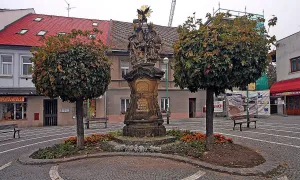
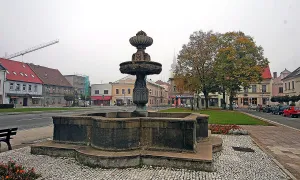
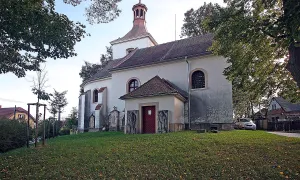
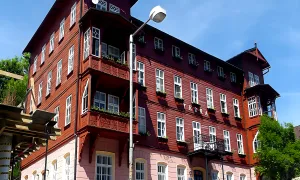
Real photos taken near the monument

Zdroj a licence jsou uvedeny u každého snímku.
Atmosphere of the place
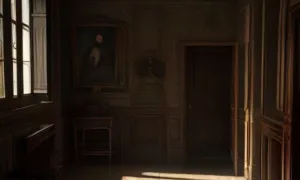
This atmospheric visualisation of the place and period was generated by artificial intelligence. It is not real footage of the location.
Tips from visitors
No tips yet. Be the first!
Log in and add your tip.
Sources and literature
Photos: MartinMerinsky / CC BY-SA 4.0, rozlišení zvýšeno umělou inteligencí — Wikimedia Commons. The author and licence also appear when you hover over the image.
Faktickým podkladem tohoto textu byl článek na Wikipedii, jehož autory jsou přispěvatelé Wikipedie. Článek je dostupný pod licencí CC BY-SA 4.0.
Location on the map

Příběhy a pověsti
Legendy, pověsti a příběhy spjaté s touto památkou
Fotografie návštěvníků
Zatím žádné fotografie. Buďte první, kdo přidá fotografii z návštěvy!
Log in a přidejte svou fotografii nebo hodnoťte.
Za ověřenou návštěvu v aplikaci získáte víc bodů — poznáme podle GPS, že jste na místě.
Reviews and comments