



Tvrz Bošovice Fortress
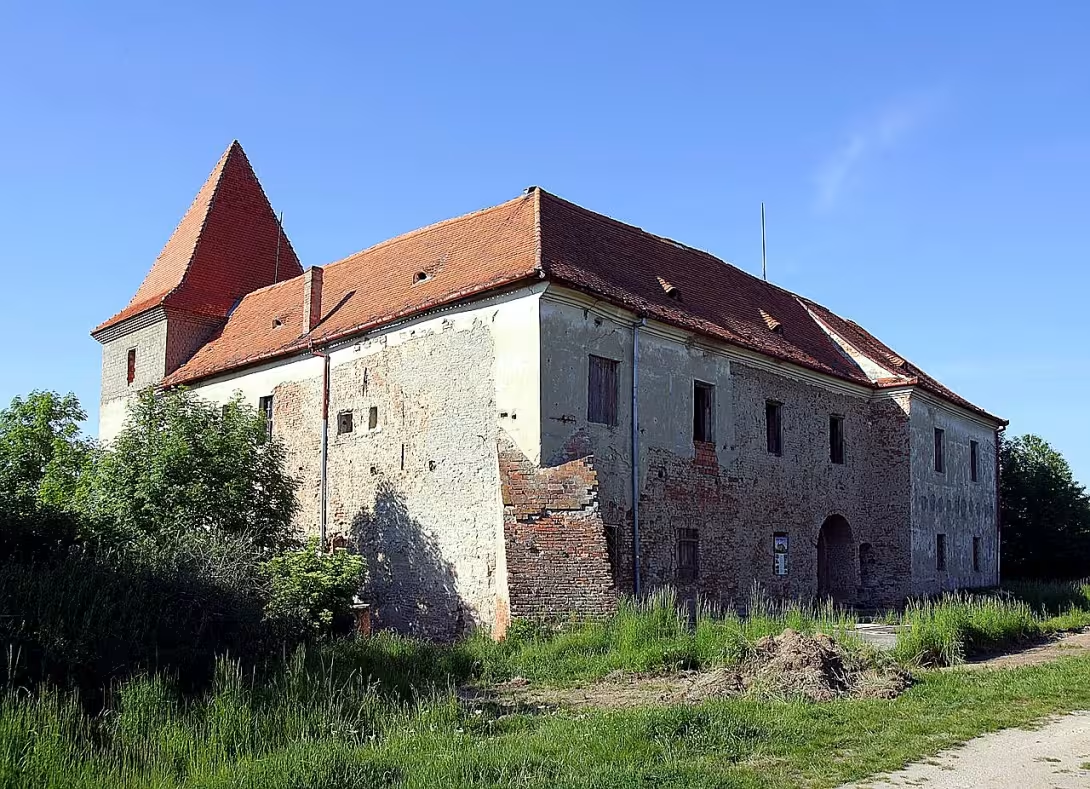
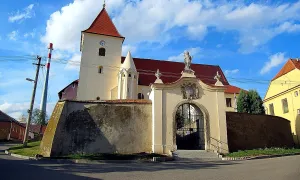
Tvrz Bošovice is a Gothic-Renaissance monument in the village Bošovice in Vyškovsk. Her history goes back to the end of the 14th century. The building represents a significant dominant part of the village and is among the few Moravian strongholds that have survived to this day.
There are only reports of the oldest history of the site. Petr z Bošovic is mentioned in 1298; It is assumed that on the site of today's stone building could stand an older woodclay fortress. In writing, the existence of a fortified place is not safely documented until 1398 as the property of the gentlemen of Kunštát. During the fighting between the Margrave Jošt and Prokop at the beginning of the 15th century, the fort was likely destroyed because the records from 1408 and 1415 call it desolate or mention only the bare hill.
The construction of a new stone fortress made of bricks and stone dates back to 1415 when Jimram z Doubravice decided on it. During the 15th century, the construction was further expanded, probably under Jan Zají from Valdek, which obtained it between 1423 and 1434. The Vladyks of Polanka, who owned the building since 1481, deserved a late Gothic form and other modifications in the 16th century. At that time, the guard tower was raised, the rooms were veiled and a Renaissance wing was formed at the site of the original defensive ditch.
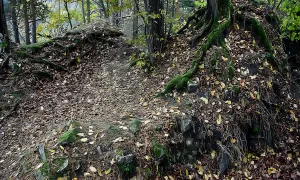
The original defense system consisted of a deep and wide moat surrounding the object from all sides, lined with a clay bead with a reinforced oak palisade. Access was provided by a ramp leading to a gate in the wall and a wooden bridge. There was a deep well in the middle of the courtyard. The living quarters included a one-storey palace with two skylights on the ground floor and two on the floor.
The fortress has often changed owners over the centuries. After gentlemen from Kunštát, Jan Kos from Okrasovice, Jimram from Doubravice and Jan Zajíc from Valdek in 1481, the masters from Polanka took it. Since 1627 he became owner of Maxmilián z Lichtenštejna and remained in possession of this family for another 300 years. However, this period was a gradual decline. the object ceased to serve as a noble residence and was used as a residence of officials or granary.
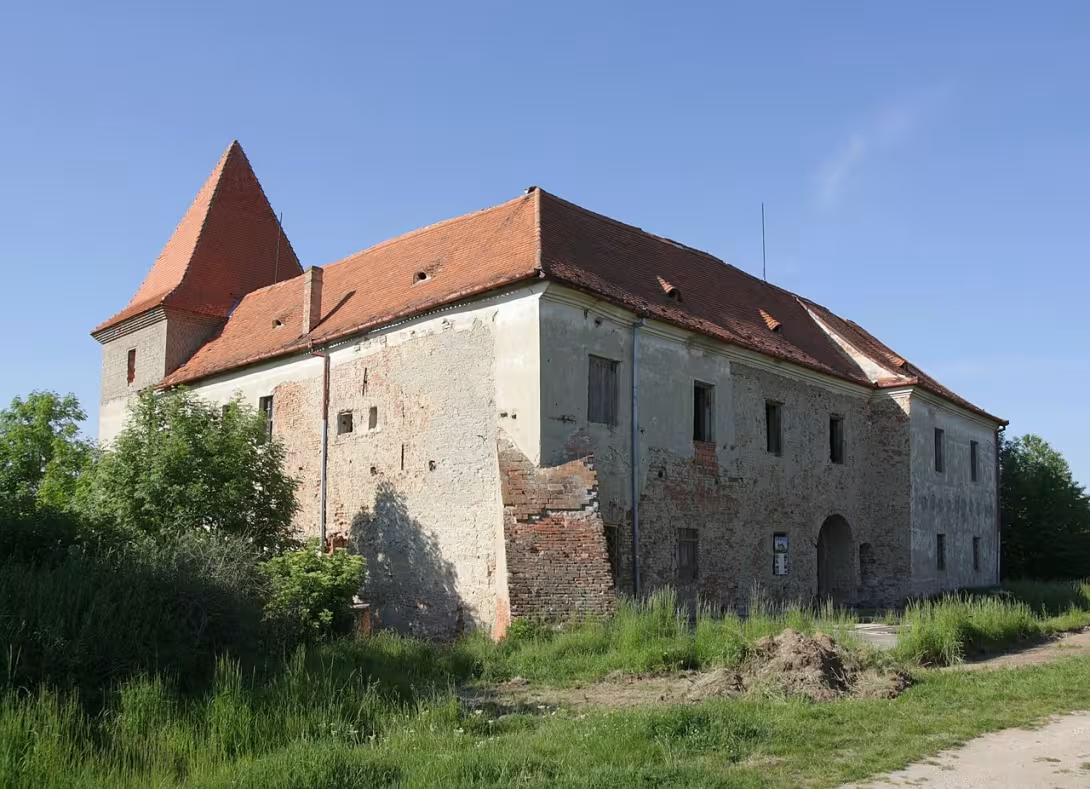
After World War II, the fort served as a social centre. In the 1980s, it underwent an inconsiderate and unfinished reconstruction which damaged a number of original architectural elements. After 1989, the work was stopped as a result of restitution to the original owners. Since 1997 the fortress has been protected as a real-estate cultural monument of the Czech Republic, yet its construction condition remains poor in the long term.
This monument represents valuable evidence of the development of the aristocratic residence from the Middle Ages to the Renaissance. Despite the dismal technical state, it remains an important historical point, which shows changes in Moravian architecture over the centuries.
Then and now
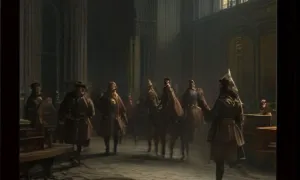
Drag the slider to compare how the landmark may have looked when it was built with the view today.
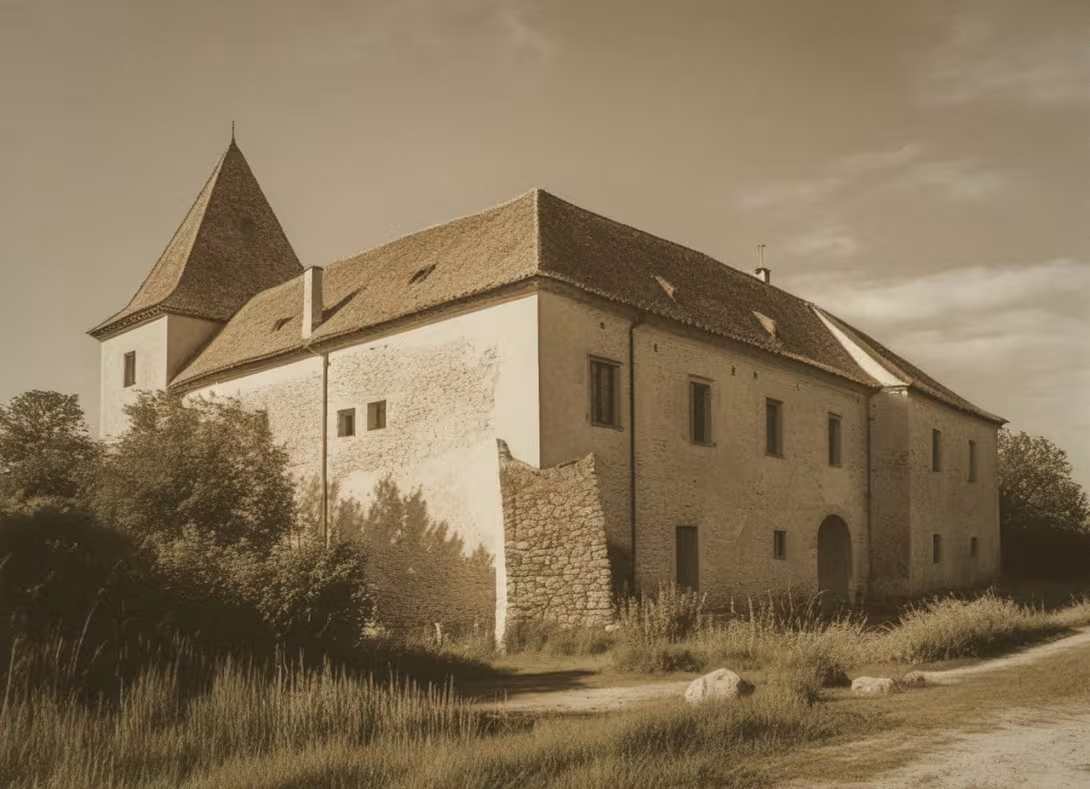
The historical appearance on the left is an AI-generated visualisation and serves as inspiration only.
Historical milestones
- 1398
- First written mention of the fort as a fortification site.
- 1415
- New stone and brick fort mentioned.
- 1627
- The fort goes to Maxmilián z Lichtenštejna.
- 1997
- Declaration for a real estate cultural monument of the Czech Republic.
Architectural development
The original woodclay fortress was replaced by a stone building with a palace in 1415. In the 16th century, a Renaissance wing was added to the site of the original ditch. The building was partially and unsparingly reconstructed in the 1980s.
Historical events
The destruction of the fortress during the wars between the Marcrabats at the beginning of the 15th century, the construction of a new stone fortress in 1415, the acquisition of a fortress by the families of Liechtenstein in 1627.
Owners
Lords of Kunštát, Jan Kos z Okrašovic, Jimram z Doubravice, Jan Zajíc z Valdeka, lords of Polka (1481-1574), family of Liechtenstein (from 1627).
Points of interest
- The fortress is a Gothic-Renaissance monument, whose history goes back to the end of the 14th century. - In the place of today's stone building, a wood-clay fortress could have stood before. - The original defense system formed a deep and wide moat with a strengthening of the oak palisade and a deep well in the middle of the courtyard. - During the period of ownership by the family of Liechtenstein, the object ceased to serve as a noble residence and was used as a residence for officials or granary. - In the 1980s, the building underwent an inefficient reconstruction which damaged a number of original architectural elements.
Guide
Show guide text
This text was created by artificial intelligence and has not been editorially reviewed. It may contain inaccuracies.
Welcome to Bošovice, a small village full of history and secrets. You are standing in front of one of the most famous places in this location - the Bošovice Chateau. Look up at its distinctive Gothic-Renaissance architecture that goes into deep history. Imagine how this fortress used to serve as a defensive mansion and later as a sanctuary for the nobles.
Tvrz Bošovice has a rich history dating back to the end of the 14th century. The first written mention of it dates back to 1398, when it was described as a woodclay fortress. In 1415 we are already talking about a new stone and brick construction, which shows its gradual development. This building has become an important residence for noble families such as Petrí of Bošovice or Arklebi of Bošovice. In 1627, the fortress was taken over by Maximilian from Liechtenstein, which affected its further history and development.
Let's look at the architectural details. Note the gothic elements in the form of window mantelpiece and Renaissance extension, which gave construction elegance and meaning. The fortress is built from solid stone blocks, which made it not only beautiful, but also trusted to protect against the enemy. Now notice the deep and wide trench that once formed part of the defense system, and the well in the middle of the courtyard.
Tvrz Bošovice was home to many prominent personalities. Among them are Kuna z Kunštátu a Lysic or Aleš z Kunštátu a Lysic, who influenced its history. Later, the fortress was home to officials such as Jan Kos z Okrašovic or Jimram z Doubravice, indicating a change in its use.
The interesting thing about this place is its long history and transformation. The wood-clay fortress has become a Gothic-Renaissance monument, which tells the story of the entire area by its origin and development. Tvrz Bošovice is also known for being a real-estate cultural monument of the Czech Republic in 1997.
Now you can go back and explore Bošovice. Note other historical sites and natural beauty that make this area unique. I hope your visiting day in Bošovice was fruitful and inspiring. Good luck on your next trip!
Tips for visitors
The best time to visit is during sunny days in spring or autumn months, when the surrounding landscape is colorful and the building excels as a dominant village. Avoid rainy weather, because due to the poor condition of the monument the movement can be difficult in the immediate surroundings.
You can easily reach the village Bošovice by car. If you use public transport, check the connection in the current connection search engine as the frequency of the lines can change.
Take with you fixed shoes suitable for the field and a charged camera. Since this is a historic landmark in bad condition, we recommend that you also carry a bottle of water and snacks, as refreshments may not be provided in the immediate vicinity of the fort.
For photography is the ideal golden hour just before sunset, when soft light highlights Gothic and Renaissance details of masonry. The best view of the fort is from a slight elevation in the surrounding area, where its silhouette stands out in the landscape.
For families with children the visit is suitable as part of a walk around the village Bošovice in the district of Vyškov. Please note that due to the poor state of the monument care should be taken and children should be kept under constant supervision to avoid any damage to the loose masonry.
Frequently asked questions
Can the monument be visited?
Some buildings of this kind are open for guided tours, others serve another purpose or are privately owned. We have not verified whether and when this monument is open – please ask the operator. According to the heritage register the structure is in poor condition – do not enter it and take care nearby.
What are the opening hours and admission?
We have not verified the opening hours or admission. Current information is published by the operator.
Where is the monument?
Location: Bošovice, Jihomoravský kraj. The map on this page shows the exact spot.
Why is the monument protected?
It is listed in the Central List of Cultural Monuments of the Czech Republic as a cultural monument (register no. 1000135223).
Businesses nearby
Do you run a restaurant, accommodation, shop, museum, rental, wellness or other visitor service near this monument? Show yourself directly to the people heading to it — this is how they will see you in the app and on the web:
Nearby
Obec Bošovice v okrese Vyškov.
Accommodation nearby
Trips and activities nearby
Guided tours, tickets and activities nearby from GetYourGuide
Affiliate link: if you buy from the partner, we may receive a commission. The price for you does not change.
Search tours and activities →Themed route
1. Tanks (Type: Entrance) - A place where you can feel the first impression from the historical area. 2. Tvrz Bošovice (Type: Monuments) - Main object with exposures that represents the center of the whole trip. 3. Tower (Type: View) - The point where the surrounding area of the village can be observed from a height. 4. Park (Type: Natural space) - An environment for relaxation in the immediate area of the monument.
Seasonal recommendations
In the spring, the surroundings of the fort awaken to life and the young green contrasts with the crumbling walls. The atmosphere is full of hope and fine spring light highlights the details of old stones. I recommend moisture-resistant shoes because the road can be amused. The best place to visit is in the morning when the air is the cleanest.
The summer season brings rich colors and thick foliage, which naturally covers part of the ruin. The sun falls perpendicular to the remnants of the walls, creating sharp shadows and dramatic appearance. Due to the heat and more visitors in the high season come early in the morning. Don't forget light clothing and sun protection.
Autumn is the most atmospheric for this monument thanks to colorful leaves and frequent fog that underscore the melancholy of the bad state of the building. The light is soft and golden, which is ideal for capturing the nostalgia of the place. Get dressed in layered clothes and visit the fort in the afternoon when the mood is most respectful.
In winter, the Bošovice fortress works strictly and unveiled, especially if the masonry covers the snow. There is a deep silence and a freezing calm that highlights the abandonment of the building. It is necessary to have very warm clothes and fixed shoes with a slip-proof sample. Count on a shorter opening time and recommend a visit at noon when the most light is.
Visualizations and artistic views


The visualisations are generated by artificial intelligence and serve as inspiration.
Photos from the area
Real photos taken near the monument

Zdroj a licence jsou uvedeny u každého snímku.
Tips from visitors
No tips yet. Be the first!
Log in and add your tip.
Sources and literature
Photos: RomanM82 / CC BY-SA 4.0 — Wikimedia Commons. The author and licence also appear when you hover over the image.
Faktickým podkladem tohoto textu byl článek na Wikipedii, jehož autory jsou přispěvatelé Wikipedie. Článek je dostupný pod licencí CC BY-SA 4.0.
Location on the map


Příběhy a pověsti
Legendy, pověsti a příběhy spjaté s touto památkou
Fotografie návštěvníků
Zatím žádné fotografie. Buďte první, kdo přidá fotografii z návštěvy!
Log in a přidejte svou fotografii nebo hodnoťte.
Za ověřenou návštěvu v aplikaci získáte víc bodů — poznáme podle GPS, že jste na místě.
Reviews and comments