



Tvrz (Prostředkovice) Fortress
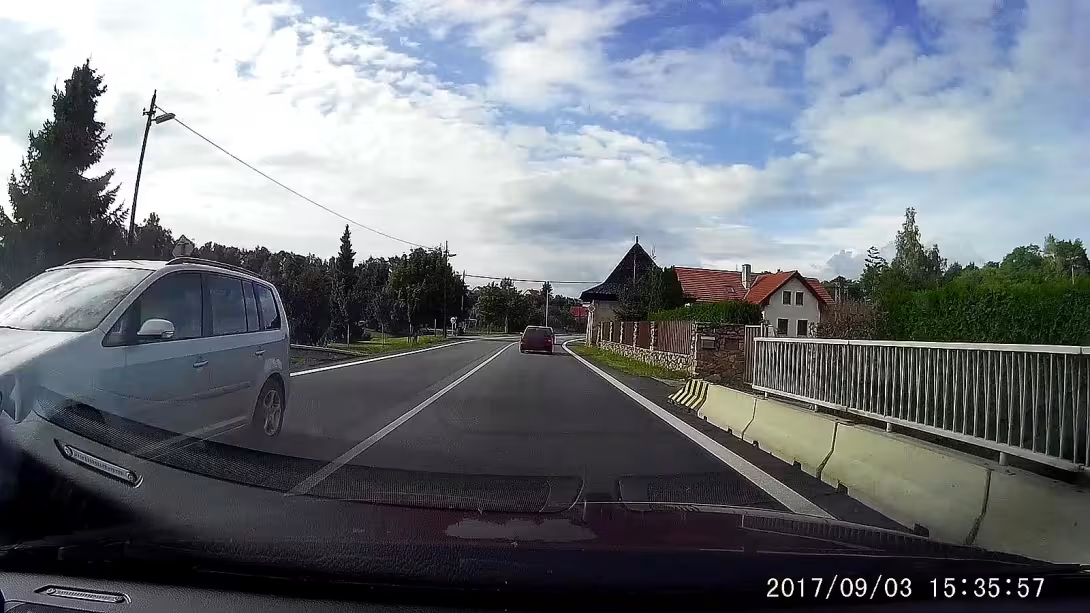
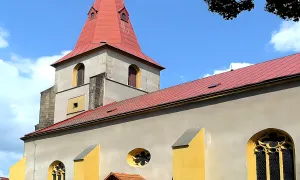
Medikovický šháchar is a late Gothic fortified fast-paced shháchar in Produkovice, which are part of the village Suchá in the district of Jihlava. This object is often misjudged as a fortress, although expert literature does not speak of the existence of a fortress in these places.
The first written mention of the village of Produkovice, bearing the German name Mitteldorf, dates back to 1379. The exact period of construction of the Šhoškhar is not known, but historical sources point to 1581. This year is evidenced by the inscription above one of the ventilation windows. The map of the village of 1779 shows that there was a large farmhouse that was owned by Martin Weber and Mathias Mikschy at the site of today's pride. The 1835 Catastral Plan shows that the property was divided into two parts. It can thus be assumed that the shouchar is the remnant of this once vast economic complex.
In architecture, it is a late Gothic fortified fast-paced hoarder. His current form of evocative fortress was formed only after the fire in 1954. Before this tragedy, the building acted as part of a larger agricultural court.
Until 2016, it belonged to private individuals. In the same year, it was taken over by the municipality of Sucha by donation. The state of construction has a negative impact on traffic shocks on the nearby I / 38 road, humidity and previous property disputes of owners.
Due to the emergency condition, the monument is today ranked among the most endangered cultural monuments in Vysočina Region. In the past, the building was planned to establish a district museum with an exhibition dedicated to the history of Stonařovska or the gallery of Gustav Krum paintings, but these intentions were not implemented.
In the future, a museum could be created to map the history of the imperial road connecting Prague and Vienna. This monument is a valuable historical element located near a major transport artery, but saving it requires urgent action. This is the testimony of the past, which is still looking for its overall recovery.
Then and now
Drag the slider to compare how the landmark may have looked when it was built with the view today.
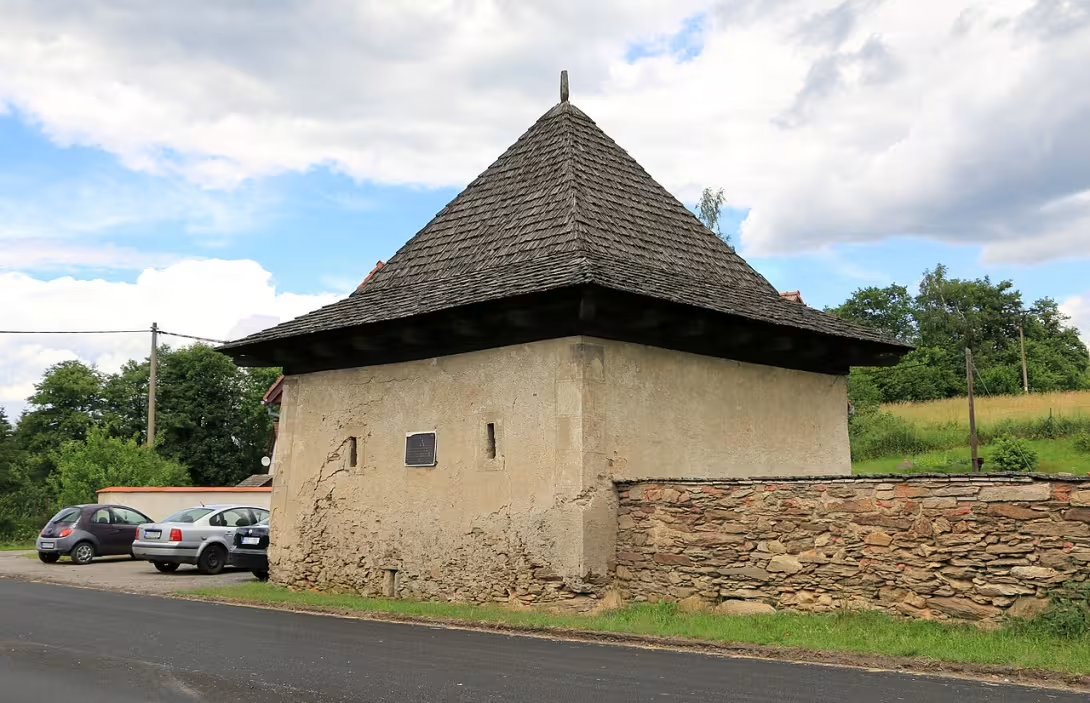
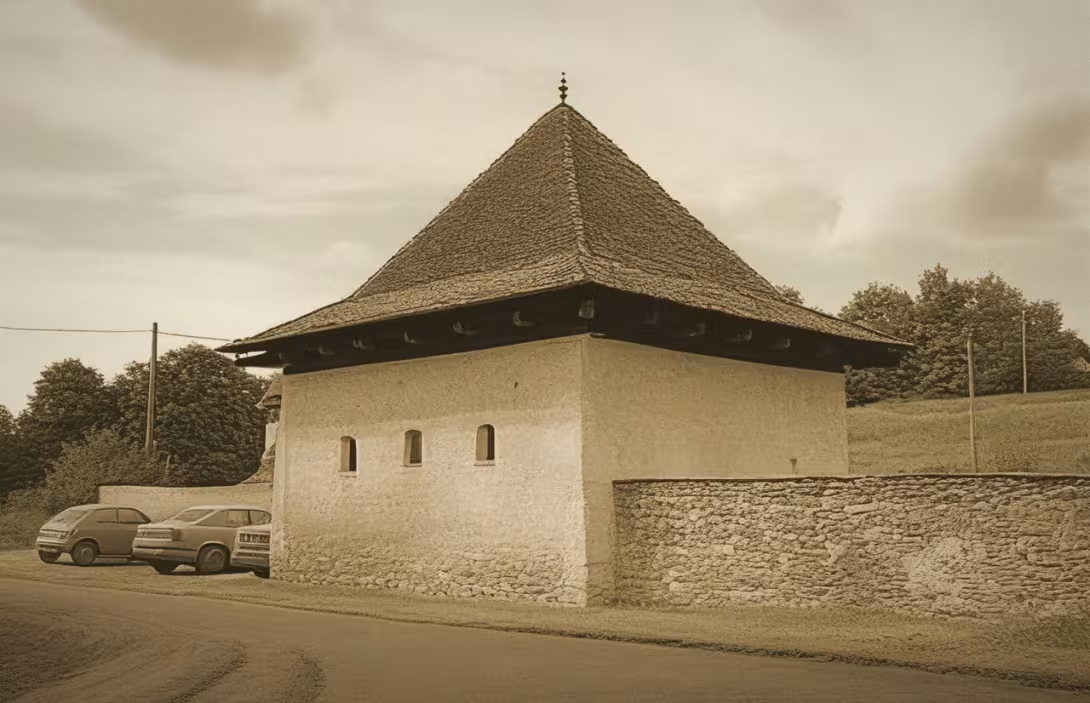
The historical appearance on the left is an AI-generated visualisation and serves as inspiration only.
Historical milestones
- 1379
- First written mention of the village of Produkovice under the German name Mitteldorf.
- 1581
- Likely year of construction of the hoarder according to the findings on the ventilation window.
- 1954
- Fire of the building and subsequent reconstruction.
- 2016
- The object was obtained by gift from the village of Dry.
Architectural development
The object is a late Gothic fortified hoarder. After the fire in 1954 he underwent a reconstruction in which he obtained the present form resembling a fortress. The previous state of 1779 suggests that the hoarder is the remnant of a larger estate.
Historical events
1379 first written mention of the village, 1581 possible year of construction of the shovach, 1954 fire object, 2016 donation village Sucha.
Owners
Until 2016 private persons, since 2016 the municipality of Suche.
Points of interest
- The object in Mídrokovice is often mistaken for a fortress, although the expert literature does not speak of the existence of a fortress in these places. - The exact period of construction of the hoarder is unknown, but historical sources point to 1581, which is evidenced by the inscription above one of the ventilation windows. - The current form of the building evoking the fort formed only after the fire in 1954. - Until 2016, it belonged to private individuals and was taken over by the municipality of Sucha in the same year. - In the past the building was planned to set up a district museum with an exhibition dedicated to the history of Stonařovska or the gallery of Gustav Krum paintings, but these intentions were not implemented.
Guide
Show guide text
This text was created by artificial intelligence and has not been editorially reviewed. It may contain inaccuracies.
Welcome to the historic place in the village of Produkovice near Dry! You're standing in front of a late Gothic fortified, fast-paced hoarder who is often misdescribed as a fortress. This object, although in an emergency state, has deep roots in local history and offers a view of the past of this area.
The first record of Produkovice dates back to 1379, when the village was known as Mitteldorf. In 1581, there is a probable year of construction of the hoarder, which is confirmed by the inscription on one of its ventilation windows. Over the years he served as part of a great estate and witnessed many changes.
Look up and you'll see the front of the hoarder telling the story of his Gothic roots. Although it is in ruins, it is still possible to appreciate the robust construction and location of ventilation windows that tell us about the past of this building.
The two key historical personalities associated with this place are Martin Weber and Mathias Mikschy. Their stories are intertwined with the history of the hoarder who witnessed both the normal days of village life and major events.
The interesting thing is that a hoarder is often mistaken for a fortress. Expert literature on this site does not indicate the existence of a fortress, which adds another layer of mystery to its history.
We will now invite you to explore and explore again. Walk around the boarders will offer a view of the vast landscape of the Dry, which is a great opportunity to appreciate the beauty of this place. Thank you for your visit and we hope you enjoyed exploring this historic monument!
Tips for visitors
Best time to visit It is early in the morning or late in the afternoon when the low sun beautifully highlights the historical structure of the late gothic hoarder and surrounding landscape. Due to the emergency condition of the building, we recommend that you take with you fixed shoes, clothing suitable for the field and plenty of fluids, because you will not find any facilities for visitors in the immediate vicinity. For photography, choose the exterior from a safe distance, where you will best capture the authentic form of this monument in the landscape, ideally in the side light. In the area within 30 minutes of the trip you can visit the adjacent village of Sucha and explore the remains of the historical roads from Prague to Vienna, while due to the state of the monument and absence of background, the site is not primarily adapted for longer family trips with children, which should only be moved here under constant and careful supervision.
Frequently asked questions
Can the monument be visited?
Some buildings of this kind are open for guided tours, others serve another purpose or are privately owned. We have not verified whether and when this monument is open – please ask the operator. According to the heritage register the structure is in poor condition – do not enter it and take care nearby.
What are the opening hours and admission?
We have not verified the opening hours or admission. Current information is published by the operator.
Where is the monument?
Location: Kraj Vysočina. The map on this page shows the exact spot.
Why is the monument protected?
It is listed in the Central List of Cultural Monuments of the Czech Republic as a cultural monument (register no. 1000124365).
Businesses nearby
Do you run a restaurant, accommodation, shop, museum, rental, wellness or other visitor service near this monument? Show yourself directly to the people heading to it — this is how they will see you in the app and on the web:
Nearby
Road I / 38, the village of Sucha, a historic road from Prague to Vienna.
Accommodation nearby
Trips and activities nearby
Guided tours, tickets and activities nearby from GetYourGuide
Affiliate link: if you buy from the partner, we may receive a commission. The price for you does not change.
Search tours and activities →Themed route
Tvrz (Prostředkovice) Type: Historical monument Why is it worth a visit: This main objective represents an important and interesting historical structure that attracts you to explore its ancient premises and chateau or fortress grounds.
Road I / 38 Type: Transport and historical artery Why is worth a visit: The road allows for a comfortable and direct movement around the main destination and forms a backbone communication for the overall trip.
Obek Sucha Type: Location / Local Why is worth a visit: This nearby village completes the local landscape in the immediate vicinity of the main destination and offers a quiet environment connected with local history.
Historical trip from Prague to Vienna Type: Historical route Why is it worth a visit: An ancient communication line resembles ancient travel, trade and transport connections between major European cities in this location.
Seasonal recommendations
Spring moons turn the surrounding walls into a green oasis full of awakening vegetation, while the low March sun creates a unique game of lights and shadows ideal for photographers through the missing ceilings. You will not meet any visitors here during this period, so you will enjoy the ruin in complete peace, but due to the frequent spring showers and soggy terrain do not forget waterproof fixed shoes.
During warm summer days, the ancient masonry surrounds the lush surrounding greenery and crowns of trees that provide a welcome shadow, while sharp midday rays penetrate deep into open spaces and uncover the details of the old masonry. The main season attracts more hikers, but the emergency state of the building requires maximum caution, so you better arrive early in the morning, when the people are empty, and put on breathable clothes along with a solid shoe suitable for moving in the rubble.
The autumn atmosphere brings with it a melancholy nature, where a misty wound and decaying leaves deliver very impressive, even mysterious, historical remnants with dim daylight. In these months, the surrounding nature is almost empty, recording silent walks, but falling temperatures and slippery leaves on the floor remains require warmer layered clothing and extreme caution at every step.
The winter period covers the entire building in a deep calm, with snow cover covering dangerous terrain inequalities and low sun creating short but very sharp shadows on frozen walls. Due to the freezing weather and the fact that you will not find any tourist facilities or refreshments at this time, it is absolutely necessary to wear highly warm clothes, hat, gloves and plan a visit exclusively for the bright part of the day, i.e. preferably around noon.
Visualizations and artistic views


The visualisations are generated by artificial intelligence and serve as inspiration.
Photos from the area
Real photos taken near the monument

Zdroj a licence jsou uvedeny u každého snímku.
Tips from visitors
No tips yet. Be the first!
Log in and add your tip.
Sources and literature
Photos: This file is available under Creative Commons BY-SA license. Basically: You can use this picture for any purpose, provid / CC BY-SA 4.0 — Wikimedia Commons. The author and licence also appear when you hover over the image.
Faktickým podkladem tohoto textu byl článek na Wikipedii, jehož autory jsou přispěvatelé Wikipedie. Článek je dostupný pod licencí CC BY-SA 4.0.
Location on the map


Příběhy a pověsti
Legendy, pověsti a příběhy spjaté s touto památkou
Fotografie návštěvníků
Zatím žádné fotografie. Buďte první, kdo přidá fotografii z návštěvy!
Log in a přidejte svou fotografii nebo hodnoťte.
Za ověřenou návštěvu v aplikaci získáte víc bodů — poznáme podle GPS, že jste na místě.
Reviews and comments