



tvrz Šabina Fortress
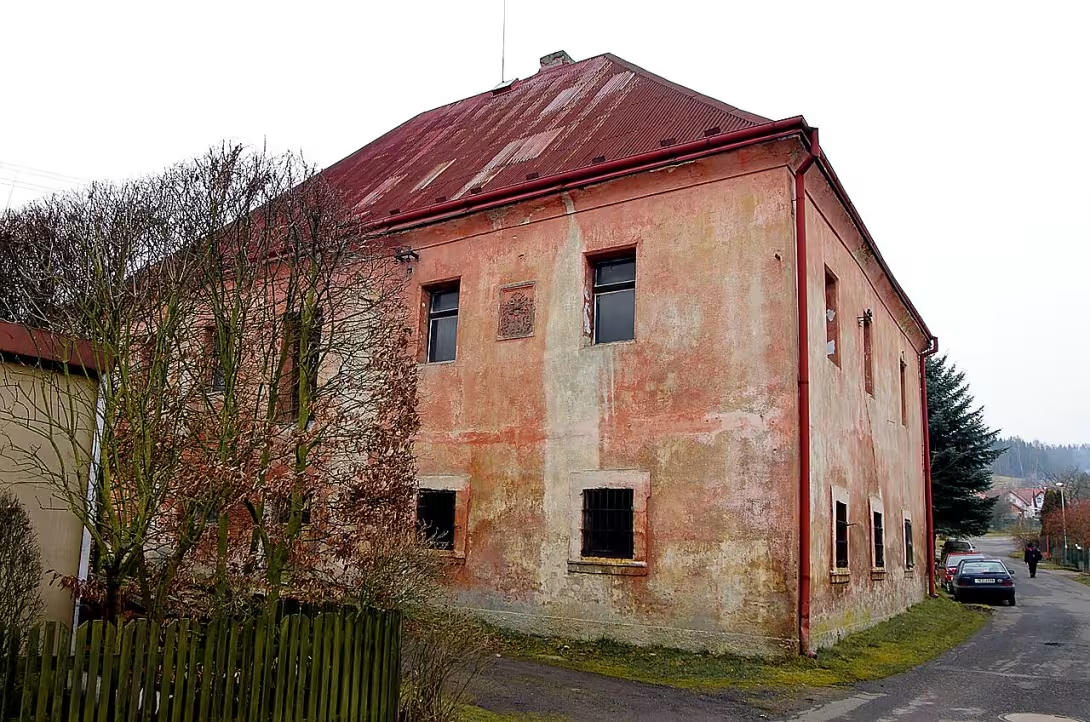
Šabina is a Renaissance castle located in the village of Šabina, within the Sokolov District of the Karlovy Vary Region. Originally built as a Gothic fortress, it was transformed into its current form during the 16th century. The castle has served various noble families over the centuries and is now recognized as a cultural monument since 1963. Its historical significance lies in its architectural evolution and its role as an administrative and economic center.
The origins of Šabina trace back to either the Pergler or Stolc family, who initially constructed it as a Gothic fortress. Historical sources suggest that the Perglers likely used it as their administrative seat before the Stolcs acquired it in 1551 after the defeat of the Bohemian Revolt. The castle's transformation into a Renaissance structure occurred during the 16th century, reflecting broader cultural and architectural trends under Habsburg rule.
Architecturally, Šabina began as a late Gothic fortress but underwent significant renovations in the Renaissance style during the 16th century. This period saw the introduction of a richly profiled hammerbeam ceiling with cross and star motifs, characteristic of the transition from Gothic to early Renaissance styles. Later, in the mid-18th century, the Nostic family made baroque modifications, including changes to window frames and interior decorations. The castle retains two original portals from its early history, adding to its architectural interest.
Ownership of Šabina has changed hands several times throughout its history. Initially held by the Perglers in the early 16th century, it was granted to Mikuláš Štolc ze Simsdorfu by Ferdinand I in 1551. Following the Battle of White Mountain, Bartoloměj Brunner z Vildenavy acquired it. In 1765, the Nostic family took ownership and integrated it into their Falknov estate. These transitions reflect shifts in noble power dynamics over time.
Key events at Šabina include its designation as a cultural monument in 1963, highlighting its historical and architectural significance. The castle's Renaissance style is particularly notable for its hammerbeam ceiling with intricate designs. A relief of the Stolc coat of arms, featuring the initials G.S.V.S., was added after 1567, marking an important period in its history.
Today, Šabina stands as a testament to its rich past. Although it has been used variously as a granary and storage facility, it is now preserved as a cultural monument. Visitors can appreciate its architectural features and historical significance, making it a worthwhile destination for those interested in Czech heritage. The castle's location near the Ohře River adds to its charm, inviting exploration of this remarkable site.
Then and now
Drag the slider to compare how the landmark may have looked when it was built with the view today.
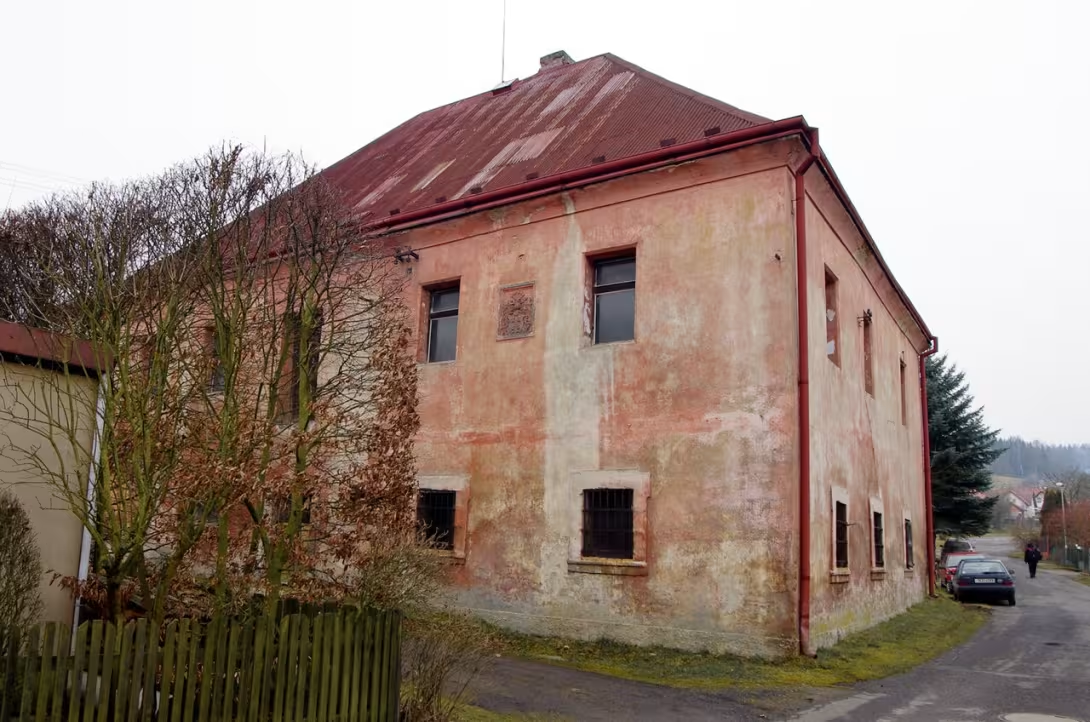

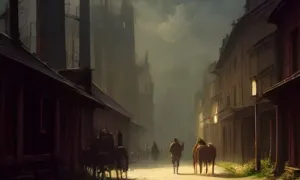
The historical appearance on the left is an AI-generated visualisation and serves as inspiration only.
Historical milestones
- kolem 16. století
- Transformation into a Renaissance fortress
- 1551
- Taken over by the Štolc family after the defeat of the Bohemian Revolt
- kolem poloviny 18. století
- Baroque modifications by the Nostic family
- 1963
- Designated as a cultural monument
Architectural development
Šabina began as a late Gothic fortress and underwent significant renovations in the Renaissance style during the 16th century. Baroque modifications were made by the Nostic family in the mid-18th century, including changes to window frames and interior decorations. The castle has retained two original portals from its early history.
Historical events
In 1525, Václav Pergler was recorded as the owner.
After the defeat of the Bohemian Revolt, Ferdinand I granted Šabina to Mikuláš Štolc in 1551.
Post-White Mountain Battle, Bartoloměj Brunner acquired it.
In 1963, the castle was designated a cultural monument.
Owners
Perglerové z Perglasu in early 16th century
Štolcové ze Simsdorfu from 1551
Bartoloměj Brunner z Vildenavy after the Battle of White Mountain
Nosticové acquired it in 1765
Points of interest
- The transformation of Šabina from a Gothic fortress to a Renaissance castle reflects the broader cultural shift in Bohemia during Habsburg rule, illustrating how political changes influenced architectural styles.
- Despite its turbulent history and multiple ownerships, Šabina retained two original portals from its early history, showcasing the blend of Gothic and Renaissance elements that make it unique among Czech castles.
- The relief of the Stolc coat of arms with the initials G.S.V.S. added after 1567 is a rare example of heraldic art in the region, symbolizing the castle's connection to noble families and their legacies.
- In the mid-18th century, the Nostic family made baroque modifications to Šabina, including changes to window frames and interior decorations, highlighting how successive owners left their mark on its architecture over centuries.
- Although it has been repurposed as a granary and storage facility in more recent times, Šabina's designation as a cultural monument in 1963 underscores its enduring historical significance and the efforts to preserve Czech heritage.
Guide
This guide is narrated by a synthetic voice generated by artificial intelligence.
Show guide text
This text was created by artificial intelligence and has not been editorially reviewed. It may contain inaccuracies.
Šabina is a Renaissance fortified manor that was created by converting an older Gothic fortress. It stands in the village of the same name in the Sokolovsko region, on the right bank of the Ohře river. Not far away, a footbridge crosses the river at the site of a former ferry.
Who built the original Gothic fortress is uncertain. It could have been the Perglers of Perglas, or the Štolcs of Simsdorf. Historians tend to favor the Perglers, because according to them, the wealthy Štolcs would have built a more impressive residence. At the beginning of the sixteenth century, the village was held by Vilém Pergler of Perglas, the Lokety castellan. In the year fifteen twenty-five, Václav Pergler is listed as the owner.
After the defeat of the Estates Rebellion, King Ferdinand the First leased Šabina in fifteen fifty-one to Mikuláš Štolc of Simsdorf, the Lokety judge. His property was later divided among three sons, and in fifteen sixty-seven, the middle son Jiří acquired the village together with the fortress. After the Battle of White Mountain, the Štolcs' estates were confiscated. Šabina was then given to Bartoloměj Brunner of Vildenau, a counselor of the royal appellate court in Prague.
After the Thirty Years War, the fortress lost its importance as a fortified residence. However, it continued to serve economic and administrative purposes, and owners changed hands. In sixteen fifty-one it was owned by Colonel Jan Jakub Pirovano, and three years later it belonged to the Kynšperk estate of the Metternichs. In seventeen sixty-five the Nosticové family acquired the village and attached it to their Falknov estate. They renovated the fortress in the Baroque style.
Until approximately eighteen seventy the fortress functioned as an inn. In eighteen ninety-one, after renovation, a single-class village school moved in here, along with the teacher's apartment. The school remained there until nineteen four, when a new two-class school opened in the village. Then a baker named Jakob ran a bakery in the fortress. After nineteen forty-eight it served a state farm as a granary and storage. After the Velvet Revolution it passed into private hands. It has been a cultural monument since nineteen sixty-three and its condition today is described as dilapidated.
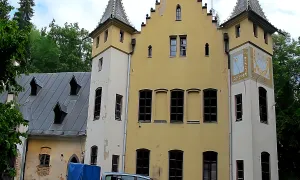
The fortress is a freestanding brick single-story building with a rectangular floor plan of roughly nineteen by thirteen point eight meters and a hipped roof. On the northeastern façade, between the windows, there is a relief coat of arms of the Štolcs with the initials of Jiří Štolc. It was placed here after fifteen sixty-seven.
The ground floor rooms have richly profiled comb vaulting arranged into cross and star patterns. This is typical of the transition from Gothic to early Renaissance. Two valuable original portals have also been preserved on the ground floor. From the time of the Nosticové comes part of the window frames and wall painting in the large hall on the first floor, which is whitewashed today.
Tips for visitors
The best time to visit Šabina is during late spring or early autumn when the weather is mild, making it ideal for exploring both the castle grounds and the surrounding Bohemian countryside. During these months, you can enjoy pleasant temperatures without the crowds that often accompany peak summer tourism. Additionally, the natural light during this period enhances the beauty of the Renaissance architecture.
It's advisable to check current public transport schedules online for the most accurate information.
When visiting Šabina, it is recommended to bring comfortable walking shoes as there are several areas of the castle grounds that may require some walking. A camera or smartphone with a good camera is essential for capturing the stunning views and architectural details. Additionally, consider bringing water and snacks, especially if you plan on spending extended time exploring.
For photography enthusiasts, the best spots at Šabina include the main courtyard and any elevated viewpoints that offer panoramic views of the Ohře River and surrounding landscape. The soft morning or late afternoon light provides excellent conditions for capturing the castle's intricate details and the serene countryside backdrop.
Nearby attractions within a 30-minute drive from Šabina include the historical town of Sokolov, known for its charming architecture and cultural events. Additionally, visitors can explore the natural beauty of the nearby Bohemian Forest, offering hiking trails and picturesque landscapes perfect for outdoor enthusiasts.
Frequently asked questions
Can the monument be visited?
Some buildings of this kind are open for guided tours, others serve another purpose or are privately owned. We have not verified whether and when this monument is open – please ask the operator. According to the heritage register the structure is in poor condition – do not enter it and take care nearby.
What are the opening hours and admission?
We have not verified the opening hours or admission. Current information is published by the operator.
Where is the monument?
Location: Karlovarský kraj. The map on this page shows the exact spot.
Why is the monument protected?
It is listed in the Central List of Cultural Monuments of the Czech Republic as a cultural monument (register no. 1000134682).
Businesses nearby
Do you run a restaurant, accommodation, shop, museum, rental, wellness or other visitor service near this monument? Show yourself directly to the people heading to it — this is how they will see you in the app and on the web:
Events nearby

Zdroj akcí: otevřená data měst a obcí ČR (Národní katalog otevřených dat) a kalendář akcí Národního památkového ústavu.
Nearby
Šabina is located near a pedestrian bridge over the Ohře River and was historically connected to a ferry crossing. The surrounding landscape includes typical Bohemian countryside.
Accommodation nearby
Trips and activities nearby
Guided tours, tickets and activities nearby from GetYourGuide
Affiliate link: if you buy from the partner, we may receive a commission. The price for you does not change.
Search tours and activities →Themed route
Tvrz Šabina (hlavní cíl) - Tvrz je dobře zachovalá a nabízí pohled do historie regionu. Její pozemek je obklopen typickou českou krajinou.
Pěší most přes Ohři - Nachází se nedaleko tvrze a nabízí krásný výhled na řeku. Historicky byl spojen s pravidelným převozem.
Šabinský rybník - Malý rybník v bezprostřední blízkosti tvrze, který dodává místu klidnou atmosféru.
Šabina Castle (main attraction) - The castle is well-preserved and offers a glimpse into the history of the region. Its grounds are surrounded by typical Czech countryside.
Pedestrian Bridge over the Ohře - Located near the castle, it provides beautiful views of the river. Historically, it was linked to regular ferry services.
Šabina Pond - A small pond in close proximity to the castle that adds a tranquil atmosphere to the area.
Seasonal recommendations
Jaro
Spring is the ideal time to visit Šabina Castle because nature around it begins to awaken from its winter slumber, offering beautiful green hues and budding flowers. The atmosphere is full of optimism and hope for new beginnings. If you want to take advantage of this season for a visit, we recommend coming before school holidays start so you can explore the castle without large crowds of tourists. Don't forget your walking shoes and comfortable clothing that will allow you to comfortably stroll around the castle and its surroundings.
Léto
Summer is the main season for visitors to Šabina Castle. Come early before school holidays start to explore the castle without large crowds of tourists. Don't forget sun protection and comfortable clothing that will allow you to comfortably stroll around the castle and its surroundings.
Podzim
Fall is a beautiful season for visiting Šabina Castle, as nature around it takes on hues of gold, orange, and brownish-red. The atmosphere is calm and quiet, allowing you to fully immerse yourself in the history and magic of the castle. If you want to take advantage of this season for a visit, we recommend coming later than the start of the main school season so you can explore the castle without large crowds of tourists. Don't forget warm clothing, as it can get chilly during fall nights.
Zima
Winter is the most pleasant time for visitors to Šabina Castle because there is peace and quiet. The atmosphere is calm and serene, allowing you to fully immerse yourself in the history and magic of the castle. Don't forget warm clothing and comfortable shoes that will allow you to comfortably stroll around the castle and its surroundings.
Visualizations and artistic views


The visualisations are generated by artificial intelligence and serve as inspiration.
Photos from the area
Real photos taken near the monument


Zdroj a licence jsou uvedeny u každého snímku.
Tips from visitors
No tips yet. Be the first!
Log in and add your tip.
Sources and literature
Photos: Lubor Ferenc / CC BY-SA 3.0 — Wikimedia Commons. The author and licence also appear when you hover over the image.
Faktickým podkladem tohoto textu byl článek na Wikipedii, jehož autory jsou přispěvatelé Wikipedie. Článek je dostupný pod licencí CC BY-SA 4.0.
Location on the map
More monuments – Karlovarský kraj
Show all in the region
Příběhy a pověsti
Legendy, pověsti a příběhy spjaté s touto památkou
Fotografie návštěvníků
Zatím žádné fotografie. Buďte první, kdo přidá fotografii z návštěvy!
Log in a přidejte svou fotografii nebo hodnoťte.
Za ověřenou návštěvu v aplikaci získáte víc bodů — poznáme podle GPS, že jste na místě.
Reviews and comments