



Tvrz Velké Svatoňovice Fortress
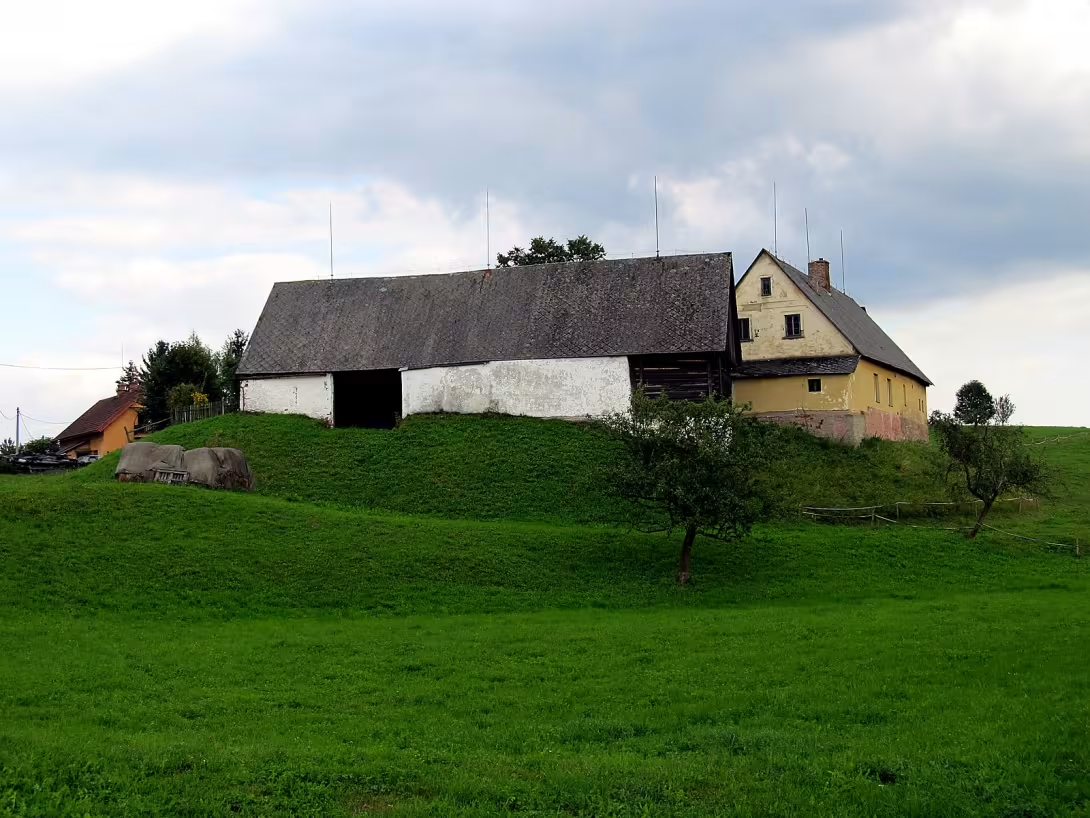
Tvrz Velké Svatoňovice is a former medieval residence in the village Velké Svatoňovice. It was founded probably in the 13th century and is today protected as a cultural monument along with the remains of the fortifications. This object, also called Na Valech or Valovský farmhouse, represents an important historical reminder of the old settlement. On its foundations today stands a farmhouse surrounded by original walls.
Exact evidence of the foundation of the fort does not exist. It is assumed, however, that it was created during the thirteenth century before the nearby chateau of Vismburk grew. According to the old legend, it was built in 1009 by the flag of Bartholomew Svatonou. The birth of the monument falls into the historical context of the 13th century. Back then, in the last Přemyslovovci, the settlement was dynamically developed, new noblemen 'houses and chateaux were established, Gothic colonization was taking place in Europe and noble power was strengthened.
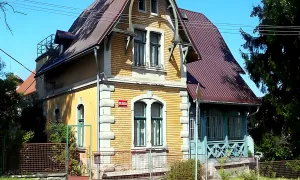
The original fort has been preserved mainly by terrain walls and underground areas. Beneath the courtyard there are Gothic cellars with a vaulted vault. In the north-east front of the yard used to be the original entrance and another, now buried cellar is located under the barn. On the foundations of the extinct building was built a farmhouse with a saddle roof, which was called Valovský according to the wallets surrounding the building.
At the end of the 13th century, the Svatonovice fell to the masters of Švábenice. The first written mention dates back to 1357, when Albert ze Skalice was based here, which was later also written as Albert of Svatonovice. On 26 July 1386, the village joined the Vienna estate, which lost its importance and disappeared. In later centuries, the farm was affected by war events. On 10 June 1762, during the seven-year war, it was fired by Russian Cossacks, but subsequently restored.
Key events are linked to 1009 according to the legend of the founding of the flag of Bartholomew Svatonou, to the year 1357 associated with the first written mention and seat of Alberto of Skalice, the year 1386 with the connection to the Vienna estate and 1762 when the farm was destroyed by Russian Cossacks. The remains of the nearby castle Vizmburk are also located in the vicinity of the monument.
Today, the whole complex is a protected cultural monument. Visitors can see here, next to the farm with a saddle roof, the original defensive walls and gothic cellars with a vaulted vault. The tour of this place offers a view of the building development from medieval beginnings to younger reconstructions to traces marked by a seven-year war. Get to know personally the history written in the terrain and underground areas of the Great Svatonovice.
Then and now
Drag the slider to compare how the landmark may have looked when it was built with the view today.
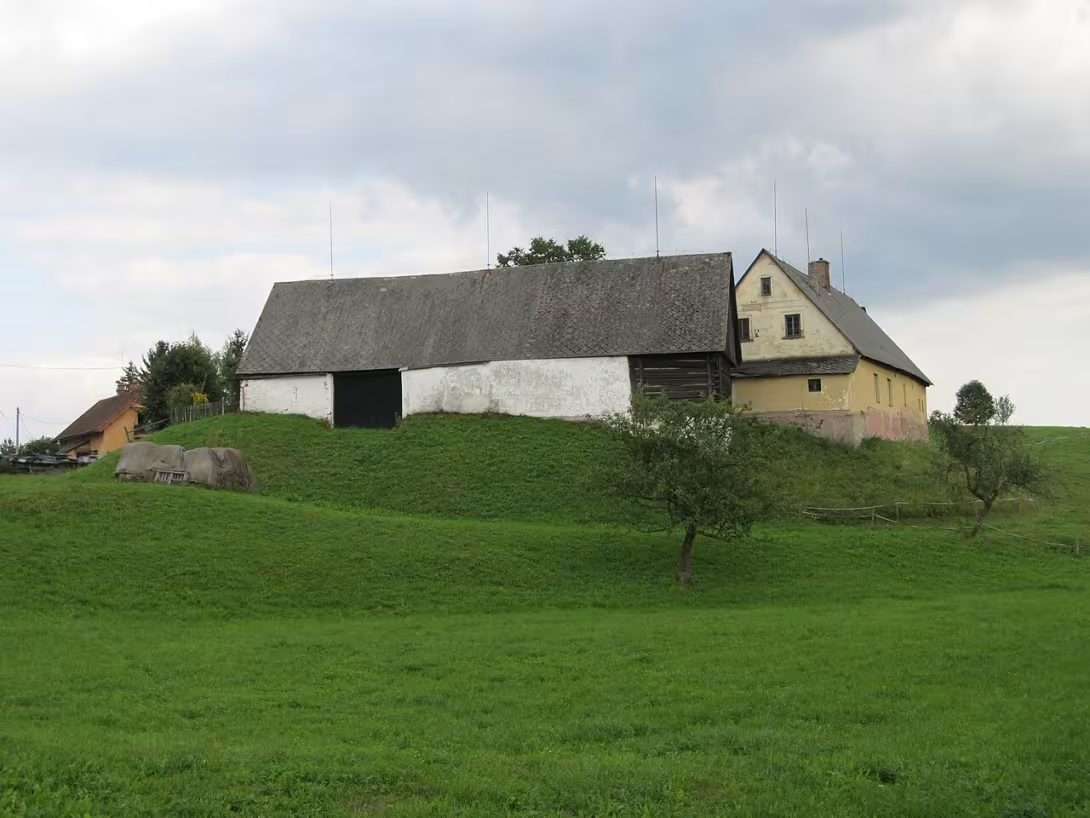

The historical appearance on the left is an AI-generated visualisation and serves as inspiration only.
Historical milestones
- 1009
- According to legend, the fort was built by the flag of Bartholomew Svatonou.
- 1357
- First written mention of Svatonovice, where Albert ze Skalice was based.
- 1386
- The Svatonovice fell to the Visbury estate and the fort lost its meaning.
- 1762
- The farm was burned by Russian Cossacks during the seven-year war and subsequently rebuilt.
Architectural development
The fortress was built probably in the 13th century and protected by defensive walls. After the collapse of the fort, a farm with a saddle roof was built on its foundations. The Gothic cellars were preserved under the courtyard with a vaulted vault, with the original entrance and other, now buried cellars under the barn in the northeast front.
Historical events
1357: First written mention of Svatonovice and the residence of Alberto from Skalice. July 26, 1386: Svatonovice fell to the Vizmorgan estate and the fort lost its meaning. June 10, 1762: The farm was burned by Russian Cossacks during the seven-year war.
Owners
páni ze Švábenic (since the end of the 13th century), Vismorgan Manor (since 1386)
Points of interest
- The fortress was probably founded in the thirteenth century, before the nearby castle Vizmburk, with the old reputation of its creation until 1009. - The original building has until today preserved landscapes, underground spaces and Gothic cellars with a vaulted vault located under the courtyard. - The first written mention dates back to 1357, when Albert ze Skalice was based here, which was later also written as Albert of Svatonovice. - On 26 July 1386, the village joined the Vienna estate, which lost its importance and disappeared. - On 10 June 1762 the farm was burned down by Russian Cossacks during the seven-year war, but subsequently restored.
Guide
Show guide text
This text was created by artificial intelligence and has not been editorially reviewed. It may contain inaccuracies.
Welcome to the Great Svatonovice. Stop for a moment, take a breath and look around you. You're standing right in front of a place that hides hundreds of centuries of stories, although at first glance you may not see any high walls or arrows in the windows. Before you, there is an area that the locals know as a Valovský farmhouse, but under the surface of today's buildings and in the very shape of the terrain, there is something much older. It is a monument that brings us back to the times of knights, flags and the early Middle Ages. What you see today as a quiet rural space was once a strategic point, a fortified seat that, in its time of glory, dominated the surrounding countryside.
Now try to think about what this place looked like hundreds of years ago. Before you there was a medieval fortress, which was probably founded in the 13th century. This is a fascinating detail because this fortress was created probably before the nearby chateau of Vismburk. So imagine this place was one of the first real fortifications in the wider area. History, however, is often confused with legends that provide a place of mystery. If we believe in the old story, the foundation of the fortress goes much deeper into the past, to the year one thousand nine hundred and nine. According to these legends, the fortress was built by the flag of Bartholomew Svatonou, after which the municipality may have also received its name. Although the documents speak of the thirteenth century, the idea of Bartholomew's flag, which stood here over a thousand years ago, gives this place a strange, almost mystical atmosphere.
Now, please pay attention to what you see right in front of you and around you. Notice the shape of the terrain. Tvrz Velké Svatoňovice is no longer a dominant building with a tower, but its trail is still very distinctive in the landscape. Take a look at the field walls surrounding the area. These are the most visible remnants of the original fortification. In the Middle Ages, these grave zones and sprinkled earth muscles were used to protect citizens and property from enemy attacks. It was the first line of defense that combined with the moats made the fort difficult to conquer. Feel these inequalities in the country not as random hills, but as silent witnesses to the ancient architecture of defense.
If you look at the present farm, you realize it's not just next to history, it's right on it. Once the fort lost its original strategic importance, it gradually began to disappear. But people did not leave this place because it was practical and safe. On the basis of the former fortress, a farm was gradually built, which combined the old fortified structure with a new agricultural function. Even if you see the walls of the farm today, beneath your feet, deep below the courting, there are real treasures of Gothic architecture. There are underground spaces and gothic cellars with a characteristic vaulted vault. Even if we don't enter them at the moment, imagine the cold, stone vaults that once used to store supplies and provide shelter in the most difficult times. It is these cellars that are now one of the most valuable elements that survived from the original medieval building to our days.
Let us now stop by the people who once ruled and wrote the history of this place. The first written mention of Svatonovice dates back to a thousand three hundred fifty-seven. At that time Albert ze Skalice was based here. Imagine Albert as an influential man of his time, who managed his estate here and oversaw the order in the vicinity. The fortress was still an important centre of power at the time. However, the fate of the fort changed in a thousand three hundred eighty-six. In this year, Svatonovice joined the Vismov estate. That was a turning point. With the increase in the importance of the castle Vizmburk began to lose its importance. It was no longer the main administrative or military centre; it became rather a dependent part of the larger whole. páni ze Švábenic probably took turns in this period, leaving its mark in the history of the region.
When you look at this place, you might think it's just a quiet corner of the village. But history here was sometimes very cruel and dramatic. Let's move forward in time until the year is seven hundred and sixty-two. Europe was involved in a seven-year war at the time, a conflict of huge scale. It was during this period that Russian Cossacks invaded the Great Svatonovice. Imagine the chaos, the flames, and the fear when these warrior equestrian troops shouted through the countryside. The farmhouse that was already standing at the fort site was burned by Cossacks. Everything that people have built and accumulated here has turned to ashes in a flash. It was a painful ending to one chapter, but a new beginning. The farm was subsequently rebuilt, which shows the incredible persistence of the people who have been bound to this place for centuries.
There is one interesting thing that may interest you. The entire area, including the forest walls and the remains of the fortifications, is today protected as a cultural monument. This means that even if you don't see a monumental chateau here, the state recognises the value of these invisible layers. The mystery remains the exact moment of transition from fortress to farmhouse and of how many other secret spaces are still hidden underground under courting. Each stone and every section of the wave tells the story of how power in the landscape changed, how the chateau of Vismburk prevailed over a small fortress, and how wars came and went while the country remained.
Now that you know what's under the surface of this place, I suggest you walk slowly around the premises. Feel the atmosphere of this place and try in your mind to reconstruct the image of the flag of Bartholomew, Alberto of the Skalice and dramatic scenes with Russian Cossacks. Look at the walls again and realize that they are the only tangible traces of the time this fortress was a proud guardian of the neighborhood.
Thank you for joining me on this short journey in time. I hope you've seen the spirit of history that still lives in this place. Now you can explore the surroundings of the Great Svatonovice in peace and look for other traces of the past that this region offers you. I wish you a pleasant continued journey and many new discoveries. Goodbye.
Tips for visitors
The best time to visit the fortress Velké Svatoňovice is early in the morning or late in the afternoon, when the sunlight supplies the historic remains with an impressive atmosphere and the best light for photography. You can use your car and public transport for transport, first check the current connection in the search engine; park directly on the spot at a suitable storage place in the village. The site tour is suitable for solid footwear, as the terrain around the former medieval fortress also known as Na Valech can be mineral and requires caution. In the vicinity, within 30 minutes of the journey, do not miss the remains of the nearby castle Vizmburk, to which the estate was connected in the 14th century.
Frequently asked questions
Can the monument be visited?
Some buildings of this kind are open for guided tours, others serve another purpose or are privately owned. We have not verified whether and when this monument is open – please ask the operator.
What are the opening hours and admission?
We have not verified the opening hours or admission. Current information is published by the operator.
Where is the monument?
Location: Velké Svatoňovice, Královéhradecký kraj. The map on this page shows the exact spot.
Why is the monument protected?
It is listed in the Central List of Cultural Monuments of the Czech Republic as a cultural monument (register no. 1000126863).
Businesses nearby
Do you run a restaurant, accommodation, shop, museum, rental, wellness or other visitor service near this monument? Show yourself directly to the people heading to it — this is how they will see you in the app and on the web:
Events nearby
Zdroj akcí: otevřená data měst a obcí ČR (Národní katalog otevřených dat) a kalendář akcí Národního památkového ústavu.
Nearby
In the vicinity there are remains of the nearby castle Vizmburk, to which the estate was connected in the 14th century.
Accommodation nearby
Themed route
1.Tvrz Velké Svatoňovice Type: fortress Why is it worth a visit: The main destination of our trip is a historical monument in the village Velké Svatoňovice, which forms the starting point of the whole trip and whose estate was connected in the 14th century to a nearby chateau.
2. Castle Vizmburk Type: castle Why is it worth a visit: In the vicinity there are significant remains of this historic chateau, to which the fort has been attached in the past.
Seasonal recommendations
Spring awakens the surrounding nature of the Great Svatonovice to a new life and the satisfactory state of the historical walls of the fortress works in contrast with the lush greenery very picturesque. The lighting is clear due to the lengthy days, but the morning fog above the nearby meadows gives the place a mysterious atmosphere. During this period you will not meet crowds of tourists, which guarantees a peaceful tour. Wear tight shoes and a waterproof jacket, because the field path to the monument is muddy after winter. The best time to visit is in the morning when the sun warms pleasantly without heating too much.
Summer brings lush vegetation, which partly surrounds the entire area, and the atmosphere is full of living energy in the open air. At noon the sun radiates the stone foundation and creates interesting shadows ideal for photography. The main season brings a little more curiosity, but it is still a calmer target in the shadow of larger tourist centres. We recommend light breathable clothes, headgear and plenty of drinking water because there is no permanent refreshment in the area. The best time for arrival is early in the morning or late in the afternoon, avoiding the biggest heat of the day and enjoying the golden hour.
Autumn turns the landscape into a colorful palette of colors from yellow to dark red, which gives the fort a deep and melancholy mood. The low sun casts long rays, and the morning twinkle on the fallen leaves creates a captivating game of lights and shadows on the old wall. Visitors are dropping sharply at this time, so you will enjoy the memory in complete privacy. Don't forget the warm layered clothes, scarf and windbreaker, as the dry wind can cool quickly. The ideal time for visiting is around noon, when the daily temperatures reach their daily maximum.
Winter covers the Velké Svatoňovice in silence and the snow cover gives aging ruins the nature of fairy-tale corners. The light is very rough in this period, the days are short and early dimming can quickly turn the atmosphere into a freezing romance. You rarely meet tourists here, which will be appreciated by lovers of lonely trips. The need is for quality winter shoes with anti-slip sole, warm gloves, hat and warm jacket. The best time for a tour is early afternoon hours, when there is the best chance of at least a partial brightening of the sky.
Visualizations and artistic views


The visualisations are generated by artificial intelligence and serve as inspiration.
Photos from the area
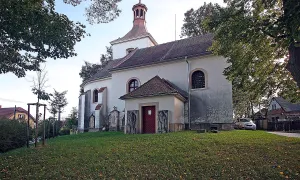
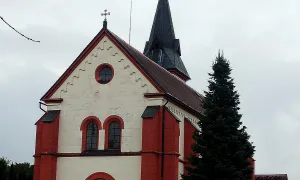
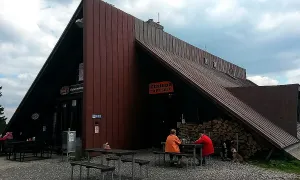
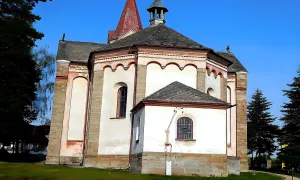
Real photos taken near the monument


Zdroj a licence jsou uvedeny u každého snímku.
Tips from visitors
No tips yet. Be the first!
Log in and add your tip.
Sources and literature
Photos: Ewwwa / CC BY-SA 3.0 — Wikimedia Commons. The author and licence also appear when you hover over the image.
Faktickým podkladem tohoto textu byl článek na Wikipedii, jehož autory jsou přispěvatelé Wikipedie. Článek je dostupný pod licencí CC BY-SA 4.0.
Location on the map
Příběhy a pověsti
Legendy, pověsti a příběhy spjaté s touto památkou
Fotografie návštěvníků
Zatím žádné fotografie. Buďte první, kdo přidá fotografii z návštěvy!
Log in a přidejte svou fotografii nebo hodnoťte.
Za ověřenou návštěvu v aplikaci získáte víc bodů — poznáme podle GPS, že jste na místě.
Reviews and comments