



tvrziště Na Baště v Tihavě Motte
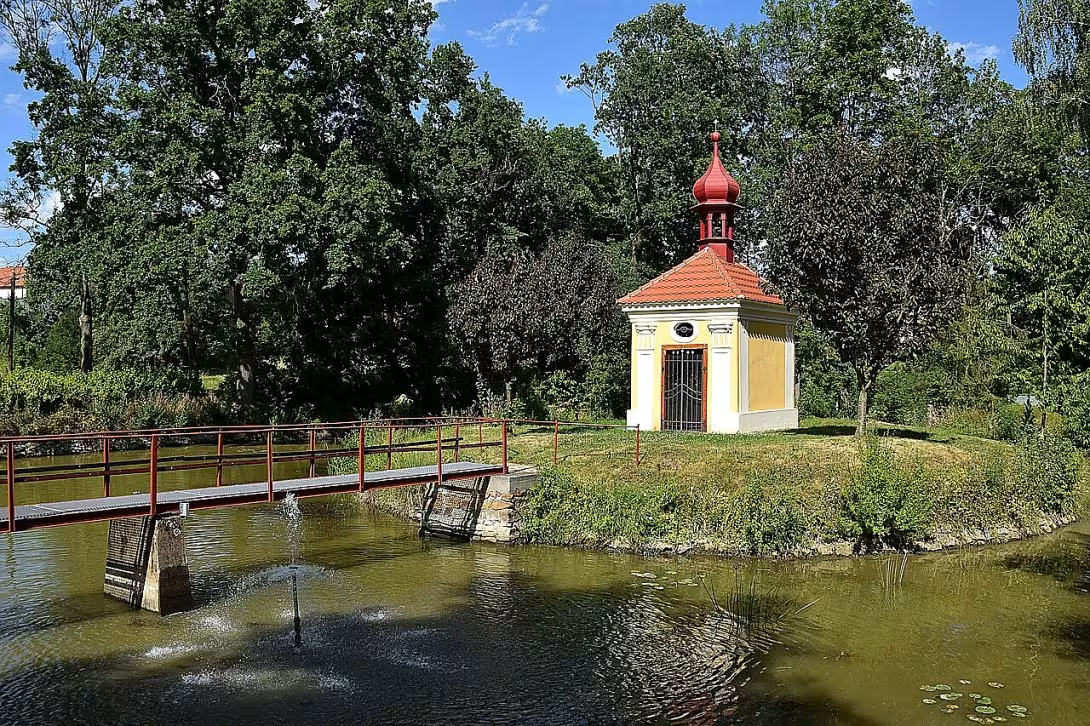
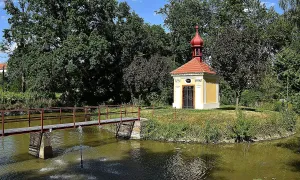
The Castle Na Baště in Tihava near Kotopek is a remnant of the medieval fortress, which was probably the seat of the nobles with a home from Tihava. The area consists of a water moat with a central island on which the chapel of St. John Nepomucký was later built. The original building probably served as an administrative and defence point within local property. Today, the entire complex is protected as a cultural monument.
The Castle Na Baště in Tihava near Kotopek is remarkable by its history and architecture. It was created in the late Middle Ages, namely in the 14th century, when the Czech country was in the period of peak and late goth. The fort was probably the seat of the nobles with a home from Tihava, who held the property in Kotopecki.
The original fort was a water construction with a moat of 8 to 16 metres wide and an external height that could be the rest of the wall. The chapel of St. John Nepomuk was later built on the central island. The fortress was probably the seat of the Mareš of Tihava, which is mentioned in 1393. His successor was perhaps Jan z Tihavy, who inherited his uncle's property in Kotopecki. He died in 1416 at the latest and his property was acquired by the widow Dorota.
At the beginning of the 15th century, the village was divided between two flags, both using the "Tihava" adjective. The first member of the second family was Drslav z Tihavy, which is listed in 1406 as a servant of Zdeněk of Chajna. Soon after he died, and his widow Elizabeth remarried Henry Swan from Švamberk. Another holder was Zdeněk z Koněprus, which sometimes also used the addition from Tihava, mentioned in 1454-1456 and then in 1472. At that time, his family died, and the property fell as death to King Vladislav II. The Lord left it to Nicholas of Landstein. The younger stronghold lost its meaning and eventually ceased to exist. At the beginning of the 16th century, Tihava became part of the Gentile estate.
The Castle of the Bastion is remarkable by its architecture. The original fort was a water construction with a moat of 8 to 16 metres wide and an external height that could be the rest of the wall. The chapel of St. John Nepomuk was later built on the central island.
The Castle Na Baště in Tihava near Kotopek is a cultural monument worth visiting. It is remarkable in its history and architecture and offers an insight into the life of the 14th century nobles. If you're interested in history and architecture, it's worth a visit.
Then and now
Drag the slider to compare how the landmark may have looked when it was built with the view today.
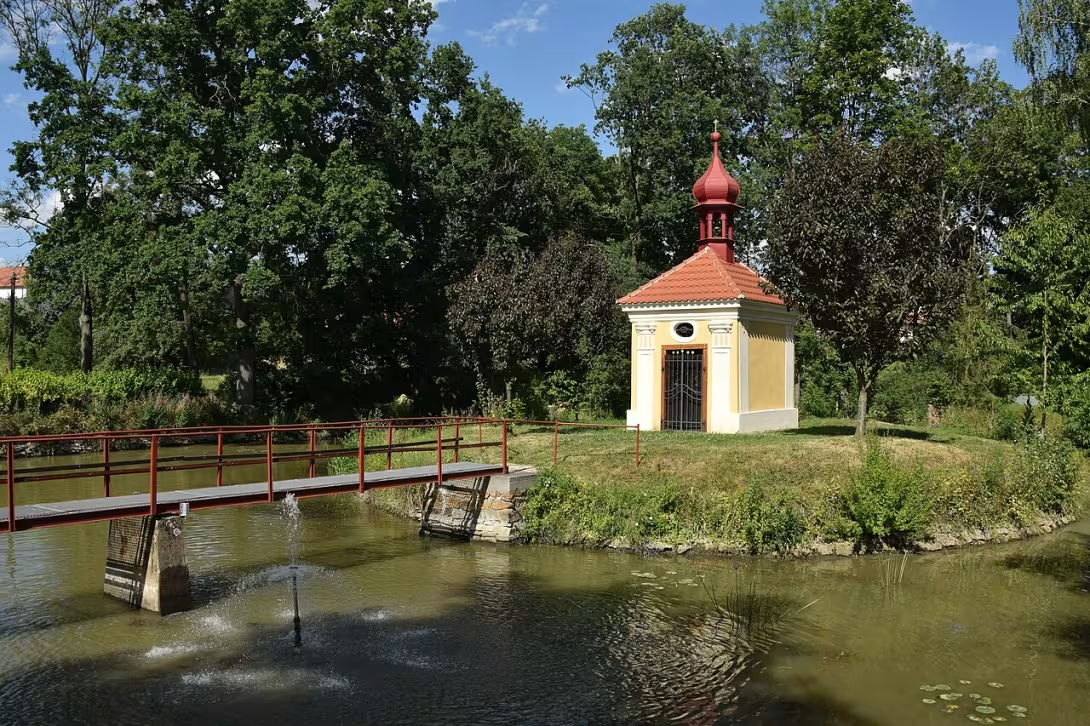
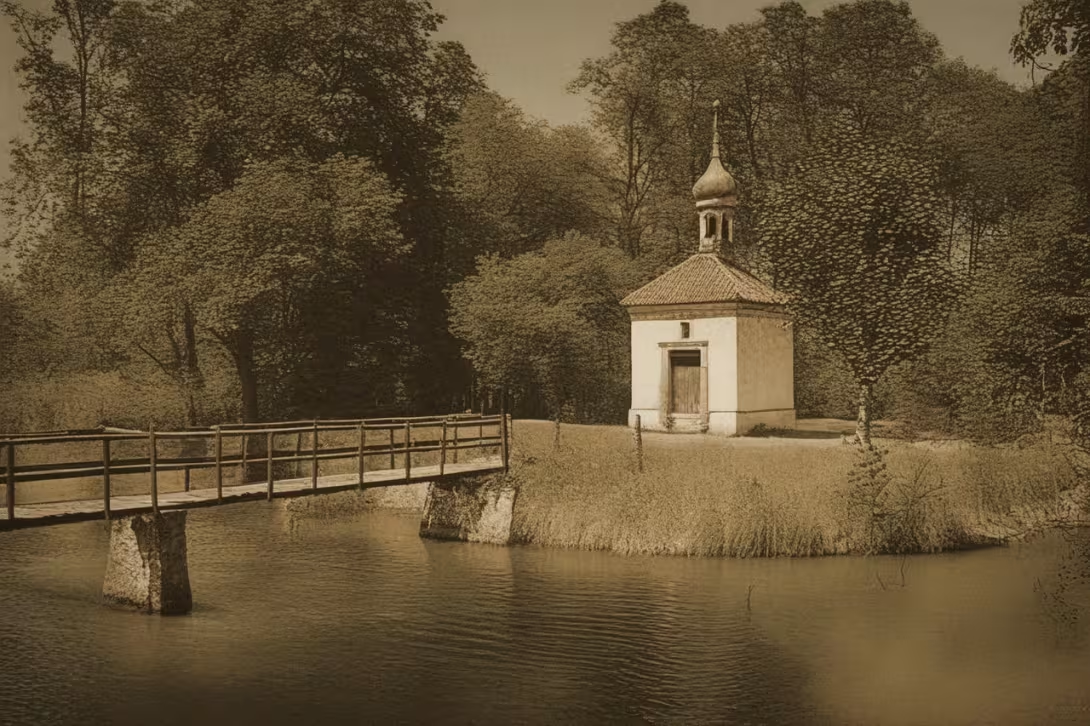
The historical appearance on the left is an AI-generated visualisation and serves as inspiration only.
Historical milestones
- 1393
- Mention of the Maresha of Tihava, the probable residence of the fort.
- 1416
- The latest death date of John of Tihava.
- 1472
- The last mention of Zdeněk of Koneprus as property holders.
- 16th century
- Tihava is becoming part of the Gentile estate.
Architectural development
The fortress was originally a water construction with a moat of 8 to 16 metres wide and an external height which may be the rest of the wall. The chapel of St. John Nepomucký was built on the central island in a later period. The original stronghold died over time and only the fortress remained.
Historical events
1393: mention of Mareshi of Tihava; 1406: mention of Drslav of Tihava as servant of Zdeněk of Chajno; 1472: last mention of Zdeněk from Koneprus in connection with Tihava.
Owners
Mareš z Tihavy (1393), Jan z Tihavy (until 1416), widow Dorota, Drslav z Tihavy (1406), Zdeněk z Koněprus (1454-1472), king Vladislav II, Mikuláš z Landštejna, since the beginning of the 16th century of the bitterness.
Points of interest
- The Castle Na Baště in Tihava near Kotopek is a cultural monument. - The fortress was a water construction with a moat 8 to 16 metres wide and an external elevation. - A chapel of St. John Nepomuk was later built on the central island. - The fort was probably the seat of the nobles with a home from Tihava. - The original fort was the seat of the Mares of Tihava.
Guide
Show guide text
This text was created by artificial intelligence and has not been editorially reviewed. It may contain inaccuracies.
Welcome to Tihava. You are standing in a place where time has stopped and where nature is trying to empower its greenery and calm what once was a symbol of human power and unwavering power. Before your eyes, there is a view that can calm you at first glance, but know that beneath this layer of silence and calm water lies a rich and exciting past. Look around you. Do you see this moat that surrounds this space? It's not just plain water in the landscape that happened to swarm. It's a remnant of something much more powerful that once stood here. You're standing outside the fort of the Bastion. Even though today we see more natural shapes and remains that gradually return to the earth, feel this atmosphere. Feel the calm of this day mixed here with the echo of a long time ago when this place served as a firm hand in this area, a place to protect, decide and show the power of those who lived here.
To truly understand why this place is so special, we must go back deep into the past together, to a time when the borders between the knights' worlds and ordinary people have not yet been so clear. The first clue we can find in our old records and documents is in the year one thousand thirty-three. That's when the name of Mares from Tihava appears in the written records. He was probably the first man we could connect to this mansion. Imagine him, at the time when security was the greatest value, deciding the fate of his surroundings and building the foundations of his home. Later, in the year of one thousand and four hundred and sixteen, the storytellers recorded the end of the life of John of Tihava, another important man associated with this family. These places were not just ordinary homes; it was a centre of power, a place that served as an important point for the management of the surrounding property and as a defensive point for all those who lived under the protection of this mansion. In the sixteenth century, Tihava's fates continued to intersect with wider history, when this area became part of the Gentile estate. With this, this small but incredibly important fortress became part of the much larger political and economic system that controlled these countries at the time.
Now pay attention to what you see right in front of you, and try to reconstruct the shapes that once stood here in the eyes of imagination. Although the main buildings are no longer in their original state, their trail is indestructible in the landscape. Notice this moat in particular. This is not just a narrow dam, but a wide water road, which, in its greatest glory, measured between eight and 16 metres. Imagine the width, the obstacle any enemy would have had to try to attack to get to the very heart of the fort. This water was the first and most important line of defense. Now look in the middle. You see that little island in the middle of the water? This is the very core of this place. It was on this island, in a place that was once the safest place where people could hide from danger, that the chapel of St. John Nepomuk was later built. It is a fascinating connection - a place that was once meant to fight, to defend and to maintain power has become a place of spiritual peace and prayer over time. This chapel gives the whole complex its present, a little mysterious and sacred touch. Feel the natural elements, such as water and earth, intermingle beautifully with the human work left here.
When you look at these shapes in the landscape, remember the people who used to walk here on the same paths and see this space as their home. Tihava wasn't empty. It was full of names that today in our books evoke memories of ancient times. In addition to the mentioned Mareš and John, there were other important people whose names are connected to this place. Drslav z Tihavy, Zdeněk z Koněprus, which in the year of the first thousand four hundred seventy-two was the last known holder of this property. Each of these names represents its own story, its own ambition, and perhaps even the fear of the unknown. We can also think of figures like Vladislav II or Mikuláš z Landštejna whose names are closely associated with this time and this region. These people weren't just names in papers; They were people with their own desires who perceived this fortress as their fortress and their honor. Imagine their everyday life, their decision-making and how much it mattered that these walls and these waters remain intact and that their family name remains safe.
There is one thing that might interest you and leave you in deep consideration. It's the incredible transformation this place has undergone. How does it happen that a place designed to fight, surrounded by such a broad moat of water, to reflect attacks and defend against the enemy, will become a place so quiet and peaceful, where the chapel now dominates? There is a certain mystery of human nature - our efforts to build forts to protect ourselves from the world, and, consequently, our desire to seek peace and spiritual comfort in the very heart of these fixed places. This transformation from a military point to a cultural monument is a beautiful proof of how our needs and our views of the world change over the centuries. The Castle of the Bastion is not just a pile of remains or remains, it is a living witness to the transformation of time and human life.
Now that you have gained at least a little insight into the past of this place, I suggest you continue your walk. See the surroundings, feel the silence and try to draw the faces of those who lived here hundreds of years ago. Let the atmosphere of Tihava and Kotopka drift. See how light is reflected from water and how nature tries to do its job. Thank you for spending this moment with us and for being interested in our common heritage. We wish you a beautiful and inspiring journey further. Goodbye.
Tips for visitors
The best time to visit tvrziště Na Baště v Tihavě is during the summer months when the days are long and sunny. This allows not only better conditions for exploring ruins, but also more pleasant corridors around. In winter months, roads can be wet and difficult.
Public transport may be used to reach a place; you can find specific connections and times using an online search engine.
When visiting, it is advisable to bring protective shoes, because the soil around the water ditch and the area itself can be untouched. We also recommend sunglasses, sun-proof protective ties and plenty of drinking water. If you're planning a long walk, it's good to bring some light food.
Fortress photography The Baště offers interesting options especially in the early morning or evening when the light is softer and the shadow game on the ruins is more pronounced. The best places for photos are from the water ditch, where the island itself offers itself as an interesting motif.
The historical village Kotopeky can be visited in the vicinity of the fortress. Its centre is characteristic of the traditional Czech medieval urban arrangement and offers visitors the opportunity to immerse themselves in the atmosphere of the past. For families with children it is advisable to design a walk along the surrounding forest paths where children can play and discover nature.
Frequently asked questions
Can the monument be visited?
This is an archaeological site. Often there is little to see on the ground and the land may be private. We have not verified access.
Where is the monument?
Location: Kotopeky, Středočeský kraj. The map on this page shows the exact spot.
Why is the monument protected?
It is listed in the Central List of Cultural Monuments of the Czech Republic as a cultural monument (register no. 1000152741).
Businesses nearby
Do you run a restaurant, accommodation, shop, museum, rental, wellness or other visitor service near this monument? Show yourself directly to the people heading to it — this is how they will see you in the app and on the web:
Events nearby
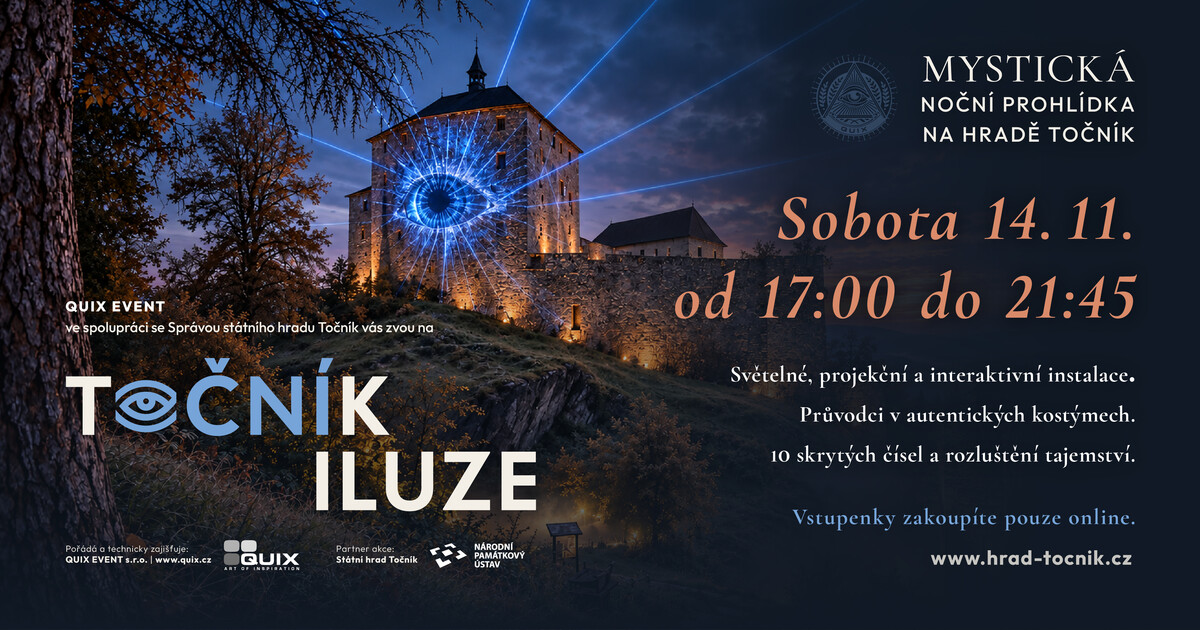
Zdroj akcí: otevřená data měst a obcí ČR (Národní katalog otevřených dat) a kalendář akcí Národního památkového ústavu.
Nearby
Obec Kotopeky, okres Beroun.
Accommodation nearby
Themed route
Thematic cruise route from the Fortress on the Bastion in Tihava
1. Fortress on the Bastion in Tihava (fortress) We will begin our journey at this historic place where the ruins of an antique fortress are found. Her remains tell us of the past and allow us to imagine life in ancient times. The fortress is an ideal place for those who like history and architecture.
2. Municipality of Kotopeky (village) After visiting the fortress we will go to the village of Kotopek. This village is famous for its peaceful atmosphere and beautiful rural landscapes. It is an ideal place to relax on the way where you can enjoy natural views and maybe even meet the locals.
3. Kotopek surrounding forests Near the village we find beautiful forest spaces that offer an opportunity to walk and relax in nature. Forests in the area are ideal for those who love walking or cycling. You may encounter a wild fauna here or enjoy a quiet moment.
4. Natural road around Kotopek (road) For those who desire activity, the area offers a short natural journey. Its passage allows you to explore various aspects of local flora and fauna. The journey is suitable for families with children who like nature.
5. Historical church in Kotopeků (church) At the end of our trip we will visit the historical church in the village. Its architecture and spiritual atmosphere offer a quiet place for a reflector or simply for the use of the beauty of old construction.
This route allows you to know the area around tvrziště Na Baště v Tihavě, from historical monuments to natural beauty.
Seasonal recommendations
Spring: During the spring season tvrziště Na Baště v Tihavě is strangely lit by long sun rays that paint beautiful shadows on the ground and roofs. Nature is awakening from its winter sleep, so you can see the first flowering shrubs and herbs. The atmosphere is full of hope and recovery. You will be happy to visit a place in the spring sun, but keep in mind that the humidity remains high and the trees are starting to flap. The good idea is to come early in the morning when it's not too warm and the crowd isn't too hot. Dress appropriately - mild clothes with the possibility to add a layer in case of a cool windshield.
Summer: During summer, the Castle of the Bastion is lit by long sunny days, which increase the attractiveness of visitors. Nature is in full bloom and surrounding forests offer pleasant shadows. The atmosphere is revived and alive, but it can also be very hot. In summer, the most people gather here, especially in the high summer season, when the days are long and warm. We recommend that you arrive early in the morning or later in the evening to avoid the midday heat and crowd. Put on light clothes, sun cream, and don't waste water.
Autumn: In autumn, the Fortress of the Bastion is lit with golden rays of the sun, which bring warm colors to the woods around. Tree leaves turn into different shades of yellow and red, giving the area a unique beauty. The atmosphere is calm and mild, although the temperature is dropping. Less people gather here in the autumn months than in the summer, allowing a more relaxed tour. Best come on a bright day when you can see beautiful sunlight and colorful leaves. Wear layered clothes - maybe even a warm jacket or coat because it can be cold.
Winter: In winter tvrziště Na Baště v Tihavě is lit by long and often dark days. Sun rays are weak, which gives the regions a melancholic atmosphere. Nature is overshadowed by snow or ice, which can turn the ruins into mystical and mysterious ways. Best come on a bright day when the sun lights up the snow landscape. Wear warm clothes - long jacket, gloves and frosty goggles if there is snow or ice.
Visualizations and artistic views


The visualisations are generated by artificial intelligence and serve as inspiration.
Photos from the area
Real photos taken near the monument


Zdroj a licence jsou uvedeny u každého snímku.
Tips from visitors
No tips yet. Be the first!
Log in and add your tip.
Sources and literature
Photos: Petr Kinšt / CC BY-SA 4.0 — Wikimedia Commons. The author and licence also appear when you hover over the image.
Faktickým podkladem tohoto textu byl článek na Wikipedii, jehož autory jsou přispěvatelé Wikipedie. Článek je dostupný pod licencí CC BY-SA 4.0.
Location on the map





Příběhy a pověsti
Legendy, pověsti a příběhy spjaté s touto památkou
Fotografie návštěvníků
Zatím žádné fotografie. Buďte první, kdo přidá fotografii z návštěvy!
Log in a přidejte svou fotografii nebo hodnoťte.
Za ověřenou návštěvu v aplikaci získáte víc bodů — poznáme podle GPS, že jste na místě.
Reviews and comments