






U svatých Tří králů, Teyflův dům Palace
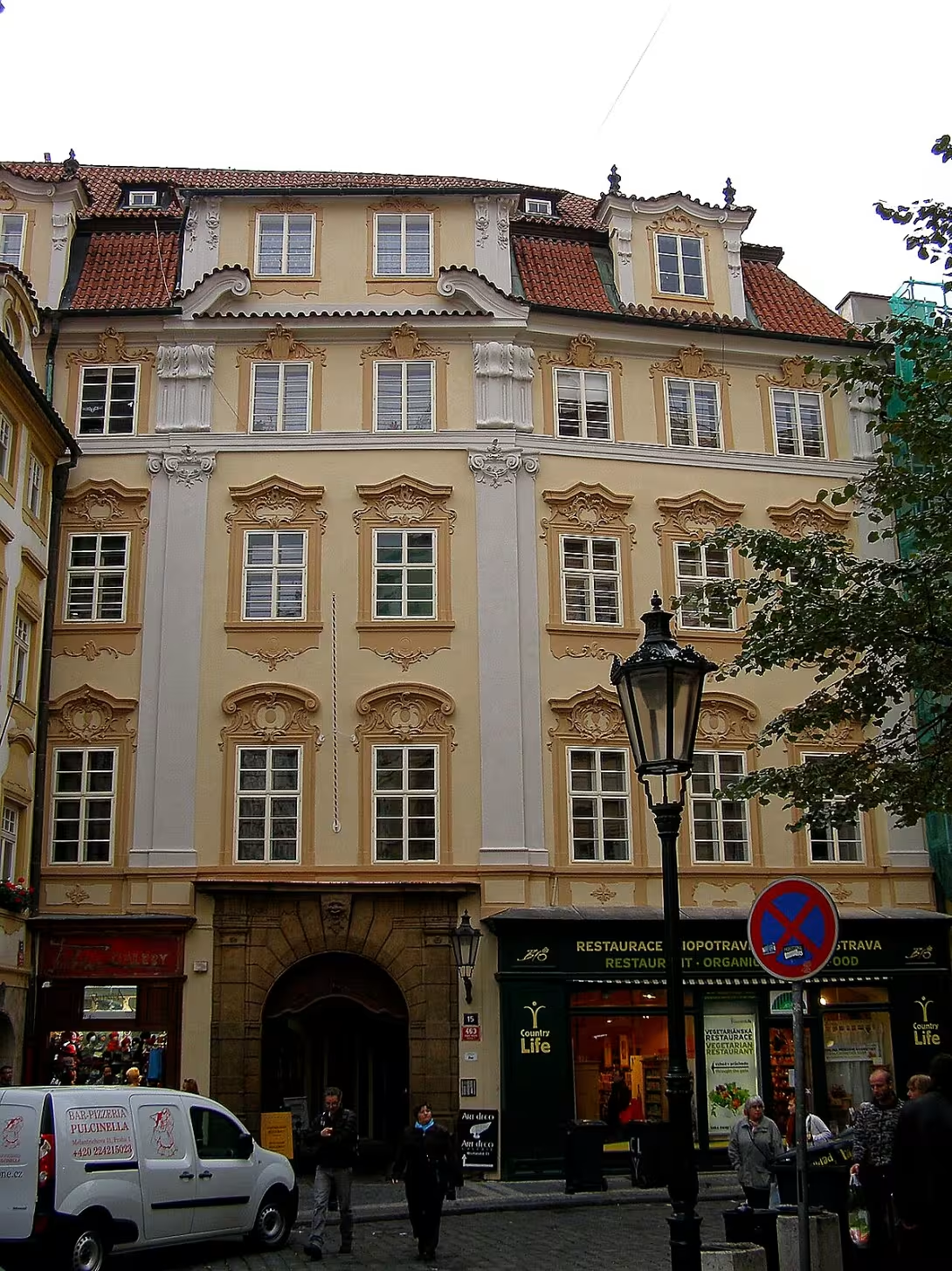
Dům U Svatých Tří králů, commonly known as Teyflův dům, is a four-winged Renaissance palace in Prague's Old Town at Melantrichova and Michalska streets. This historical monument showcases architectural evolution from Gothic origins to a Renaissance masterpiece with Baroque modifications. Recognized as a cultural heritage site since 1964, it holds rich history and architectural significance.
Originally built on the site of a Gothic structure, some cellar spaces with vaults remain. By the late 16th century, Mikuláš Teyfl, a prominent merchant, owned it. His son, Jan Teyfl z Zeilberku, later acquired the estate and was elevated to the knightly estate in 1591. In the early 17th century, an impressive Renaissance palace for the Teyfl family was constructed by Italian architect Jan Dominik de Barifis, marking a significant transformation from its Gothic roots.
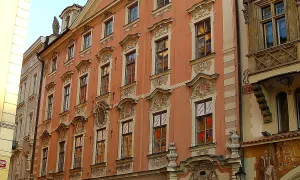
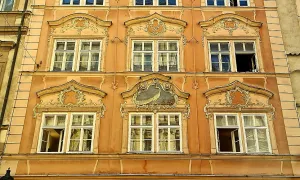
The palace features a six-sided façade with preserved late Renaissance edicule portals and richly decorated Rococo stucco work. Its arcaded courtyard showcases both Renaissance and Baroque influences. Around 1741, under František Daniel Payer's ownership, the building underwent modifications, including heightening and additional stucco decorations, possibly influenced by František Ignác Prée.
Throughout its history, Dům U Svatých Tří králů has been linked to notable figures. In 1620, Esther, widow of Jan Teyfl, hosted Friedrich V, the "Winter King," marking a significant event in its storied past. The palace's ownership and architectural transformations reflect broader historical shifts, including early 17th-century Bohemia's political and religious upheavals.
Today, Dům U Svatých Tří králů remains accessible to visitors, offering insight into Prague's rich architectural heritage. Its preserved Renaissance arcades and intricate façade make it a worthwhile destination for history and architecture enthusiasts. The palace stands as a testament to the cultural and historical layers that have shaped Prague over centuries, inviting exploration and appreciation from all who visit.
Then and now
Drag the slider to compare how the landmark may have looked when it was built with the view today.
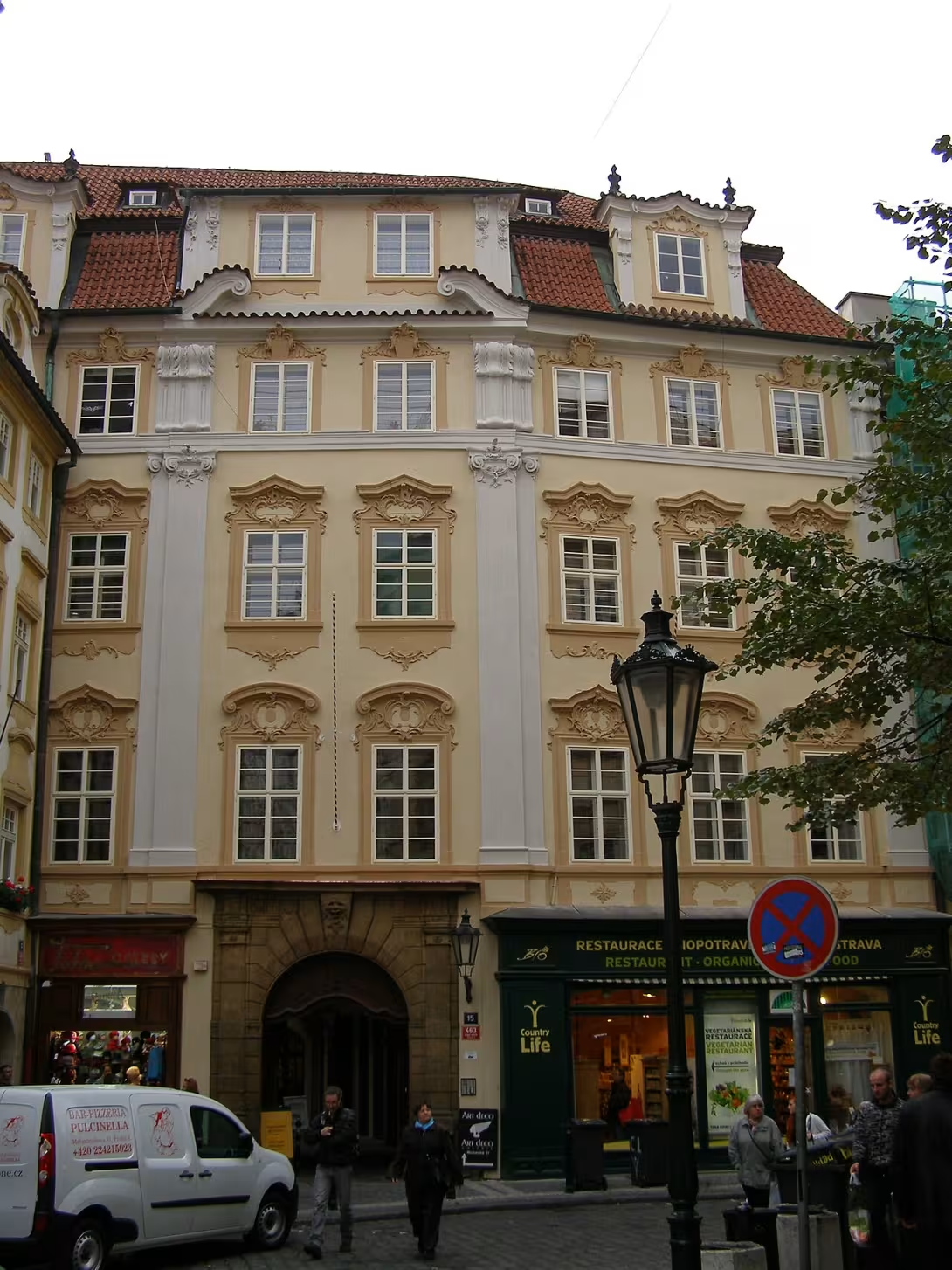

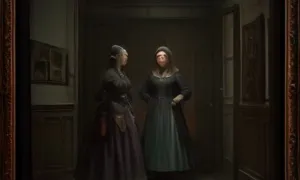
The historical appearance on the left is an AI-generated visualisation and serves as inspiration only.
Historical milestones
- end of the 16th century
- Mikuláš Teyfl became the owner of the house.
- 1591
- Jan Teyfl from Zeilberk was elevated to a knightly estate.
- beginning of the 17th century
- The construction of a Renaissance palace by Jan Dominik de Barifis.
- 1620
- Esther, widow of Jan Teyfl, hosted Friedrich V., 'the Winter King'.
- 1741
- Under František Daniel Payer, modifications to the palace were made.
- 1964
- The house was recognized as a cultural monument.
Architectural development
The original Gothic structure was replaced by a Renaissance palace with an arcaded courtyard. Around 1741 and after 1768, it underwent late Baroque modifications, including heightening and stucco decorations. Further classical and modern alterations affected its interior and façade.
Historical events
In 1591, Jan Teyfl was elevated to the knightly estate.
In 1620, Esther, widow of Jan Teyfl, hosted 'Winter King' Friedrich V in the palace.
Owners
The property was initially owned by Mikuláš Teyfl in the late 16th century, followed by his son Jan Teyfl z Zeilberku. By around 1741, it belonged to František Daniel Payer and later underwent changes post-1768.
Points of interest
- The palace's cellar vaults are remnants of its Gothic origins, offering a glimpse into the architectural layers beneath its Renaissance and Baroque facades. - In 1620, Esther, widow of Jan Teyfl, hosted Friedrich V, known as the "Winter King," at Dům U Svatých Tří králů, linking it to a pivotal moment in Bohemian history.
- The six-sided façade features late Renaissance edicule portals and Rococo stucco work, showcasing a blend of artistic styles that evolved over centuries.
- Architect Jan Dominik de Barifis played a crucial role in transforming the building into an impressive Renaissance palace for the Teyfl family, marking a significant departure from its Gothic roots.
- Under František Daniel Payer's ownership around 1741, the palace was modified with heightened structures and additional stucco decorations, reflecting ongoing architectural innovation.
Guide
This guide is narrated by a synthetic voice generated by artificial intelligence.
Show guide text
This text was created by artificial intelligence and has not been editorially reviewed. It may contain inaccuracies.
Welcome to Dům U Svatých Tří králů, also known as Teyflův dům—a remarkable piece of Prague's architectural history nestled in the heart of the Old Town. As you stand here, take a moment to absorb the grandeur of this four-winged Renaissance palace, its façade whispering tales from centuries past.
The origins of this site trace back to an earlier Gothic structure, but it was not until the late 16th century that Mikuláš Teyfl acquired this plot. The transformation into what you see today began in the early 17th century when Jan Dominik de Barifis designed and oversaw its construction as a Renaissance palace for the influential Teyfl family.
As you gaze upon the building, notice how it seamlessly blends history with artistry. While specific architectural details are not visible from your current vantage point, imagine the intricate designs that once adorned this place. The cellar vaults beneath, remnants of its Gothic origins, hint at the layers of time embedded within these walls.
This palace is more than just a structure; it's a witness to pivotal moments in history. In 1620, Esther, the widow of Jan Teyfl, hosted Friedrich V, known as the "Winter King," here. This event linked Dům U Svatých Tří králů to a significant chapter in Bohemian history.
Over time, the palace underwent various modifications, including those by František Daniel Payer in 1741, which further shaped its character. Recognized as a cultural monument in 1964, it stands today not just as an architectural marvel but also as a custodian of stories and secrets from centuries gone by.
As you continue to explore this historic site, let your imagination wander through the epochs that have unfolded here. Each stone has a story waiting to be uncovered. We invite you to delve deeper into its history and perhaps discover something new with each visit. Thank you for joining us on this journey through time at Dům U Svatých Tří králů.
Tips for visitors
The best time to visit Teyflův dům is during the late spring or early fall when the weather is pleasant, allowing you to comfortably explore both the interior of the palace and its charming courtyard with Renaissance arcades. These seasons offer a balance between avoiding the summer crowds and experiencing mild temperatures that enhance your enjoyment of Prague's Old Town atmosphere.
Transportation options are plentiful for reaching Teyflův dům in Prague's Old Town. The area is well-served by public transport, including trams and buses, which can be checked via a local transit app or website for the most current routes. Walking from other parts of Prague Old Town is also an enjoyable option.
When visiting Teyflův dům, it's advisable to bring comfortable walking shoes as you'll likely be exploring on foot both inside and around the courtyard. A camera or smartphone for photography is recommended; early morning or late afternoon offers the best natural light for capturing the architectural details of the Renaissance palace and its surroundings.
For families with children, Teyflův dům provides a fascinating glimpse into Prague's rich history and architecture. Nearby, Melantrichova and Michalska streets offer additional sights and shopping opportunities that can keep the whole family engaged.
Nearby attractions within a 30-minute walk include several historic sites and cultural landmarks in Prague's Old Town. The area around Teyflův dům is rich with history, offering visitors a chance to explore more of what this iconic part of the city has to offer beyond just the palace itself.
Frequently asked questions
Can the monument be visited?
Some buildings of this kind are open for guided tours, others serve another purpose or are privately owned. We have not verified whether and when this monument is open – please ask the operator.
What are the opening hours and admission?
We have not verified the opening hours or admission. Current information is published by the operator.
Where is the monument?
Location: Praha 1, Hlavní město Praha. The map on this page shows the exact spot.
Why is the monument protected?
It is listed in the Central List of Cultural Monuments of the Czech Republic as a cultural monument (register no. 1000150535).
Businesses nearby
Do you run a restaurant, accommodation, shop, museum, rental, wellness or other visitor service near this monument? Show yourself directly to the people heading to it — this is how they will see you in the app and on the web:
Events nearby

Zdroj akcí: otevřená data měst a obcí ČR (Národní katalog otevřených dat) a kalendář akcí Národního památkového ústavu.
Nearby
The palace is situated in Prague's Old Town, near landmarks such as Melantrichova and Michalska streets. The area features a small courtyard with preserved Renaissance arcades.
Accommodation nearby
Trips and activities nearby
Guided tours, tickets and activities nearby from GetYourGuide
Affiliate link: if you buy from the partner, we may receive a commission. The price for you does not change.
Search tours and activities →Themed route
Thematic Walking Tour: The Legacy of the Renaissance in Prague's Old Town
1. Teyflův dům (Palác) - Type: Historical Building - Why Visit: Start your journey at Teyflův dům, a remarkable example of Renaissance architecture nestled in the heart of Prague's Old Town. This historic palace offers insight into the architectural and cultural transformations of 16th-century Bohemia. Its preserved arcades provide a glimpse into the past, making it an essential stop for history enthusiasts.
2. Melantrichova Street - Type: Historic Street - Why Visit: Just a short walk from Teyflův dům, Melantrichova Street is lined with historic buildings that echo the Renaissance spirit of Prague's Old Town. This street serves as a living museum, showcasing architectural styles and urban planning from centuries past. Strolling along this path offers an immersive experience into the everyday life and aesthetics of historical Prague.
3. Michalska Street - Type: Historic Street - Why Visit: Continue your exploration to Michalska Street, another gem in the Old Town's historic fabric. This street complements Melantrichova with its own collection of Renaissance architecture and charming ambiance. It provides a perfect backdrop for appreciating the intricate details and craftsmanship that define Prague’s architectural heritage.
4. The Small Courtyard - Type: Historic Courtyard - Why Visit: Near Teyflův dům, discover a small courtyard with preserved Renaissance arcades. This intimate space offers a serene escape from the bustling streets of Old Town and allows visitors to appreciate the architectural beauty up close. The courtyard is an ideal spot for reflection on the historical significance of the area.
5. U svatých Tří králů - Type: Historical Church - Why Visit: Conclude your tour at U svatých Tří králů, a church that stands as a testament to Prague's rich religious and cultural history. Its proximity to Teyflův dům makes it an accessible final stop on this thematic journey through the Renaissance legacy of Prague’s Old Town.
This walking tour offers a focused exploration of Renaissance influences in Prague, allowing visitors to connect with the city's historical narrative through its architecture and urban landscape.
Seasonal recommendations
Spring: Visiting U svatých Tří králů, Teyflův dům during spring offers a vibrant atmosphere as the city bursts into life with blooming flowers and lush greenery. The natural beauty surrounding Prague 1 enhances the historical charm of the site, making it an ideal time for photography enthusiasts to capture the interplay between architecture and nature. As daylight hours extend, visitors can comfortably explore the area without feeling rushed. However, be prepared for occasional showers typical of this season by wearing layers that can easily adapt to changing weather conditions.
Summer: Summer at U svatých Tří králů is characterized by long days filled with warm sunshine, perfect for leisurely strolls around Prague 1. The historical site becomes a lively spot as tourists flock to experience the city's rich cultural heritage during this peak season. To avoid large crowds, consider visiting early in the morning or later in the afternoon when temperatures are more manageable. Light, breathable clothing is recommended, along with sun protection such as hats and sunscreen to ensure a comfortable visit.
Autumn: Autumn brings a picturesque transformation to U svatých Tří králů, Teyflův dům, with vibrant foliage creating a stunning backdrop for the historic architecture. The cooler weather makes it an enjoyable time to explore without the summer heat, and the site is less crowded compared to other seasons. Layers are advisable as temperatures can vary significantly between day and night. This season also offers a more intimate experience of Prague's cultural offerings, with fewer tourists around.
Winter: Winter at U svatých Tří králů provides a magical atmosphere as the area is adorned with festive lights and decorations during the holiday season. The crisp air adds to the charm of exploring this historic site, though visitors should be prepared for shorter daylight hours and potential cold temperatures. Warm clothing, including coats, hats, gloves, and scarves, is essential to ensure comfort while enjoying the winter wonderland ambiance. Despite the chill, the enchanting setting makes it a perfect time for a visit.
Visualizations and artistic views


The visualisations are generated by artificial intelligence and serve as inspiration.
Photos from the area
Real photos taken near the monument


Zdroj a licence jsou uvedeny u každého snímku.
Tips from visitors
No tips yet. Be the first!
Log in and add your tip.
Sources and literature
Faktickým podkladem tohoto textu byl článek na Wikipedii, jehož autory jsou přispěvatelé Wikipedie. Článek je dostupný pod licencí CC BY-SA 4.0.
Location on the map
Příběhy a pověsti
Legendy, pověsti a příběhy spjaté s touto památkou
Fotografie návštěvníků
Zatím žádné fotografie. Buďte první, kdo přidá fotografii z návštěvy!
Log in a přidejte svou fotografii nebo hodnoťte.
Za ověřenou návštěvu v aplikaci získáte víc bodů — poznáme podle GPS, že jste na místě.
Reviews and comments