






Usedlost čp. 34 (Kyšice) Homestead
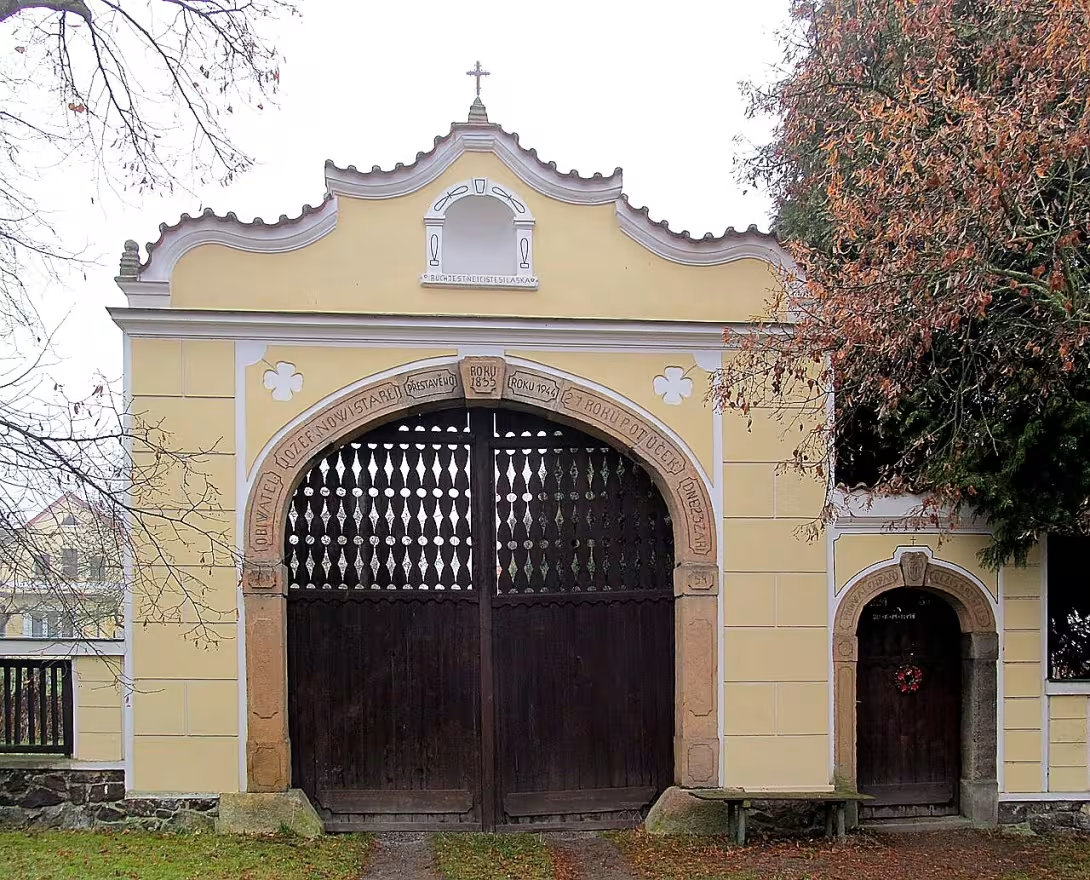
The residence No. 34 in Kyšice in Plzeň represents the highest example of rural classical architecture of the 19th century. The object stands on the village baits. Since 1958 it has been a protected cultural monument and since 1995 it has been part of a rural monument zone.
The building of the estate began in 1832 by digging the cellars. The building itself was completed one year later, in 1833, which is confirmed by the inscription on the gate. The creation of the building falls within the period of maturing classicism and national renewal. At that time, the first influences of the industrial revolution began to manifest themselves in the Czech countries, which gradually transformed the rural economic environment.
The construction features a tripartite layout and a richly decorated facade. The ground-floor part of the facade is three-axis and is divided by pilasters with profiled heads. In the top of the shield there is a ventilation hole of a complex shape. The residential building is covered by a saddle roof, on the excellent side there are two freight skylights. The interiors of the stables and the bows are encapsulated in elliptic belts with three fields of placebo. The area is supplemented by a perpendicular with a saddle asymmetric roof and a gate with baroque elements and a profiled ledge.
The object has undergone several modifications over the years. In 1904, there was work on the barn, which has a rectangular plan and is partially undercut. Another significant reconstruction, reflecting the economic needs at the time, took place in 1944.
The technical state of the estate is currently unbalanced. While the classical core remains a testament to traditional folk construction, the barn is in a state of emergency and its saddle roof has already collapsed for the most part.
This monument is an important proof of the historical form of the Pilsen countryside and the development of the 19th century folk architecture. The visit to Kyšic offers an opportunity to visit this classical ensemble. Despite its current state, it remains a valuable witness to the craftsmanship and construction traditions of our ancestors.
Historical milestones
- 1832
- Construction of cellars.
- 1833
- The completion of the estate construction, supported by the inscription on the gate.
- 1958
- Object declared a cultural monument.
- 1995
- The estate became part of the rural monument zone.
Architectural development
The original classicist core from 1833 was supplemented with economic objects and a horse-mounted clone. In 1904, there were building modifications to the barn. Another reconstruction was carried out in 1944, reflecting the needs of the economy at the time.
Historical events
1832: Construction of cellars. 1833: Completion of farm construction. 1944: Reconstruction of the building has been carried out. 1958: Declaration for cultural heritage.
Points of interest
- Residential No. 34 is a top example of the rural classical architecture of the 19th century and since 1958 it has been a protected cultural monument. - Construction of the building began in 1832 by deepening the cellars and the building itself was finished in 1833, as evidenced by the inscription on the gate. - The interiors of stables and machetes are wedged into elliptical belts with three fields of placebos. - The area includes a clone with a saddle asymmetric roof and a gate which contains baroque elements and a profiled ledge. - A barn with a rectangular plan is in emergency condition and its saddle roof has already collapsed for the most part.
Guide
Show guide text
This text was created by artificial intelligence and has not been editorially reviewed. It may contain inaccuracies.
Welcome to Kyšice. You've just stopped in front of one of the most important construction sites in the area. You are standing right in front of the estate number 34, which is not just an ordinary private residence, but the real peak of rural architecture that can be expected in these parts. While you're looking at this vast area, try to forget about the noise of the modern world for a moment and let yourself drift through the atmosphere of the year eight hundred and thirty-three. Imagine how this space worked when it was newly completed and its facade shone with purity and order of classical style. The whole complex is harmonious and balanced, which is what makes it such a rare phenomenon in the Pilsen countryside.
Let us now look together at how this place was created and why it is so important to us. The entire history of this building, which you can see, began in the year one thousand eight hundred thirty-two. At that time, not by building walls, but by digging cellars, which was a major first step in ensuring the stability and future functioning of the entire economic operation. The completion of the estate itself followed very quickly, already in the year one thousand eight hundred thirty-three. It's not just our assumption, it's a fact that's written in history. If you look at the gate, you can see a sign that serves as a historical witness and confirms the exact date of completion of the construction. This object was at the time of its creation a symbol of prosperity and balanced management. Although we do not know the names of the particular architects who carved this proposal into reality, their work is evident in every proportional detail and in the overall elegance that the building radiates.
Now pay attention to the architecture itself, which is the main reason why this place is so valued today. The estate is built according to a three-part layout, which is the typical way in which the division between the residential area and the economic space was organised at the time. Look at the main building, its facade. Notice how richly decorated the facade is. These are not just simple walls, but there are pilasters, i.e. these vertical outputs that resemble columns and provide a building with a noble, almost palate appearance, even though it is a rural building. This style is called Classicism. It is a style that seeks beauty in simplicity, in straight lines and in perfect proportions. It is this effort for order and aesthetics that makes the estate number 34 the highest example of its kind throughout Pilsen.
When your eyes move further along the premises, you will see that the estate is not just one house, but a whole focused building system. It consists of a residential building which served the family, but also of stables and other economic objects such as a barn. Although you are now looking from the outside, it is good to know that the interior areas of these economic buildings are very interesting. Note that the interiors of the stables and the bows are finished with vaults. These arched ceilings are not only an aesthetic element, but above all a functional solution which ensured the strength and stability of the premises for animal husbandry and storage of stocks. The whole area was designed to be practical for everyday work, but also to reflect the status and taste of its owners at the time.
Even though no specific personalities were found in the historical records that were closely associated with this estate with names, we can imagine them through their lifestyle. Imagine the people who lived here in the middle of the nineteenth century, working and building their future. They were people who perceived beauty and order because that was what was reflected in their home. This homestead was the heart of their world, a place where work and home met.
We also have one interesting thing that might interest you. You may be asking why this place is so carefully protected. This is because its value was recognised very soon. In the year one thousand eight hundred fifty-eight, this object was declared a cultural monument. This means that the state and the community have realised that this is an unchangeable piece of history. And to make protection even more comprehensive, from the year one thousand nine hundred ninety-five, the estate became part of the rural monument zone. This is not only a formal designation, but a guarantee that this place will be preserved in the form you see it today for future generations. It's like a chapter in history that was chosen to be read over and over again.
Now that you know the secret and history of this place, I suggest you continue your search. Take a walk around the buildings, see the atmosphere of this space and try to cross the views between the residential area and the economic buildings in a spirit. Watch how architecture changes depending on the purpose for which part of the building was intended, while the same classical harmony remains in the whole area. Thank you for spending this moment with us and for being interested in this piece of our heritage. We wish you a beautiful rest of the day and another pleasant discovery of the surroundings.
Tips for visitors
The best time to visit is during the sunny morning hours, when natural light best highlights the details of the classical facade and stucco decoration. Due to the poor technical condition of the building, the tour is possible only from outside, so we recommend choosing a period with good visibility.
You can easily reach the village Kyšice by car or by regional public transport. Parking is possible in the adjacent streets of the village, but always make sure you do not block the entrances to the locals. Check the current connection of public transport in the respective search engine.
It is recommended to use a wide-angle lens to photograph the estate, which captures the overall composition of the three-piece layout of the house. The best lighting conditions for façade pictures are at a time when the sun shines directly on the facade, which helps to excel at historical elements from 1833.
In the vicinity of the estate you can explore the whole rural monument zone in the village Kyšice, which offers an authentic insight into the history of Pilsen. The walk of the village is suitable for lovers of architecture who want to soak up the atmosphere of traditional rural development.
When visiting with children we recommend to take a trip as a sightseeing walk behind history. Due to the poor state of the monument, children must be instructed about safety and movement in the vicinity of historical objects in order to avoid damage or injury.
Businesses nearby
Do you run a restaurant, accommodation, shop, museum, rental, wellness or other visitor service near this monument? Show yourself directly to the people heading to it — this is how they will see you in the app and on the web:
Events nearby



Zdroj akcí: otevřená data měst a obcí ČR (Národní katalog otevřených dat) a kalendář akcí Národního památkového ústavu.
Nearby
The village Kyšice in the district of Pilsen-town, rural monument zone.
Accommodation nearby
Trips and activities nearby
Guided tours, tickets and activities nearby from GetYourGuide
Affiliate link: if you buy from the partner, we may receive a commission. The price for you does not change.
Search tours and activities →Themed route
Thematic cruise route from the estate No. 34 (Kyšice)
1. Usedlost čp. 34 (Kyšice) - rural monument zone Type: Rural Monument Region Why is it worth a visit: Residence No. 34 is a key part of the rural monument zone in Kyšice, which captures the historical character and architectural value of the area. It is an ideal place for those who want to know the traditional life in the countryside and enjoy the quiet surroundings.
2. Memorial houses in Kyšice Type: Historical architectural complex Why is it worth a visit: The village Kyšice is famous for its historically important houses, which represent a classic rural architecture. These buildings are an important element of the local monument zone and provide a view of the lifestyle of past generations.
3. St. John Nepomuk's Chapel Type: Religious monument Why is it worth a visit: St. John Nepomuk's chapel is a key part of Kyšice's spiritual and cultural heritage. It is a place where you can enjoy a quiet moment and appreciate the historical importance of this chapel for the inhabitants of the village.
4. Cultural Center in the Village Type: Cultural institutions Why is worth a visit: The cultural centre is the heart of local life and offers various activities that represent the tradition and culture of the village. It's a great way to immerse yourself in today's and historical aspects of Kyšice.
This route offers you the opportunity to explore not only the property No. 34, but also other attractions of the village Kyšice and its surroundings.
Seasonal recommendations
In spring, the estate wakes up along with the surrounding vegetation. The light is fine in this period and the colors are gradually coming to life, giving the place a fresh look. It is advisable to wear layered clothes because the morning cold can quickly vary with heat. Due to the lower number of visitors, it is ideal time for an early morning tour.
Summer months bring the most intense sunlight and thick green screen around the object. The atmosphere is alive, but due to the poor state of the building, it may be uncomfortable in the heat. We recommend that you arrive as early as possible in the morning to avoid the greatest heat and possible groups of people. Don't forget the headgear and plenty of fluids.
The autumn season offers a nostalgic atmosphere, underscored by fog and leaves. The low sun creates interesting shadows on the walls of the estate. It is necessary to prepare for wet and cold, so choose waterproof shoes and a laminated coat. The best time to visit is around noon when the light is most stable.
In winter, the country's estate is very lonely and quiet. The grey sky and frost can highlight its decayed character. Due to the short day and unpleasant temperatures it is best to visit the place in the afternoon. The need is warm clothes and solid shoes to protect you from uneven and possibly slippery terrain.
Visualizations and artistic views

The visualisations are generated by artificial intelligence and serve as inspiration.
Photos from the area
Real photos taken near the monument


Zdroj a licence jsou uvedeny u každého snímku.
Tips from visitors
No tips yet. Be the first!
Log in and add your tip.
Sources and literature
Fotografie: Krabat77 / CC BY-SA 3.0 — Wikimedia Commons. The author and licence also appear when you hover over the image.
Faktickým podkladem tohoto textu byl článek na Wikipedii, jehož autory jsou přispěvatelé Wikipedie. Článek je dostupný pod licencí CC BY-SA 4.0.
Location on the map
More monuments – Kyšice
Show all in the municipality
Příběhy a pověsti
Legendy, pověsti a příběhy spjaté s touto památkou
Fotografie návštěvníků
Zatím žádné fotografie. Buďte první, kdo přidá fotografii z návštěvy!
Přihlaste se a přidejte svou fotografii nebo hodnoťte.
Za ověřenou návštěvu v aplikaci získáte víc bodů — poznáme podle GPS, že jste na místě.
Reviews and comments