






Usedlost čp. 80 Homestead
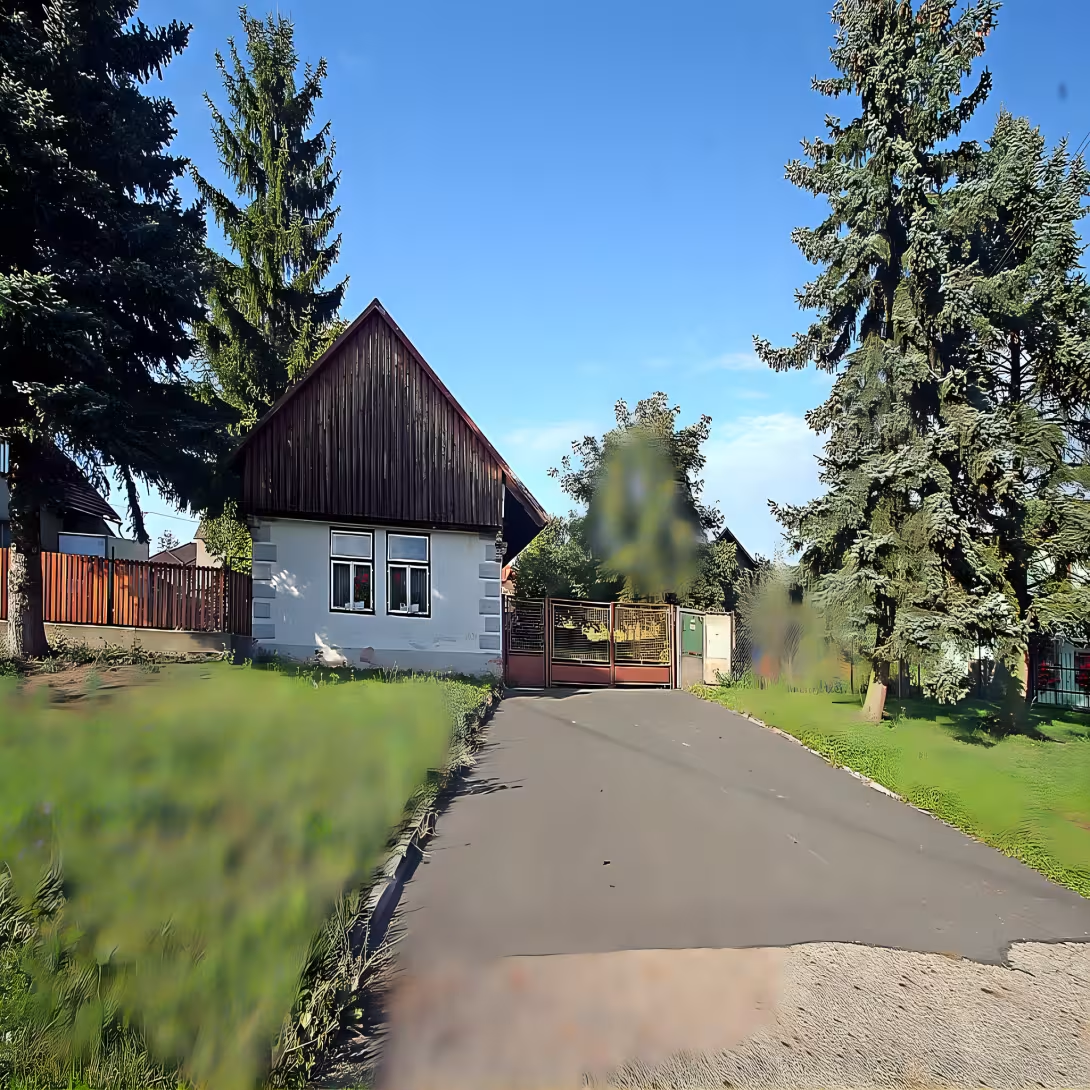
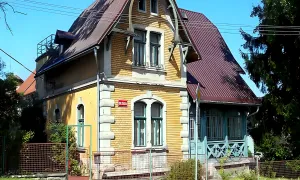
Usedlost čp. 80 in the village Kosičky is a rural house declared a cultural monument of the Czech Republic, located in the centre of the village near the village. It dates back to the mid-19th century and at the turn of the 19th and 20th centuries it was built. The house is a remarkable architecture combining elements of neo-Renaissance with historical details such as preserved quarries and carved ceiling beams. They are currently used for recreation.
The building was probably built in the middle of the 19th century when various architectural styles appeared on rural buildings. At the turn of the 19th and 20th centuries, there were modifications that affected her appearance. The architecture includes neo-Renaissance elements such as barefoot corner pilasters. According to the historical photographic documentation, they were still present in 2012, but are no longer preserved. The house has a well preserved grafted residential area with a quilting and boxed vertical planks, which gives it authenticity.
In 2002 the house was declared a cultural monument of the Czech Republic. This event highlighted its historical and architectural value, which led to the protection and maintenance of its original appearance. A small settlement also includes stables and shed in one building. The architectural attractions include a reinforced threshold under the overpass of the saddle roof.
Today, the building serves for recreation, allowing visitors to become familiar with history and architecture in a quiet rural location. Location in the centre of the village Kosička near the village provides easy access to tourists. Exploring the history and architecture of the region makes a visit to the estate no. 80 a unique opportunity.
Usedlost čp. 80 is not only a monument to rich history, but also a place where you can feel a connection to the past and the natural environment of the village. It is a testament to the architectural art and cultural tradition of the region, which is important to preserve for future generations. In addition to a historical experience, this monument offers the possibility of relaxing in a beautiful rural environment.
Historical milestones
- half of the 19th century
- Establishment of the estate
- zlom 19th and 20th century
- Construction work of the building
- 2002
- Declaration for cultural monument of the Czech Republic
- 2012
- Recent recording of neoplasms in documentation
Architectural development
The original state dates back to the middle of the 19th century, followed by a modification at the turn of the 19th and 20th centuries. The architecture shows elements of neo-Renaissance, such as barefoot corner pilasters. However, these decorative measures have not been preserved over time.
Historical events
In 2002 the house was declared a cultural monument of the Czech Republic.
Points of interest
- The building dates back to the middle of the 19th century and at the turn of the 19th and 20th centuries it was built. - The architecture combines elements of the Neo-Renaissance with historical details such as preserved quarries and carved ceiling beams. - In 2002 the house was declared a cultural monument to the Czech Republic. - A small settlement also includes stables and shed in one building. - Architectural attractions include a reinforced threshold under the edge of the saddle roof.
Guide
Show guide text
This text was created by artificial intelligence and has not been editorially reviewed. It may contain inaccuracies.
Welcome to Kosicka village. You have just stopped in front of one of the most important building units in this part of the village. You are standing right in front of the estate number 80, which carries a deep trail of history and an authentic atmosphere of the old Czech countryside. Please feel the calm of this place and pay attention to the building that is now in front of your eyes. Her presence in the centre of the village, close to the village, gives us a clear indication of how important this place played for the entire community in the past.
When you look at this estate, it may seem like a common country house, but it's actually a very rare and valuable whole. Let's go back in time together to understand how this object was created. The roots of this estate date back to the mid-nineteenth century. At that time the village of Kosička was a living organism and this house was part of the daily rhythm of the work and rest of the locals. The construction was originally built with a clear purpose - to provide a home for people, while at the same time providing space for their economic activity.
Over time, however, people's needs have changed and the building itself has changed. At the turn of the nineteenth and twentieth centuries, the estate underwent major building modifications. It was during this period that her appearance began to change and to gain a new, more sophisticated form. This transformation was an important moment when a simple rural home began to connect with the architectural trends at the time, which gradually spread to smaller municipalities.
Now pay attention to the architecture itself and to what you can see right now. This estate is a fascinating example of how what was practical in one object was combined with what was aesthetic. If you look around, you realize that architecture involves not only the residential part where the family's personal life took place, but also the stables and shed that are part of this whole. This integration of residential and economic space under one roof or in close proximity was a characteristic of the way in which man lived in constant contact with his animals and crops.
Look closely at the details of the building. Although it is a rural building, there are clear signs of higher architecture in its structure. In the construction works at the turn of the century, the elements of the Neo-Renaissance entered the building. Note above all how the building profiles. If you look up to the upper part of the building, you can see a characteristic refraction that gives the house a specific and balanced look. These Neo-Renaissance elements are not only a beauty, but they are proof of the effort at the time to ensure that rural housing has its style and dignity. Even though new modifications are no longer being made, these elements were still clearly recorded in the documentation of the year two thousand and twelve, indicating their persistence and their ability to resist time.
Perhaps you are now told who lived here. Even though the names of the particular families and persons who have inhabited this estate for centuries have been lost in history, their presence in every stone and wooden beam is still felt. But we can imagine them. Imagine the housekeepers who came out of this door to the fields in the morning, the families who met at this table at dinner, and the people who did their daily tasks in these areas to ensure the survival of their economy. This estate wasn't just a building, it was a living part of their world.
Now I want to draw your attention to one very interesting thing that distinguishes this settlement from many other similar buildings. You might wonder why a small object is so important that we talk about it with such respect. You'll find the answer in her official recognition. In the year two thousand and two, this estate was declared a cultural monument of the Czech Republic. This is a huge award that tells us that this house is not just an old mine, but it is an untouchable fragment of our national history and culture. It is a commitment that we must protect this object for future generations, because in it the soul of our countryside is preserved.
It is also fascinating to see how the role of this building has changed completely over time. While in the nineteenth century it was a symbol of hard work, management and everyday struggle for existence, it is currently serving something quite different - for recreation. This transition from place of work to place of rest is an excellent example of how our relations with space and history change. Today people here seek peace and harmony with the past, instead of doing hard physical work.
Looking at the building, you can also imagine its inner beauty, which is written in professional records. Even though you're out now, in your mind, you can imagine those carved ceiling beams that give the interior a sense of warmth and history. These details are proof that even in a simple country house there was room for craftsmanship and artistic expression.
Now that you've been through the basic history and architecture of this estate, I suggest you continue your walk around the village of Kosička. This estate number 80 is just one of many stories you can find here. Feel the atmosphere of this place, look at the details of the surrounding buildings and try to find a connection in every bit of history with the people who were here before us.
Thank you for spending this moment with us and paying attention to this precious monument. We hope that this view of the estate number 80 helped you better understand its meaning and beauty. We wish you a beautiful and inspirational further journey in the historic footsteps of our country. Goodbye.
Tips for visitors
The best time to visit the estate No. 80 in Kosičky is autumn or spring when the surroundings are green and flowering, which adds a romantic and peaceful character instead. The sunny days provide ideal light for shooting architectural details of the building.
Parking is possible near the centre of Kosička village, where you can find vacancies. For those travelling by public transport, the estate is easily accessible from the following current routes of buses or trams leading to the centre of the village.
When visiting, it is recommended to bring sun protection clothes and a warm coat during winter. For photography it is advisable to have a high-quality camera or mobile phone with photo capabilities to capture historical details of the building.
Photo of the estate No. 80 will offer the best results from the west side, where the light is the sweetest at noon and evening. The surrounding area is located in Kosiček village, which can be explored for further photography.
For families with children, the settlement no. 80 is a suitable place to walk and discover historical buildings in a quiet atmosphere. In the area, you can reach in half an hour, located the center of the village Kosičky with opportunities for further entertainment or shopping.
Businesses nearby
Do you run a restaurant, accommodation, shop, museum, rental, wellness or other visitor service near this monument? Show yourself directly to the people heading to it — this is how they will see you in the app and on the web:
Events nearby
Zdroj akcí: otevřená data měst a obcí ČR (Národní katalog otevřených dat) a kalendář akcí Národního památkového ústavu.
Nearby
The centre of the village Kosička and the proximity of the village.
Accommodation nearby
Themed route
Thematic cruise route from the estate No. 80
1.Usedlost čp. 80 - Type: Historical residence - Why is it worth a visit: This estate is an example of rural architecture, which retains the characteristic elements of past times. It is an ideal place for those who want to know the history and culture of the region.
2. Centre of the village Kosičky - Type: Local center - Why is worth a visit: The centre of the village offers a view of traditional Czech street framing and is suitable for a short walk. Here you can discover local shops and restaurants that represent the lively spirit of the community.
3. Nav Kosička - Type: Local page - Why is it worth visiting: The naves are the heart of local social life and offer the opportunity to explore traditional architecture of houses. It is also a place where various cultural events and markets take place.
4. Bones: Local Church - Type: Religious memorial - Why is it worth visiting: Church in the village is an important historical and cultural monument, which represents the architectural art of the region. It is an ideal place for those interested in religious history and decoration.
5. Cuts: Local Park - Type: Green area - Why is worth a visit: The park offers a quiet atmosphere for relaxation and short walks, which is an ideal way to enjoy the natural beauty of the surroundings. It's also a place for family trips.
This route offers a view of the cultural and historical richness of the village Kosička, which makes it an ideal experience for visitors to the region.
Seasonal recommendations
In the spring the estate comes alive with the arrival of the first flowers and fresh greenery, which surrounds the historic walls. Soft spring light is ideal for observing facade details and awakening gardens. We recommend to dress in layered clothes, because the weather is variable, and set off in the morning when the air is purest.
The summer season brings a full bloom of surrounding nature and intense sunlight that highlights the beauty of the building. Expect a larger number of visitors in the main season, which is why it is best to come right at the opening to avoid the biggest crowds. Don't forget light, breathable clothing and sun protection.
The autumn at the estate is nostalgic, mainly due to golden leaves and morning fog. The atmosphere is quieter and the colors of the surroundings are rich, which creates a pleasant environment for walks. Suitable is waterproof shoes and warm jacket, the best time to visit is late afternoon in low sun.
In winter there is a quiet and freezing calm in the area, which complements the snowy landscape. The contrast of white snow and historical architecture creates a unique, minimalist impression. It is essential to have warm clothes and quality winter shoes. The opening times are shorter in advent time, so we recommend planning a visit by noon.
Visualizations and artistic views

The visualisations are generated by artificial intelligence and serve as inspiration.
Photos from the area
Real photos taken near the monument


Zdroj a licence jsou uvedeny u každého snímku.
Tips from visitors
No tips yet. Be the first!
Log in and add your tip.
Sources and literature
Photos: Petr1888 / CC BY-SA 3.0, rozlišení zvýšeno umělou inteligencí — Wikimedia Commons. The author and licence also appear when you hover over the image.
Faktickým podkladem tohoto textu byl článek na Wikipedii, jehož autory jsou přispěvatelé Wikipedie. Článek je dostupný pod licencí CC BY-SA 4.0.
Location on the map

Příběhy a pověsti
Legendy, pověsti a příběhy spjaté s touto památkou
Fotografie návštěvníků
Zatím žádné fotografie. Buďte první, kdo přidá fotografii z návštěvy!
Přihlaste se a přidejte svou fotografii nebo hodnoťte.
Za ověřenou návštěvu v aplikaci získáte víc bodů — poznáme podle GPS, že jste na místě.
Reviews and comments