



Usedlost Strakovka House
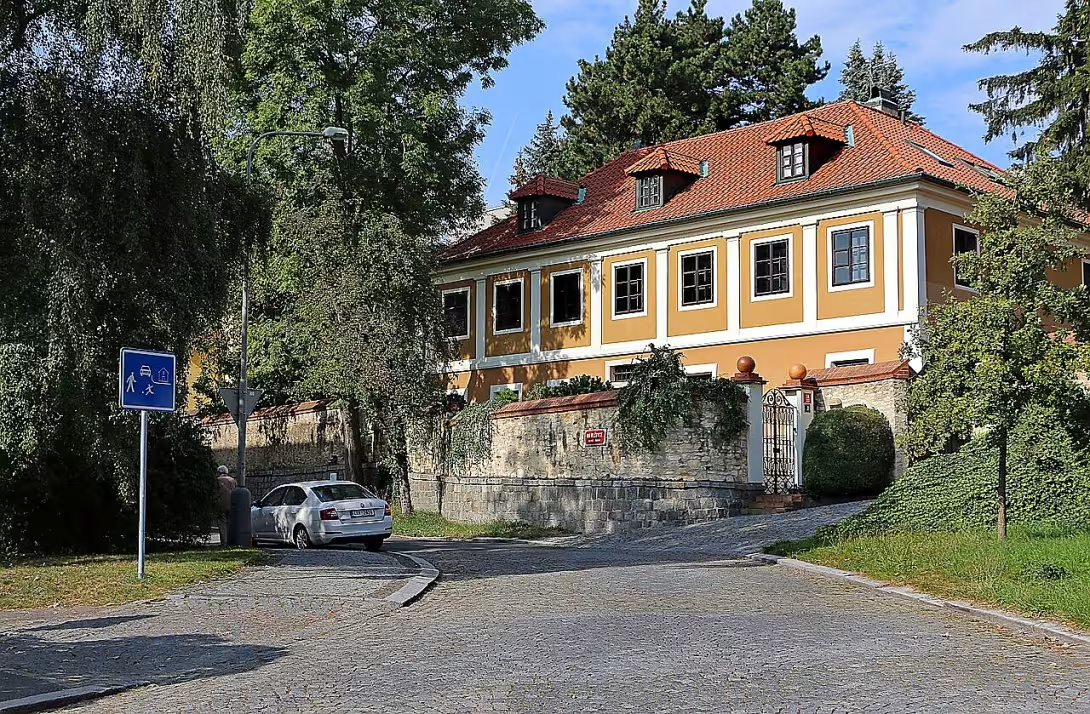
Strakovka is a former vineyard estate in Dejvice, Prague, which was created by the gradual merger of smaller vineyards during the 17th century. Since 1958, the building has been protected as a real-estate cultural monument of the Czech Republic and represents an important proof of historical agricultural use of the Prague landscape.
The origins of the estate date back to the beginning of the 17th century, when the vineyards Kozlovská, Topolka, Little Topolka and Lower Bakery were merged into one whole. In 1622 Jakub Kozel z Peclinovce bought the Koutsky vineyard. In Kozlovce there was the press and the Kouta hut; Both parts were wrapped around a common wall. In 1646, the Supreme Court Judge Jindřich Volf Berka z Dubé became the owner. At the time, his land was a nine-strum area and a three-strum garden belonged to it.
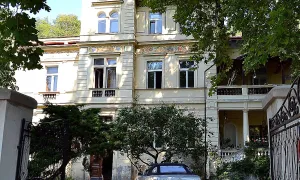
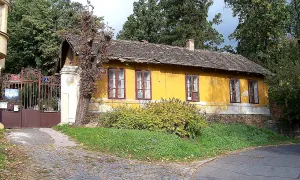
The current form of the building is classical. It's a one-story building on a rectangular plan, covered with a valb roof with a skylight. The facade is broken by Tuscan Pilasters and seven window axes. The estate stands on a sloping, trapezoidal plot, which fundamentally affected its architectural arrangement.
In 1696, Rozina Geismüller won the vineyard. Together with her second husband Jiří František LiProcessing of Liebenfels, she built a residential house, fixed a wall and built economic buildings, stables and warehouses. Her current name was acquired by the manor after the canon and later by the Saint Francis Kazimír Strachovský, who bought it in 1750. It was then conducted in the Josephine cadastral with an area of 8 mornings and 1303 fathoms. In the 19th century, the owners quickly took turns. In 1837 it was purchased by court builder Jan Klement Zobel with the intention of setting up a brick here. This was realized by another owner Gustav Hoffman, who acquired the estate in 1845. However, the operation of the brick was terminated under the following owner. In 1907 the land was divided and part of the house purchased by architect Richard rytíř Klenka z Vlastimilu.
Although the building is officially called a vineyard estate, the vine cultivation ended here after the Austrian heritage wars. Yet the house in the cadastral records was kept under this designation. The historical context of the establishment of the estate in the 17th century is closely linked to the period after the 30-year war, which fundamentally transformed ownership relations and economic conditions in the Czech countries.
Strakovka is now a valuable proof of the transformation of Prague suburbs from agricultural production to industrial use to residential development. For those interested in the history of Prague architecture, this building in the street Na Vlčovce represents a remarkable example of the classical reconstruction of the vineyard estate, which is worth paying attention when walking through the Děvická locality.
Then and now
Drag the slider to compare how the landmark may have looked when it was built with the view today.
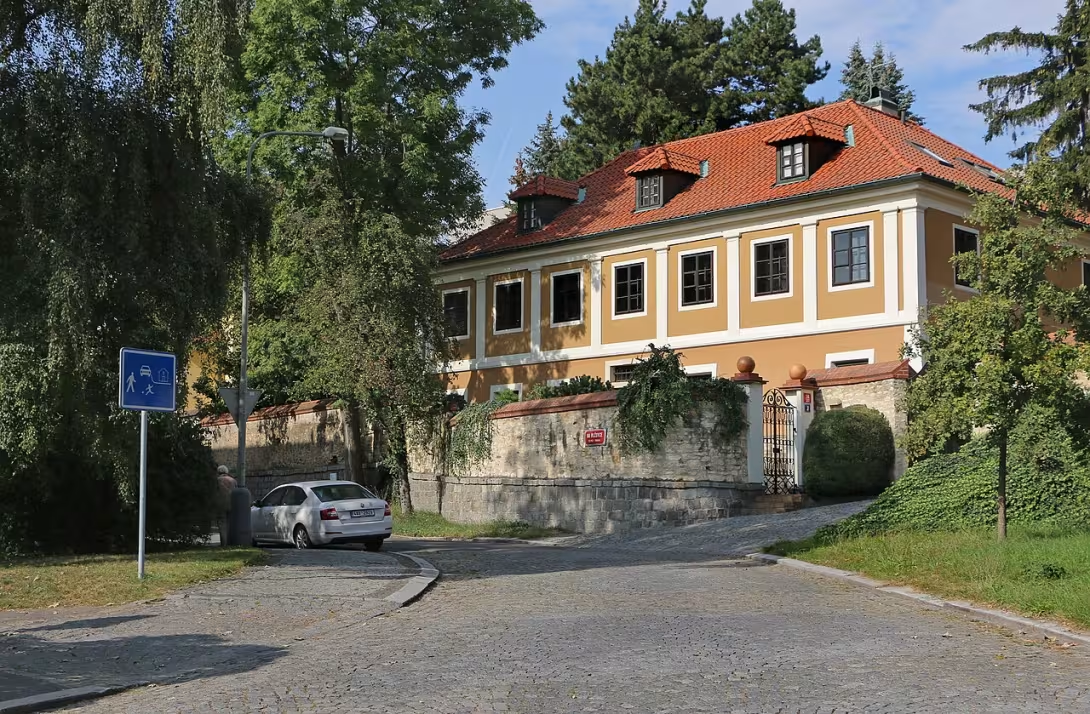

The historical appearance on the left is an AI-generated visualisation and serves as inspiration only.
Historical milestones
- 1622
- Jakub Kozel z Peclinovce bought the Koutsky vineyard and merged it with the surrounding land.
- 1750
- The estate bought František Kazimír Strachovský ze Strachovic, according to which it acquired its name.
- 1845
- Gustav Hoffman built a brick on the estate.
- 1958
- The estate was declared a cultural monument.
Architectural development
In the 17th century the original vineyard buildings were supplemented with a residential house and economic facilities. The current classical form of a building with seven window axes comes from later reconstructions. The object is situated on a narrow plot, which affected its architectural arrangement.
Historical events
In 1622, several smaller vineyards were merged into one whole. In 1750 the manor was bought by the canon František Kazimír Strachovský, after which he bears his present name. In 1845, the owner of Gustav Hoffman was set up here by a brick factory, which later disappeared.
Owners
Jakub Kozel z Peclinovce (from 1622), Jindřich Volf Berka z Dubé (from 1646), Rozina Geismüller (from 1696), František Kazimír Strachovský ze Strachovic (from 1750), Jan Klement Zobel (from 1837), Gustav Hoffman (from 1845), Richard rytíř Klenka z Vlastimilu (from 1907).
Points of interest
- The estate was established in the 17th century by gradually merging smaller vineyards, namely Kozlovská, Topolky, Malá Topolka, Lower Bakery and Koutsky. - The current form of the building is classical and its architectural arrangement was fundamentally influenced by a narrow, trapezoidal plot. - Her current name was acquired by the manor after the canon and later by the Saint Francis Kazimír Strachovský, who purchased it in 1750. - The vine cultivation ended here after the Austrian heritage wars, yet the house in the cadastral records was still listed as a vineyard estate. - In 1837 the estate was purchased by court builder Jan Klement Zobel with the intention of setting up a brick, which was subsequently realized by another owner Gustav Hoffman.
Guide
Show guide text
This text was created by artificial intelligence and has not been editorially reviewed. It may contain inaccuracies.
Welcome to Prague's Dejvice, a place where the modern rhythm of the city clashes with the silent reflection of ancient history. You are standing in front of the settlement of Strakovka, an object that carries within it the mites of many different centuries and many different lives. While the life of the present Prague flows around you, this complex retains its own, quieter atmosphere. Look at the building ahead. Although at first glance it may seem like a harmonious whole, it is actually the result of a long process of joining, growing and transforming, which lasted hundreds of years.
Let us return together to a deep past to understand how this space was created. The entire history of this place begins in the early seventeenth century. Imagine the Prague margins in 1622. At the time, there were not dense neighborhoods of houses, but large vineyards. That is when Jakub Kozel z Peclinovce took the first major step towards what you see today. He bought the Koutsky vineyard and started gradually merging it with the surrounding land. What we see today as one estate was once a fragmented map of smaller vineyards. Over time, other parts like Kozlovská, Topolka, Little Topolka, Lower Baker or Koutsky were added to this whole. So this settlement was not created at once as a single project, but as a mosaic, when the individual pieces of the country gradually merged into one larger whole.
Now pay attention to the construction itself, which now stands before your eyes. Although its roots extend deep into the seventeenth century, its present appearance is the result of later modifications. The building you're watching is built in a classical style. Note its one-storey character and valbic roof, which gives a whole balanced and stable look. If you look at the facade, you'll see how it's broken down by Tuscan pilasters. These vertical elements, which resemble distorted columns immersed in the wall, add rhythm and grandeur to the building without being unnaturally cumbersome. It's fascinating to see how architecture reacted to the surrounding environment. Notice how the structure of the building is affected by the terrain itself. The estate stands on a sloping, trapezoidal plot, and it is this challenging slope that is in how the building fits into the landscape and how its architecture must be balanced in order to operate harmonically and on an uneven ground. For the present form you can see, the architect Richard rytíř Klenka z Vlastimilu can connect these elements into a whole.
To fully understand the importance of this place, we need to look at the people who left their mark. Each period brought a new name and a new direction. After centuries of vineyards came an era that gave the estate its present identity. In 1750 the estate was purchased by František Kazimír Strachovský ze Strachovic. It is because of him and his birth name that this object has become known as Strakovka. This is the moment when a simple agricultural and wine place becomes a mansion with a clear name and prestige.
But history was not just about wine and noble names. The place had to be adapted to the changing world of industry. In the middle of the nineteenth century, exactly in 1845, there was a fundamental change in the nature of the land. Gustav Hoffman built a brick here. Imagine this contrast - from one side a quiet vineyard and from the other side a place where it was worked with dirt and fire for the needs of a growing city. This transformation shows how dynamic this territory was and how it had to adapt to the needs of the time when Prague was beginning to develop rapidly.
Now, if you think about what's survived this place, you'll find how extraordinary it is. Usedlost Strakovka has undergone a number of modifications, from simple vineyards to industrial use to today's form. And even though her function was changing, her essence remained. Even in the modern era, this place has kept its weight. In 1958, the estate was officially declared a cultural monument, which ensured that its history would not be forgotten and its architecture would be preserved for future generations.
There's one more interesting thing you might find interesting. You might be asking why this building is so specifically designed like this. The key is the constant transformation. It's not just a building, it's a record of how the Prague landscape changed. From the small, individual vineyards that once covered these slopes to one complex object, which today serves as a monument. It is a story about how from small pieces of earth, such as Topolka or Kozlovská, gradually created one fixed point in the map of Dejvic.
Now that you know the story behind this facade and pilasters, I suggest you continue your walk. Take a look around, see the atmosphere of this place and try to imagine what life here looked like hundreds of years ago, when grapes are harvested and the smell of vineyards is carried through the air. Thank you for joining us on this short journey through time. We'll take the rest of your day to discover the secrets of our city.
Tips for visitors
The best time to visit is in the morning during the working week, when the surroundings are quiet and you can enjoy the exterior of the historic estate without the excitement of the city. The architecture and details of the facade stand out in the morning light.
For photography we recommend to use natural light that is reflected from the surrounding green. The best shots will be taken from a street view, where the historical character of the building will stand out in contrast to the modern construction of Dejvice.
In the area there is the historical estate Herčovka, which together with Strakovka forms an important whole of the vineyards. The walk between these objects offers an interesting insight into the history of the Prague winery.
For families with children, the location is suitable as a stop when walking on Dejvice. We recommend taking with you a snack and comfortable shoes because the terrain in the area can be slightly more demanding due to hilly nature.
Frequently asked questions
Can the monument be visited?
This is a residential or farm building, not a museum with opening hours. Please view it from public space and respect the owners' privacy. We have no information about access to the interior.
Where is the monument?
Location: Dejvice, Hlavní město Praha. The map on this page shows the exact spot.
Why is the monument protected?
It is listed in the Central List of Cultural Monuments of the Czech Republic as a cultural monument (register no. 1000152550).
Businesses nearby
Do you run a restaurant, accommodation, shop, museum, rental, wellness or other visitor service near this monument? Show yourself directly to the people heading to it — this is how they will see you in the app and on the web:
Events nearby

Zdroj akcí: otevřená data měst a obcí ČR (Národní katalog otevřených dat) a kalendář akcí Národního památkového ústavu.
Nearby
The estate is located near Hercovka in Prague's Dejvice, in an area with a rich history of vineyards.
Accommodation nearby
Trips and activities nearby
Guided tours, tickets and activities nearby from GetYourGuide
Affiliate link: if you buy from the partner, we may receive a commission. The price for you does not change.
Search tours and activities →Themed route
1. Usedlost Strakovka (Type: Historical landmark) - The main destination of the trip, which represents an important architecture in this location. 2. Actor (Type: Historical object) - Interesting destination located near the main monument. 3. Wine estate (Type: Historical architecture) - This area in Dejvice shows a rich history of local winery.
Seasonal recommendations
Spring brings nature awakening and first flowers to the gardens of the Manor. The atmosphere is fresh and light fine, making the surrounding area an ideal place for walks. I recommend wearing more layers of clothing because the morning cold can still be felt. The best thing is to visit the memorial in the morning before the larger groups of people start gathering here.
In the summer months, the space is dominated by thick greenery and rich foliage colour, which provides a pleasant shade. The sun hits the area sharply, creating contrast shadows and a dynamic atmosphere. Due to the main summer season it is advisable to come right after opening to avoid the biggest crowds. Choose light, breathable clothes and don't forget the sun protection.
Autumn turns the surroundings into a sea of yellow and red leaves, while morning fog gives the place a mysterious touch. The lighting is golden and very quiet in this period. The practical recommendation is to wear moisture resistant shoes because lawns are usually wet. The ideal time for visiting is the late afternoon when the light is softest and the space is less crowded.
Zimą reigns in the area of silence and minimalist beauty of naked branches that look fragile in the freezing air. The atmosphere is calm and meditative, especially if snow covers the landscape. It is necessary to choose really warm clothes and solid shoes. Don't forget to watch the opening times that are shortened during this period.
Visualizations and artistic views


The visualisations are generated by artificial intelligence and serve as inspiration.
Photos from the area
Real photos taken near the monument


Zdroj a licence jsou uvedeny u každého snímku.
Tips from visitors
No tips yet. Be the first!
Log in and add your tip.
Sources and literature
Photos: Pavel Hrdlička (Czech Wikipedia user Packa) / CC BY-SA 4.0 — Wikimedia Commons. The author and licence also appear when you hover over the image.
Faktickým podkladem tohoto textu byl článek na Wikipedii, jehož autory jsou přispěvatelé Wikipedie. Článek je dostupný pod licencí CC BY-SA 4.0.
Location on the map


Příběhy a pověsti
Legendy, pověsti a příběhy spjaté s touto památkou
Fotografie návštěvníků
Zatím žádné fotografie. Buďte první, kdo přidá fotografii z návštěvy!
Log in a přidejte svou fotografii nebo hodnoťte.
Za ověřenou návštěvu v aplikaci získáte víc bodů — poznáme podle GPS, že jste na místě.
Reviews and comments