



Úsobí Chateau
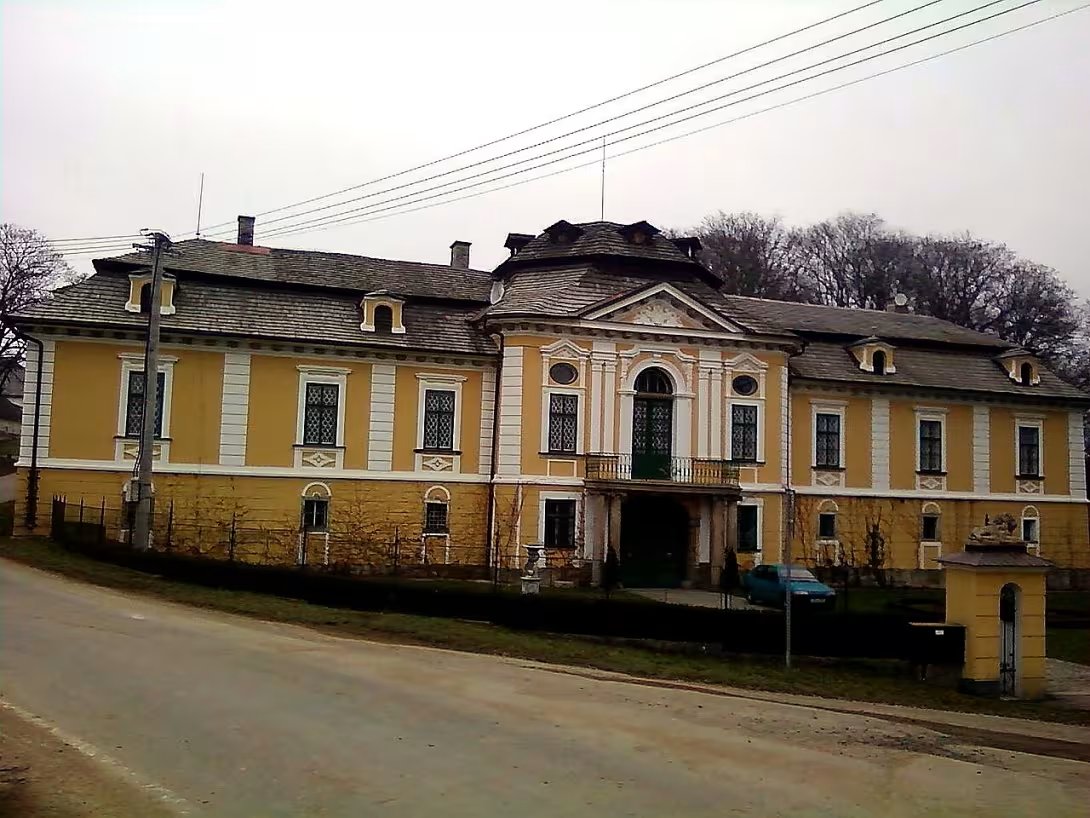
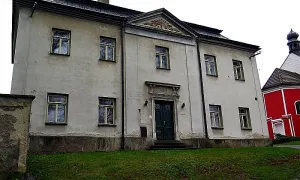
The chateau is located in the heart of the town just off the bank of the Pansky pond, in the immediate vicinity of the Sýsský creek. Located on Road II / 348 leading from Chryška to Herálec. The construction is protected as a cultural monument of the Czech Republic since 1958 and is marked by tourist stamp number 1989.
The first written mention of Úsobí dates back to 1307, when the estate was owned by the Prague bishops and archbishops to which the Rožmberks provided it. Spiritual owners stayed here for more than 130 years. In 1436 it was bought by Trčeček from Lipa and became the longest owners - holding the estate for nearly 170 years until 1601. In the middle of the 16th century, it is assumed that a water fort was built as the first mansion. The first well-proven mention of the mansion dates back to 1622.
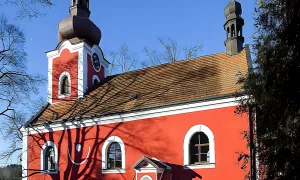
After 1628, when Stubíková of Königstein owned the estate, the owners changed at a faster pace. In the second half of the 18th century there was a major reconstruction of the fortress on the late Baroque chateau. In 1751 he purchased the estate of František Jošt (Jodok), svobodný pán Göldin z Tiefenau, the father of fifteen children. It is he who is credited with the transformation of the mansion into a chateau in the Baroque style. In 1757, he did not build in the northeast wing chapel dedicated to the Virgin Mary the Auxiliary, Saint Florian and Saint Donat.
But the son was unable to maintain prosperity, and the estate ended in auction. In 1785 it was purchased by Martin Leopold Fučikovský z Grünhofu, under which the chateau developed. Around 1830, the chateau passed through an empir reconstruction, which also touched the chapel. The park was built in this period of orange. Since 1903 the chateau was owned by Ludvík a Jenny Wesselá - Jenny was the daughter of the industrialist Emil Skoda. In 1935, the family sold it to Robert Stangler.
Sales became difficult - the purchase price was partially paid by Dr. Antonín Imlauf. After Stangler's death in 1947, the chateau was nationalized in 1948. The building was housed in a treatment of long-term patients from Havlicko Brod Hospital and the building gradually disintegrated. In 1992 he was returned to the descendants of Stangler under restitution. A year later, the owners sold it to them, but their intentions were not realised. After six years, the chateau remained empty and was the target of vandals. In 1999 it was purchased by the current owner and overhauled. Today, the visitor finds a renewed building that retains its baroque character.
Then and now
Drag the slider to compare how the landmark may have looked when it was built with the view today.
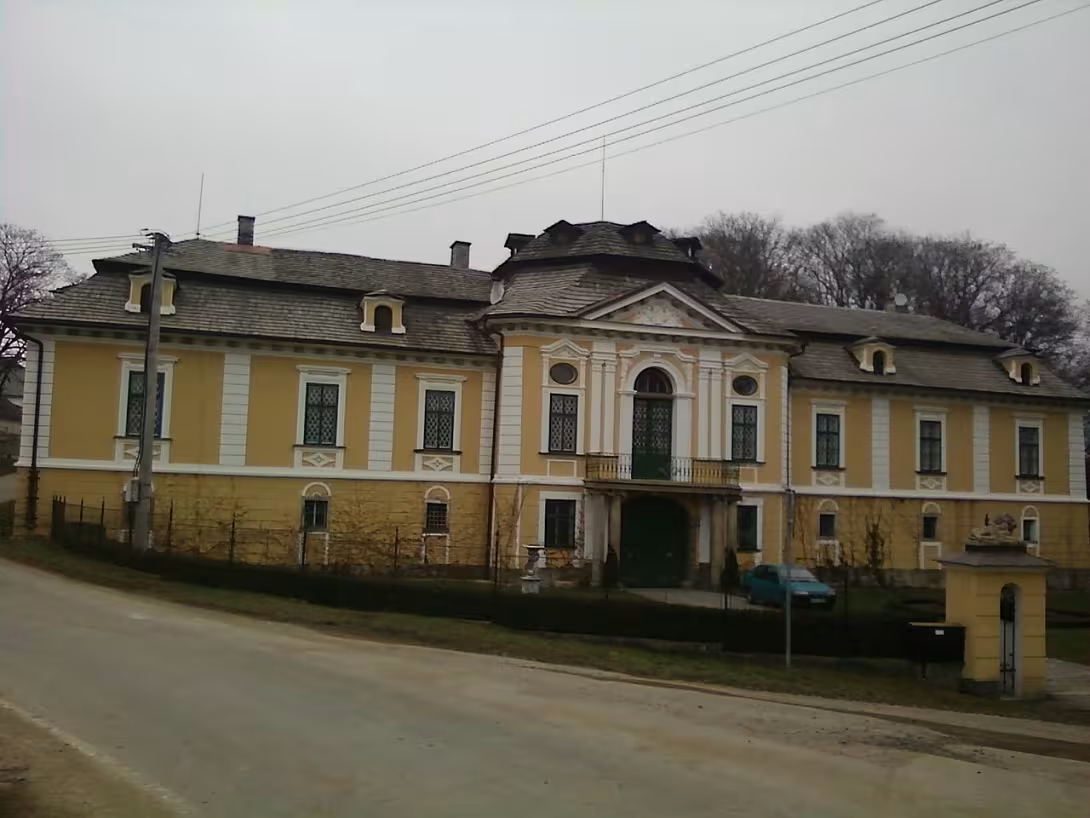
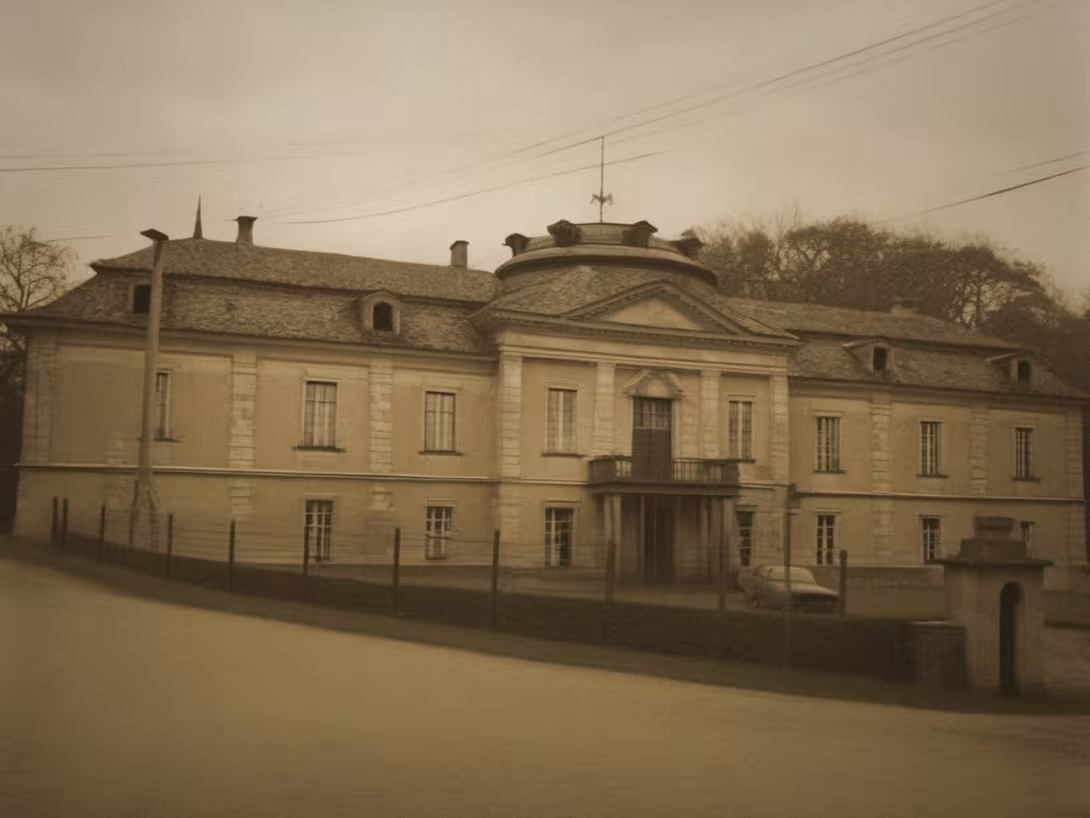
The historical appearance on the left is an AI-generated visualisation and serves as inspiration only.
Historical milestones
- 1757
- The position of the Chapel of the Virgin Mary of the Auxiliary, St. Florian and St. Donat.
Architectural development
Originally, a water fort was built in the middle of the 16th century, which was rebuilt in the second half of the 18th century into a Baroque chateau. In 1757, the chapel of the Virgin Mary was built in the northeast wing of the chateau. At the time of empirical modifications around 1830 there were changes in the chateau chapel.
Owners
The sequence of owners with years if available, otherwise zero.
Points of interest
- The chateau has been protected as a cultural monument of the Czech Republic since 1958. - The first written mention of Úsobí dates back to 1307, when Prague bishops and archbishops were owned. - After 1628 the owners changed at a faster pace and in the second half of the 18th century the chateau was rebuilt on the late Baroque chateau. - In 1757, they built a chapel dedicated to the Virgin Mary of Auxiliary, Saint Florian and Saint Donat. - In 1992 the chateau was returned to the descendants of Stangler as part of the restitution process.
Guide
This guide is narrated by a synthetic voice generated by artificial intelligence.
Show guide text
This text was created by artificial intelligence and has not been editorially reviewed. It may contain inaccuracies.
The Úsobí Castle stands on the shore of Panský rybník, almost in the very center of the market town of Úsobí in the Vysočina region, by the road from Chyška to Herálec. The Úsobský potok stream flows tight around the castle. As a cultural monument, it has been protected since 1958.
The first written mention of Úsobí dates from 1307. At that time, the local estate was acquired from the Rozemberks by the Prague bishops and archbishops. They held it until 1436, when it passed to the Trčka family of Lípa. They ruled there the longest of all, almost one hundred seventy years, until 1601.
According to some sources, a water fortress was built in the middle of the sixteenth century at the confluence of two streams as the first lordly residence. However, it is documented only in 1622. The estate had belonged to the Štubíks of Königstein for two decades at that time. They sold it in 1628. Over the following hundred years, several owners succeeded each other, but none of them left a more significant mark.
In the second half of the eighteenth century, the fortress was transformed into a late Baroque castle. In 1751, František Jošt, also called Jodok, Baron Göldin of Tiefenau, a man of fifteen children, purchased the estate. According to some sources, he himself carried out the reconstruction. In 1757, he had a chapel of Our Lady of Help, Saint Florian and Saint Donatus established in the northeastern wing. However, his son brought the estate to ruin. In 1785, Martin Leopold Fučikovský of Grünhof therefore acquired it at an auction, and Úsobí experienced rapid development under him. Around 1830, the castle, along with the chapel, underwent an Empire style reconstruction, and an orangery was established in the castle park at that time.
From 1903, the castle belonged to the couple Ludvík and Jenny Wessely. Jenny, whose maiden name was Johanna, was the daughter of industrialist Emil Škoda. In 1935, the family sold the castle to Robert Stangler, the owner of the nearby castle in Věž. Stangler, however, paid only a small part of the price. Antonín Imlauf paid most of it, as he wanted to spend his retirement there. The relations between the two men soon became complicated, as Stangler did not fulfill his obligations and demanded further concessions and loans. In 1947, Stangler died. Before the inheritance could be settled, the castle was nationalized in 1948.
Subsequently, a long-term care facility was moved there from the hospital in Havlíčkův Brod, and the castle gradually fell into decay. In 1992, descendants of Robert Stangler acquired it through restitution. A year later, they sold it to a company from Třebíč, which did not carry out its plans and went bankrupt. For six years the castle then stood unused and open to vandals. In 1999, the current owner purchased it at an auction and had it completely restored.
Tips for visitors
The best time to visit the chateau Úsobí is autumn or spring season when the forests and surrounding countryside are in full beauty. The sunny day offers ideal lighting conditions for shooting the chateau and Pansky pond. At this time, there is also the least chance of rainy days, allowing you to easily explore the historical area.
We recommend checking current connections and times in previous route counting using an online search engine or local transport schedule.
When visiting the chateau Úsobí it is advisable to take with you comfortable shoes, because a walk along the historical area and surrounding park can be long. Do not forget also the protective umbrella or umbrella, depending on the weather. Photographers can bring specific tools to capture the details of architecture.
For families with children, the Úsobí Chateau is an ideal destination where not only history and beauty of the building can be enjoyed, but also nature. Children can enjoy walking around the Pansky pond or playing in the park next to the chateau. It is also possible to look at the interior of the chateau, where some rooms are accessible and interesting even for younger visitors.
If you have time and desire to explore the surroundings of the chateau Úsobí, we recommend visiting the Pansky pond. It is a beautiful place for relaxation or picnic where you can enjoy a quiet moment in nature. In addition, it is possible to look at the surrounding forests and potentially visit local shops or restaurants offering traditional regional dishes.
Frequently asked questions
Can the monument be visited?
Some buildings of this kind are open for guided tours, others serve another purpose or are privately owned. We have not verified whether and when this monument is open – please ask the operator.
What are the opening hours and admission?
We have not verified the opening hours or admission. Current information is published by the operator. Official website: http://www.zamekusobi.cz/
Where is the monument?
Location: č.p. 1, Úsobí, Kraj Vysočina. The map on this page shows the exact spot.
Why is the monument protected?
It is listed in the Central List of Cultural Monuments of the Czech Republic as a cultural monument (register no. 38675/6-349).
For kids
Imagine going back to the past, before there were trees and animals. It was like another world! Úsobí, a small chateau, was a truly wonderful place back then.
Who lived here? I don't think anyone's gonna think about that question today because people haven't lived here in a long time. But there used to be villages here, and people used to feed on agriculture. They grew fruit trees, vegetables and amazing grass.
Businesses nearby
Do you run a restaurant, accommodation, shop, museum, rental, wellness or other visitor service near this monument? Show yourself directly to the people heading to it — this is how they will see you in the app and on the web:
Events nearby
Zdroj akcí: otevřená data měst a obcí ČR (Národní katalog otevřených dat) a kalendář akcí Národního památkového ústavu.
Nearby
Ambient landscape, other monuments, natural elements up to 5 km or zero.
Accommodation nearby
Themed route
1. Chateau tank - outdoor area. The place where visitors are welcomed by historical architecture and begins the journey to explore. 2. Interiors and exposition - indoor spaces. Possibility to see past times through exhibited objects and historical rooms. 3. Chateau park - natural area. Ideal space for relaxation and walks in the immediate vicinity of the monument.
Seasonal recommendations
Spring: Úsobí offers a wonderful view in the spring, when the chateau and surrounding nature come to life in a vibrant shine. Flowers and trees are beginning to bloom, giving the chateau a unique spring atmosphere full of sweet fragrances and colorful diversity. During this period, some garden parcels may still be under-built, adding a sense of peace and a new beginning. It is recommended to visit in the morning when the sun lights the chateau most beautifully, but it is advisable to remember a warm coat due to morning and evening cold. Visitors should be ready to visit the time when the first tourist groups are beginning to appear.
Summer: In summer, Úsobí is a favourite destination for lovers of history and nature. The sunny days provide ideal conditions for exploring the chateau and its large parks where visitors can enjoy the movement on the outdoor trails or relax in the shady garden. Summer attracts a large number of tourists, so it is advisable to visit early in the morning or later in the evening to avoid the biggest crowds. Early arrival ensures better opportunities for shooting without excessive light and warm clothing is important but with sun protection.
Autumn: In autumn, Úsobí offers a view of the chateau in an atmosphere full of colorful leaves and mild air. Changing the color of trees adds a romantic and peaceful feeling to the chateau, which is ideal for visiting a family or a loved one. When visiting during this period, visitors should remember clothes suitable for colder temperatures and rain options, because autumn is often variable. In addition, parks are less visited in this period than in summer, which makes it possible to explore the chateau more intensively.
Winter: The winter visit to Sysobia offers unique views of the chateau and its surroundings, where everything is covered with snow or has pale colors. The atmosphere is calm and quiet, which allows you to enjoy historical architecture without excessive crowd noise. Despite cold moons, beautiful sunny days can be enjoyed during winter periods, which illuminate the chateau and surroundings more clearly than in other seasons.
Visualizations and artistic views


The visualisations are generated by artificial intelligence and serve as inspiration.
Photos from the area
Real photos taken near the monument


Zdroj a licence jsou uvedeny u každého snímku.
Atmosphere of the place
This atmospheric visualisation of the place and period was generated by artificial intelligence. It is not real footage of the location.
Tips from visitors
No tips yet. Be the first!
Log in and add your tip.
Sources and literature
Photos: Freibo / CC BY-SA 3.0 — Wikimedia Commons. The author and licence also appear when you hover over the image.
Faktickým podkladem tohoto textu byl článek na Wikipedii, jehož autory jsou přispěvatelé Wikipedie. Článek je dostupný pod licencí CC BY-SA 4.0.
Location on the map


Příběhy a pověsti
Legendy, pověsti a příběhy spjaté s touto památkou
Fotografie návštěvníků
Zatím žádné fotografie. Buďte první, kdo přidá fotografii z návštěvy!
Log in a přidejte svou fotografii nebo hodnoťte.
Za ověřenou návštěvu v aplikaci získáte víc bodů — poznáme podle GPS, že jste na místě.
Reviews and comments