



Valečov Rock castle
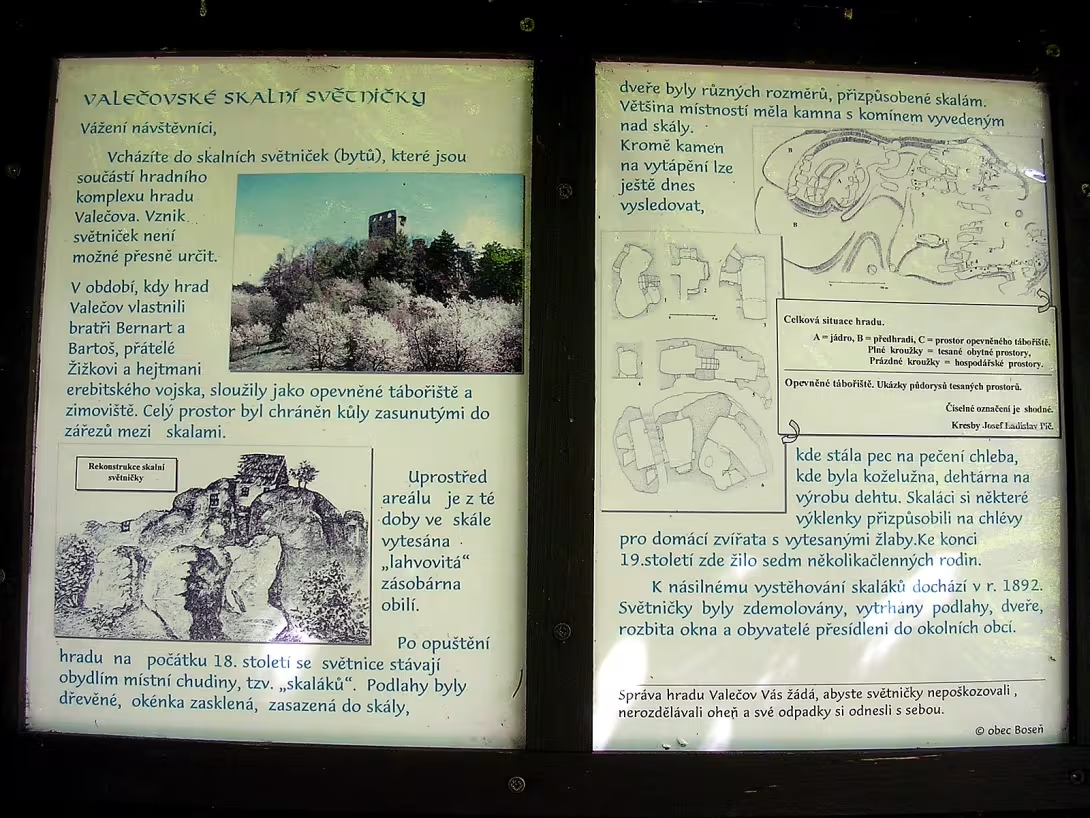
Valečov is a ruin of the medieval castle, which lies on sandstone rock formations in the village Boseň near Mladá Byslav. This cultural monument, protected since 1967, is located at an altitude of approximately 320 metres on the western edge of the Czech Paradise, near Munich Hradiště.
The castle was founded after 1300 by the Valečov family from Valečova. Originally, the wooden structure was gradually converted into stone in later periods.
The building unit consisted of a dominant core situated on three sandstone ribs, supplemented by two frontiers and a large fortified space. A significant part were numerous rock lights and carved into sandstone blocks under the castle core of the access corridor leading to the top platform. On the middle block was the Old Palace, originally wooden or raked. The preserved New Palace has two prevents and an archery on the excellent side. In the 16th century, both palaces were adapted so that everyone had their own entrance from the courtyard. The inner walls were supplemented by smaller buildings, such as a dining room or women's accommodation, and other dwellings carved directly into the rocks. Under the walls there was a castle with a series of buildings and dozens of rock rooms.
After the foundation of the castle, the Valečov family of Valečova was run there. Since he was one of Jan Žižka's supporters from Trocnova, the castle was conquered in 1439 and burned down by Henry of Vartenberk. After Hussite wars, the castle was gradually rebuilt from stone, but after the Prague campaign in 1443-1444 it remained only a few years. In 1472 there lived Vaněk z Valečova, a subchamber of royal cities under the rule of Jiří z Poděbrad. Subsequently, the owners of the castle took turns quickly, until the Valdstejns acquired it at the beginning of the 17th century. For this family, the object served as an administrative centre, not as a seat, and in 1652 it was already mentioned as desolate.
Rock lights have had a specific use in the past; served, for example, as a winter grounds for Hussite field troops. Even in the 19th century, poor local people who had been forced to evict Munich Hradiště by order of the District Government in October 5, 1892 were also living in some rock areas. The ruin also became a movie scene - scenes from RumplCimprCampr, the premiere of which took place on Czech TV at the end of 1997.
The village Boseň is the owner of the castle since 1994. The object can be reached after the red marked Golden Path of the Czech Paradise on the Klamorn and the Drabské lights, or after the green marked walking route to Branzej. There are other hiking and cycling routes in the vicinity and there is a parking lot approximately 250 metres from the castle. The entrance to the premises is paid for in the season.
Valečov presents a unique combination of medieval architecture and natural rock formations. It is a place worth visiting to anyone who is interested in the history and rock architecture of the Czech Paradise.
Then and now
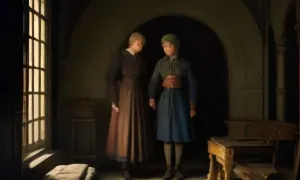
Drag the slider to compare how the landmark may have looked when it was built with the view today.
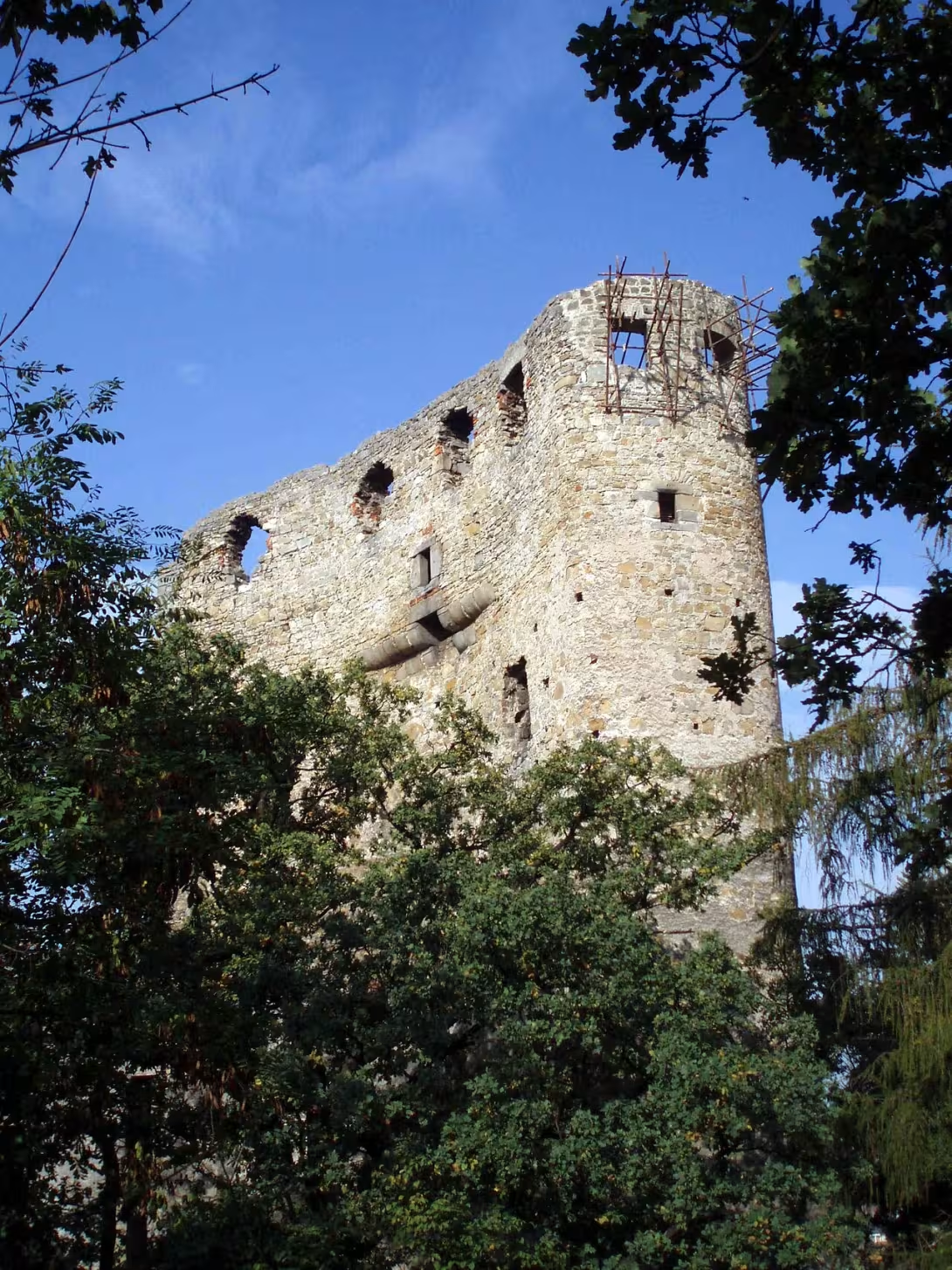
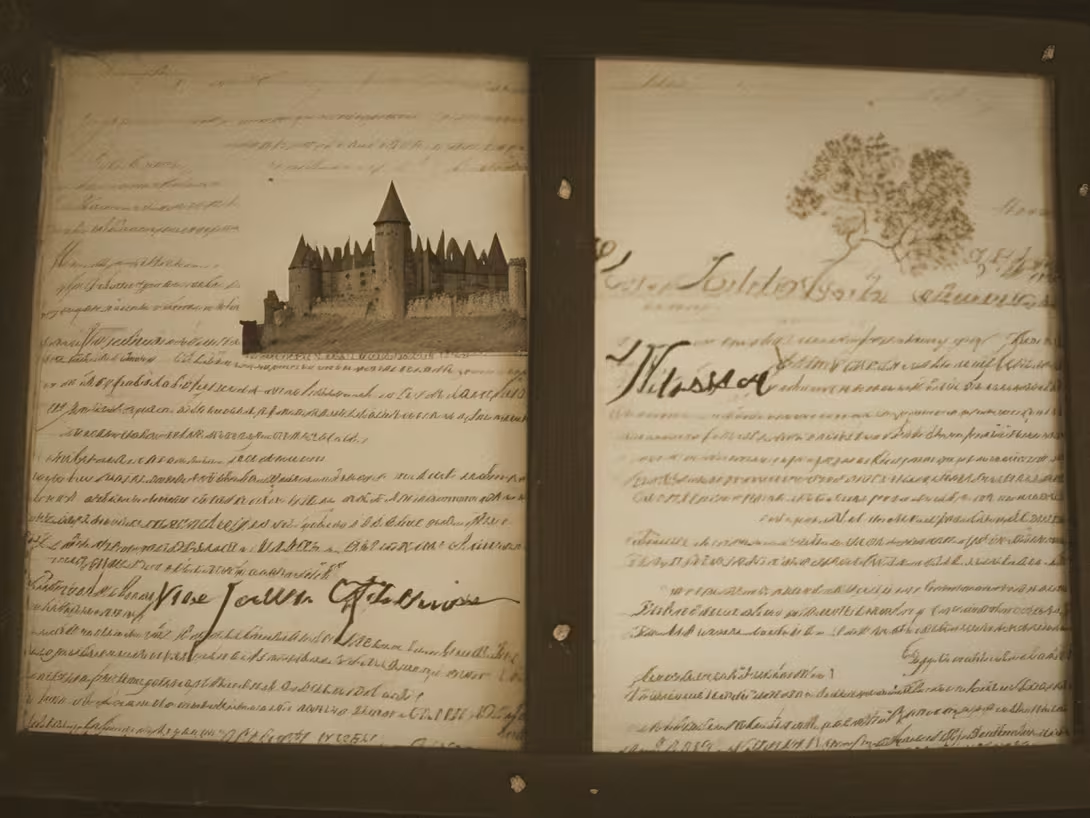
The historical appearance on the left is an AI-generated visualisation and serves as inspiration only.
Historical milestones
- 1439
- Conquering and burning the castle by Henry of Vartenberk after Hussite wars.
- 1472
- At the time of the reign of Jiří z Poděbrad lived here Vaněk z Valečova.
- 1652
- The castle is referred to as desolate.
- 1892
- Violent eviction of the inhabitants of the rock lights by order of the district government.
Architectural development
Originally a wooden castle was gradually rebuilt from stones on sandstone rock ribs. The dominance was the construction of the Old Palace and later the New Palace with the arches and the privates. Carved rock lights and corridors formed an integral part of the castle complex.
Historical events
1439 - the castle was conquered and burned by Henry of Vartenberg, 1652 - the castle was referred to as desolate, 1892 - the inhabitants of the rock lights were violently evicted.
Owners
Valečov from Valečova (after 1300), Valdštejn family (early 17th century), Boseň municipality (since 1994).
Points of interest
- Valečov is a ruin of medieval castle situated on sandstone rock formations in the village Boseň near Mladá Byslav. - The castle was founded after 1300 by the Valečov family from Valečova and gradually converted into a stone building. - After Hussite wars the castle was conquered and burned by Henry of Vartenberk in 1439, then quickly changed owners. - Rock skylights served as winter grounds for Hussite field troops, and in the 19th century, poor local people lived there. - The ruin became a film scene where scenes from RumplCimprCampr were filmed.
Guide
Show guide text
This text was created by artificial intelligence and has not been editorially reviewed. It may contain inaccuracies.
Welcome to the ruins of Castle Valečov. You are standing in a place where the natural strength of sandstone rocks meets the legacy of medieval builders. In front of you is a unique landscape that will immediately lead you to another era. Look around you at these monumental sandstone formations. Feel the atmosphere of peace, however, which is only superficial, because every rock and every remnant of stone masonry carries here traces of stormy events. This location at the village Boseň is not just an ordinary pile of stones, it is a witness of centuries that hovers over the surrounding area on three sandstone ribs.
Let us now return together to the time when everything began. This fortress does not have its origin in one particular construction, but in a gradual transformation. After a year of thirty hundred, the Valečov family of Valečova founded the first mansion, which was originally built of wood. Imagine the early medieval atmosphere when the first dwelling began to be built between the trees and the rocks. Over time, however, the need for safety and durability has changed the nature of this place. The wooden structures were replaced by a stone, which gave the castle its impressive form, which you will feel today in its ruin. The strategic location of the castle was not random. The choice of these three sandstone ribs was a brilliant move that allowed the use of nature itself as part of the defence system.
Now pay attention to what you see right in front of you and what lies in the rocks themselves. The castle Valečov is not just a building built on a rock, it is a building that connects with a rock. Note how stone masonry is connected to natural sandstone walls. What you see is the result of an effort to integrate architecture perfectly into the field. The key element you have to perceive here is rock lights. These spaces, carved directly into sandstone floors, served not only as defence positions but also as accommodation spaces. Imagine the narrow, cold, but safe spaces that provided shelter for soldiers and residents in times of greatest danger. This combination of worked stone and raw rock creates a fascinating contrast that is typical of this castle.
But the history of this place is full of conflicts and dramatic twists. If you look at these rocks, you can imagine the hard times when there was not a struggle for living, but for survival. At the time of Hussite wars that shook the country, Valečov was in constant danger. He wrote this place down in the history of a thousand four hundred thirty-nine. This year the castle was conquered and burned by Henry of Vartenberk. Imagine the chaos, the smoke rising from the sandstone peaks and the destruction that struck this strategic fortress. It is possible that in these times there were also shadows of figures like Jan Žižka z Trocnova, whose name is inseparably linked to this period.
Although the castle has passed through such a devastating wound, life here has never quite ceased. Let's go a few decades further. By the time George of Podebrad reigned, in the year one thousand four hundred seventy-two, there lived a man named Vaněk z Valečova. This proves to us that even after the devastating wars the castle tried to return to its original position and was once again the seat of the nobles. This continuity of life in ruins is fascinating. The castle was constantly changing, its owners were changing, and its meaning was changing, until in the year one thousand six hundred fifty-two was first mentioned as desolate in historical records.
But here we come to one of the most interesting and perhaps the most mysterious chapters of this place. Even though the castle was officially considered a ruin, people didn't give it up. The rock lights we talked about kept their function a lot longer than it seemed. The people here lived in the amazement of nature, right in the sandcracks and spaces that once served as a military hostel. This existence in close contact with nature lasted until the end of the nineteenth century. Imagine the constant efforts to survive in these rocky areas, until the year came a thousand and eighty-two. That was when the decision of the county council ordered the inhabitants of these rock lights to evict violently. That was the end of a very specific era of human life in this place. This event has left a sad touch in the history of Valečova and reminds us how much human fatalities can connect with the relentless power of law and nature.
In your next look at the surroundings, try not only to perceive what you see, but also what you feel. Feel the weight of history that is imprinted in every sandstone grain. Valečov is not just a monument to medieval fortification, it is a monument to human tenacity, to trying to build, destroy, relive and eventually give up again. This ruin on three ribs is a living example of how human history intertwines with the geological landscape.
I'm not expecting you with another long story, but an invitation. Please continue to browse and pay attention to the details offered by this rocky landscape. Take a closer look at the structure of sandstone formations, try to find places where stone masonry meets natural rock, and perceive the silence that exists here. Every step of these paths can bring you closer to understanding how difficult and fascinating it was to live in close proximity to these rock castles. Thank you for choosing to visit Valečov and devote time to his story. We wish you a pleasant journey and many other experiences in exploring this beautiful Czech paradise.
Tips for visitors
For the best experiences we recommend a visit in the late afternoon when the sun hits sandstone rocks at an angle that highlights their structure and creates beautiful light for photography. Autumn season is ideal for lovers of colorful nature.
After arrival you will have a short walk in the natural terrain, so prepare to move in the forest and between the rock formations.
Bring quality hiking shoes and plenty of drinking water. For families with children, a tour of the rock castle is a great adventure, but it must be remembered that the terrain is uneven and requires increased attention when moving near the cliffs.
For photography are the best places on the views right at the ruins, from where you can see the panorama of the surroundings. If you have more time, you can visit the Drábské svůzky, Branzej, Munich Hradiště or go to the Czech Paradise area or the Klamorna River.
Frequently asked questions
Can the monument be visited?
This is a ruin. Such sites are often freely accessible, but some can only be visited with a guide or are closed for safety reasons. We have not verified the current situation – take care and respect any restrictions.
Where is the monument?
Location: Boseň, Středočeský kraj. The map on this page shows the exact spot.
Why is the monument protected?
It is listed in the Central List of Cultural Monuments of the Czech Republic as a cultural monument (register no. 1000145415).
Businesses nearby
Do you run a restaurant, accommodation, shop, museum, rental, wellness or other visitor service near this monument? Show yourself directly to the people heading to it — this is how they will see you in the app and on the web:
Natáčelo se zde
- Lotrando a Zubejda (1997) film
- Rumplcimprcampr (1997) film
Zdroj: Wikidata (vlastnost „místo natáčení“) · Všechna filmová místa
Events nearby


Zdroj akcí: otevřená data měst a obcí ČR (Národní katalog otevřených dat) a kalendář akcí Národního památkového ústavu.
Nearby
Český ráj, Mnichovo Hradiště, Klamorna, Drábské světničky, Branžež.
Accommodation nearby
Trips and activities nearby
Guided tours, tickets and activities nearby from GetYourGuide
Affiliate link: if you buy from the partner, we may receive a commission. The price for you does not change.
Search tours and activities →Themed route
1. Munich Hradiště (city): The entrance gate to the region, which offers a historical introduction to the road. 2. Valečov (ruin): The main destination of a trip with a dominant location and a beautiful view. 3. Drab lights (rock fort): Fascinating building carved into sandstone, which complements the atmosphere of the surrounding area. 4. Business (village): A quiet location suitable for relaxation in the landscape of the Czech Paradise.
Seasonal recommendations
Spring: In spring, the ruins of Valečov awaken together with the surrounding vegetation. Young green leaves and the first flowers make the stone remains fresh. The atmosphere is optimistic and light is very pleasant to capture details thanks to less dense tree crowns. We recommend wearing layered clothes because the morning cold can quickly vary with the heat of the sun. There is peace in this period, which allows us to perceive history without disturbing the influence of crowds.
Summer: In the summer months the monument is healed with thick leaves, which creates a pleasant shadow on hot days. The sun hits the ruins directly, highlighting the texture of the old stone. Due to the increased interest of visitors, we recommend arriving immediately after opening so that you enjoy the peace in front of the main wave of people. Don't forget enough drinking water, headgear and fixed shoes suitable for uneven terrain between the ruins of the castle.
Autumn: Autumn brings melancholy beauty and fascinating color changes around the castle Boseň. Golden and brown shades of leaves combined with morning fog in the valley create a magical and quiet atmosphere for visitors. It is best to visit the place in the afternoon when the sun shines low and highlights the shapes of ruins. Due to wet soil and volatile rain, it is necessary to carry a waterproof jacket and shoes with good grip.
Winter: Winter offers a raw and uncompromising view of the ruin. Without leaves, the details of the building are better visible and in case of snow the ruins are very impressive and lonely. The atmosphere is quiet and remote, which is ideal for those looking for complete focus. For short days plan to visit in the morning and do not forget very warm clothes and high-quality shoes to protect you from cold and possibly slippery surface.
Visualizations and artistic views


The visualisations are generated by artificial intelligence and serve as inspiration.
Photos from the area
Real photos taken near the monument


Zdroj a licence jsou uvedeny u každého snímku.
Tips from visitors
No tips yet. Be the first!
Log in and add your tip.
Sources and literature
Photos: Benutzer:Hejkal / CC BY-SA 2.0 de — Wikimedia Commons. The author and licence also appear when you hover over the image.
Faktickým podkladem tohoto textu byl článek na Wikipedii, jehož autory jsou přispěvatelé Wikipedie. Článek je dostupný pod licencí CC BY-SA 4.0.
Location on the map





Příběhy a pověsti
Legendy, pověsti a příběhy spjaté s touto památkou
Fotografie návštěvníků
Zatím žádné fotografie. Buďte první, kdo přidá fotografii z návštěvy!
Log in a přidejte svou fotografii nebo hodnoťte.
Za ověřenou návštěvu v aplikaci získáte víc bodů — poznáme podle GPS, že jste na místě.
Reviews and comments