



Vápenky Miskovice Limestone
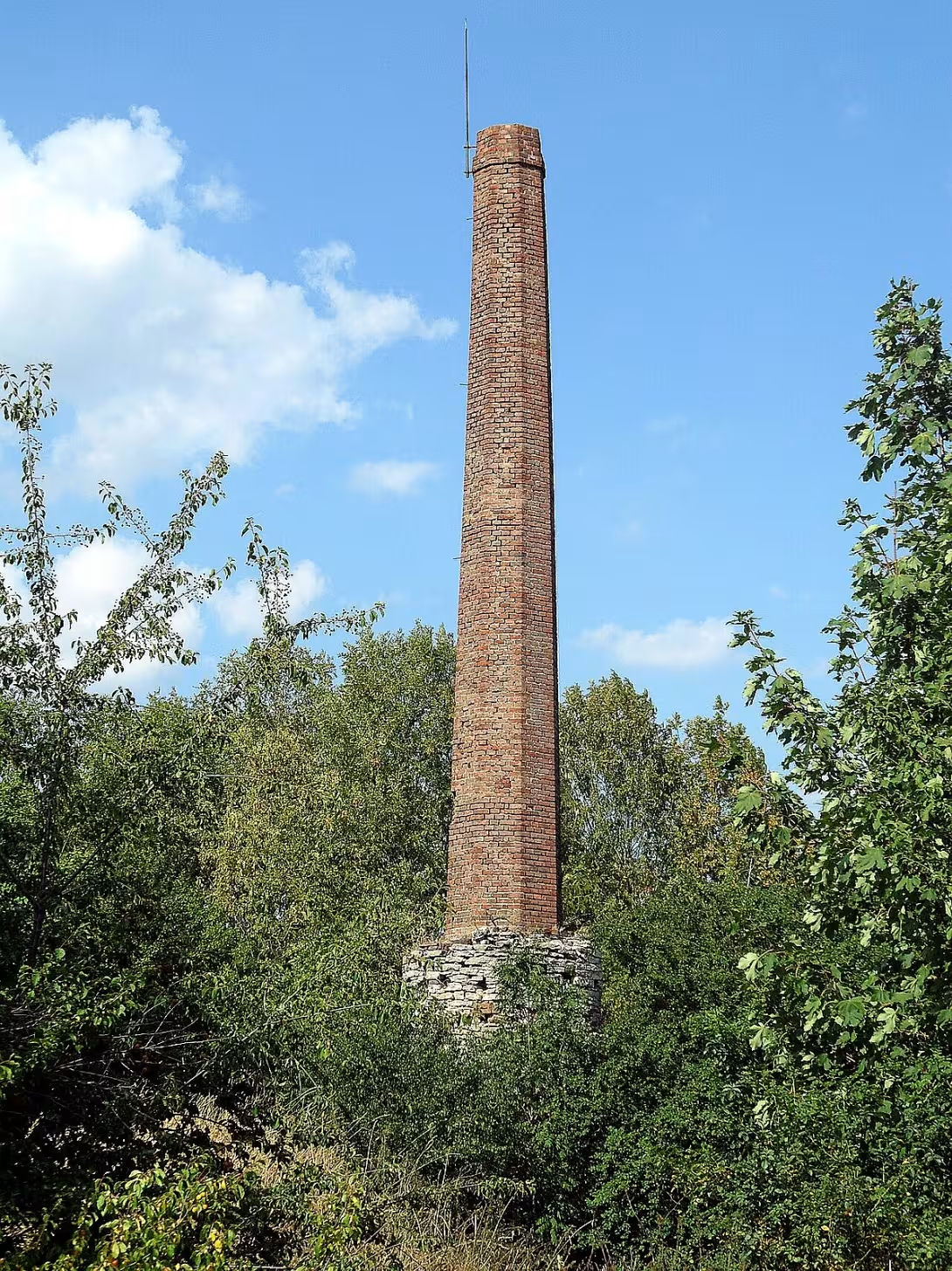
Vápenky Miskovice presents a fascinating set of technical monuments near the village of Miskovice, which shows a long-term tradition of extraction and burning limestone. These historical structures include circular and shaft limestone, the development of which reflects technological advances in the limestone industry, from primitive wood seals to slotted pits to modern top-up top and chamber rings. The most significant of these monuments is the cultural monument, circular limestone south of the quarry, which is documented as a technical and cultural monument in the register of the Institute for the Protection of Monuments of the Czech Republic under the number 18106 / 2-1107. This site is located on the cadastral territory of Bylana near Kutná Hora, but is assigned to Miskovice in a cultural historical context.
The history of limestone dates back to the 19th century, when lime started to be extracted and burned in wood-heated seals. This process was later modernised by the transition to coke or carbon energy, allowing for more efficient and larger lime production. In 1892 Antonín Podolák built the first top hat, which represented progress against earlier burning methods. Josef Růžička followed in 1901 with another top hat which was replaced in 1921 by a large circular. In 1922 Alois Čepelák built a chamber circle for half a million crowns, which shows financial and technological development in the field of limestone industry.
Architecturally, limestone is an example of the evolution of building methods. The cultural monument, circular limestone south of the quarry, is built from local mussel limestone in the lower part and from bricks in the upper part. This building is characterized by a plinth and other double concessions that separate the body of the building. There are visible holes in the upper part of the wooden structure, which suggests the historical development of construction techniques. The dominant element is an eight-sided brick chimney that dominates the landscape and resembles a castle tower with its height.
The ownership of limestone has been governed over the years by various owners who have influenced their development and maintenance. These included Antonín Podolák, Josef Čejka, Josef Pauš, František Bohunovský, Jan Brant, Josef Štolba, Antonín Růžička, Josef Růžička and Alois Čepelák. Each of these owners brought their own technological innovations and investments in the development of limestone equipment.
The cultural monument at Miskovice is not only important for the history of the local industry, but also for its geological significance. The adjoining limestone quarry is of international importance for paleontology and biostratigraphy due to very well preserved chalk fauna. This quarry was historically used to build a part of the old town of Kutná Hora, which highlights its cultural and technical value.
Today Miskovice limestone is an important monument that attracts people interested in history and geology. Although some parts of the complex are inaccessible or serve new purposes such as storage on the premises of the agricultural cooperative, they still represent a valuable element of local culture and history. Visitors have the opportunity to explore the unique geological structure of the quarry and appreciate the architectural elements of limestone, which show technological progress over the centuries.
Vápenky Miskovice is a reminder not only of technical development, but also of the deep cultural and historical roots of the region. Their visit offers a unique view of the past and inspires the recognition of the importance of protecting technical monuments as part of the cultural heritage.
Historical milestones
- 1892
- Antonín Podolák built a top-hat limestone.
- 1901
- Josef Růžička built a top-hat limestone.
- 1921
- Josef Růžička demolished an outdated top hat and built a big circle.
- 1922
- Alois Čepelák built a chamber circle for half a million crowns.
Architectural development
The structures show a transition from primitive jams (mines) to cylindrical furnaces and then to complex circular furnaces. The cultural monument is built from local mussel limestone in the lower part and from bricks in the upper part. The dominant is a tall octave brick chimney from the turn of the 19th and 20th centuries.
Historical events
In 1892 Antonín Podolák built a top hat, in 1901 Josef Růžička built another top hat, which was replaced by a large ring in 1921, and in 1922 built a Alois Čepelák chamber ring.
Owners
They operated at different times Antonín Podolák, Josef Čejka, Josef Pauš, František Bohunovský, Jan Brant, Josef Štolba, Antonín Rožička, Josef Růžička and Alois Čepelák.
Points of interest
- The most significant is the circular limestone south of the quarry, which is registered in the register of monuments. - This building is built from local limestone and bricks. - The dominant element is an occluded brick chimney, which resembles a castle tower. - The adjoining quarry is of international importance for paleontology thanks to preserved chalk fauna. - Lom was historically used to build part of the old town of Kutna Hora.
Guide
Show guide text
This text was created by artificial intelligence and has not been editorially reviewed. It may contain inaccuracies.
Welcome to the place where history meets the depth of the earth and where the echoes of ancient work continue to flow between stones and shadows. You are standing right near the village of Miskovice, in an area that has been a tireless source of human effort and wealth for centuries. If you look around you now, you will see a landscape that may seem calm at first glance, but beneath it lies a story of fire, stone and constant progress. In front of you is a collection of technical monuments that are witnessing an ancient era, when the rough stone was created by the use of heat and patience by something necessary to build the whole world. Let us return together to a time when the extraction of limestone and its subsequent burning has become a fundamental pillar of life in this area. This tradition was never young. Many years ago, the construction of large and complex units that you can see or imagine did not begin here. It all began much more simply, almost in line with the natural face of the earth. The first people here used simple wooden structures called tadpoles, and plastered pits in the ground. It was brutal, it was challenging, and it required tremendous strength. Over time, however, human knowledge and technical possibilities have constantly developed. We saw how these primitive ways turn into modern and sophisticated systems that could use the power of fire much more effectively. Now pay attention to how this technological journey changed over the years thanks to individual men who had the courage and vision to raise these buildings. The history of this place is directly linked to the names of several prominent personalities. The first major step in modernization was made by Antonín Podolák. In the year eighteen hundred and ninety-two he built a top-class top-class top limestone. There were other changes and other people who brought new possibilities to this landscape. In the year one thousand nine hundred and one here Josef Růžička built another cylinder structure. Josef Růžička was, however, a man who was not afraid of the great reconstruction. In the year one thousand and nine hundred and twenty-one, he decided to take a radical step - an old, already obsolete top hat, to tear it down to create something much bigger and more powerful in its place. This created a large circular limestone which still dominates the surrounding view. But there was another, perhaps the most fascinating moment in the history of this place. In the year one thousand nine hundred twenty-two came Alois Čepelák. His vision was so great that he paid an incredible half a million crowns to build chamber limestone. At that time, it was an amount which spoke of the enormous importance of this enterprise and of the unwavering faith in the future flourishing of this place. These buildings are not just piles of stone and bricks, they are monuments of human ambition and technical progress. Now take a breath and look directly at the most important structure located south of the local quarry. It is precisely this circular limestone, which is today protected as a cultural monument and which should now impress you with its structure. Notice what it was built from. It's not just a random mix of materials. This building is carved directly from the surrounding area, using local limestone and red bricks. If you look closely at it, you can see traces of ancient life in the stone, tiny boxes and structures that were there millions of years ago. This link between the material and the construction itself is deep and relentless. Now, please look up. A dominant element that immediately captures your vision and gives the whole place an extraordinary character is an occluded brick chimney. If you look at it from a certain angle, you might feel that you're not looking at an industrial structure, but at a high castle tower that's watching over the whole landscape. Its geometric shape and strength seem majestic. It's a symbol of the power that was needed to control the heat and turn the stone into lime. When your eyes then move to the adjacent quarry, you realize that you are in a place that has a meaning far beyond the borders of this country. This quarry is not just a source of limestone material. Thanks to what it has preserved, this place is of international importance to scientists who are concerned with the ancient history of life on our planet. It's paleontology, that is to study the traces of life forms left here in stone. Every layered piece of limestone you see here can hide a secret about a world that existed long before the first humans. It's fascinating how three different timelines connect here. You have a deep history written in stone and fossils, you have a history of human effort and technological development from wooden pits to magnificent brick buildings, and then you have a presence here where you stand here and perceive the atmosphere of this place. These limestone are not just dead monuments, they are living chronicles that tell the story of how we learned to work with what the country offers. Now let's move on slowly. Let yourself be carried away by the atmosphere of this place and try in spirit to present the noise, dust and heat that once existed here. See the surrounding terrain, see the shape of the quarry and see how the architecture of these buildings adapted to nature. Every step can lead you to another detail that reveals another piece of this complex puzzle. Thank you for choosing to make this journey with us. We wish you a pleasant and inspiring continuation in exploring these historical secrets.
Tips for visitors
Best time to visit limestone Miskovice is in the spring or autumn season when vegetation is pleasantly green and light is not very strong. These months offer ideal conditions for shooting with fine colours and calm atmosphere.
Transport by public transport is also suitable, but specific connections and times can be verified using an online search engine. When planning a trip, notice the possibility of transporting back if you choose to take a long walk.
When visiting limestone, it is advisable to carry shoes suitable for walking on uneven terrain and plenty of drinking water, especially in warmer months. Also remember the protective coat or jacket because the conditions can be quickly variable.
The best place for photography is a circular limestone south of the quarry. Here you will find beautiful views of the unique geological structure and well of St. Vojtěv. The best light is usually in the early morning or late afternoon when the sun is not directly above your head.
In the vicinity of the limestone Miskovice there is a well of St. Vojtěv and a quarry with unique geological structure, which are interesting places to explore. These locations offer opportunities to learn the history and nature of the region.
Frequently asked questions
Can the monument be visited?
This is a ruin. Such sites are often freely accessible, but some can only be visited with a guide or are closed for safety reasons. We have not verified the current situation – take care and respect any restrictions.
Why is the monument protected?
It is listed in the Central List of Cultural Monuments of the Czech Republic as a cultural monument (register no. 1000128789).
Businesses nearby
Do you run a restaurant, accommodation, shop, museum, rental, wellness or other visitor service near this monument? Show yourself directly to the people heading to it — this is how they will see you in the app and on the web:
Nearby
Vápencový lom s unikátní geologickou stavbou, studánka Sv. Vojtěcha, obec Miskovice a obec Bylany.
Accommodation nearby
Trips and activities nearby
Guided tours, tickets and activities nearby from GetYourGuide
Affiliate link: if you buy from the partner, we may receive a commission. The price for you does not change.
Search tours and activities →Themed route
Thematic cruise route around Vápenek Miskovice
1. Limestone quarry with unique geological construction (Nature Memorial) This quarry is an ideal place to look into the fascinating eccentricities of geology. It is famous for its unique geological construction, which offers wonderful views of limestone layers and is interesting for lovers of nature and geologists.
2. Study of St. Vojtěh (Historical Spring) The well is located near the quarry and has served in the past as a source of drinking water for the inhabitants of the surrounding villages. It is a place of historical significance where you can enjoy a quiet moment and possibly look at old writing boards.
3. Municipality of Miskovice (Local Centre) After exploring the quarry and wells visit the village Miskovice where you can learn local culture and history. The village offers a quiet area with picturesque streets and the opportunity to explore traditional Czech houses.
4. The village of Bylana (Expansion trip) Continue to the neighbouring village of Bylany, which is known for its natural environment and calm atmosphere. This place is ideal for short walks or relaxation in green.
This route offers a combination of geological, historical and cultural attractions that allow you to know the area around Vápenek Miskovice at different angles.
Seasonal recommendations
Spring: During the spring season Vápenky Miskovice will turn into a place full of life and color. The first sunlight illuminates the ruins that appear in their fullness in light of daylight. Various shrubs and trees are beginning to bloom around the monument, which gives the landscape a beautiful green color. Visitors can enjoy mild temperatures, but it is important to prepare for cool wind and possible springs. It is recommended to wear top clothing in layers so that you can adjust your thermometers as necessary.
Summer: Summer brings long sunny days and ideal conditions for visiting Vápenek Miskovice. The sun illuminates the ruins, creating an almost magical impression. Nature blooms in its full beauty and visitors can enjoy a quiet moment under a shady bush. However, moisture is usually high, so it is advisable to equip yourself with light clothing and sun protection such as a hat or sunglasses.
Autumn: In autumn, Vápenky Miskovice offers visitors wonderful experiences. Leaves on trees turn into vivid colors from orange to red, giving the surroundings a romantic and peaceful atmosphere. The sun is beginning to set, so it is advisable to visit the memory during the sun's day. The temperatures are usually mild, but in the winter months you can meet with a cool vortex, so it is good to wear warm clothes and maybe even an umbrella for a sudden taste.
Winter: The winter season brings a completely different look to Vápenky Miskovice. The ruins are illuminated by moonlight, which gives them touching and mysterious. Snow sheets or ice shapes add magic and peace to the landscape image. The temperatures are low, so it's important to equip yourself with warm clothes, including insulated shoes and hats. Visiting a monument can be interesting even in winter conditions, but you need to be careful about the safety on a possibly slippery surface.
Visualizations and artistic views

The visualisations are generated by artificial intelligence and serve as inspiration.
Photos from the area
Real photos taken near the monument


Zdroj a licence jsou uvedeny u každého snímku.
Tips from visitors
No tips yet. Be the first!
Log in and add your tip.
Sources and literature
Photos: Stribrohorak / CC BY-SA 3.0 — Wikimedia Commons. The author and licence also appear when you hover over the image.
Faktickým podkladem tohoto textu byl článek na Wikipedii, jehož autory jsou přispěvatelé Wikipedie. Článek je dostupný pod licencí CC BY-SA 4.0.
Location on the map






Příběhy a pověsti
Legendy, pověsti a příběhy spjaté s touto památkou

Fotografie návštěvníků
Zatím žádné fotografie. Buďte první, kdo přidá fotografii z návštěvy!
Log in a přidejte svou fotografii nebo hodnoťte.
Za ověřenou návštěvu v aplikaci získáte víc bodů — poznáme podle GPS, že jste na místě.
Reviews and comments