



Velký hrádeček Hillfort
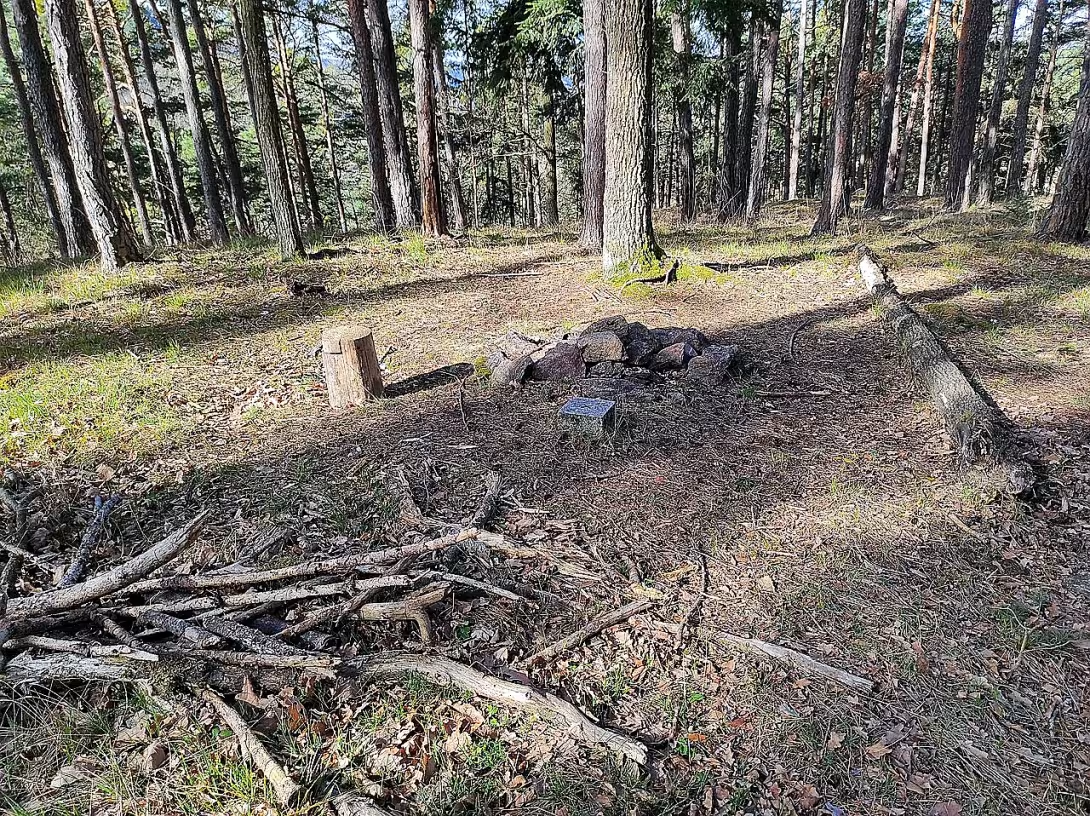
Velký hrádeček is an ancient castle on the top of the same-name hill in Šumava foothills near the village of Třebanice in the district of Prachátice. The locality of approximately 0.55 hectares was populated in the Bronze, Halštat and the early Middle Ages. Today it is protected as a cultural monument.
Few direct reports of the oldest history of the site have been preserved, as the site has never been more closely examined. In the period of Halštatian, where the castle is primarily dated, a network of fortified high-rise settlements was formed in Czech countries. It served as power and economic centers. The first technical description of the site was made by Jan Nepomuk Woldřich in 1882. At that time, however, he was unable to determine the time of creation due to the absence of archaeological findings.
The building form of the castle uses natural landscape configuration on the top platform at 571 meters above sea level. The steep slopes here exceed the surrounding terrain by up to 70 metres. The fortification consists of 395 meters long stonewall, the outside of which reaches an oblique height of three to five metres. On the more accessible east and southeast side, the defence system is reinforced by external bays and moats. The space between the walls is approximately ten metres. The entrance to the complex was situated in the south wall, where there was a three-metre break with slightly inverted wings of the wall.
The key moment for finding the site was surface collection of ceramics in 1957 and 1961. These findings allowed scientists to date the settlement to the period of the Hallatians and also confirmed activity during the Bronze and Early Middle Ages. Despite these partial findings, the question of the exact purpose and internal structure of the castle remains open, since the fortification itself was not the subject of archaeological research.
Today, Velký hrádeček is an important example of the prehistoric settlement of the region. Thanks to its position and preserved waves, it is well visible in the field. Visiting this place offers an opportunity to see the history of prehistoric high-rise settlements in the Bohemian foothills. For people interested in archeology and history, this monument represents a valuable goal, which shows the way in which people used the natural configuration of the landscape in the past to defend and settle.
Historical milestones
- 1882
- The first technical description of the fort by Jan Nepomuk Woldřich.
- 1957
- Surface collection of ceramics to allow dating to the period of the Hallatite.
- 1961
- Another archaeological collection confirming settlement in the Bronze and Early Middle Ages.
Architectural development
The fort was built using the natural landscape configuration on the top platform. The fortification consists of 395 meters long stone wall, which is doubled on accessible sides and supplemented by external moats. The entrance gate was designed with slightly inverted wall wings.
Historical events
In 1882 the site was first described by Jan Nepomuk Woldřich. In 1957 and 1961, surface collection of ceramics was carried out, which allowed dating of the fort to the period of the Hallatians.
Points of interest
- The fort is located at the top of the hill in the Bohemian foothills and is situated on an area of approximately half a hectare. - The locality was inhabited in the Bronze, Halštat and the early Middle Ages. - The first technical description of the site was created by Jan Nepomuk Woldřich in 18 hundred and eighty-two but at the time it was unable to determine the time of origin. - The fortification consists of three hundred ninety-five meters long stone wall, the outside of which is up to five metres high. - The entrance to the complex was located in the south wall, where there was a three-metre break with inside curved walls.
Guide
Show guide text
This text was created by artificial intelligence and has not been editorially reviewed. It may contain inaccuracies.
Welcome to a place where time seems to be stopped and where the earth under your footsteps touches ancient history. You are standing at the foot of the hill, which reminds you by its presence that the world around us was once quite different. The Velký hrádeček stands before you. At first glance, you may not see massive castle walls or tall towers that you know from other places, but don't be fooled. What you see is something much deeper and older. It's a trace of the people who lived here, built and defended their home at a time when the world had just formed. Please feel this atmosphere of peace and old secrets floating above the Šumava foothills.
Let us now look together at what this hill really means. Velký hrádeček is not just an ordinary hill. It's a fortress that served as a safe haven and a place of residence for many generations. This site, spread over an area of approximately half a hectare, was already inhabited by bronze. Imagine the people who built their first houses here thousands of years ago. Later, people from the period of the Hallatians settled here, which is the period that brings other layers of history to this place. And although the ancient ages seem to be gone, the findings tell us that people lived here all the time in the early Middle Ages. This hill has been a world for many centuries that had its own rules, its own battles and its own peaceful days.
Now pay attention to what you can see around you. Look at the steep slopes that make up this hill. It was this natural steeple that was the largest ally of the people at the time. People were very smart at the time and used what nature had offered them. To secure their defenses, they used the slopes to create fortifications. Notice the stony valleys and ditches looming in the landscape. These structures were not just random piles of stone, but a premeditated system that should have stopped the enemies before they reached their peak. If you look towards the south, you can imagine the way people used to get into the compound. The entrance to this fortified place was located just in the southern part, which was a strategically chosen place to control the surrounding area. Even if you don't see the original gates today, the road that people used to take is still radiating in that place.
When we look at the history of this place, we can't forget the people who took care of it. The first person to look at this hill with the eyes of a scientist and try to describe it with a technical description was Jan Nepomuk Woldřich. It happened in 1814. Before him, this hill may have been just another place in the landscape, but he saw a hidden story in it. Although at that time, more than a century ago, he had not yet been able to pinpoint exactly all the ages that took place here, laid the foundation for what we know today. Thanks to his work and the subsequent work of other researchers, we can now know that this place was important in the Bronze Age.
Science helps us write this story as a complex puzzle. In the year one thousand nine hundred fifty-seven experts discussed the surface of this country and found tiny pieces of ceramics. These fragments of containers that used to be used to cook or store water are like letters from the past to us. It was because of them that it was possible to determine that people lived here in the period of the Hallatians. Later, in the year one thousand nine hundred sixty-one, another collection was able to confirm that the settlement here lasted even in the early Middle Ages. Every little piece of shard that archaeologists found in the country told us something new about how people lived, what they ate, and what they used to do.
Here is one of the greatest mysteries of this place. Think about how long this settlement took. How did people decide to settle here in the Bronze Age and stay here, or come back here until the Middle Ages? What kept them at this hill in the Bohemian foothills? Was it the safety that offered steep slopes and stone walls? Or perhaps a strategic view of the surrounding landscape that allowed them to see everyone who came near them? This continuity of life over thousands of years is fascinating. Velký hrádeček is not just a pile of stone and clay, it is a living proof of human endurance and an effort to find a place to call home.
Now please don't just listen to my words, but try looking around with a new look. Take a look at the surrounding nature, see the atmosphere of this place and try to imagine those steep slopes full of people who have worked here to repair the valleys or who have been looking at the horizon. Every piece of land here can hide other secrets waiting to be discovered.
Now let's move on slowly. You can continue walking along the surrounding paths and watch the landscape change. I hope this brief insight into the past has brought you a bit of wonder and enthusiasm. Thank you for spending this moment with us at the Great Castle. I wish you a wonderful journey and many other interesting experiences in the next survey of our beautiful country. Goodbye.
Tips for visitors
The best time to visit is spring or autumn, when vegetation is thinner and the terrain on top of the hill is better accessible. In summer, the fort can be covered with high grass and bushes. You can best reach the place by foot from the village Lhenice, where you can reach it by car or public transport; Check the current connection in the traffic search engine. The road to the top leads through the forest, so take firm shoes and plenty of fluids, because there are no services on the site itself. The early morning is ideal for photography, when the sun shines through the trees and highlights the terrain inequalities of prehistoric fortification. In the surrounding area you can explore the picturesque landscape of the Šumava Peak, which offers quiet walks in nature, and then visit the village Lhenice, where you will find the basic background. For families with children the trip is suitable as an adventure trip to history, but we recommend choosing the route according to the physical possibilities of the children, because the climb on the hill of the Great Hrádeček can be steeper.
Frequently asked questions
Can the monument be visited?
This is an archaeological site. Often there is little to see on the ground and the land may be private. We have not verified access.
Where is the monument?
Location: Lhenice, Jihočeský kraj. The map on this page shows the exact spot.
Why is the monument protected?
It is listed in the Central List of Cultural Monuments of the Czech Republic as a cultural monument (register no. 1000139029).
Businesses nearby
Do you run a restaurant, accommodation, shop, museum, rental, wellness or other visitor service near this monument? Show yourself directly to the people heading to it — this is how they will see you in the app and on the web:
Events nearby

Zdroj akcí: otevřená data měst a obcí ČR (Národní katalog otevřených dat) a kalendář akcí Národního památkového ústavu.
Nearby
Obec Lhenice, Šumavské podhůří, vrch Velký Hrádeček.
Accommodation nearby
Trips and activities nearby
Guided tours, tickets and activities nearby from GetYourGuide
Affiliate link: if you buy from the partner, we may receive a commission. The price for you does not change.
Search tours and activities →Themed route
Velký hrádeček Archaeological sites This place is the heart of the entire route, because there were remains of medieval fortifications. A visitor can imagine life in this region in the past and admire the strategic position at the top.
Village Lhenice Default point and cultural background The route should start directly in the village that provides context for archaeological research. Here you can find basic information about the history of the site and prepare for a subsequent walk into the field.
Šumava foothills Natural environment On your way to the top you are walking through the typical landscape of this region. The vegetation and relief of the terrain create a calm atmosphere that complements the historical atmosphere of the site.
Vrch The Great Gambles Top point and view A view of the surrounding hills and forests opens from the top. It is an ideal place to relax and think about the variability of history in this region.
This route is designed as a short but concise walk that combines historical research with natural beauty. It starts in the center of the village where you learn the essential facts about research. Then you go towards the top where you are accompanied by a characteristic vegetation of the foothills. The goal is the archaeological site itself, where traces of ancient fortification can be observed. The whole circuit is suitable for lovers of history and nature, who prefer a quiet environment without disturbing elements. Due to the limited number of points, we focus solely on the locations to maintain the authenticity and accuracy of the description. The walk is not difficult, but requires fixed shoes for uneven terrain. After completing the route you can go back to the village and think about the artifacts found and the history of the place.
Seasonal recommendations
Spring: During the spring season, Velký hrádeček in Lhenice is transformed into a cozy place where the early flowering shrubs and trees bring green beauty. Sun rays illuminate the ruins differently than in other seasons, allowing them to capture its historical character with a new view. At the beginning of summer there are usually fewer visitors, so it is advisable to visit this archaeological object at noon or afternoon when nature fully wakes up. It is recommended to wear clothes on mild weather and carry shoes suitable for walking on uneven terrain.
Summer: Summer is the highlight of the visit of the Great Castle, where nature is growing in full bloom and green vegetation creates a beautiful atmosphere around the ruins. Sunshine shines on ancient builders, which is the perfect time for photography. A larger number of tourists may appear in the main summer season, so we recommend visiting a monument early in the morning or later in the afternoon so that it is possible to enjoy a place without overcrowding. Remember the sun protection and wear comfortable clothes suitable for warm times.
Autumn: Autumn visit to the Great Castle offers a unique look when tree leaves move to live colors and fall around ruins. Sunshine days are often warmer than we expect, but frosty nights resemble the proximity of winter. The atmosphere is calmer than in the summer months, which allows you to see the memory at a mild pace. We recommend wearing clothes on variable weather and bringing with you a hat or cap to protect from sunlight, which may be suddenly strong this season.
Winter: Winter Velký hrádeček offers a completely different atmosphere with snow covered with landscape and silence that dominates ruins. The sunlight in winter days illuminates the kit differently from other times, which can be an interesting experience for visitors. We recommend wearing warm clothes, including hat and protective gloves, and be ready for freezing conditions. If the snow is sufficient, you can also enjoy walking on snowy terrain.
Visualizations and artistic views


The visualisations are generated by artificial intelligence and serve as inspiration.
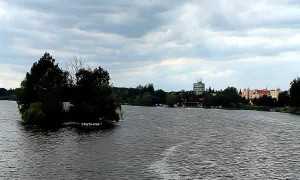
Photos from the area
Real photos taken near the monument


Zdroj a licence jsou uvedeny u každého snímku.
Tips from visitors
No tips yet. Be the first!
Log in and add your tip.
Sources and literature
Photos: Jana Sekyrová / CC BY-SA 4.0 — Wikimedia Commons. The author and licence also appear when you hover over the image.
Faktickým podkladem tohoto textu byl článek na Wikipedii, jehož autory jsou přispěvatelé Wikipedie. Článek je dostupný pod licencí CC BY-SA 4.0.
Location on the map


Příběhy a pověsti
Legendy, pověsti a příběhy spjaté s touto památkou
Fotografie návštěvníků
Zatím žádné fotografie. Buďte první, kdo přidá fotografii z návštěvy!
Log in a přidejte svou fotografii nebo hodnoťte.
Za ověřenou návštěvu v aplikaci získáte víc bodů — poznáme podle GPS, že jste na místě.
Reviews and comments