






Věžový vodojem v Chudeřicích Water tower
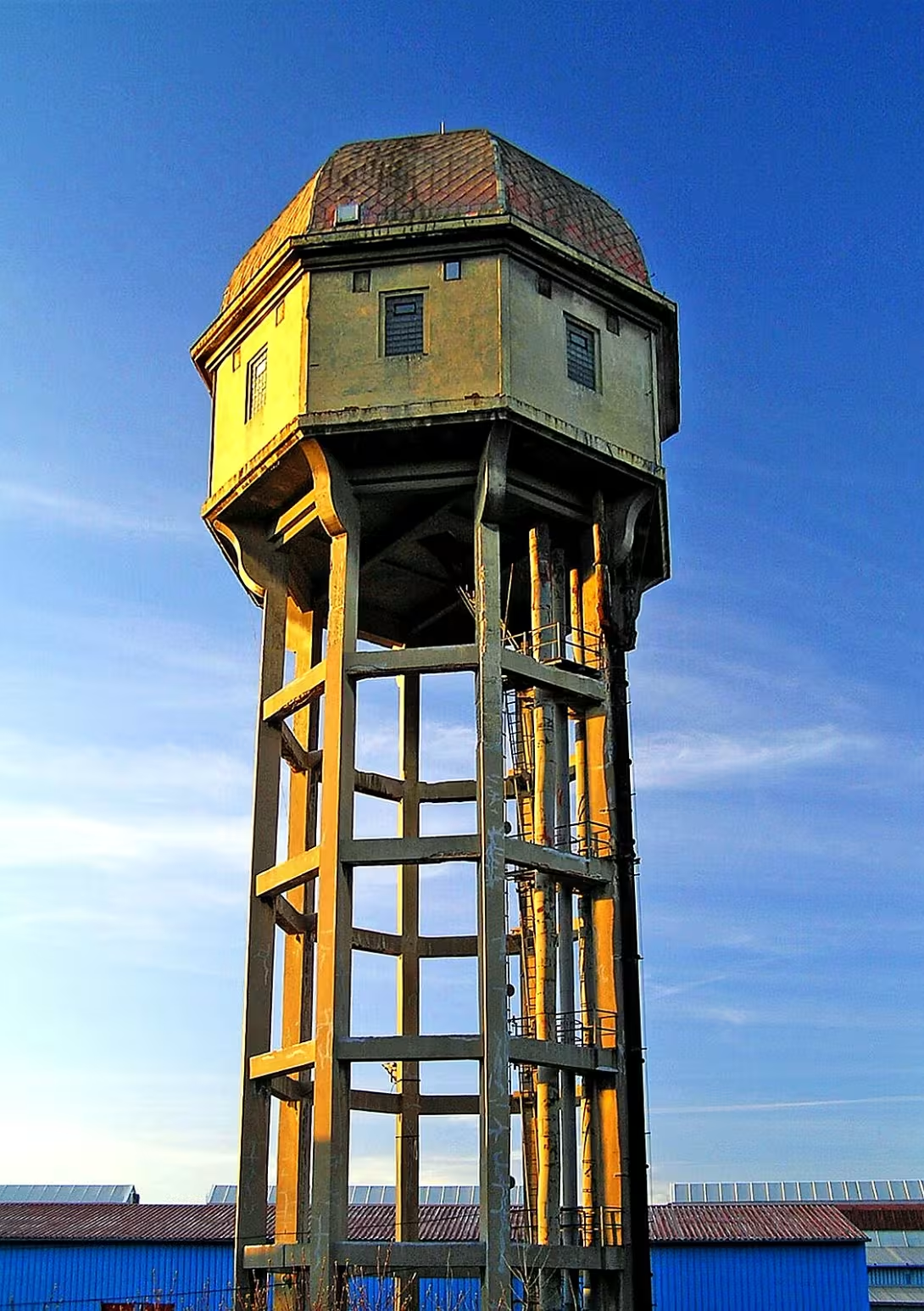
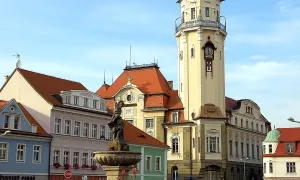
Věžový vodojem v Chudeřicích is an eight-sided technical monument from the Industrial Revolution. Located in the former premises of the Weinmann Werke glassworks in the village Bílina, in Teplice district. Built in 1916 as part of a zinc mill and later a glassworks. Its main purpose was to supply technological water from the Bílina River.
It is important as an example of a technically progressive solution - the water is built on a free reinforced concrete skeleton, which was a revolutionary design process for the time being. The monument was entered on the list of cultural monuments of the Czech Republic in 1999.
Establishment and use In 1914, the entrepreneur Edmund Weinmann started building a glassworks on cast glass. The water was built in 1915-1916 as part of a zinc mill. After the end of the First World War, he served water to supply the glassworks with water. In 1942 there was built a water supply feeder in the area, which supplied water from the petrol station in Lower Zálešlů to the factory in Záluží. In 1945, poor water was connected to this system, making it a source of water for other industrial objects.
Architecture The water is 43 meters high. Its construction is based on eight rectangular pillars connected by intersections. The lower part consists of a free reinforced concrete skeleton, which is carried by the water itself on the console. It's lined with bricks and has eight window openings. The inner space is secured by a reinforced concrete floor with trays and two semicircular tanks of about 150 m ³. An octogonal dome with lantern and square windows with blinds is located above the water. The roof is covered with a wooden roof with an eternite cover.
Fate and Present In 1914-1945 it belonged to the Weinmann Werke glassworks. After 1919 the glassworks went under Glass Union Teplice, which operated until 1990. At this time, water was part of the water supply system, which supplied water to the Ledvice power plant. After 1990, the owner of the complex changed several times. Today, the water tank is inactive, while the water feeder from Lower Zálezel works.
The monument is accessible as a cultural monument. In the vicinity, there is a tourist route called Waterways, which follows the original route of the water pipeline between Lower Záležlů and Bílinou. This journey, 29 kilometers long, was created by students and university departments. It is advisable to use available information about the route and the monument, which represents an example of industrial architecture and technical engineering.
This monument is interesting not only for its historical importance but also for innovative industrial construction. It is interesting to see how the technical solution of the water tank developed and became part of the industrial heritage of the region.
Then and now
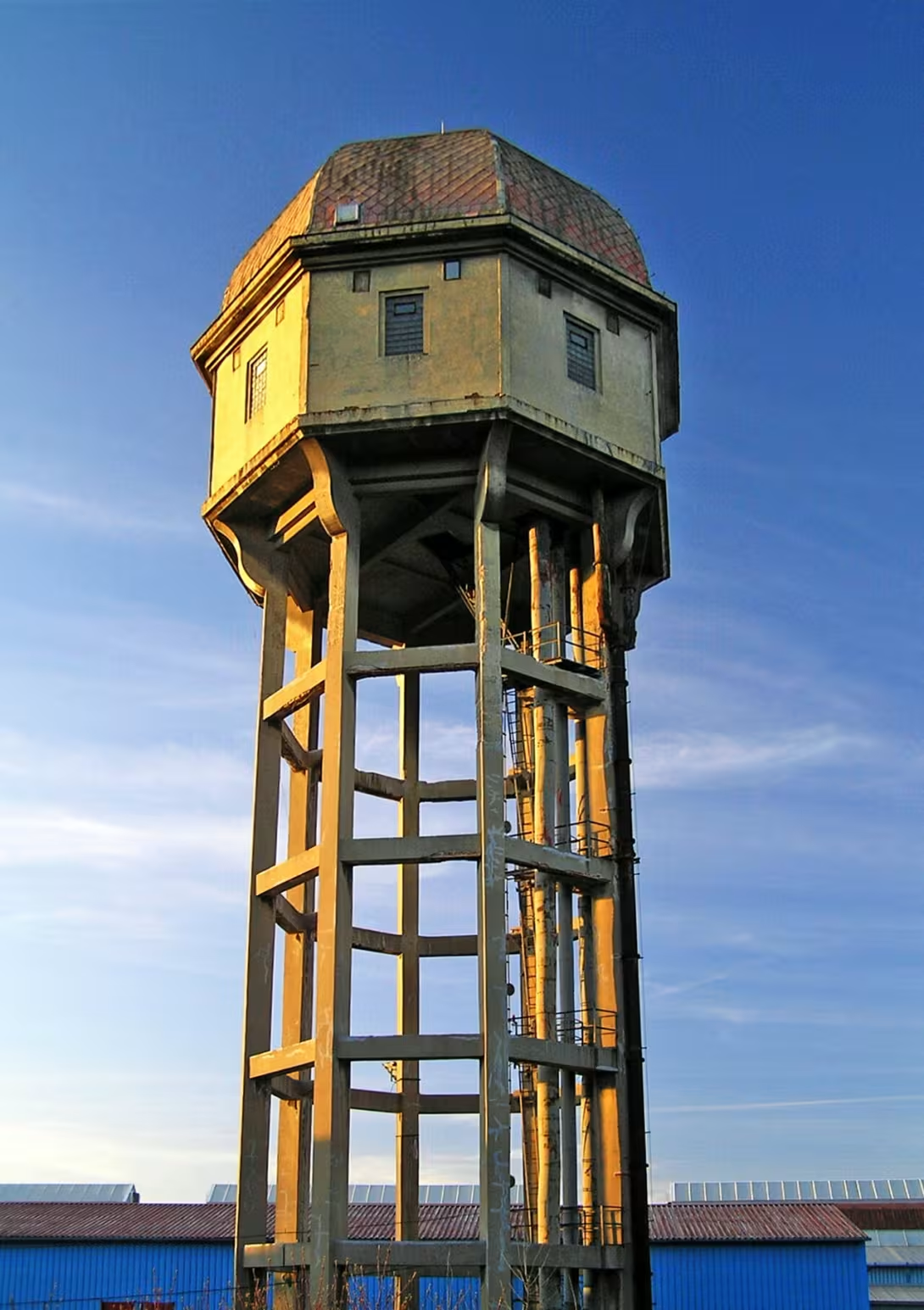
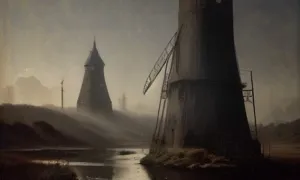
Drag the slider to compare how the landmark may have looked when it was built with the view today.
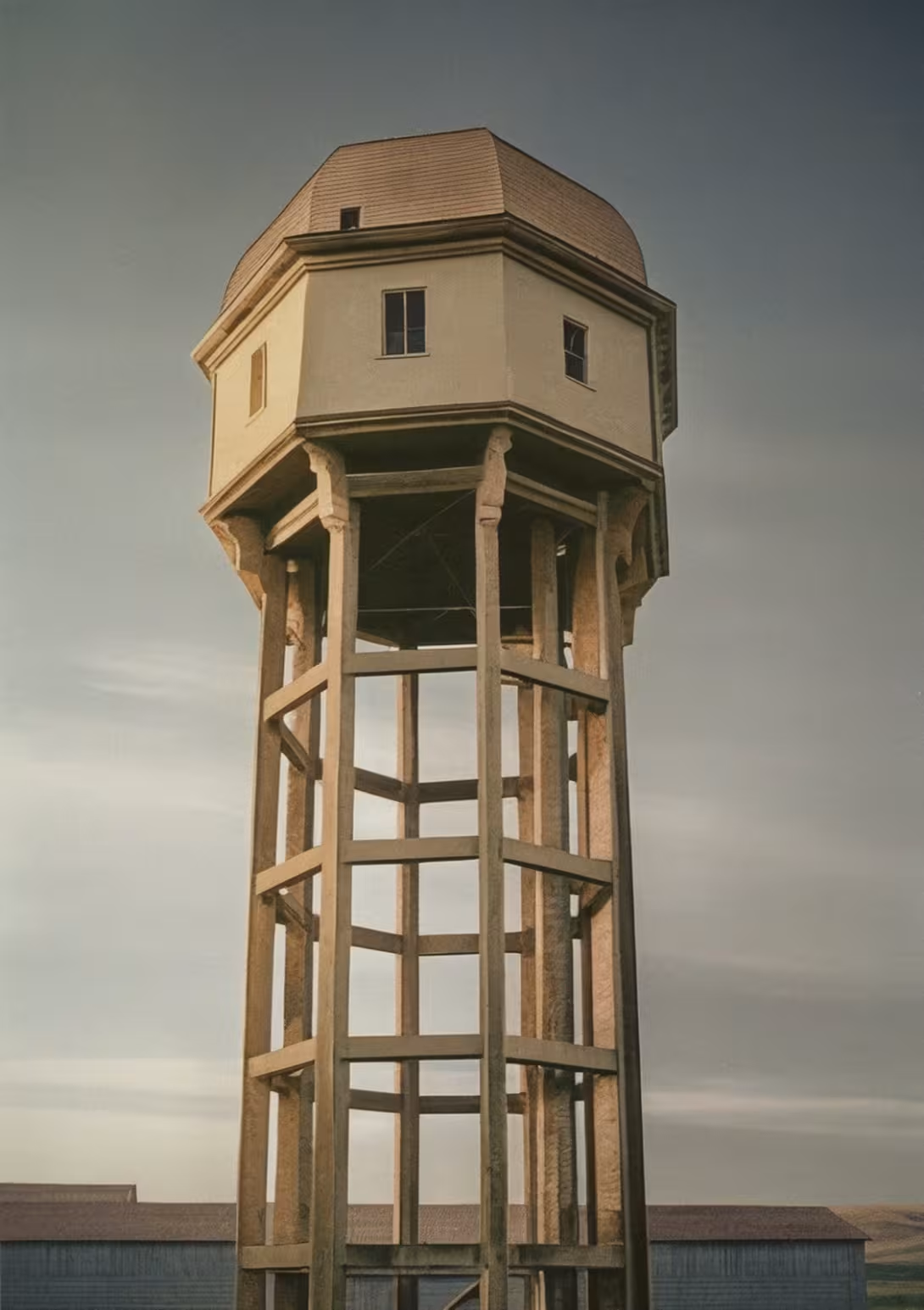
The historical appearance on the left is an AI-generated visualisation and serves as inspiration only.
Historical milestones
- 1914-1916
- The position of the Oxy water tower as part of the zinc and glassworks in the municipality Bílina for the supply of technical water from the river Bylina
- 1915-1916
- The water was built as part of an industrial site within the industrial revolution with a revolutionary iron concrete skeleton
- 1942
- The position of the water feeder in the surrounding area, which connected the petrol station in Lower Zálezlů with the factory in Záluží
- 1945
- The water was connected to the new water supply system, making it a source of water for other industrial objects
- 1990
- Glass Union Teplice has ceased operation of the glassworks, the water has become part of the water supply system for the Ledvice power plant
- 1999
- Registration of the water tower on the list of cultural monuments of the Czech Republic
Architectural development
The tower was built from a reinforced concrete skeleton with a brick filling, covered by an octogonal dome with a lantern. The lower part consists of a free reinforced concrete skeleton with pillars and trays which are carried by water of 150 m ³. The materials include a wooden crov with an eternite cover and a ladder staircase between the pillars.
Historical events
- 1915
- The beginning of the construction of the zinc mill and the preparation of the construction of the water tower in Weinmann Werke glassworks
- 1916
- The position of the Oxy water tower for supplying the glassworks with technological water from the river Bílina
- 1942
- Built water line from Lower Zálezel (Lálská water) to Záluží near Litvinov, later connected to the poor water
- 1999
- Registered to the Central List of Cultural Monuments of the Czech Republic as an example of industrial architecture
Owners
1914- 1945: Ing. Edmund Weinmann (coking plant with zinc), 1919- 1945: glassworks Weinmann Werke, 1942- 1990: Glass Union Teplice, 1990- 1999: Glavunion a.s., 1999- today: Splintex Czech, a.s.
Points of interest
- The tower water was built between 1915 and 1916 as part of the original zinc mill, later the glassworks.
- The technical monument is built on a free reinforced concrete skeleton, which was a revolutionary solution for the time being.
- In 1999 it was entered on the list of cultural monuments of the Czech Republic.
- There is a tourist route in the vicinity of the water tower, which connects the original route of the water duct between two places.
- In 1942 there was built a water feeder in the area, which supplied water from the gas station to the glassworks.
Guide
Show guide text
This text was created by artificial intelligence and has not been editorially reviewed. It may contain inaccuracies.
Welcome to this massive technical monument! You're standing in front of a unique tower that stands above the landscape as a witness to industrial birth. In front of you is the water pipe from Chuderice, a construction that proves how people in the last century have been able to combine practical with innovation. Look around you - you see an octagonal tower that seems like something from another world, but is also firmly anchored in the reality of the industry at that time.
This building was created in the years of the First World War, namely between 1914 and 1916, as part of the glassworks Weinmann Werke. It was built to supply the glassworks with clean technical water from the river Bílina. At first glance, what seemed like an ordinary tower was a technical miracle in its time. Look at its foundation - see it standing on a free steel concrete skeleton? This was a revolutionary solution at the time, which made construction easier and more stable than the construction before.
Let's take a closer look at her appearance. The tower is eight-sided, giving it a characteristic, almost geometric appearance. Notice how its design is clean and functional - no unnecessary details, just what was necessary for its purpose. It is this simplicity and efficiency that makes it so fascinating. Now pay attention to its location - it is situated in an area that once belonged to a glassworks, and still bears a mark of industrial heritage.
This building has undergone an interesting history. After the original purpose as part of the zinc mill and glassworks it later became an important element of the water system. In 1942, a water supply feeder was built, which connected the gas station in Lower Zálezlů with the factory in Záluží. Several years later, in 1945, the tower was connected to a new water supply system, making it a source of water not only for the glassworks, but also for other industrial objects. In 1990, after the operation of the glassworks, the water tank became part of the water supply system for the Ledvice power plant. It was only in 1999 that this technical monument was entered on the list of cultural monuments of the Czech Republic.
As for the personalities involved in this construction, unfortunately, their names remain in the fog. However, it is this anonymity that gives the memory some mystery. Who were the people involved in her project and construction? What were their motivations and challenges? These questions provide depth and attract the attention of anyone who stops by.
Now let's look at one of the most interesting properties of this tower. It stands on a free reinforced concrete skeleton, which was a truly innovative solution for its time. This skeleton allowed the construction to be lighter and more stable. This was especially important for industrial buildings where reliability and long service life were needed. Notice how this tower is built - it seems to be floating above the ground as if it were being held by invisible hands. This is proof of how far people got in the construction sector at the time.
There is not only a technical monument but also a witness to the industrial revolution. This tower was built when the world was changing faster than ever. It was an era of inventions, new technologies and major construction projects. And it is this tower that is one of these projects that has survived time and still reminds us how people have managed to overcome obstacles and create things that were considered impossible at the time.
If you like this building and want to learn more about the history of industry in this area, I recommend you visit other places nearby. For example, glassworks in Teplice or historical factories in Bílina. Each of them has its own story and heritage worth discovering.
Thank you for stopping by this technical monument. You are standing in front of a construction that is not only functional but also beautiful in its own way. Whether you have come here for history, technology or simply for the beauty of this place, I hope this visit has brought you new knowledge and inspiration. When we say goodbye, don't forget to look at this tower again - maybe right now you're seeing something you haven't noticed before. May your next journey be full of discoveries!
Tips for visitors
It is convenient to visit a monument between May and September when the weather is pleasant and the surrounding tourist routes can be used. In winter the area is less visited but suitable for observing historical elements that are less disturbed by tourists.
The monument is available by car and public transport. From Bílina it is possible to get directly to the glass factory area where it is located by water. There is a possibility of parking nearby, but it is recommended to check the current options in advance. It is recommended to use public transport if you want to avoid finding a parking spot.
It is advisable to wear high-quality shoes on fixed heels for a visit because the terrain can be uneven. Furthermore, it is good to have a clue or a map with you if you want to go on the tourist route of Waterways. It is also convenient to take some refreshments and drinks because there are not many options for lunch or buying food in the area.
Water is a great place for photography, especially at a time when light is favourable - morning or evening. The best places are the windows of the tower and its surroundings, where a combination of historical elements and surrounding forest can be captured. Furthermore, it is interesting to photograph a water feeder nearby. Always make sure it's not forbidden before taking pictures.
In the vicinity of the monument in Chuderice there is the possibility to visit the water supply feeder of labské water built in 1942. This object is interesting for technical attractions and its history. It is also appropriate to take advantage of the Waterways tourist route, which leads the original route of the water pipeline between Lower Záležlů and Bílina. This route is suitable for hiking and offers beautiful views of the surrounding countryside.
Businesses nearby
Do you run a restaurant, accommodation, shop, museum, rental, wellness or other visitor service near this monument? Show yourself directly to the people heading to it — this is how they will see you in the app and on the web:
Nearby
V okolí se nachází vodovodní přivaděč labské vody, který byl postaven v roce 1942 a slouží dodnes. V blízkosti se nachází také turistická trasa Vodobraní, která sleduje původní trasu vodovodu mezi Dolními Zálezlemi a Bílinou.
Accommodation nearby
Trips and activities nearby
Guided tours, tickets and activities nearby from GetYourGuide
Affiliate link: if you buy from the partner, we may receive a commission. The price for you does not change.
Search tours and activities →Themed route
Thematic cruise route: Water tower in Chuderice and water heritage
1. Věžový vodojem v Chudeřicích - water tower Base point of the route. A unique concrete tower from 1942, which still supplies the White with clean water from the Elbe. The inner staircase and observation platform offer a view of the surrounding landscape and a technical detail of the historical water pipeline.
2. Water feeder from Elbe - technical construction Approximately two kilometers from the tower. Underground and above ground part of the old binder that brings the water flow from the Elbe to the White. The places can be seen by the original concrete tunnels and bridges that prove the resistance of the construction for over 70 years.
3. Hiking route Waterways (section Lower Zálezle - Bílina) - educational path Approximately 5 km from the tower. The trail follows the original route of the water duct and explains its history, technical solution and natural environment. Stops at original water tanks and transfer facilities are interesting for lovers of technology and nature.
4. Crossing the historic bridge by the water pipeline - technical monument On the Waterway route, about 3 km from the tower. The bridge was used to transfer water pipes through local flow. Its construction is an example of an engineering solution from the time of construction of the binder.
Recommended order: Start at the Tower water tower, continue along the Waterway route to the latch and bridge, finish by returning to the tower with notes from the tour. Total length 10-12 km, suitable for cyclists and pedestrians.
Seasonal recommendations
Spring
You will be careful of the softer sunlight that illuminates the surrounding tower with green forests and blooming oak trees. The air is full of the scent of flowers and empty roads, when the first tourist waves have not yet appeared. The atmosphere is calm but restless - as if new life forces were awakened in nature. Take the time to walk around the tower where it is advisable to wear light but warm clothes to avoid energy. The best time is early morning, when it's still quiet and you can enjoy a quiet morning without crowds.
Summer
In the main summer season the tower is often full of people, therefore it is recommended to come before it starts moving. The sun shines intensively, so wear sunglasses and light, but protective clothing. Nature is full of animals and insects, so keep a protective repellent on your hand. The best time to visit is early afternoon when the temperature is more pleasant and the crowds are smaller.
Autumn
In the period when leaves turn into gold and red, the atmosphere of the tower is strange and attractive. The lighting in the inside of the tower illuminates the surrounding landscape with bright shadows and colours of leaves. Wear warm clothes because temperatures are dropping. The best time to visit is the evening when light is softer and nature is full of beauty, but the crowds are less.
Winter
In winter, the tower is often closed due to lower temperatures and snow conditions. If you decide to visit, choose a warm and laminated garment to help keep you warm. The best time to visit is in the morning when snow is less likely and the surrounding area is quiet. Also wear the right shoes in the snow so you don't lose stability.
Visualizations and artistic views


The visualisations are generated by artificial intelligence and serve as inspiration.
Tips from visitors
No tips yet. Be the first!
Log in and add your tip.
Sources and literature
Photos: Daniela Endrštová / CC BY-SA 4.0 — Wikimedia Commons. The author and licence also appear when you hover over the image.
Faktickým podkladem tohoto textu byl článek na Wikipedii, jehož autory jsou přispěvatelé Wikipedie. Článek je dostupný pod licencí CC BY-SA 4.0.
Location on the map
Příběhy a pověsti
Legendy, pověsti a příběhy spjaté s touto památkou
Fotografie návštěvníků
Zatím žádné fotografie. Buďte první, kdo přidá fotografii z návštěvy!
Log in a přidejte svou fotografii nebo hodnoťte.
Za ověřenou návštěvu v aplikaci získáte víc bodů — poznáme podle GPS, že jste na místě.
Reviews and comments