






Radnice (Bílina) Town hall
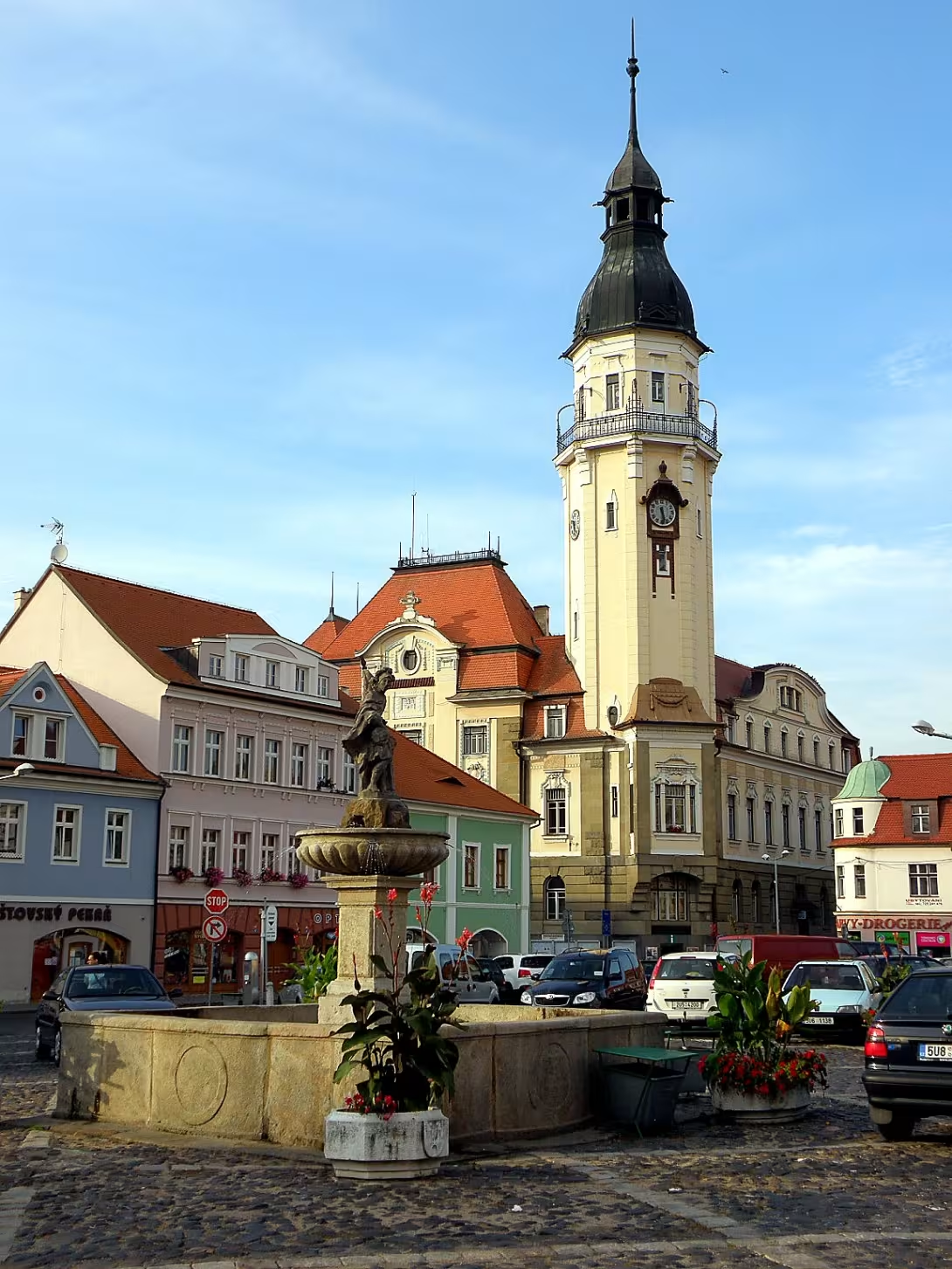
The town hall in Bílina in Teplice district in Ústí region is a Art Nouveau building from 1908-1911. Since 2009 it has been protected as a cultural monument. This polyfunctional object serves as a seat of the city office and represents an important architectural dominant of the city.
The idea of the new town hall was created in 1905 thanks to Mayor Josef Schmettan. He proposed to place the building on the corner of the streets of Elisabeth and Motalstraße, today Želivský and Břevňská. Originally, the Viennese architect Franz Neumann was approached, but the financial intensity of the project was initially postponed. In 1907, a member of the City Council Hugo Tropschuh proposed to ask the state local authority in Prague for a gift of CZK 400,000. The condition was that City Hall would honor the 60th anniversary of the reign of Emperor Franz Joseph I and bear his name. The application was approved on 13 December 1907. After Franz Neumann's death, the Vienna company Troll & Stoppel took over the plans. Due to high costs, the building was divided into a main building and a tenement house. The final reconstruction and modernisation of the plans was carried out by Professor Friedrich Kick from the German Technical University in Prague. The foundation stone was laid on 2 December 1908 and the first meeting of the city council took place in the building on 18 August 1911.
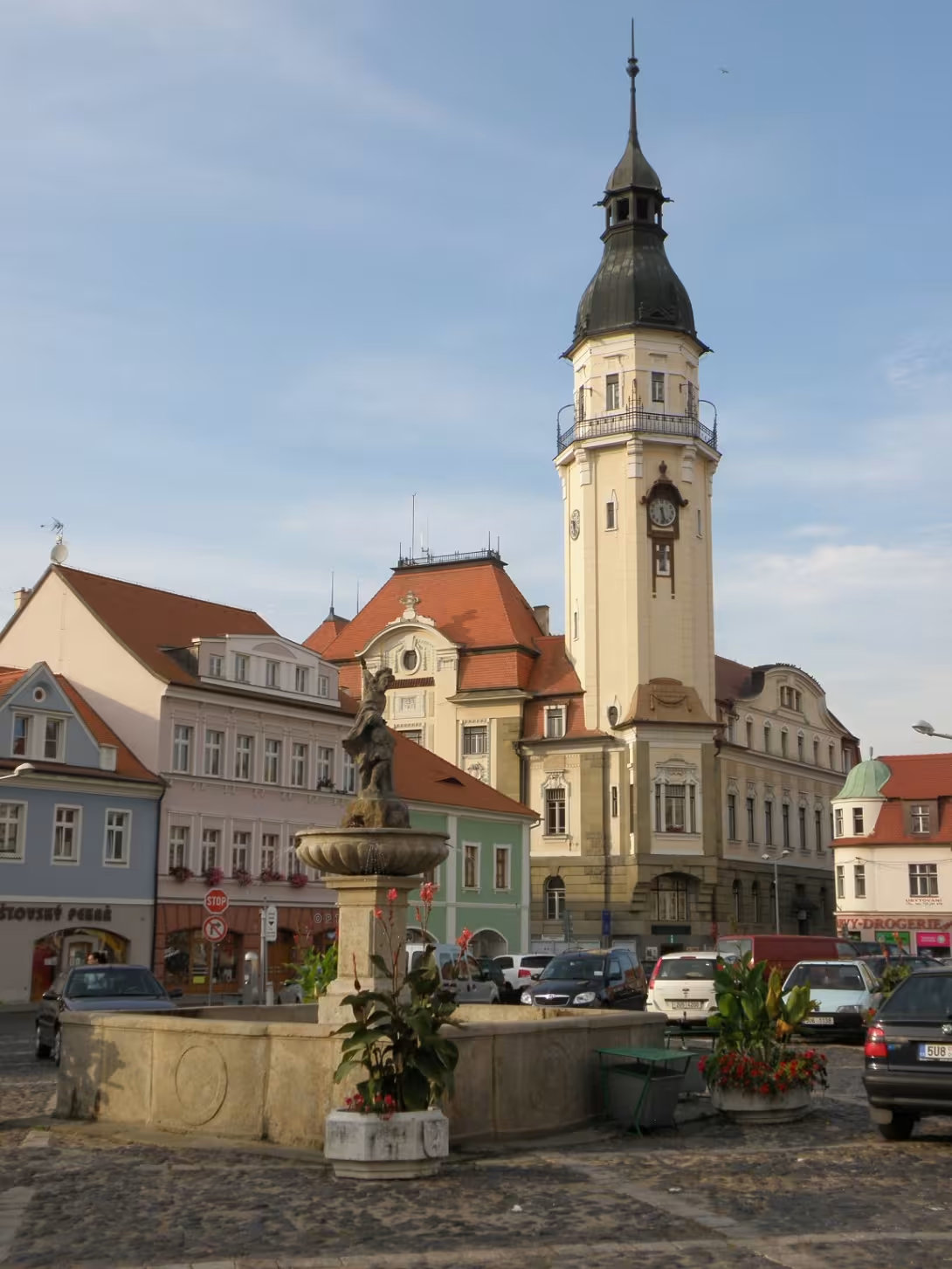
The building is built in Art Nouveau style with various roofs. The construction was used granite, sandstone and artificial stone, while the tower and bay cover the right copper. The main dominant is a 63-metre tall tower with clock and onion-shaped toe-dancing. This makes a vertical contrast to the horizontal lock. There is a view of the square, a bridge across the river Bílina and a castle from the observation gallery at 37 metres high.
The main entrance in Břežanská Street leads through the lobby to the first floor. The interior is decorated with wall lights and chandeliers, of which the one in the lobby measures 195 cm. The first floor consists of a representative space with the offices of the mayor, deputy mayor and secretary, ceremonial hall and matrix office. The mayor's office has original wooden tiles, built-in cabinets, windows and windows. An important element here is an eight-wall Art Nouveau chandelier with a height of 163 centimetres and a dimension of 70 × 70 centimetres. The ceremonial hall is high over two floors, decorated with stucco and reliefs and illuminated with copper Passeur chandeliers and 20 wall lights.
On the top floor there were formerly service apartments, and today there are offices of the city office. The ground floor, where the city savings bank and pension office used to operate, hosts the mailroom and other trade unions. The side entrance from Želivský Street was originally led to an apartment building where the city police and the Department of Education, Culture and Sport are now active. Another entrance from M. Majerová Street provides access to the elevator and the large meeting hall, where the council meeting took place in April 2004. The object owner is the city Bílina.
The building was declared a cultural monument in 2009 thanks to authentic preserved Art Nouveau architecture, original windows, layout and interior decoration. The Ministry of Culture has also declared a set of original Art Nouveau lamps as a protected element, which are an exceptional example of artistic craftsmanship. The town hall is currently the seat of the city office and the city police, while in the basement of the tower there is an information center with the Gallery under the Tower.
The town hall represents a rare example of a quality Art Nouveau work with preserved original equipment. Its visit offers an insight into the architecture of the early 20th century and a view of the city centre from the tower.
Then and now
Drag the slider to compare how the landmark may have looked when it was built with the view today.
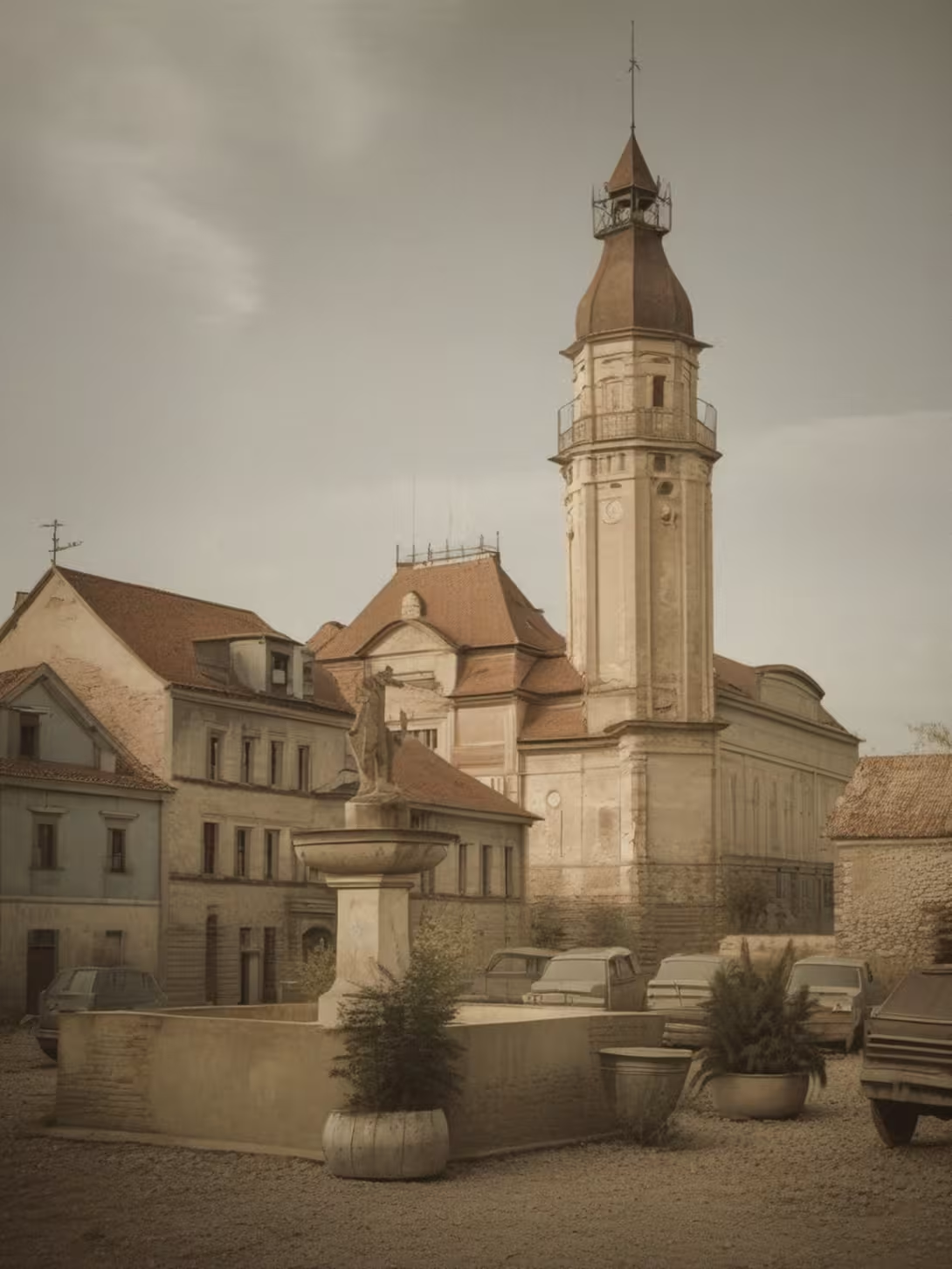
The historical appearance on the left is an AI-generated visualisation and serves as inspiration only.
Historical milestones
- 1905
- Josef Schmettan comes with the idea of building a new town hall.
- 1907
- The Ministry of the Interior has granted permission to provide funds.
- 1908
- The ceremonial laying of the base stone.
- 1911
- First town council meeting in the new building.
Architectural development
The original plans of Franz Neumann were subsequently upgraded by architect Friedrich Kick. The construction included the main town hall building and the neighbouring tenement house. The materials include granite, sandstone and copper on roofs.
Historical events
1908: Festive laying of the base stone. 1911: First city council meeting in the new building. 2009: The building was declared a cultural monument.
Owners
City of Bílina
Points of interest
- Art Nouveau building from 1908-1911 is protected as a cultural monument since 2009. - State gift of 400 000 crowns was conditional on honoring 60th anniversary of reign of emperor Franz Joseph I. - The building has a 63-metre tower with a clock and a observation gallery at a height of 37 meters. - There's a chandelier in the lobby that's six feet tall. - A set of original Art Nouveau lamps is declared a protected element.
Guide
Show guide text
This text was created by artificial intelligence and has not been editorially reviewed. It may contain inaccuracies.
Welcome, you're standing outside the city hall in Bilina, an impressive building that dominates the town square and immediately captures your view. In front of you is a high tower with a clock whose silhouette rises above the roof and gives the whole system a characteristic profile. The whole body of the building is covered with carefully worked granite and sandstone, the colours of which are golden in the afternoon sun, and in some places there are also copper details that underscore Art Nouveau style. The entrance portal is wide and decorated with fine ornaments that suggest that it is an object that was originally intended as a place for more than one function. The air around you carries the light scent of stone surfaces and the whisper of urban excitement that mingles with the silent echo of your footsteps.
Let's move on to the past and see how this town hall came to be. In 1905 he came to the city of Josef Schmettan with a vision of a new office that would unite various city institutions under one roof. His proposal received support and in 1907 the Ministry of the Interior granted authorisation to provide funds, which enabled the construction to start. In June 1908 there was a ceremonial laying of the foundation stone, in which representatives of the city and civil servants gathered. The work continued with relentless energy and in 1911 the first town council meeting took place in new premises. The whole project was granted thanks to state support, namely a gift of four hundred thousand crowns, which was conditional on honoring the 60th anniversary of the reign of Emperor Franz Joseph I. This historical link underlines how closely the town hall was linked to the national events of that time.
Now pay attention to the architectural details you can see right now. The building was designed by architects Franz Neumann, company Troll & Stoppel and Friedrich Kick, and represents an exceptional example of Art Nouveau. The high tower, which rises to a height of 63 meters, is the main dominant element. At a level of 37 metres there is a sightseeing gallery from which you can see all over the city. The entrance vestibule is decorated with a large chandelier whose glass drops capture light and disperse it throughout the room, thus creating an atmosphere of ceremonial welcome. The surface treatment of granite and sandstone is carefully carved, which gives the facade rhythm and depth. Copper elements, such as decorative rails and decorative window frames, will turn into a green shade after a period of time, which underlines the historical character of the construction.
Let us now move on to stories and personalities that are closely related to the city hall. Josef Schmettan, the initiator of the whole project, was a local official whose determination and vision brought the city a new administrative center. Franz Neumann, the main architect, transferred his experience from previous projects to Bilina and created a design that combines functionality with aesthetic charm. Hugo Tropschuh, who was involved in technical securing of the construction, oversaw the quality of materials and compliance with deadlines. And finally, František Josef I., whose 60th anniversary of the government became a condition for a state gift, became inadvertently part of the City Hall story, although he had never seen this building himself. These personalities together have created the basis for a place where the fate of the city is decided and where citizens meet the authorities.
The fact that the town hall has been protected as a cultural monument since 2009 is an interesting thing that can attract even the most curious visitors. This status not only ensures the preservation of historical value, but also underlines the importance of the building for the whole community. Another remarkable detail is that the above-mentioned gift of four hundred thousand crowns was linked to a specific condition - the honour of the 60th anniversary of the reign of Emperor Franz Joseph I. This historic moment has thus left a permanent print in the stone and administrative records. And finally, if you look up at the tower, you'll notice that the clock is not only a practical indicator of time, but also a symbolic guardian of the urban rhythm that reflects the everyday life of the people of White.
Now that you have put on headphones and listen to this sound guide, you can perceive not only the visual beauty, but also the depth of the historical context that lies behind every stone. Enter the space where the past meets the present, and get carried away by the atmosphere that has been there for over a hundred years. Explore the detailed ornaments on the facade, focus on the granite shading, observe how copper shines in sunlight, and let yourself be led by the idea of how the first council meeting was held and how the future of the city was decided.
In conclusion, I invite you to further discover. Take a walk around the square, look at the surrounding buildings that complement the city hall with their own character, and be inspired by how history and architecture intersect in everyday life. Whether you choose to stay just for a while and soak up the first impression or come back later to explore every corner, the town hall in Bílina always offers you something new to discover. Thank you for listening to this guide, and I wish you a pleasant rest of the city visit.
Tips for visitors
For the best experience we recommend a visit during bright days, when the Art Nouveau details of the building light up beautifully. The best time to observe architecture is in the morning.
Transportation to the place is possible by car and public transport. Parking can be found near the centre. Check the current traffic connections in the internet search engine.
Bring comfortable shoes and possibly a drink. If you want to take photos, you can get the best view of the high tower from the square space. The best light for images is around sunrise or sunset.
In the surrounding area you can take a short walk to the bridge over the White River or visit the castle. For families with children, a walk around these places is suitable thanks to the open area around the square.
Businesses nearby
Do you run a restaurant, accommodation, shop, museum, rental, wellness or other visitor service near this monument? Show yourself directly to the people heading to it — this is how they will see you in the app and on the web:
Events nearby


Zdroj akcí: otevřená data měst a obcí ČR (Národní katalog otevřených dat) a kalendář akcí Národního památkového ústavu.
Nearby
Náměstí, most přes řeku Bílinu a zámek.
Accommodation nearby
Trips and activities nearby
Guided tours, tickets and activities nearby from GetYourGuide
Affiliate link: if you buy from the partner, we may receive a commission. The price for you does not change.
Search tours and activities →Themed route
1. Square - central space. Ideal place to start walking and orientation in the centre. 2. Town Hall - administrative building. The main destination of the journey, which will capture its architecture. 3. Bridge over the White River - crossing over the water. It connects parts of the village and offers a view of the river. 4. Castle - historical construction. A magnificent object that ends the thematic route.
Seasonal recommendations
Spring: In the spring period, the town hall in Bílina is shining with its newly revived flowering surroundings, when the first flowers appear after winter frost and the trees are starting to sprout. The sunny days offer ideal conditions for a tour of the historic building with its characteristic architectural styl, where the atmosphere is full of hope and restoration. It is advisable for visitors to prepare for mild temperatures and the possibility of rain, so light clothes with a blanket could be useful. The best time to visit is in the afternoon when the sun rises high and illuminates the architecture of the town hall.
Summer: In summer, Bílina offers visitors a warm and lively atmosphere with long daylight lights that celebrate the historic city hall in full glory. The sun rays especially decorate the stone facades, which is the perfect time for photography and the recognition of the details of the building. Summer brings the highest attendance, so it is recommended to visit the city hall early in the morning or in the evening to enjoy a place without large crowds. A wet summer requires light clothes and plenty of drinking water.
Autumn: Autumn visit to the town hall in Bílina offers a unique atmosphere, where the trees in the surrounding area are coloured into a colorful palette and sunny days are warm. This time of year is ideal for a relaxed tour without large crowds, allowing deeper immersion in history and architecture. The humidity of autumn days can be pronounced, so it is advisable to prepare for mild temperatures with a blanket and protection against moisture. The best time to visit is in the afternoon when temperatures are most pleasant.
Winter: In winter, the town hall in Bílina offers a quiet and quiet atmosphere with the opportunity to see it under the dawn of the ice lamps or evening lights, which brings a specific romantic character. Winter visit is suitable for those who seek peace and want to look at history without large crowds. It is important to prepare for cold temperatures with warm clothes, blanket and wind protection. The opening hours may be shorter, so it is advisable to schedule a visit on a predate or evening.
Visualizations and artistic views


The visualisations are generated by artificial intelligence and serve as inspiration.
Photos from the area
Real photos taken near the monument


Zdroj a licence jsou uvedeny u každého snímku.
Tips from visitors
No tips yet. Be the first!
Log in and add your tip.
Sources and literature
Photos: MAKY.OREL / CC BY-SA 3.0 — Wikimedia Commons. The author and licence also appear when you hover over the image.
Faktickým podkladem tohoto textu byl článek na Wikipedii, jehož autory jsou přispěvatelé Wikipedie. Článek je dostupný pod licencí CC BY-SA 4.0.
Location on the map
Příběhy a pověsti
Legendy, pověsti a příběhy spjaté s touto památkou

Fotografie návštěvníků
Zatím žádné fotografie. Buďte první, kdo přidá fotografii z návštěvy!
Log in a přidejte svou fotografii nebo hodnoťte.
Za ověřenou návštěvu v aplikaci získáte víc bodů — poznáme podle GPS, že jste na místě.
Reviews and comments