



Vila Sutnar Villa
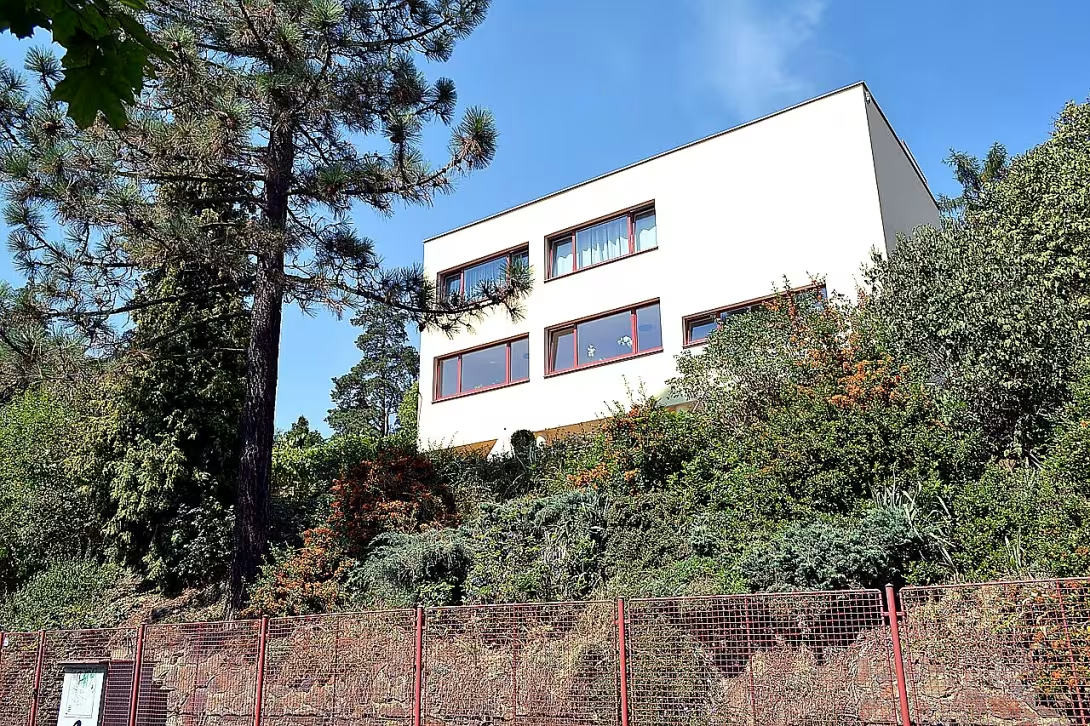
Villa Ladislav Sutnar, located in the Villa Colony in Baba in Prague 6-Dejvice, is a family house built in 1931- 1932. The architect Oldřich Starý designed the construction and the interiors were processed by Ladislav Žák. This monument, protected as a cultural monument of the Czech Republic since 2000, represents an important part of Czechoslovak functionalism.
The foundation of the villa is connected with the historical context of the 1930s, when the functional architectural style was promoted in Czechoslovakia. This style reflected modern living standards and technological advances of the time. Ladislav Sutnar, a graphic designer, asked Oldřich Old for a project of his home, which became one of the leading architects of the functional movement in Czechoslovakia.
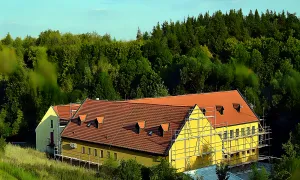
Architecturally, the villa is characterized by a semi-embedded basement, two above-ground floors and a roof terrace. The construction has a reinforced concrete skeleton and is mounted on the south side of the piles. The residential part of the house is open, while the studio on the ground floor has only a belt window and is illuminated by high northern light. The bedrooms are located on the top floor, which was typical of functional architecture focused on maximum use of space and light.
After the Nazi occupation, Ladislav Sutnar remained permanently in the US. In 1954, a national administration was announced over the house, a year later, it was bought by an academic painter and restorer Karel Mezera. For him the architect Karel Lodr designed in 1969 a new construction of garages and studio situated in the lower part of the garden, which contributed to further development and adaptation of the building.
Today the villa is protected as a cultural monument of the Czech Republic. Its historical value lies in architectural design, which represents a functional style and its adaptation to the needs of modern life of the 1930s. Visiting this villa colony offers a unique opportunity to explore the architectural wit and history of Czech design.
The Villa Ladislav Sutnar is not only a monument but also a witness to changes in the lifestyle and architecture of the 20th century. Its visit brings a deep insight into the history of Czech design and functional movement, which makes it necessary for every query about the architectural heritage of the Czech Republic.
Historical milestones
- 1931
- The beginning of the construction of the Villa Ladislav Sutnar.
- 1932
- Completion of the construction of the Villa Ladislav Sutnar.
- 1954
- Announcement of the national administration over the house.
- 1955
- The purchase of a villa by an academic painter and a restorer Karel Mezera.
- 1969
- Design of new building of garages and studio by architect Karel Lodrem.
- 2000
- Protection of the villa as a cultural monument of the Czech Republic.
Architectural development
The villa has a half-flooded basement, two floors above ground and a roof terrace. It's built from a reinforced concrete skeleton and mounted on piles. The living area is open, while the studio has only a belt window on the ground floor and a high north window.
Historical events
- 1931
- Construction of the Villa Ladislav Sutnar.
- 1954
- A national administration has been declared over the house.
- 1969
- Karel Lodr designed a new extension of garages and studios.
Owners
- 1931
- 1954
- 1955
Points of interest
- Villa Ladislav Sutnara is protected as a cultural monument of the Czech Republic since 2000. - Architect Oldřich Starý designed the construction and the interiors were processed by Ladislav Žák. - The villa represents an important part of Czechoslovak functionalism. - The architecture of the villa is characterized by a semi-embedded basement, two above-ground floors and a roof terrace. - After the Nazi occupation, Ladislav Sutnar remained permanently in the United States.
Guide
Show guide text
This text was created by artificial intelligence and has not been editorially reviewed. It may contain inaccuracies.
Welcome to Prague's Dejvice. You're standing in front of one of the most important building parts ever created in this part of town. In front of your eyes is Ladislav Sutnar's villa. Feel the strange atmosphere that exists here. It's a place where time stops, but it's also a place that keeps talking about the future. Look at the building around you. It's not just an ordinary house. It's an expression of an era where people believed that architecture could change the way people live and see the world. Feel the peaceful, considered presence of this building within the entire neighborhood.
Let us now return together to the time when this world was changing and looking for its new faces. To understand why this place is standing here in this form, we need to look at the year one thousand nine hundred thirty-one. This was the moment when the construction of this villa began to take place. The whole process lasted approximately two years and was completed in the year one thousand nine hundred thirty-two. The villa was not created randomly, but as part of a unique settlement in Baba. This area was at the height of human efforts to create an ideal place to live, where nature and the latest ideas of the time were united.
Now pay attention to the very form of the house in front of you. Notice how this building is trying to connect nonviolent to the surrounding terrain. It is very characteristic of its design, which can be described as semi-embedded. This villa is not just an object built on the ground, it seems to have slipped into it as if it were in one spirit. This is an excellent example of what we call Czechoslovak functionalism in our history. If you look at the building, you may feel the purity and order. In this style, there is no room for needless decorating without a clear purpose. Each line and each area has a function here.
The main creator of this exterior was architect Oldřich Starý. His vision was clear and he was moving towards the future. He designed this whole building, but in order to be a truly perfect place for life, it was also necessary to create its inner world. And that's what happened by working with another great figure. The inner space, what we might call the inner balance of the house, was designed by Ladislav Žák. Imagine the harmony between what you see from the outside and how space inside is divided for the needs of the family. The old man created the body of the house and the pupil breathed into his inner life.
Every house has a soul, and the soul of this villa is made up of people whose fates have intertwined with this place. The name of the villa bears Ladislav Sutnar, a character whose influence on the formation of shapes and visual style was huge. But the life of this house wasn't just about its beginnings. In times when the world was changing, the administration was changing over this house. In the year one thousand and nine hundred and fifty-four, the national administration got over the building. Later, in the year one thousand nine hundred fifty-five, a man took the house and brought a new layer of sensitivity into it. He was Karel Mezera, an academic painter and also an expert in the restoration of old things. He brought an artistic view into this space, which interconnected beautifully with the architecture of the house.
In times when people started moving more and needed new space for their creation, there was another change. In the year one thousand nine hundred sixty-nine architect Karel Lodr designed a new part of the construction. This new part was intended for cars and also as a space for artistic creation, i.e. as a studio. This extended the villa and adapted to the new needs of modern life.
You may now wonder why this place is so important that we're talking about it with such respect. Since the year two thousand, this villa has been protected as a cultural monument of the whole Czech Republic. It's not just an ordinary label. It is a promise that this work, this vision of architects and this history will be preserved for all future generations. It is proof that our pursuit of beauty and functionality has its immense value.
The ever-changing world around us may be chaotic, but this villa stands as a fixed point, as proof that order, purity and a clear purpose can create something that will survive for decades and centuries. It is a monument to the human idea that sought the best way to combine benefit with beauty.
Thank you for stopping by and paying attention to this special place. We hope that this view of the history of the Villa Ladislav Sutnar helped you better understand its meaning and its beauty. Continue to walk through this beautiful neighborhood, feel the atmosphere of the surrounding buildings and be inspired by what people have created here in the past. Goodbye.
Tips for visitors
The best time to visit the Villa Sutnara is autumn or spring, when the vegetables on the surrounding grounds are the most beautiful and the light is ideal for photography. These seasons offer a calm atmosphere and beautiful colors that excel in photographic images.
It is appropriate to use public transport or a car to access the villa colony in Baba. The location is well connected to the centre of Prague, which allows easy access from various parts of the city.
When planning a visit, take a camera or mobile phone with you for shooting as well as shoes suitable for walking on the lawn. Thanks to the functional design and unique interior of the villa, it is ideal for lovers of architecture.
The best places for photography are the garden in front of the villa, where you can capture views of the building and its surroundings. The best photos are taken in the early morning or late afternoon, when the light is softer.
Other historical and cultural monuments can be visited in the vicinity of the Sutnara Villa. The villa is located in a villa colony in Baba, which offers the opportunity to explore other similar functional buildings in this area. For families with children is a suitable active place around the park where children can be moved and played.
Frequently asked questions
Can the monument be visited?
This is a residential or farm building, not a museum with opening hours. Please view it from public space and respect the owners' privacy. We have no information about access to the interior.
Where is the monument?
Location: Dejvice. The map on this page shows the exact spot.
Why is the monument protected?
It is listed in the Central List of Cultural Monuments of the Czech Republic as a cultural monument (register no. 1000140592).
Businesses nearby
Do you run a restaurant, accommodation, shop, museum, rental, wellness or other visitor service near this monument? Show yourself directly to the people heading to it — this is how they will see you in the app and on the web:
Events nearby

Zdroj akcí: otevřená data měst a obcí ČR (Národní katalog otevřených dat) a kalendář akcí Národního památkového ústavu.
Nearby
Vila se nachází ve vilové kolonii na Babě, což je část Prahy 6-Dejvic. V okolí jsou další historické a kulturní památky.
Accommodation nearby
Trips and activities nearby
Guided tours, tickets and activities nearby from GetYourGuide
Affiliate link: if you buy from the partner, we may receive a commission. The price for you does not change.
Search tours and activities →Themed route
Thematic cruise route around Villa Sutnar
1.Vila Sutnar (villa) The main goal is to visit this architectural pearl designed by Karel Honzík in 1936 for Ladislav and Milushi Sutnary. It is an example of functionalism with unique interior fulfillment of modernist principles. The villa is not only an architectural monument but also a testament to the life and work of the Sutnar family.
2. School at Babi (school) This school is another important functionalist building in the same villa colony. Its simple and functional architecture represents an important aspect of urban plans of the 1930's. Visiting the kindergarten offers insight into the history of educational establishments and their role in society.
3. Jewish cemetery in Babi (cemetery) This cemetery is an important cultural monument that resembles the history of the Jewish community in Prague. It is a place of respect and memory where there are many memorable tombstones and monuments. The visit to the cemetery offers the opportunity to learn more about the historical development of the area.
4. Jewish Museum on Babi (Museum) This museum is part of the Jewish cemetery and provides valuable information about the history of Jewish inhabitants in Prague. It is a place where you can learn more about the life and heritage of the Jewish community of Babi and its importance for the history of the city.
5. Parcel around the villa colony (park) A tour of parks and green spaces around the villa colony offers the possibility of relaxing after visits to architectural monuments. These rooms are ideal for a short view of nature and relaxation in a quiet atmosphere, which is a perfect ending to the theme route.
This route offers a comprehensive view of the history and architecture of the Dejvice-Baba region, focusing mainly on functionalism and cultural heritage.
Seasonal recommendations
Spring: In the spring, the Sutnar villa is decorated with flowers that are tightened and developed in its gardens. The sun rays illuminate the building with long shadows, creating a harmonious image. The atmosphere is full of hope and a new beginning when nature awakens from a freezing sleep. It is recommended to visit in the morning or in the evening in order to enjoy mild temperatures and a beautiful light effect. Put on a suitable combination for temporary weather - moisture and something warmer to protect you in colder mornings or evenings.
Summer: During the summer, the surroundings of the Sutnar Villa are lit by long sunny days, which increases the attractiveness of the tour. The Green Garden offers shelter from the sun and is an ideal place to relax in a warm atmosphere. It may be advisable to visit in the morning or evening to avoid heat and intense light, which may be eye-consuming. It is recommended to wear light clothes, protective sunglasses and plenty of drinking water.
Autumn: In the autumn, the garden around the Villa Sutnar offers beautifully coloured leaves that go into yellow, orange and red shades. The sun illuminates the space with shorter but warm rays, which creates a comfortable atmosphere for visiting. Mild cold weather is suitable for long walks and nature observation. It is recommended to wear clothes that protect against first freeze such as warm scarves or jackets.
Winter: During winter, the Sutnar Villa is surrounded by a snow blanket, which adds a unique touch instead. Sun rays illuminate space brighter and longer shadows add the impression of a mystical atmosphere. Freezing weather may be a challenge, but it also offers a beautiful view of the winter landscape. It is recommended to visit on a clear day in order to be able to use light effects and a lighter temperature during the day. Clothing should include insulated cold layers, protective gloves and a hat for protection against low temperatures.
Visualizations and artistic views

The visualisations are generated by artificial intelligence and serve as inspiration.
Photos from the area
Real photos taken near the monument

Zdroj a licence jsou uvedeny u každého snímku.
Tips from visitors
No tips yet. Be the first!
Log in and add your tip.
Sources and literature
Photos: Sefjo / CC BY-SA 3.0 — Wikimedia Commons. The author and licence also appear when you hover over the image.
Faktickým podkladem tohoto textu byl článek na Wikipedii, jehož autory jsou přispěvatelé Wikipedie. Článek je dostupný pod licencí CC BY-SA 4.0.
Location on the map
More monuments – Dejvice
Show all in the municipality


Příběhy a pověsti
Legendy, pověsti a příběhy spjaté s touto památkou
Fotografie návštěvníků
Zatím žádné fotografie. Buďte první, kdo přidá fotografii z návštěvy!
Log in a přidejte svou fotografii nebo hodnoťte.
Za ověřenou návštěvu v aplikaci získáte víc bodů — poznáme podle GPS, že jste na místě.
Reviews and comments