



vinice svaté Kláry Vineyards
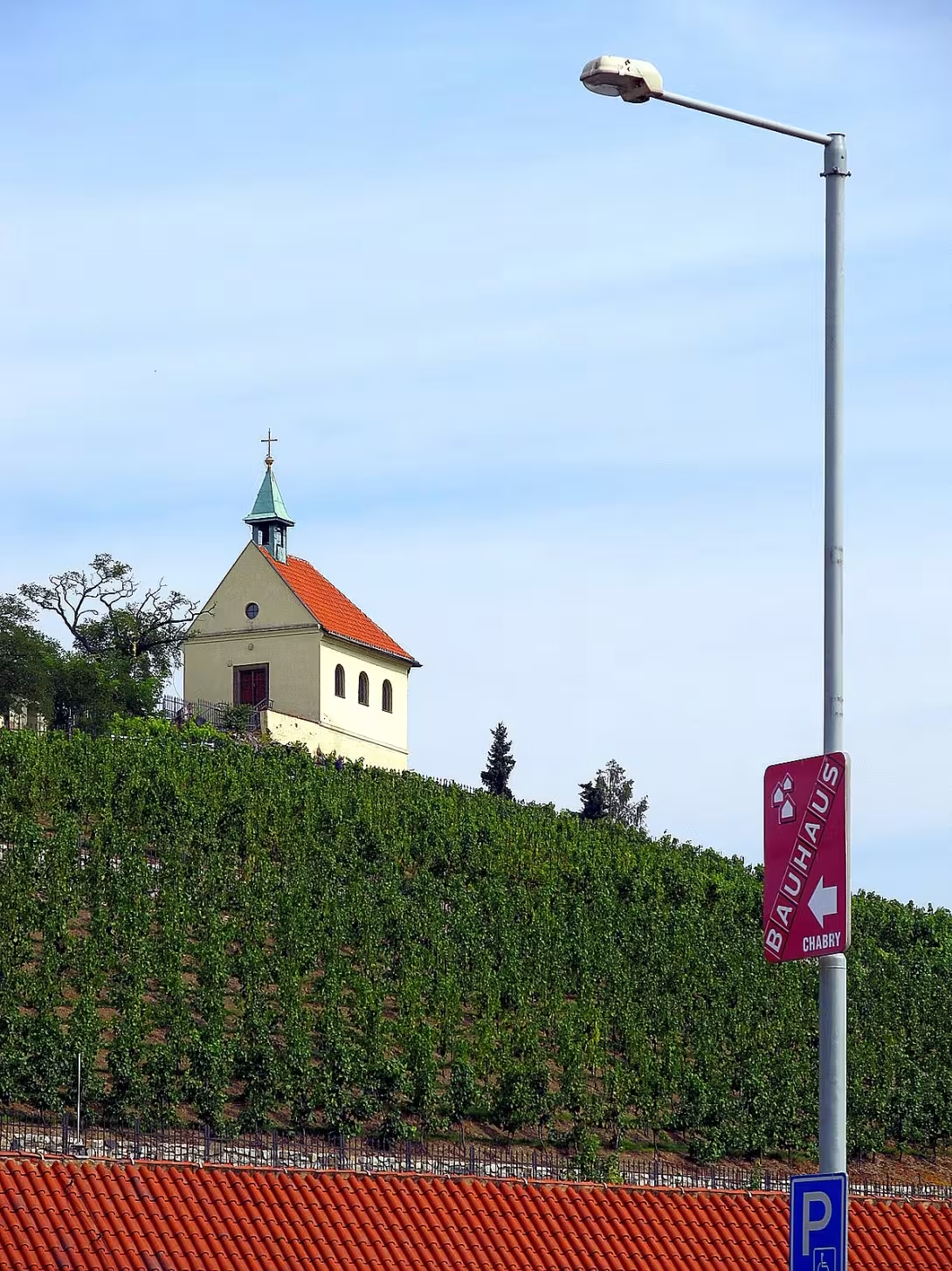
The Vineyard of St. Clara in Prague 7 is a medieval remnant of the vineyard economy on the southern slope of the Botanical Garden in Troy. Together with the chapel of St. Klara and the vineyard house No. 34, it is protected as a real-estate cultural monument of the Czech Republic.
This location represents the remnants of the vineyard belt that surrounded Prague since the Middle Ages. It keeps the traditional winery on the Trojan slopes, which still show the vinorodas available. In the 17th century, the vineyard was connected to the Trojan Castle. This corresponded to the flourishing Baroque castle complexes around the capital.
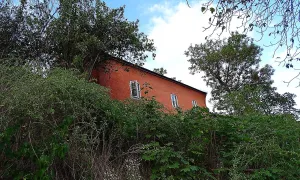
Around 1700, St. Clara's Chapel was built on top of the slope. The wine house from the turn of the 17th and 18th centuries is slightly lower. Originally served as a farmhouse and background for workers at the vineyard. The entire complex in the lower part closes a preserved wall in Trojska Street.
The relationship between the vineyard and the castle was later interrupted by the construction of Trojan Street. The vineyard was restored between 1950 and 1953 and since 1995 the building is in the administration of the Prague Botanical Garden. The wine house was repaired in 2024, which makes it now accessible to visitors.
The wine culture fluently covers the entire slope of 3.5 hectares. The vine is planted at the wooden stake in a regular buckle and led to the head. Five employees are in charge of the operation. The wine is grown, harvested and processed in the cellar. Of the nine grown varieties, the most prosperous is the Blue Ruland. Each year, up to 24,000 bottles are bottled.
There is a educational trail available for interested parties. It is possible to find up to 120 varieties of grapes authorised in the Czech Republic for cider. The Trojska Castle and Botanical Garden are located in the immediate vicinity of the monument.
The vineyard of St. Clara is a valuable witness to the historical agricultural use of the Prague surroundings. It is recommended to visit it for its combination of history, architecture and lively wine tradition.
Historical milestones
- 1700
- the creation of the chapel of St. Clara on top of the vineyard
- 1950
- start restoration of the vineyard (completed 1953)
- 1995
- takeover of administration by Prague Botanical Garden
- 2024
- repair of the wine house
Architectural development
The chapel of St. Clara was built around 1700. The wine house from the turn of the 17th and 18th centuries served originally as a background for workers and in 2024 it underwent repair. The area downstairs closes a preserved wall on Trojska Street.
Historical events
Around 1700, St. Clara's Chapel was built on top of the vineyard. The vineyard was restored between 1950-1953.
Owners
In the 17th century connected to the Trojan Castle, since 1995 in the administration of the Prague Botanical Garden.
Points of interest
- It is a medieval remnant of a vineyard farm on the south slope of the Botanical Garden in Troy. - In the seventeenth century, the vineyard was connected to the Trojan Castle. - The wine house from the turn of the seventeenth and eighteenth centuries served originally as a farmhouse and background for workers. - Nine varieties are grown on an area of three and a half hectares, the most prosperous of which is the Blue Ruland. - The educational trail in the area offers up to one hundred and twenty varieties of vines allowed in the Czech Republic for cider.
Guide
Show guide text
This text was created by artificial intelligence and has not been editorially reviewed. It may contain inaccuracies.
Welcome to the heart of Prague, where history drinks directly from grapes. You are standing in a place that deserves your full attention, as vinice svaté Kláry is decomposing before you. It's a place that looks like an idyllic oasis of peace, but it actually hides deep roots dating back to the Middle Ages. Look around you. You can see a series of vines coming down the slope. It's not just common green, but living proof of what the capital was like centuries ago. This vineyard is the remnant of a vast belt of vineyards that once surrounded the whole city like a green coat. Today, this place is protected as a real-estate cultural monument and is located in the area of the Botanical Garden in Troy. The atmosphere here is different than elsewhere in the metropolis. You can feel the silence that only breaks the noise of the leaves and the distant noise of the city behind the hill. It's a place where time runs slower, where one can stop and suck history right out of the air.
Let's take a step back in time to understand why this place has actually been preserved. The vineyard of St. Clara is not a random creation of nature, but a result of human work and planning. Its existence is closely linked to the Trojan landscape, which has been a popular place to grow wine since time immemorial. In the seventeenth century there was a fundamental change when this vineyard was connected to the Trojan Castle. This meant that it became part of the nobility and its maintenance and development were subordinated to the interests of the castle estate. This belonging to Troy has determined the next fate of this place. The original medieval remnant became part of a representative landscape, which was intended not only to produce wine but also to make aesthetic pleasures for visitors.
Now pay attention to the architectural elements surrounding you. The main point of interest is the Chapel of Saint Clara, which stands at the top of the vineyard. This building was built in the seventeenth century and its location is not random. The location at the highest point of the vineyard allows the chapel to be visible from a large distance while providing a view of the whole area. Look at her facade. Even though we don't know the names of the particular architects who designed it, their work defies the spirit of the time. The chapel is simple but dignified, and its shape harmoniously fits into the landscape. There are no excessive ornaments that disturb the view. Instead, the building reliably relies on the slope and becomes part of it.
Another important element to be careful of is the vineyard house. This object dates back to the turn of the seventeenth and eighteenth centuries. It was originally not built as a tourist attraction, but as a functional building. It served as a farm and background for workers who took care of the vine. Imagine how people lived and worked here who knew every grape and every leaf. This house is proof that the vineyard was not only a beautiful miracle, but also a hard work. Today it is undergoing reconstruction to be preserved for future generations. His existence recalls that every glass of wine is worth human hands and effort.
The key stories associated with this place are more collective than individual. We don't know any particular famous people who would live or often visit here, but we do know that this place was an important part of Troy's life. The history of the vineyard is a story of endurance. Over the centuries she changed owners and purposes, but always kept her essence. In the 1950s, namely in 1950, a large renovation of the vineyard began, which lasted until 1953. This restoration was crucial for the preservation of traditional vineyard culture. Without it, it could happen that this place would only become an ordinary field or be written in history as a lost place. Restoration has shown that even in modern times it makes sense to preserve the old traditions and techniques of growing wine.
Another important step took place in 1995 when it took over the Prague Botanical Garden. This move meant that the site became part of a scientific and educational project. The Botanical Garden takes care of the vineyard not only as a historical monument, but also as a living organism to be cared for. This means that there is research, variety monitoring and biodiversity protection. For a visitor, this means that not only historical remains can be seen here, but also actual cultivation results. It's a place where the past and the present intersect.
The interesting fact that this vineyard is one of the few places in Prague, where you can imagine what the city looked like from the outside. The medieval city was surrounded by vineyards that served as a natural barrier and a source of nutrition. Today, when you're standing on this slope, you feel like you're on the border between the city and nature. This line is invisible, but you can feel it every step of the way. The position of the chapel on top is also interesting. This is not only an aesthetic choice, but also practical. The vineyards are better overlooked from the top and the weather and the condition of the vines can be better monitored. It's a place where prayer and work meet.
Let's take a look at the details that might not draw attention at first. Notice how the vine grows. Traditional vineyard culture includes specific cutting and shaping methods that are passed down from generation to generation. Even though the vineyard now takes care of the botanical garden, the principles remain the same. Every tree is important and every grape has its meaning. This attention to detail is what makes this place special. It's not just the grapes growing here, it's the way they're grown. It's an art that requires patience and knowledge.
In conclusion, I would like to remind you that this vineyard is a living document. It's not the museum where the objects are behind the glass, it's the place where history develops. Every year something new happens here, but the roots remain firmly in the ground. That's why I invite you to keep your distance from the outside. Stop by the chapel, look at the vineyard house, walk between the rows of vines. Save some time to notice details that might escape attention. Listen to the silence, you smell the smell of earth and leaves. This vineyard is a place where you can connect with history and also enjoy the present.
It's hard to say good-bye to this place, because it remains calm and calm. But you know you can come back. The vineyard of St. Clara is open to all who want to know different views of Prague. Not just the monuments of stone, but the ones of living matter. I hope that this experience remains in your memory and that you will be happy to remember the moments you have experienced here. Thank you for
Tips for visitors
The best time to visit is late spring or autumn, when the wine bushes are in the most beautiful colors and the surrounding landscape is the most cosy. Transport to Prague 7 can be arranged by your own car or public connections. Check the specific routes in the maps.
We recommend to the vineyards that you wear comfortable shoes suitable for the field and a sun hat because there are fewer shading places in the area. For photo lovers, the best points are the surroundings of the chapel of St. Clara and the views of the wine rows, ideally for the golden hours before sunset when the light softens.
Near is the Botanical Garden, Trojská Castle and Trojská Street, which offers pleasant walks around the monument. For families with children it is advisable to use the area of vineyards to tell about the medieval cultivation of grapes in Prague.
Frequently asked questions
Can the monument be visited?
We have not verified whether this monument is accessible. Please ask the owner or operator, or the local municipal office.
Where is the monument?
Location: Praha 7. The map on this page shows the exact spot.
Why is the monument protected?
It is listed in the Central List of Cultural Monuments of the Czech Republic as a cultural monument (register no. 1000152631_0005). It is protected as part of a larger listed ensemble.
Businesses nearby
Do you run a restaurant, accommodation, shop, museum, rental, wellness or other visitor service near this monument? Show yourself directly to the people heading to it — this is how they will see you in the app and on the web:
Events nearby

Zdroj akcí: otevřená data měst a obcí ČR (Národní katalog otevřených dat) a kalendář akcí Národního památkového ústavu.
Nearby
Botanická zahrada, Trojský zámek, Trojská ulice.
Accommodation nearby
Trips and activities nearby
Guided tours, tickets and activities nearby from GetYourGuide
Affiliate link: if you buy from the partner, we may receive a commission. The price for you does not change.
Search tours and activities →Themed route
Here is the design of the cruise route:
1. Trojan Castle (construction) - Beautiful Baroque mansion with rich interior equipment. 2. Botanical Garden (park) - A place with unique plants from all over the world. 3. The vineyard of Saint Clara (vineyard) - The main destination of the journey where traditional vine cultivation can be admired. 4. Trojan street (road) - Walk through the local road that connects the individual points of the route.
Seasonal recommendations
In spring, greenery awaken in the surroundings and wine shoots begin to grow. The light is soft and the air is fresh, which creates a feeling of a new beginning. We recommend shoes suitable for wet ground and visit in the morning when dew is still visible.
In summer, rich green leaves and intense sun dominate. The atmosphere is warm and calm, typical of the peak of the season. It is necessary to choose light clothes, hat and to reach a place in the early morning or late evening to avoid heat.
Autumn brings golden colors with leaves and a specific scent of ripe fruit. The lighting is golden and milder, which gives the place a melancholy touch. Suitable is layered clothing and a visit in the afternoon when the colors of nature are the most distinctive.
Zimą is a landscape in decline, leaves are gone and dominance has grey color of stone and bare branches. The atmosphere is quiet and freezing, especially in advent time. It is necessary to wear warm winter clothes and fixed shoes that do not slip on the frozen surface.
Visualizations and artistic views

The visualisations are generated by artificial intelligence and serve as inspiration.
Photos from the area
Real photos taken near the monument


Zdroj a licence jsou uvedeny u každého snímku.
Tips from visitors
No tips yet. Be the first!
Log in and add your tip.
Sources and literature
Photos: Ewwwa / CC BY-SA 3.0 — Wikimedia Commons. The author and licence also appear when you hover over the image.
Faktickým podkladem tohoto textu byl článek na Wikipedii, jehož autory jsou přispěvatelé Wikipedie. Článek je dostupný pod licencí CC BY-SA 4.0.
Location on the map
More monuments – Praha 7
Show all in the municipality


Příběhy a pověsti
Legendy, pověsti a příběhy spjaté s touto památkou

Fotografie návštěvníků
Zatím žádné fotografie. Buďte první, kdo přidá fotografii z návštěvy!
Log in a přidejte svou fotografii nebo hodnoťte.
Za ověřenou návštěvu v aplikaci získáte víc bodů — poznáme podle GPS, že jste na místě.
Reviews and comments