






Vinohradská sokolovna Sokol gymnasium
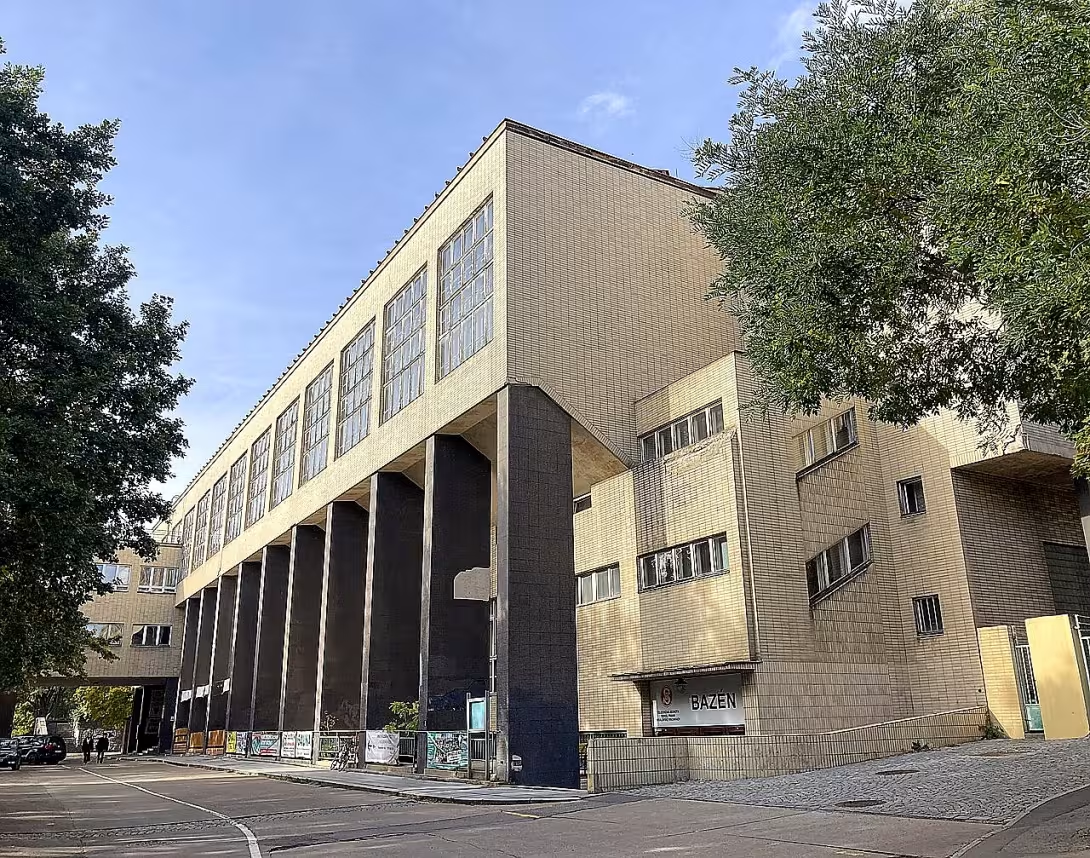
Vinohradská sokolovna is a remarkable functionalist building in Prague 2 on Vinohrady in Polish street, on the edge of Rieger orchards. It is the largest falcon house in the world, which has 46,000 m ³ hall space and 22,000 m ³ other space. In the building there are rooms for trainers and corridors and auditorium for spectators. The entrance hall is equipped with recessed ceiling lights and the statue of Miroslav Tyrš is located in it by sculptor Ladislav Šaloun.
The building was built in the 1930s. The Sokolovna project won the design of František Mark and Václav Vejhryv. To save financial costs, the project was reduced by one floor. Construction work started in 1938. The building was built in a functionalist style which was very popular at the time. The materials used were suitable for construction and future maintenance and renovation of the building.
The owner of the Sokolovna was originally Sokol Vinohrady, later it was taken over by TJ Bohemians ČKD Praha and in 1991 it was taken back by the Czechoslovak village Sokolská. The building has been protected since 2007. There are Rieger sets in the vicinity of the falcon house.
Vinohradská sokolovna is the largest falcon in the world. It has 46,000 m ³ of hall space and 22,000 m ³ of other space. The building is a statue of Miroslav Tyrš by sculptor Ladislav Šaloun. In the building there is a large hall with auditorium for 600 spectators, of which 400 seats. The hall has been using the TJ Falcon Royal Vinohrady for training and matches since 2000.
Vinohradská sokolovna is worth a visit because it is a unique architectural and historical object that offers rich sports and cultural activities. It is a place where you can experience the history and culture of Prague and Vinohrad.
Historical milestones
- 1938
- Start of construction works
- 1941
- The Germans have taken over the almost finished building
- 2007
- The building is monument protected
Architectural development
Construction work started in 1938. To save considerable financial costs, the project was reduced by one floor.
Historical events
26 February 1887: Falcon Vinohrady founded
1936: Second competition for the new Sokolovna project
1941: Germans took almost finished construction
Owners
Falcon Vinohrady
TJ Bohemians ČKD Praha
Czechoslovak village Sokolská
Points of interest
- Sokolovna is a remarkable functionalist building in Prague in Vinohrady. - It's the biggest falcon in the world. The building was built in the 1930s. - In the building is a statue of Miroslav Tyrš by sculptor Ladislav Šaloun. The building has been protected since 2007.
Guide
Show guide text
This text was created by artificial intelligence and has not been editorially reviewed. It may contain inaccuracies.
Welcome, honourable visitors, to one of the most beautiful neighborhoods in Prague, in Vinohrady. Please stop for a moment and fully observe the space you are in. You're standing in front of a building that is a real colossus of its time and an important witness to our history. It's Vinohradská sokolovna. Look before you at this vast building, which stands on Polish Street, on the very edge of the Rieger orchards. It is a place where the calm of urban green meets the rigour and purity of modern architecture. The first impression that radiates from the building is a sense of stability, strength and expansion. It's a space designed for movement, for health and for the community, which is exactly what this building was meant to express from the beginning.
Let us now look together at how this magnificent building was built and in what context it was built. Let's move on to the 1930s. It was a time of optimism, the flowering of modern thinking and finding new ways to organize space for people. It is in this atmosphere that a plan has been made to build this centre. Construction work started in the year one thousand nine hundred thirty-eight. The famous architects František Marek and Václav Vejrych were responsible for the design of the building. Their goal was not just to create an ordinary house for exercise, but a real temple of physical life serving thousands of people. But history was cruel to this construction. Shortly afterwards, in the year one thousand nine hundred forty-one, the nearly completed building was prevented by German occupation troops. Imagine the disappointment of the then builders and athletes who saw their dream of a modern health center in the hands of the enemy. But this painful experience has given the building a tragic dimension and reminds us how closely it is linked to the fate of the entire nation.
Now that you're standing in front of the front, pay attention to the architecture itself. The building is conducted in the spirit of functionalism. What does that mean in practice? Look at her lines. Note that you will not find unnecessary ornaments that would only waste space or building material. Everything here is designed to fulfil its purpose. Functionalism says that the form must follow the function. And this falcon is a perfect example of that. It's wide, it's wide and it's very airy. If you go in now, I suggest you first focus your attention on the entrance hall. It's the heart of the whole building. Note the ceiling where the lights are placed. These detailed lighting solutions provide space of modern feel even after many decades. Right here in the centre of the hall, you will meet one of the most important figures of Czech sport. In front of you will stand the statue of Miroslav Tyrš, created by the famous sculptor Ladislav Šaloun. This statue is not only an ornament, but a reminder of the founder of the Sokol movement who believed that a healthy spirit belonged to a healthy body.
When moving further from the hall, feel the atmosphere of corridors that connect individual parts of the building. This path will lead you to the spaces for the trainers themselves. The Sokolovna has a large main hall designed to accommodate a huge number of people in joint exercises. In addition to this main area you will find several smaller halls for more specialised sports or smaller groups. For the audience there are prepared auditorium from which people could watch sports competitions and festive plays. It's fascinating to imagine the noise, enthusiasm and energy these halls had to fill in their greatest glory. And there are saunas in the building for those who were looking for relaxation after demanding training, which at the time of construction was a very modern approach to the regeneration of the human body.
With this place are the names that formed the identity of the Czech nation. In addition to Miroslav Tyrš, whose vision was the basis of the movement, the name Václav Špička is also inscribed here. Personalities like these gave life to the building. The Sokolovna was not only about halls and concrete, but about people, about discipline, about mutual help and about love for the country. Exercise in these areas was meant to be a way for a better person, someone who is strong not only physically, but also morally. That's why this building is so important. It's not just a sports complex, it's a monument to national pride and joint effort.
And now I'm going to take you to one interesting thing that might surprise you. Did you know that Vinohradská sokolovna is considered the largest falcon house in the world? Imagine the range. At the time of its creation, it was a real record building to show the strength and ambition of the Czech body movement. It's a fascinating idea that right here on Polish Street, there is an absolute peak of this type of architecture. This uniqueness has also been officially recognised, which is why the building has been protected since two thousand seven monuments. This means that the state recognises its irreplaceable value for our culture and history and ensures that its original features are preserved for future generations.
Now, when you look around you, remember the contrast that this building makes with the surrounding environment. On one side you have the dynamics of the city and on the other you have the calm of the Rieger orchards. This falcon is standing right on the border of these two worlds. It's a place where sport discipline meets the freedom of nature.
I hope this short trip to history has helped you better understand the importance of this place. Vinohradská sokolovna is much more than just a 30-year-old functionalist building. It's a symbol of endurance, health and national identity. Now I invite you to take a closer look at the building, go through its premises, if possible, or just slowly walk past its vast perimeter and try to imagine what stories have happened here in decades. Feel the silence in the corridors and imagine the echoes of last century's trainee voices.
Thank you for your attention and I wish you a pleasant continuation of your walk in Prague. Enjoy the beauty of the Vinohrad and be inspired by the spirit of this wonderful place. Goodbye.
Tips for visitors
The best time to visit the Vinohradské sokolovna is during daylight to give you a beautiful view of the building from Rieger orchards.
You can park in a nearby parking lot or in Polská Street, where public transport is also available.
When visiting the falcon house, remember to take the camera with you so that visitors can capture the beautiful architecture of the building.
In the vicinity of the falcon is worth visiting Rieger's set where you can relax and walk on the pavement.
If you come with children, you can take them by visiting the falcon room and then walking through the Rieger set.
Businesses nearby
Do you run a restaurant, accommodation, shop, museum, rental, wellness or other visitor service near this monument? Show yourself directly to the people heading to it — this is how they will see you in the app and on the web:
Events nearby

Zdroj akcí: otevřená data měst a obcí ČR (Národní katalog otevřených dat) a kalendář akcí Národního památkového ústavu.
Nearby
Riegrovy sady
Accommodation nearby
Trips and activities nearby
Guided tours, tickets and activities nearby from GetYourGuide
Affiliate link: if you buy from the partner, we may receive a commission. The price for you does not change.
Search tours and activities →Themed route
1. Vinohradská sokolovna (building) - An architectural unique that shows the history of the body movement. 2. Vinohradská sokolovna (indoor space) - A tour of halls designed for sport and social events. 3. Rieger sets (park) - Space for relaxation and nature walk next to the building.
Seasonal recommendations
Spring: During the spring period the day is extended in Vinohrady and the soft light in the morning is well underlined by the historical architecture of the Sokolovna. The surrounding trees and bushes come to life, the air is fresh and the atmosphere is quieter than in the summer months. For a visit, choose a light layer of equipment because the morning can be cold and the afternoon warmer. I recommend you come on Tuesday or Wednesday morning when there are fewer people.
Summer: In summer the sun shines long and bright afternoon light highlights the colors of the facade and surrounding greenery. Hot days can create a more lively, but also a busier atmosphere, especially in the main summer season. Light shoes, hat and drinking regime are suitable because walking around the sun can be challenging. It's best to come out early in the morning or in the evening when there's less heat and less crowds.
Autumn: Autumn brings lower sun, softer shadows and golden tones of leaves that give the historic building a quieter and thoughtful mood. The temperatures are falling and sometimes the rain appears, so the atmosphere is quieter and less disturbing. Put on your jacket, scarf and waterproof shoes so you can enjoy the tour even in the cold. I recommend afternoon hours on a weekday day when fewer people and light are warmer.
Winter: Winter visit is characterized by a short day, sharp low light and cool air, which emphasizes the dignity of stone architecture. In advent time, the surroundings may be festive, but the monument is often less visited if it is not particularly open. Take warm clothes, gloves, hat and tight shoes because walking on the frost and possible snow requires caution. It is best to come after noon when the weather is the least cold and daylight is still enough for orientation.
Visualizations and artistic views

The visualisations are generated by artificial intelligence and serve as inspiration.
Photos from the area
Real photos taken near the monument


Zdroj a licence jsou uvedeny u každého snímku.
Tips from visitors
No tips yet. Be the first!
Log in and add your tip.
Sources and literature
Photos: Prikryl / CC BY-SA 4.0 — Wikimedia Commons. The author and licence also appear when you hover over the image.
Faktickým podkladem tohoto textu byl článek na Wikipedii, jehož autory jsou přispěvatelé Wikipedie. Článek je dostupný pod licencí CC BY-SA 4.0.
Location on the map
More monuments – Vinohrady
Show all in the municipality
Příběhy a pověsti
Legendy, pověsti a příběhy spjaté s touto památkou
Fotografie návštěvníků
Zatím žádné fotografie. Buďte první, kdo přidá fotografii z návštěvy!
Log in a přidejte svou fotografii nebo hodnoťte.
Za ověřenou návštěvu v aplikaci získáte víc bodů — poznáme podle GPS, že jste na místě.
Reviews and comments