



Vlkošov Fortress
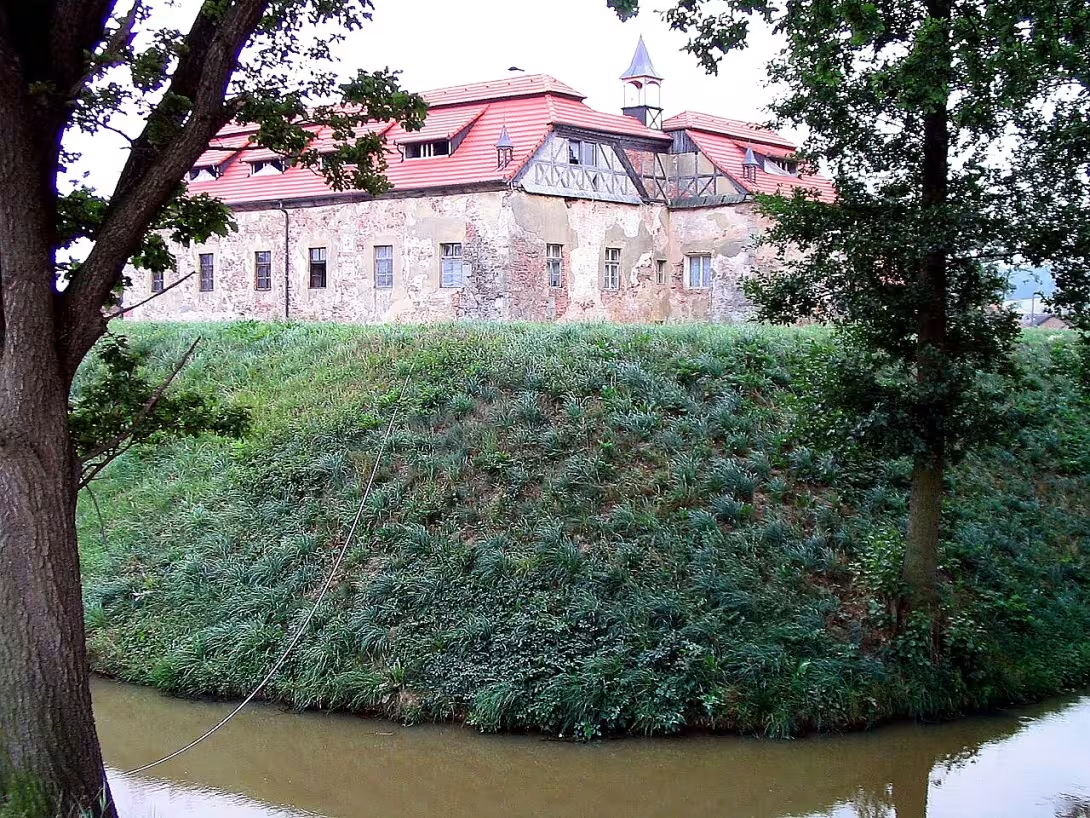
The fortress Vlkošov, located near the village of Bezřefiv in the district of Pilsen-North, is a historic residence from the fifteenth century, which served as a mansion until the middle of the seventeenth century. Its architectural character is highlighted by a two-wing building with parts of fortifications that are protected as a cultural monument of the Czech Republic. The fortress Vlkošov is significant because of its history and preserved building elements that represent the rich past of this area.
The history of the fortress probably dates back to the 14th century. The first written mention of it dates back to 1437, when it was owned by Seagull and Příbram z Račína. The fortress was built or rebuilt at the end of the 15th century or at the turn of the 16th century, probably by the brothers Nicholas and Lorenzo of Racine. The fortress was at that time part of a rich estate that became the center of local administration and life.
Architecturally, the Vlkošov fortress is characterized by a two-wing building with a north wing, which has corners lined with stone blocks. The northwest corner of both wings is reinforced with supporting pillars, and a portal with a Gothic edge was entered into the cellar, even though this portal was later removed. The interior contains remains of gothic vaults in the cellars of the north wing, and both wings have draped shields. The fortification of the fort includes the ramparts and moats, with a massive boulder and an external moat from the pond on the north edge of the complex.
The possession of the fort has undergone several changes. After Bushka Calt from Kamenná Hora in 1390, Jetřich Hošťálek z Hojnestu, followed by the Half of Vetlé before the Hussite Wars. Seagull and Příbram z Račína became owners in 1437, after which the fortress inherited Lorenc z Račína, which managed it until 1590. His son Bohuslav z Račína was the following owner, and after his death he took over Adam Ondřej z Račína. The latter was involved in the Stábor uprising, which led to the confiscation of the fortress in 1623. Jiří Kokořovec z Kokořova then connected it to its estate and Adam Václav Kokořovec baroque edited it in the 1960s.
Among the key events in the history of the fortress are the participation of Adam Ondřej of Rachín in the Stábor uprising and subsequent confiscation. In 1788, the building was converted into a granary, reflecting changes in its purpose and use.
Today the fortress Vlkošov is a protected cultural monument that retains its historical character. Its premises offer visitors an opportunity to explore the rich past and architecture of this area. Although part of the building is used differently, its historical elements remain an important testament to the lifestyle and events of the past centuries. The fortress Vlkošov is worth visiting for those who want to understand the history of the Czech countryside and its development.
Historical milestones
- 1437
- First written mention of the fort.
- 1545
- The insertion of the fort into the boards of the Earth's brothers Nicholas and Lorenzo of Racine.
- 1623
- Jiří Kokořovec z Kokořova receives the manor from the Royal Chamber.
- 1788
- Adjusting the building to the granary.
Architectural development
The fortress was built in the fifteenth century and in the sixties of the seventeenth century it underwent Baroque reconstruction. The remains of Gothic vaults are preserved in the cellars of the north wing. In 1788, the building was converted into a granary.
Historical events
1437 - the first written mention of the fortress, 1620. which - the participation of Adam Ondřej from Rachín in the stavobor uprising and subsequent confiscation, 1788 - the modification of the granary building.
Owners
Bušek Calta z Kamenné Hory (14th century), Jetřich Hošťálek z Hojnestu (after 1390), Půta z Vetlé (1406), Seagull and Příbram z Račína (1437), Nicholas and Lorenc z Račína (16th century), Bohuslav z Račína (after 1590), Adam Ondřej z Račína (after 1603), Jiří Kokořovec z Kokořova (1623), Adam Václav Kokořovec (after 1651).
Points of interest
- The first written mention of the fort dates back to 1437. - The building is double-winged and its fortification includes the ramparts and the outer moat. There are remains of Gothic vaults in the cellars of the north wing. Adam Ondřej's participation in the Stábor uprising led to the seizure of the fort in 1623. In 1788, the building was converted into a granary.
Guide
Show guide text
This text was created by artificial intelligence and has not been editorially reviewed. It may contain inaccuracies.
Welcome to Chateau Vlkošov. Stop for a moment, take a breath, and feel the silence of this place that surrounds you right now. You are standing in front of a monument that carries traces of several centuries of Czech history. In front of you is a building that once served as a wall, a home and a symbol of the power of local masters. If you look around you, you'll see that this building is not just an ordinary house. It is a historic mansion that has changed its face over time, but still retains its dignity. Notice the overall layout of the area. The building consists of two wings which form the core of this complex. But take a closer look at what surrounds the building. Notice the remains of the fortifications that are still visible here. Do you see the ramparts and the remains of the moat? It is these elements that tell us the story of a time when security was not a matter of course and home had to be a fortress capable of resisting the enemy.
Let us now return in time deep into the past, until the fifth century, namely the year one thousand four hundred thirty-seven. It is this year that the first written mention of the Vlkošov fortress comes from. Imagine what this place looked like at the time. It was an era of great changes and unrest when the landscape was filled with similar fortified settlements. The fortress was established as a mansion, a place where noble families managed their good and exercised their power over the surrounding countryside near the village of Nezářiv. For centuries there have been families who have left their trail in stone and archives. In a thousand and five hundred forty-five, the fort was officially inserted into the Earth's records, which was the most important file on land ownership at that time. It was the brothers Nicholas and Lorenc z Račína who became the recognized masters of this estate.
Now pay attention to the architecture itself before you. Although the building was changing over the years, it still has its original purpose. Look at the distribution of those two wings. This structure was typical of later stages of the development of harbours, when purely defensive buildings became more comfortable residences. Notice the outer moat that once surrounded the entire area. Water was the best ally of defense, creating a natural barrier that was difficult to overcome. Imagine how the sun was mirrored in these waters and how hard it was to get here without the Lord's permission. And even if you stand outside now, I know you'll be interested in what's left behind. In the depths of the north wing, in its cellars, there are remains of Gothic vaults. They're silent witnesses to the oldest parts of the building, a stone memory that survived all the storms of history. These arches are proof of the original style and ambitions of the founders of the fortress.
When we think about this place, we can't forget the people who lived here and decided the fate of the neighborhood. Vlkošov was home to many prominent personalities. These included Bušek Calta z Kamenné Hory, Jetřich Hošťálek z Hojnestu or Půta z Vetlé. Later, a family from Racín settled here, which was closely linked to the fort. We mentioned Nicholas and Lorence, but there were also Seagull, Pribram, Bohuslav and Adam Ondřej z Račína in this house. Each brought something of his own to Vlkošova, built, modified and lived in the rhythm of the time. But history isn't just about peace and building, it's about dramatic breakthroughs.
One of the most fascinating and tragic stories of this place is the fate of Adam Ondřej of Racine. He was a man who was involved in the great political and religious conflicts of his time. Adam Ondřej attended the stavobor uprising, which was a bold but very risky move. At that time, there was strong tension in the country, and the loyalty to the sovereign was tested by blood and property. He paid a high price for his part in the rebellion. In the year one thousand six hundred twenty-three, the fortress Vlkošov was confiscated, thus violently taken from the hands of the family of Racine. It was a painful farewell to a home their family had for generations.
This act opened a new chapter in the history of the fortress. The estate was acquired by Jiří Kokořovec z Kokořova, who received it from the Royal Chamber. Adam Václav Kokořovec worked with him. The Kokořovka family tried to maintain the influence of the fort, but the times were constantly changing. The original function of the mansion began to fade. The world has been modernised, the needs of the nobles have changed, and the fortresses that were once a symbol of security and power have begun to lose their meaning.
This brings us to one interesting thing, which may seem strange at first sight. Imagine that instead of noble feasts and political debates, the building began to transform into something much more practical. In the year one thousand seven hundred eighty eight, the building was converted into a granary. The granary, i.e. the place for storing the grain, is a function completely different from the manor. It's a fascinating contrast. The place where people's fates were once decided and Gothic vaults sounded in the depths of the cellar, became a repository for the fruits of the earth. This change, however, paradoxically helped the building survive. Thanks to its practical use in later times, it was not completely demolished and we can admire it today.
Try to imagine the transition now. From the marks of weapons and the rustle of aristocratic clothes to the silent dust of the granary and the work of farmers. Vlkošov carries both of these faces. It is a place where high politics meets daily struggle for survival. It is a place where the entire journey of the Czech manor has been reflected from medieval strongholds to Renaissance mansions to economic buildings of newer times.
Now that you know the story of this place, I suggest you look around slowly. Feel the atmosphere these walls emit. Take another look at the clouds and imagine how a moat once spread out here. Try to imagine Adam Ondřej from Racine standing in the same place as you and thinking about his fate and the uprising that took everything away from him. Feel the contrast between the strength of fortification and the modesty of later granary.
Vlkošov is not just a pile of stones and old walls. It's an open book that tells us about ambition, courage, falls, and the ability to adapt to new times. He's a silent witness to history that invites us to think about how fleeting human wealth and power are, but how permanent the trail we leave in architecture can be.
I invite you now to explore the area. Go through the perimeter of the complex, see the landscape around the village of Nepořiv and let yourself be carried away by your ideas about what has happened here in the last 600 years. You may hear echoes of the past in silence, or you may feel the presence of all those people who once lived here loved and fought.
Thank you for accompanying this short trip to Vlkošov Chateau history. I hope this story helped you see more than just the old building and that you found a bit of peace and inspiration in this place. I wish you a pleasant continuing journey and many other discoveries in our beautiful landscapes. Goodbye.
Tips for visitors
For the best experiences we recommend a visit in the afternoon, when the sun beautifully illuminates the historical wonder and creates a pleasant light for photography. The best shots will be taken from the edges of the complex, especially if you focus on the view towards the pond on the north edge.
You can travel to the monument by car and public transport; check the current connection in the internet search engine.
Bring comfortable shoes suitable for uneven terrain and plenty of drinking water. If you plan to stay longer, it is good to have small refreshments.
For families with children it is ideal to walk by the pond on the northern edge of the complex. If you have more time, you can also visit the nearby village of Bezřebov or Jyltice.
Frequently asked questions
Can the monument be visited?
Some buildings of this kind are open for guided tours, others serve another purpose or are privately owned. We have not verified whether and when this monument is open – please ask the operator.
What are the opening hours and admission?
We have not verified the opening hours or admission. Current information is published by the operator.
Where is the monument?
Location: Karlovarský kraj. The map on this page shows the exact spot.
Why is the monument protected?
It is listed in the Central List of Cultural Monuments of the Czech Republic as a cultural monument (register no. 1000134948).
Businesses nearby
Do you run a restaurant, accommodation, shop, museum, rental, wellness or other visitor service near this monument? Show yourself directly to the people heading to it — this is how they will see you in the app and on the web:
Nearby
Bezvěrov, Žlutice, rybník na severním okraji areálu.
Accommodation nearby
Trips and activities nearby
Guided tours, tickets and activities nearby from GetYourGuide
Affiliate link: if you buy from the partner, we may receive a commission. The price for you does not change.
Search tours and activities →Themed route
Useless - type: village. Historical houses and church form an introduction to regional architecture and atmosphere, which prepares the visitor for the next stops.
Yellow - type: city. Walk around the main square reveals preserved Baroque facades and local craft workshops, thus extending the context of the medieval fortress.
Pond on the north edge of the area - type: natural water area. A quiet water area provides rest and the possibility to observe water birds, ideal before the last section to the fort.
Vlkošov (fortress) - type: historical fortress. The main destination of the trip - a tour of the tower, courtyard and exhibition of medieval defense brings a profound experience of the past.
Seasonal recommendations
Spring brings awakening nature and fresh green, which surrounds the wall of the fortress. Soft spring light highlights the details of the construction and the atmosphere is full of hope. I recommend moisture-resistant shoes because the surrounding roads can be muddy when snow melts. The best time to visit is in the morning when the air is the cleanest.
In the summer months the monument is in full bloom and the surrounding trees provide a pleasant shade. The sun illuminates the space bright and well, which is ideal for photography. In the high season, I recommend you come first thing in the morning to avoid the biggest groups of people and hot noon sun. Dress light and breathable substances.
The autumn season is characterized by golden colours of leaves and frequent fog, which give the fort a mysterious touch. The light is more delicate and golden at this time, which creates a melancholy mood. Due to the variable weather, it is advisable to choose layered clothes and visit the place in the afternoon.
Winter brings peace and freezing purity to the landscape, while snow can beautifully decorate historical walls. The atmosphere is quiet and stopped in time. Don't forget to wear very warm clothes and tight shoes with anti-slip sole.
Visualizations and artistic views


The visualisations are generated by artificial intelligence and serve as inspiration.
Photos from the area
Real photos taken near the monument


Zdroj a licence jsou uvedeny u každého snímku.
Tips from visitors
No tips yet. Be the first!
Log in and add your tip.
Sources and literature
Photos: Brizolit / CC BY-SA 4.0 — Wikimedia Commons. The author and licence also appear when you hover over the image.
Faktickým podkladem tohoto textu byl článek na Wikipedii, jehož autory jsou přispěvatelé Wikipedie. Článek je dostupný pod licencí CC BY-SA 4.0.
Location on the map
More monuments – Karlovarský kraj
Show all in the region
Příběhy a pověsti
Legendy, pověsti a příběhy spjaté s touto památkou
Fotografie návštěvníků
Zatím žádné fotografie. Buďte první, kdo přidá fotografii z návštěvy!
Log in a přidejte svou fotografii nebo hodnoťte.
Za ověřenou návštěvu v aplikaci získáte víc bodů — poznáme podle GPS, že jste na místě.
Reviews and comments