






Vodárenská věž Bohnice Building
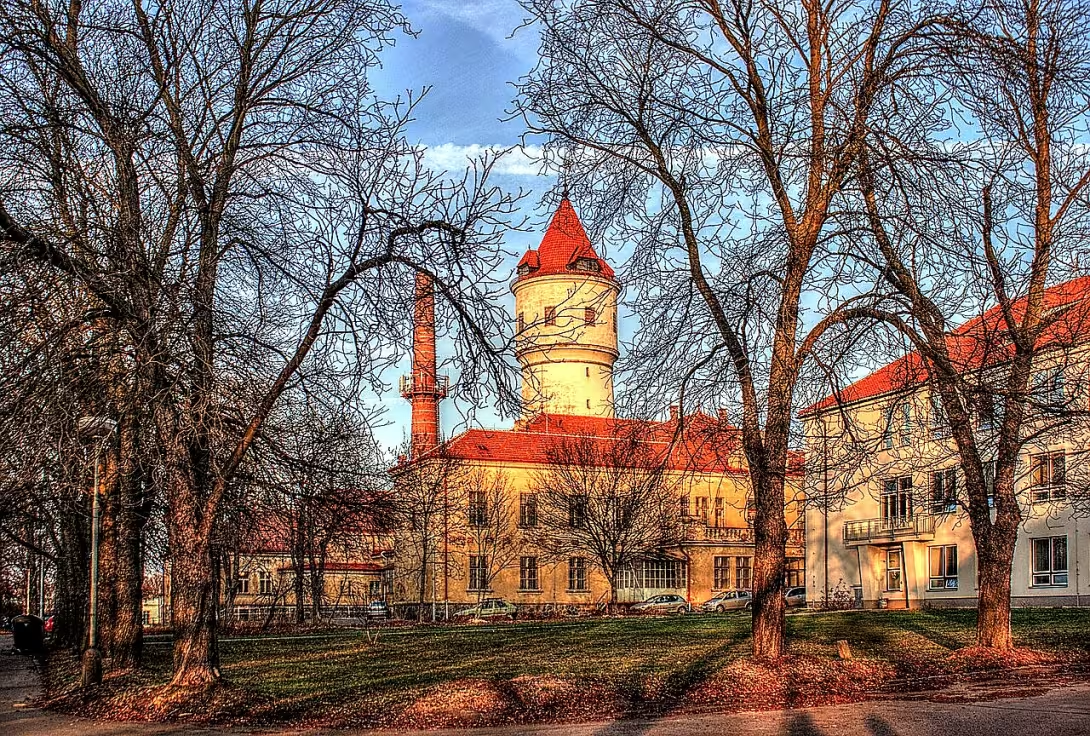
Vodárenská věž Bohnice is an important historical monument in the area of the Psychiatric Hospital Bohnice in Prague north of St. Wenceslas's Church. This building, built in the early 20th century, is protected as a cultural monument of the Czech Republic. Its importance lies not only in the function it once performed, but also in its architectural design and history.
The water tower was built according to the design of architect Václav Roštápil as part of the premises of the Royal Czech Regional Institute for Insanity. The implementation took place between 1907 and 1909 when the object was completed. At that time it served as part of the hospital's infrastructure for the accumulation of cold utility water drawn from the artesian wells on the right bank of Vltava.
Architecturally, the walled tower watercourse is connected with an extensive building that previously contained laundry, machinery room, central bath and kitchen staff apartments. The tall 42.6 meter tower contains three steel tanks located above. The highest of them had a bottom of 26 metres above the surrounding terrain and a volume of 290 m ³, the middle with a suspended bottom had a volume of 105 m ³ and used to heat the water with steam at 70 ° C. The lowest tank with a flat day of 56 m ³ contained water temperature 35 ° C, which was used for the spa.
Key events have occurred over the years that affected the function and state of the object. In 1972, the treatment facility was connected to a public water pipeline, which led to a change in the role of the water tower, which has since been used as an expansion tank. An important event was the repair of the facade in 1996, which helped to preserve the historical form of this architectural work.
Today, Vodárenská věž Bohnice is accessible to visitors and stands for interest not only as a monument but also as a witness to technological progress in the early 20th century. Its history and architectural design represent an interesting chapter in the development of health care infrastructure in the Czech Republic.
The visit offers a unique view of the past and allows you to imagine how important this object played for the daily life of the hospital. It is a reminder of the innovation and technical progress that shaped health care at that time. For historically curious tourists, this monument is not only a visual but also an intellectual reward for their visit.
Historical milestones
- 1909
- Implementation of the construction of the water tower according to the plan Václav Roštápil.
- 1972
- Connecting the treatment facility to the public water supply and changing the function of the water heater to the expansion tank.
- 1996
- Fix the facade of the tower.
Architectural development
The construction is walled and contains three steel tanks located above. The tanks had different volumes and served for different purposes, including steam heating.
Historical events
The construction of the water tower was completed in 1909. In 1972, the hospital was connected to a public water pipeline. The facade of the building was repaired in 1996.
Points of interest
- The tower was built between 1907 and 1909 according to the design of architect Václav Roštápil. - The building is 42.6 metres tall and contains three steel tanks located above. - The medium tank was used for steam heating at 70 ° C and the lowest contained water at 35 ° C for baths. - Originally used to accumulate water drawn from the artesian wells on the right bank of Vltava. - Since 1972, when the hospital was connected to a public water pipeline, it serves as an expansion tank.
Guide
Show guide text
This text was created by artificial intelligence and has not been editorially reviewed. It may contain inaccuracies.
Welcome. You're standing right where the technical precision of the last century meets the silent atmosphere of history. Take a look in front of you now and try to focus your attention on that monumental brick tower that stands right in front of your eyes. Its height, over 42 meters, is truly impressive, and it probably makes you look up to the sky right now. This water tower is not just an ordinary building, it is a symbol of the need and care that took place here in the past. Feel the weight and stability that this structure radiates, and imagine how it must have affected people who went through here over a hundred years ago.
Let us now return together to the time when this site began to form. You must imagine the beginning of the twentieth century, the time of great changes and expansion of construction. This whole space was then created as a complex area for people with mind disorders. In order for such a big institution to work, he needed something vital, and that was water. Water for hygiene, drinking and operating purposes was necessary. That's why this tower was built. The whole process of implementing this work took place in the years from a thousand nine hundred seven to a thousand nine hundred nine. The tower was not built as a separate, isolated element, but as part of a wider system. If you look now at its connection to the surrounding buildings, you will realize that it is firmly connected to the building where the machinery room, laundry and spa used to be housed. It all formed one large, functional organism that had to be constantly supplied with water.
Now pay attention to how this building was designed. If you look at its overall appearance, you will see the work of a man who understood not only the technology but also the aesthetics of the buildings at the time. It was designed by Mr. Václav Roštlapil. He was the architect who had to combine demanding requirements for water management with a form that would fit into the overall nature of the complex. Even though the tower now appears solid and unchanging, its existence is the result of a very precise plan. Feel the harmony between its practical purpose and how its walled matter soars above the ground. It is proof that purely useful buildings can have their dignity and character.
Now try to imagine what's going on inside that tall tower. Even though you're out now, the inner space is fascinating. The tower is not empty, its heart is three large steel tanks that are located directly above each other. That's the technical solution you must be interested in. Each of these tanks had its own specific role and temperature. Imagine the medium tank that was designed to heat the water. With steam, the water was heated to 70 degrees Celsius. That was a huge energy sealed inside the steel walls. And right below it, in the lowest part, there was another tank. But it served a completely different purpose. It contained water at a much lower temperature, exactly 23 degrees Celsius, which was prepared for spa needs. This difference in temperature and the way the tanks were arranged points to the incredible willingness of the engineers at the time to address every detailed need for running the Institute.
But time passes and things change. This tower has gone through many stages of its life. For decades, it has performed its original function, but in the year one thousand nine hundred seventy-two there was a fundamental change. At the time, the Institute was connected to a public water pipeline and the tower could no longer serve as the main source of water for the whole complex as it was customary. Her role changed and she began to serve as an expansion tank, a space for balancing pressure in the system. Despite these changes, its significance has not disappeared. In the year one thousand nine hundred ninety-six, the tower was subjected to the repair of the facade to preserve its appearance and to protect it from the influence of the surrounding environment. Today, this tower is not only a technical facility, but is recognised and protected as a real-estate cultural monument of the Czech Republic. It is proof that even things that have been built for practical purposes can gain their historical value.
If you're looking for something unusual in this place, think about how much this tower is connected to human life. Although we don't have any specific names about the people who lived and worked here themselves, you can imagine them. Imagine those who worked in the laundry room, those who were looking for relief at the spa, and those who made sure the water never dried up. This tower was everything to them. It was their guarantee of purity and warmth. The mysterious force that carries the contrast between the hot steam in one part and the hot water in the other is what makes this place so special.
Now that you know about history, architect and technical details, I suggest you continue your walk. Feel the surrounding spaces and try to find traces of that time in every piece of architecture. This tower is only one part of a much wider story that has been written here for many years. I hope that this view of the water tower in Bínho has brought you new knowledge and that you will enjoy walking in this historic area. Thank you for your attention and read your way through history again. Goodbye.
Tips for visitors
The best time to visit is early morning or late afternoon, when soft light hits the wall walls of the tower, highlighting its texture and historical character. The location is available by car and by public transport; Check the current connection and parking options in the map search engine.
When walking we recommend shoes suitable for the hospital grounds to make the visit comfortable and safe. For photographers are the most interesting views from the bottom that highlight the impressive height of 42.6 metres, and details of the building connection of the tower to the building of the former laundry room.
As part of a short walk around visit St. Wenceslas Church and explore the area of Psychiatric Hospital Bohnice. All these places are located in the immediate vicinity and form a unique set of structures.
We recommend families with children to use the tower as an opportunity to explain the principle of water supply in historical buildings and a demonstration of older industrial construction.
Businesses nearby
Do you run a restaurant, accommodation, shop, museum, rental, wellness or other visitor service near this monument? Show yourself directly to the people heading to it — this is how they will see you in the app and on the web:
Events nearby

Zdroj akcí: otevřená data měst a obcí ČR (Národní katalog otevřených dat) a kalendář akcí Národního památkového ústavu.
Nearby
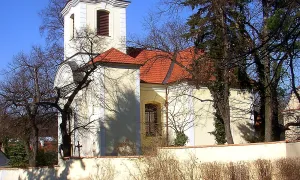
Areál Psychiatrické nemocnice Bohnice a kostel svatého Václava.
Accommodation nearby
Trips and activities nearby
Guided tours, tickets and activities nearby from GetYourGuide
Affiliate link: if you buy from the partner, we may receive a commission. The price for you does not change.
Search tours and activities →Themed route
1. Church of St. Wenceslas, a religious place. This historical object offers peace and is an important point in the surroundings. 2. Area of Psychiatric Hospital Bohnice, extensive complex of buildings and greenery. This area is interesting with its architecture and park parts. 3. Vodárenská věž Bohnice, water work. The main destination of the trip, which represents a unique example of technical history.
Seasonal recommendations
Seasonal recommendation for visiting the historical monument. Memorial: Vodárenská věž Bohnice (Water Works), Bohnice Status:
Spring: In spring there is a wonderful atmosphere due to the waking vegetation around the tower. The light is soft and the colors are fresh, which perfectly matches the technical architecture. I recommend coming in the morning when the air is the cleanest. Dress well, because morning cold can still smell.
Summer: In the summer months the surrounding tower is full of life and sun. The shadows of the trees offer a pleasant refuge from the heat. The best time to visit is early morning time to avoid the biggest crowds and heat. Don't forget enough water and light, breathable clothes.
Autumn: Autumn brings a nostalgic and calm mood around the water tower. The leaves turn colour into gold, creating a beautiful contrast with the construction of the monument. An ideal visit in the afternoon is when the sun shines low. Prepare waterproof shoes and a warmer layer of clothing in case of sudden cooling.
Winter: The winter makes the monument very raw and monumental, especially if everything is covered with snow. The atmosphere is quiet and lonely. Since the days are short, plan to visit in the first half of the day so that darkness doesn't surprise you. The need is very warm winter equipment and tight shoes in case the roads are slippery.
Visualizations and artistic views

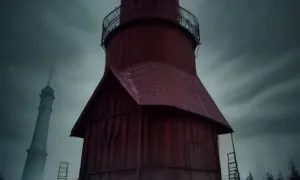
The visualisations are generated by artificial intelligence and serve as inspiration.
Photos from the area
Real photos taken near the monument


Zdroj a licence jsou uvedeny u každého snímku.
Tips from visitors
No tips yet. Be the first!
Log in and add your tip.
Sources and literature
Photos: Pedro Krtička / CC BY 3.0 — Wikimedia Commons. The author and licence also appear when you hover over the image.
Faktickým podkladem tohoto textu byl článek na Wikipedii, jehož autory jsou přispěvatelé Wikipedie. Článek je dostupný pod licencí CC BY-SA 4.0.
Location on the map

Příběhy a pověsti
Legendy, pověsti a příběhy spjaté s touto památkou
Fotografie návštěvníků
Zatím žádné fotografie. Buďte první, kdo přidá fotografii z návštěvy!
Log in a přidejte svou fotografii nebo hodnoťte.
Za ověřenou návštěvu v aplikaci získáte víc bodů — poznáme podle GPS, že jste na místě.
Reviews and comments