



Vodní mlýn s pilou (Puchverk) Water mill
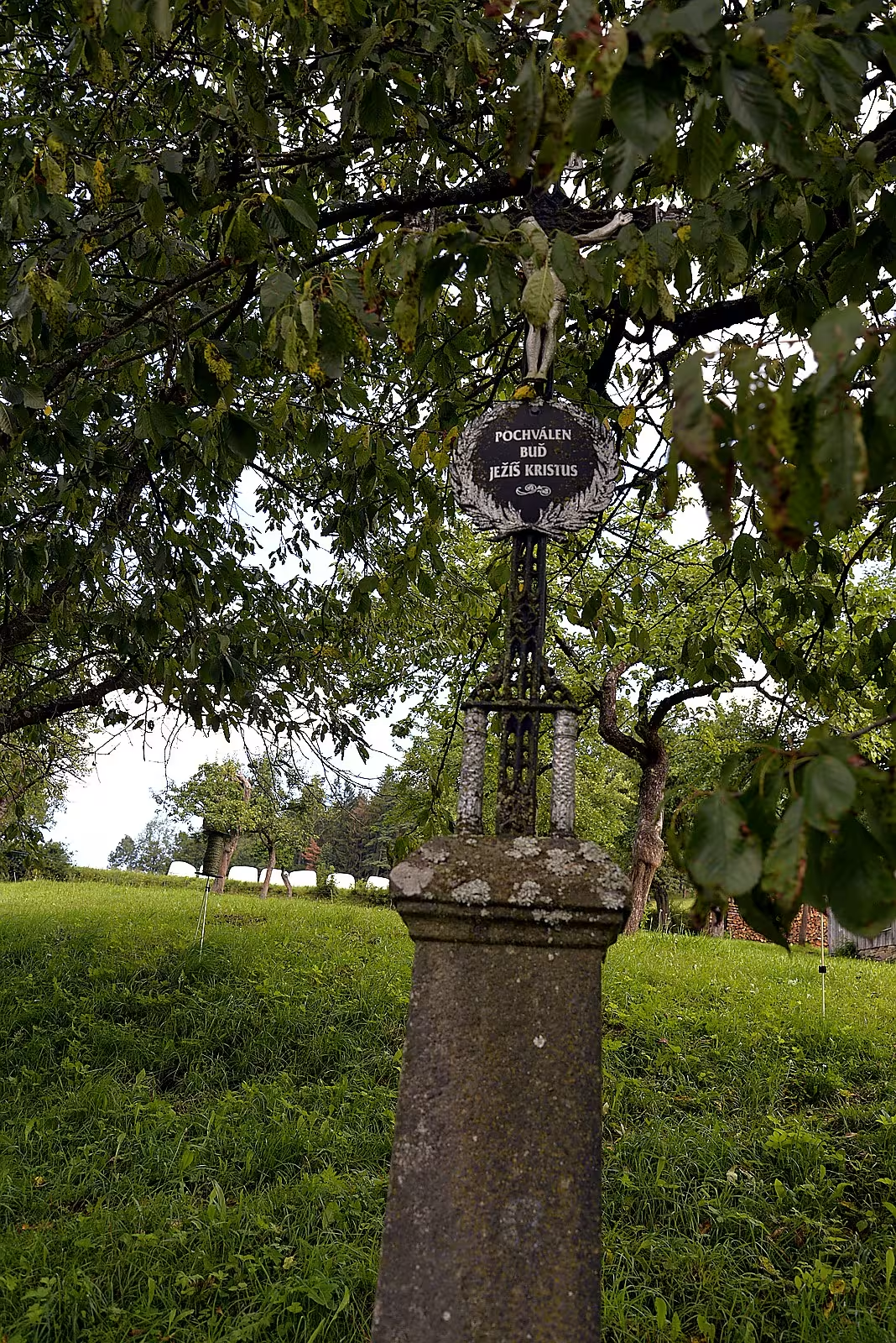
Schell Mill in Puchverk, located south of the village of Suchá near Hlavňovice in Klatovy district, is a classic water mill with saw. This real-estate cultural monument of the Czech Republic represents an important proof of the technical history of the foothills of Šumava. The existence of the site is closely linked to the former mining activity and the use of the water power of the Kepelski creek.
The history of the building is documented to 1837 when it was drawn on the map of the Imperial Mandatory Prints. There are few reports of the oldest history, but the name of the Puchwerk site of German origin refers directly to technical works used to crush ore. In the first half of the 19th century, during the period of national renewal and beginning of the industrial revolution, the mill represented a typical example of rural technical background. He used traditional craft techniques and water energy to process raw materials.
The architectural whole consists of mills, stables and barn. These buildings are arranged in the ground plan L and are located under a common roof. The dominance is a storey mill, for which is characterized by a plank shank with a wig. A separate building was a saw, from which only the remains of the masonry have been preserved until today. The drive that brought water to the water wheel was used to operate. Construction construction uses traditional materials typical of this region.
Schell Mill is a valuable witness to the link between agricultural and technical production. Visitors can observe preserved elements of folk construction and understand the importance of water works for the development of local industry in the 19th century. The building represents an important part of the cultural heritage of Hlavňovicka and deserves the attention of any interested person in the technical monuments.
Historical milestones
- around 1750
- Likely formation of original technical equipment for ore crushing
- 1837
- First written proof of the object on the map of imperial required prints
- 1850
- The period of the mill flowering in rural technical background
Architectural development
The building was created as part of the technical facilities in the location associated with historical mining activities. The mill, stables and barn form one building unit under the common roof, while the saw was built as a separate object. The construction uses traditional materials and architectural elements typical of the rural buildings of the region.
Historical events
In 1837 the mill was already drawn on the map of the Emperor's mandatory prints.
Points of interest
- The building is a classical water mill with saw, which is a real cultural monument of the Czech Republic. - The name of the place refers to earlier technical works designed to crush ore. - The history of the mill is documented in 1837, when it was drawn on the map of the Imperial Mandatory Prints. - The buildings of mills, stalls and barns are arranged in the shape of the letter L and are located under a common roof. - The dominance of the mill is a storey building with a plank slash and a wig.
Guide
Show guide text
This text was created by artificial intelligence and has not been editorially reviewed. It may contain inaccuracies.
Welcome to Hlavnovice. You just stopped at a place that carries the incredible power of history and technical ingenuity. You're standing right in front of Schell's mill in Puchverk. Look around you and let yourself pass through the atmosphere of this place. You see a set of buildings that are not just a random cluster of walls, but a thought-out total that was designed to serve people and their needs for many decades. The whole area that you now admire is composed of several major parts that are closely related. Notice how the buildings are arranged. If you look at their placement, you'll see that they form a shape resembling the letter L. This arrangement creates a certain center, a space that was probably the heart of the entire operation. You see here the mill, the stables, the barn, and also the drive, the important water channel that brings water to the work of machines. This whole view of you gives the impression of stability and order, which was so important for rural technical background.
To understand why this place looks just like this and why it's so important, we have to go back to the deep past. Although the exact date when the first stone was laid is not quite clear, historical footprints lead us to the mid-eighteenth century. Around the 1950s, it was likely that a device that had a very specific purpose began to operate here. It was not just a common grain mill, but a place designed to crush ore. That's the key to understanding the name of this place. The word Puchverk is not random; refers to precisely the technical works which were necessary for the processing of metals at that time. Imagine the noise, the dust and the constant movement of the machines that were working here at the time. Later, in the year one thousand eight hundred thirty-seven, this object was already so firmly anchored in history that it was clearly recorded on maps of imperial mandatory prints. This proves to us that the mill was already an important part of the landscape and state administration. The subsequent half of the century, i.e. the period around the year one thousand eight hundred fifty, was a period of true bloom for this space. The mill has become a key technical facility for the whole rural area and its importance has steadily deepened.
Now pay attention to the architecture itself, which is right before your eyes. If you look at the main building of the mill, you will see that it is a storey object, which shows the difficulty of its operation. The whole building is built in a classical style. This style manifests itself in some harmony and dignity that the building radiates. If you raise your sight above, you will see one of the most significant elements of this monument - a pruning refraction. It's the characteristic roof break that gives the building its unique appearance. And right underneath it, there's a wig. This element is not only an aesthetic issue, but it has served in the past for practical purposes when moving people and controlling work in the mill. Notice how these elements connect to other buildings, such as stables and barn. The whole complex consists of a whole, designed with respect to functionality and aesthetics of its time.
You may think this place has always been a mill, but history tells us about the mill. The complex used to have a saw which was part of the whole technical operation. Even though it was no longer in its full form and its existence is now visible only in the small remaining parts, its presence is still felt in the history of the whole place. Imagine how in the past, the power of water and saw tools were combined here to process wood. It was a place where various kinds of craft and technology met.
There's something fascinating about all this and maybe a little mysterious. The connection between Puchverk and crushing ore makes us think about how much our surroundings change. The place that used to be used for heavy metal processing was transformed into a classic water mill that served people in their daily lives. This building is not just an ordinary building but is protected as a real-estate cultural monument of the Czech Republic. This means that every wall, every corner of this complex, carries the weight of history that we have to protect together for future generations. It's a testament to how people adapted to nature and how they used the power of water to improve their lives.
Now we leave you with your thoughts and the impression that this place left on you. We recommend you continue your walk around the premises. Take a look at the shapes of the buildings in detail, see the connection between water and construction, and try to imagine what this place looked like two hundred years ago, when the power of water and the sound of machines ruled. Thank you for choosing to visit this history and devote your time to it. We wish you a pleasant further discovery of the surroundings.
Tips for visitors
The best time to visit is during late spring or early autumn, when the surrounding nature of the foothills of Šumava is the most photogenic and the terrain around the Kepelsky creek is well accessible. Due to the poor condition of the building, we recommend a visit in dry weather, when the movement around the mill is safer.
You can easily get to the memory by car on the roads leading to the village of Suchá near Hlavňovice. Verify public transport in current search engines for Klatovska region.
To visit, take your fixed shoes to the field and suitable clothes to protect you from moisture from the stream. Don't forget the charged camera because the technical details of the mill and the layout of the buildings in the shape of the letter offer unique compositions, especially in the soft morning light.
In the immediate vicinity there is a village of Sucha near Hlavňovice, which offers a quiet environment for walking along the Kepelsky creek. The whole area is suitable for easy tourism, but due to the state of the monument, be very careful when moving with children and do not leave them unattended near buildings.
When shooting, focus on the contrast between the historical architecture of the mill and surrounding Šumava nature. The best pictures can be taken from a slight perspective, which allows you to capture the ground plan layout of the entire area including the drive and saw.
Frequently asked questions
Can the monument be visited?
This is a technical monument. Some are open as exhibitions, others are out of use or on private land. We have not verified whether this one is accessible. According to the heritage register the structure is in poor condition – do not enter it and take care nearby.
What are the opening hours and admission?
We have not verified the opening hours or admission. Current information is published by the operator.
Where is the monument?
Location: Hlavňovice, Plzeňský kraj. The map on this page shows the exact spot.
Why is the monument protected?
It is listed in the Central List of Cultural Monuments of the Czech Republic as a cultural monument (register no. 1000140972).
Businesses nearby
Do you run a restaurant, accommodation, shop, museum, rental, wellness or other visitor service near this monument? Show yourself directly to the people heading to it — this is how they will see you in the app and on the web:
Events nearby
Zdroj akcí: otevřená data měst a obcí ČR (Národní katalog otevřených dat) a kalendář akcí Národního památkového ústavu.
Nearby
Mlýn se nachází jižně od obce Suchá u Hlavňovic v okrese Klatovy, v blízkosti Kepelského potoka v podhůří Šumavy.
Accommodation nearby
Themed route
1. Dry at Hlavňovic (village) - The entry point of the road located north of the mill. 2. Kepelsky stream (water flow) - A water road that leads directly to the main monument. 3. Vodní mlýn s pilou (Puchverk) (mill) - The main destination of the trip, where you will see the historic technical device. 4. The foothills of Šumava (natural area) - An environment with a typical landscape that forms the frame of the whole trip.
Seasonal recommendations
Spring: In spring, life wakes up around the old mill. You will watch the green grass and trees return to their full power. The light is soft and pleasant in this period to observe the details of the wooden structure. Because the mill is bad, count on mud on the road. I recommend wearing waterproof shoes and visiting the place early in the morning when the air is the cleanest.
Summer: In the summer months there is the most sun and dense vegetation around the water creates a pleasant shadow. The atmosphere is alive thanks to the warmth of the water. In the main summer season you may encounter more people at the monument. Better come early in the morning to enjoy your peace and avoid the greatest heat. Don't forget the drinks and the headgear.
Autumn: Autumn brings a melancholic mood to the region. The leaves change colour to gold and brown, which contrasts perfectly with the crumbling construction of the mill. There is often a fog that gives the place a mystery. Due to wet weather and slippery surfaces, wear tight shoes and a waterproof jacket. The best time to visit is in the afternoon when the colors most excel.
Winter: Winter makes this water mill very lonely and quiet here. Ice cover on water and frost create a raw but beautiful atmosphere. The light is weak and the days are short. Because the state of the building is bad, be very careful when moving around. The need is very warm clothes and high-quality shoes with good grip so that you don't get hurt on the icing.
Visualizations and artistic views


The visualisations are generated by artificial intelligence and serve as inspiration.
Photos from the area
Real photos taken near the monument


Zdroj a licence jsou uvedeny u každého snímku.
Tips from visitors
No tips yet. Be the first!
Log in and add your tip.
Sources and literature
Faktickým podkladem tohoto textu byl článek na Wikipedii, jehož autory jsou přispěvatelé Wikipedie. Článek je dostupný pod licencí CC BY-SA 4.0.
Location on the map




Příběhy a pověsti
Legendy, pověsti a příběhy spjaté s touto památkou

Fotografie návštěvníků
Zatím žádné fotografie. Buďte první, kdo přidá fotografii z návštěvy!
Log in a přidejte svou fotografii nebo hodnoťte.
Za ověřenou návštěvu v aplikaci získáte víc bodů — poznáme podle GPS, že jste na místě.
Reviews and comments