






Vodní mlýn (Šumice) Water mill
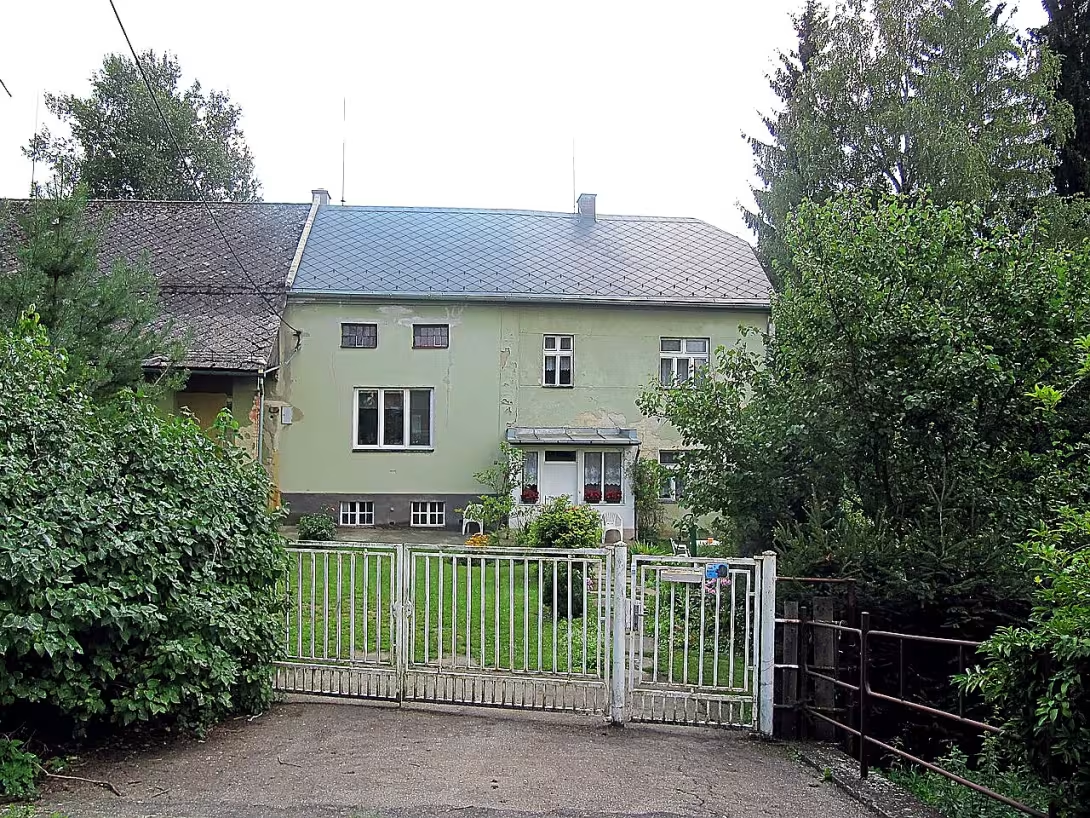
The Pipal Mill in Šumice is located on the Olshava River in the district of Uherské Hradiště. Since 2012 it has been protected as a real-estate cultural monument of the Czech Republic. The building has a rich history and architectural features that make it an important example of the mill technology of the last century.
The history of the construction dates back to 1828, when it was captured on the Emperor's compulsory prints. This document is an important source for understanding the original appearance and function of the mill at that time. In 1937 there was a major reconstruction which changed its structure and technical equipment. The mill was in operation until 1957, indicating its long functionality.
Architecturally, it's a walled-down two-story building. The building has wooden beam ceilings and an attic with standing stool under the saddle roof. The area also includes the machinery room and economic objects supplementing its original function. In the interior is preserved miller technology - from the transmission in the basement to the belt conveyor of the grain to the attic to the distribution of the grains to individual mills. This technique comes from Breitfeld Daněk from Blansko, which underlines the historical importance of the building.
In 1930, the mill had two Francis turbines with a drop of 4.75 metres and a power of 14.5 HP. This technique was a key part of the operation until 1957. Water for the water wheel led the drive, which is typical of historical water mills.
Today, the Pipal Mill stands as a testament to the technology and lifestyle of past generations. Thanks to its preservation, visitors can get an idea of the miller's craft in the 19th and early 20th centuries. The mill is located on the edge of the village of Šumice near the main road to Zedenice, so it is easily accessible to tourists and historians.
The visit to the Pipal Mill in Šumice allows you to realise the importance of preserving cultural heritage. The object not only reflects technological progress, but also the social and economic conditions of past times. It is an opportunity to explore the history of our region and appreciate the work of our ancestors.
Historical milestones
- 1828
- The mill is depicted on Emperor's required prints.
- 1937
- A reconstruction of the mill was carried out.
- 1957
- The last year the mill was operational.
- 2012
- The building is protected as a real cultural monument of the Czech Republic.
Architectural development
The building is walled and has two floors with wooden beam ceilings. Under the roof there is an attic with standing stool. There is also a machinery room and an economic building.
Historical events
In 1828 the mill was captured on the Emperor's compulsory prints. The building was rebuilt in 1937. The mill was open until 1957.
Points of interest
In the interior is preserved miller technology from the transfer to the flour shipping facility. In 1930, the mill had two Francis turbines. The grain distribution in the mill comes from Breitfeld Danek from Blansko.
Guide
Show guide text
This text was created by artificial intelligence and has not been editorially reviewed. It may contain inaccuracies.
Welcome to this place full of history and secrets! You're standing in front of the Pipal Mill in Shumice, one of the few preserved witnesses of the past. This water mill, located on the Olshava River, is a real pearl for those interested in history and technology. Its wall walls and storey structures attract attention with their simplicity and elegance.
Let's dive into his history. The mill, as the records tell us, was already visible in 1828 on the Emperor's mandatory prints, suggesting that its existence dates back to at least this time. In 1937 the mill underwent a major reconstruction which gave it a new life and probably modernised its technology. Although it was the last year of its functionality 1957, it has since become not only a monument to the past, but also a place of exploration and learning. Since 2012 it has been protected as a cultural monument of the Czech Republic.
Look up at its simple shape and notice the wooden ceilings that resemble the ancient miller technique. The mill is surrounded by a collection of economic objects and machinery, which creates an atmosphere full of life from the past.
Even though we have little information about his architect or his personalities connected to the mill, this place speaks for itself. In the interior is preserved miller technology from the transfer to the flour shipping facility. The odd thing is that in 1930 the mill had two Francis turbines - an innovation of the time that increased its efficiency.
Now pay attention to one of the most interesting details: the grain distribution in the mill comes from Breitfeld Daněk from Blansko. This fact suggests that, even then, cooperation and knowledge sharing among miller workers were needed.
Let's take a closer look at what this monument represents. Although it is now halted by time, it still makes a significant contribution to understanding technological progress and the life of the people of the past.
Allow me to invite you for further examination. Besides this mill Šumice offers many other attractions and beautiful views. So let yourself be carried away by the history that awaits you here, and continue your journey along this fascinating region.
Thank you for visiting Pipal's Mill. I hope you got here with new knowledge and memories of a beautiful moment. God!
Tips for visitors
For the best experience we recommend a visit during bright days when the sun illuminates the walled building and river level. The view of the mill by the water is the most beautiful in spring blossom or summer.
Transport is possible by car and public transport; Please check the current connection in the search engine. Parking near the village of Šumice is usually available.
Bring comfortable shoes suitable for walking by the water and possibly a bottle of drinking water. If you plan to stay longer in nature, you can also use sun protection.
For lovers of photography are the best places right on the shore of Olshava, where you can capture the building in combination with running water. For families with children it is ideal to walk along river flow near the mill.
Businesses nearby
Do you run a restaurant, accommodation, shop, museum, rental, wellness or other visitor service near this monument? Show yourself directly to the people heading to it — this is how they will see you in the app and on the web:
Nearby
Mlýn se nachází na okraji obce Šumice u řeky Olšavy.
Accommodation nearby
Themed route
1. Vodní mlýn (Šumice), historical building. Here you can see the old machines and understand how the mill works. 2. Tanks mill, indoor space. It offers a place to examine details directly at the mill. 3. Olshava River, water flow. A walk along the bank by the mill offers a view of running water. 4. The village of Šumice, a settlement. The road leads over the edge of this village where the mill is located.
Seasonal recommendations
Spring brings the mill freshness and a new life. The first flowers are beginning to bloom around the water stream and the surrounding vegetation has a bright green shade. Light is soft and pleasant in this period, which creates an optimistic atmosphere. It is best to choose the morning hours for the visit. Dress flat, because the morning temperatures may still be low, even if the sun is starting to warm.
In the summer months the mill is the most sunny days and intense green. The water level reflects a clear sky and the air is warm, which gives the place a living character. For a higher number of people, I suggest you arrive early in the morning to enjoy your peace and avoid the greatest heat and crowds. Prepare light clothes, headgear and water to drink.
Autumn turns the surroundings into a colorful landscape full of gold and brown shades. The morning mist above the water and soft light create a calm and a little mysterious mood, ideal for observing nature. I recommend a visit in the afternoon, when leaf colours are the most outstanding. Don't forget the waterproof jacket and tight shoes, because the road near the water can be wet.
Winter brings the mill silence and sleep. The landscape is often covered with frost or snow, creating contrast to dark water and wooden structures. Days are very short, so plan to visit around noon to use the maximum amount of light. It is necessary to have very warm clothes because the moisture in the water increases the feeling of cold, and also check in advance the opening times that are usually limited during this period.
Visualizations and artistic views


The visualisations are generated by artificial intelligence and serve as inspiration.
Photos from the area
Real photos taken near the monument


Zdroj a licence jsou uvedeny u každého snímku.
Tips from visitors
No tips yet. Be the first!
Log in and add your tip.
Sources and literature
Photos: Palickap / CC BY-SA 3.0 — Wikimedia Commons. The author and licence also appear when you hover over the image.
Faktickým podkladem tohoto textu byl článek na Wikipedii, jehož autory jsou přispěvatelé Wikipedie. Článek je dostupný pod licencí CC BY-SA 4.0.
Location on the map
More monuments – Zlínský kraj
Show all in the region

Příběhy a pověsti
Legendy, pověsti a příběhy spjaté s touto památkou

Fotografie návštěvníků
Zatím žádné fotografie. Buďte první, kdo přidá fotografii z návštěvy!
Log in a přidejte svou fotografii nebo hodnoťte.
Za ověřenou návštěvu v aplikaci získáte víc bodů — poznáme podle GPS, že jste na místě.
Reviews and comments