



Vondrov Manor farm
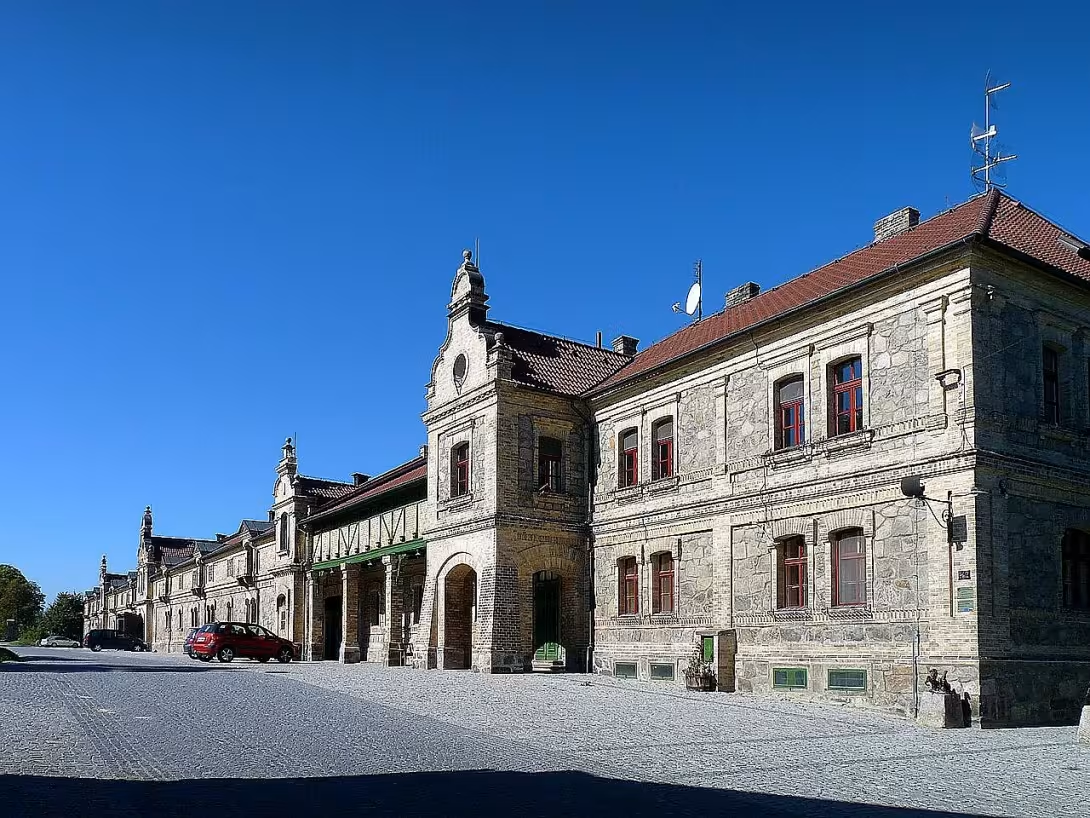
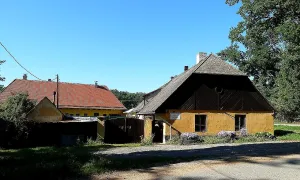
Vondrov is a former national and current economic court in the municipality of Hluboká nad Vltavou, which was established in 1550. The object is remarkable in the history of model farming and breeding of noble horses.
The construction in 1550 had Ondřej Ungnad ze Suneku built to increase the proceeds of the estate. At the time of its inception the area was named Ondřejov Court, but shortly thereafter it was renamed Vondrov.
From the point of view of architecture, the complex has been expanding over the centuries. The original Renaissance building from 1550 was supplemented by a new courtyard in 1895- 1898. He built Adolf Josef ze Schwarzenbergu approximately 150 meters west of the original part. The new tract was designed as a modern model manor yard with equipment corresponding to the end of the 19th century, including modern stables.
The property changed over time from the founder of Ondrej Ungnado from Sunek to the Schwarzenberg family. The administration of Vondrov until 1964 was part of the cadastral territory of Zlivi, then transferred to the administration of the municipality of Hluboká nad Vltavou.
Among the important events on the premises are the year 1636, when Marradas' divine torture was exposed here. The court was especially famous for the breeding of pram and noble horses. Václav Dragoun was also born here.
At present, Vondrov serves as an economic court. It is located on the top between Bezdrev and the MUNICA Pond, west of the Ohrad. For visitors, the object is available on a green marked tourist path from Hluboká nad Vltavou in the direction of Munice.
The monument represents a concrete example of the development of the government economy from the Renaissance to the modernization of the end of the 19th century. It is recommended to include Vondrova in the route while walking through the South Bohemian landscape.
Then and now
Drag the slider to compare how the landmark may have looked when it was built with the view today.
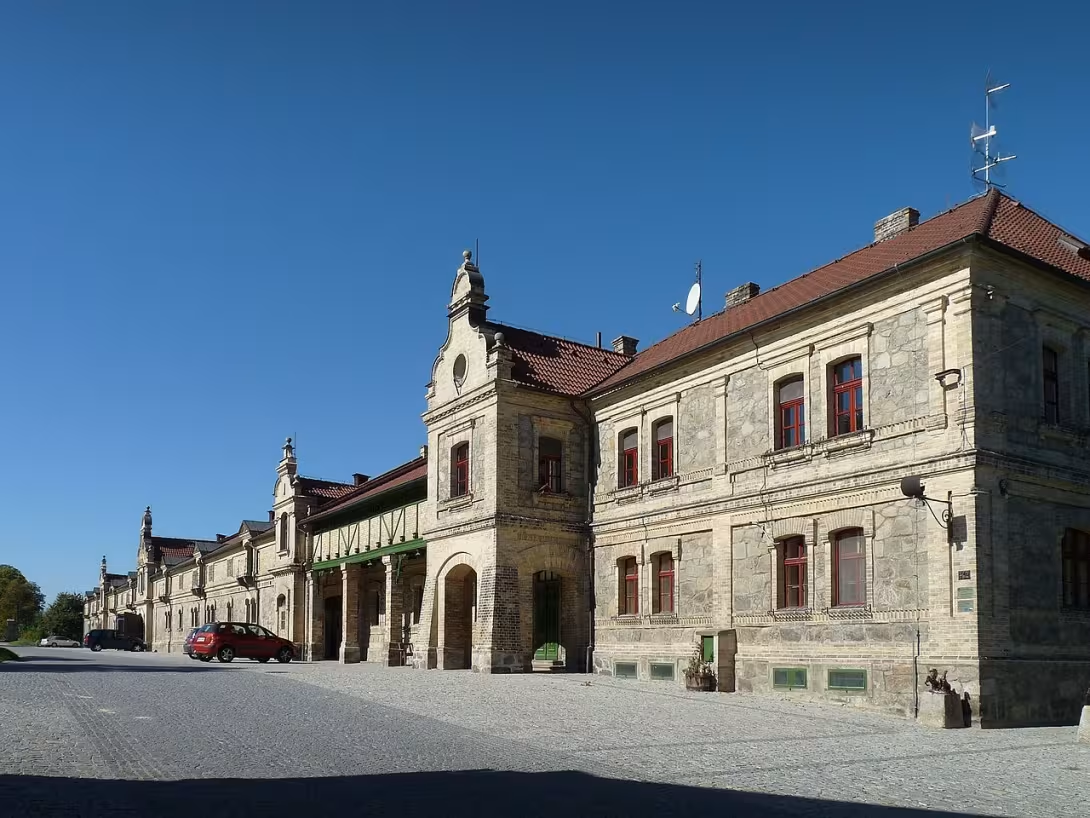
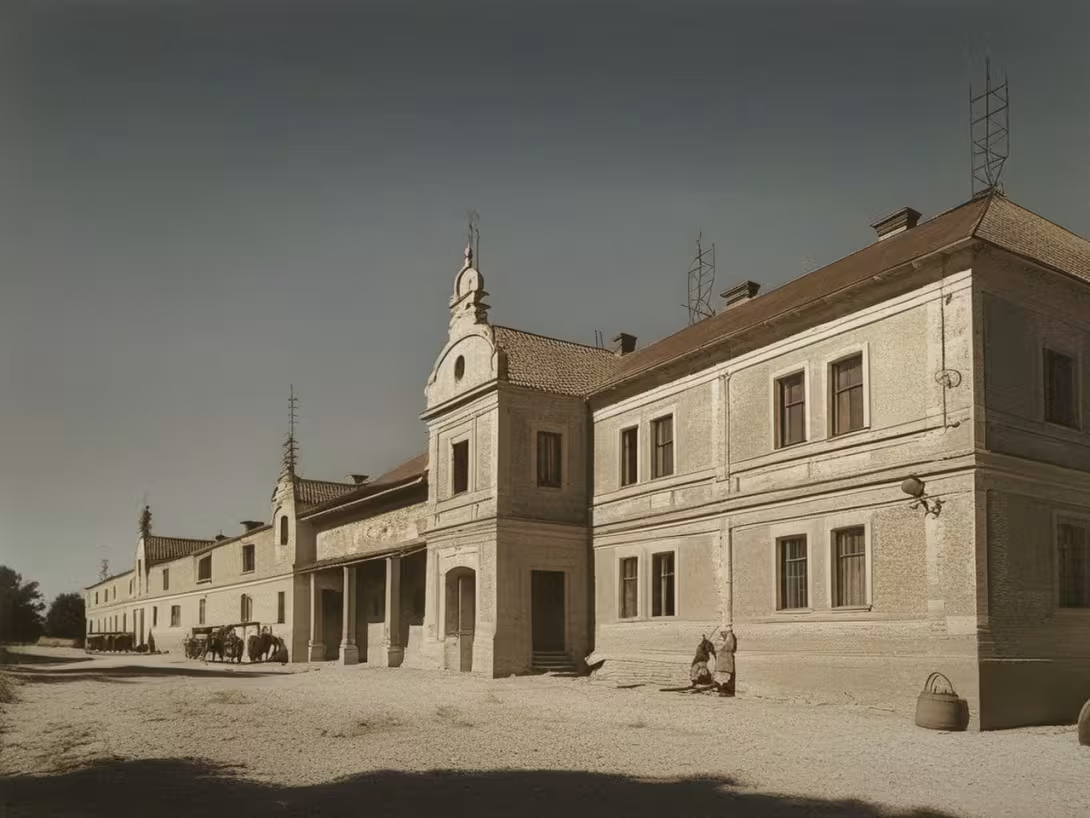
The historical appearance on the left is an AI-generated visualisation and serves as inspiration only.
Historical milestones
- 1550
- building of the Court of Ondrej Ungnado of Sunek
- 1636
- building the Marrads' divine torture on the premises
- 1895-1898
- construction of the new modern court by Adolf Josef from Schwarzenberg
Architectural development
The original yard from 1550 was supplemented by a new yard built about 150 meters west in 1895-1898. The new part was designed as a model manor yard with modern stables.
Historical events
1550 Foundation of the Ondřejovský Court, 1636 construction of Marrados' divine torture, 1964 change of cadastral territory from Zlivi to Hlukou nad Vltava.
Owners
Ondřej Ungnad ze Suneku (1550), Adolf Josef ze Schwarzenbergu (end of the 19th century)
Points of interest
- Vondrov was created in 1550 as a court that built Ondřej Ungnad ze Suneku. - The area was a remarkable breed of noble and pram horses, an exception to the history of model agricultural traffic. - In 1636, Marrados was subjected to God's torment on the premises. This is where Václav Dragoun was born. - The original Renaissance building was completed in 1895-1898 with a new modern courtyard with modern stables.
Guide
Show guide text
This text was created by artificial intelligence and has not been editorially reviewed. It may contain inaccuracies.
Welcome. You are standing in front of Vondrov, a place that will welcome you at first sight with its calm atmosphere and a sense of stability. Take a look around you at this vast area, which is situated on the top between MUNIC Pond and Bezdrev. It is a space where the history of economic use is combined with the tradition of men. In front of you is a former master and current economic court, which, in its form, tells the story of how the country was managed in the past and how people tried to assess the landscape around Deep Over Vltava.
Let us now move much deeper in time, until the mid-sixteenth century. Imagine this space right here in the year 500 and fifty. It was this year that Ondřej Ungnad ze Suneku built the original building of the court. His motive was very practical and clear at the time. The goal was to increase the proceeds of the entire estate. At the time, it was not just building buildings, but creating a productivity center that could effectively farm the surrounding land and generate profits. The Vondrov was thus created as a strategic point to serve as a motor for the economic development of the region.
Now, when you're looking at the area, feel its scope and layout. Although the face of the court has changed over the centuries, you still feel the spirit of the government. Pay attention to the overall layout of the buildings. At a later time, Vondrov became a model court. This means that this was not just about ordinary breeding or warehouses, but about a place where the most modern methods of managing their time were introduced. Everything was designed to work with maximum efficiency.
If you look around the premises now, look for one very important detail from the past. In the year one thousand six hundred thirty-six, Marradas was subjected to the torment of God. This religious element in the area of the economic court recalls that even at the heart of economic activity, man had room for spiritual reflection and prayer. He is a silent witness for centuries who survived many changes and still reminds us of the faith of the people who lived and worked here.
Now let's talk about the people who formed Vondrov. In addition to the founder of Ondrej Ungnado of Sunek, Adolf Josef ze Schwarzenbergu also left its trail. He was responsible for the great transformation that took place at the turn of the century, namely between the years one thousand eight hundred ninety-five and one thousand eight hundred ninety-eight. In this period he had a new, modern yard built. Imagine what a change it was to people at the time. Old habits have given way to modern technology and new building standards. Adolf Josef ze Schwarzenbergu wanted Vondrov to represent the peak of agricultural progress at that time.
this place is associated with another person, Václav Dragoun, who was born here. It is fascinating to think that the walls of this court witnessed the first steps of a man who subsequently left his mark in history. Vondrov was not only a place of work, but also a home and cradle of fates.
Now I want to take you to what made Vondrov really special and what it was known to be around. If you look at buildings and yards today, you may see only practical architecture in them. But in the past, this place was famous for something much more noble. Vondrov was a recognised centre for breeding noble and stroller horses. Imagine the beautiful, strong animals that lived here were nurtured and trained. At the time, horse horses were a symbol of status, elegance and power. Vondrov was not only an ordinary farm, but a place where top-class animals were grown for the public. This tradition of model agricultural operation and horse farming provided the Court with a line between clean practical use and aristocratic luxury.
It is a fascinating idea that here, in one place, the hard work of the economy met with the elegance of noble horses and the spirituality of God's torture. All together it creates a unique atmosphere of Vondrov, which is now an administrative part of the village Hluká.
Now that you're looking around, try to imagine the noise that used to be here. Horses picking up, people talking in the fields, the sound of carriages passing by, and the silence brought by the Marradas' divine torment. All these layers of time are present in this space simultaneously. Vondrov is like an open book on how the understanding of agriculture changed, from the first ambitions of Ondřej Ungnada to modernization under the hands of the Schwarzenberg family.
Feel this space as a whole. Note how the area is naturally written into the landscape between the pond and Bezdrev. It's a place that doesn't roar with its glory, but whispers it through its walls and history. It is a reminder of the time when the economic court was the heart of the entire estate and when the prosperity of the whole region was decided.
I suggest you now walk quietly through the premises and let your eyes slide down the lines of buildings. Try to imagine the noble horses that once flowed here and that we see now only in historical records. Pay attention to God's torment for a moment and think about the people who built it centuries ago.
Vondrov offers you the opportunity to stop and feel the continuity of time. From the year one thousand and five hundred fifty to today, the process of change has been ongoing, but the basic character of the place as a centre of productivity and quality has remained.
I hope you are interested in this short journey through Vondrov history and that you are now seeing this area in a new light. It's a place where economics, architecture and personal fates meet. It's up to you now. Explore the rest of the premises at your own pace, feel the silence of the surrounding countryside and be inspired by the story of this model court.
Thank you for your attention, and I wish you a pleasant continued journey to discover the beauty of the Vltava and its surroundings. Goodbye.
Tips for visitors
The best time to visit is spring or autumn, when the colors of the landscape around the surfaces are the most distinctive and a walk in nature pleasant. Vondrova can be reached by car or public transport; Check the exact connection in the current timetables.
On your way take comfortable shoes suitable for walking on a green marked tourist path that leads around the yard towards the village of Munice. Since this is an economic construction, we recommend that we stay in designated roads.
For the best photos we recommend to come in the morning or late afternoon lights that highlight the architecture of the former court. The most interesting views offer the surroundings of the building on the surface overlooking the landscape.
In addition to the court itself, visit the nearby Monic pond or walk to the villages of Bezdrev or Ohrad. For families with children, it is ideal to combine an outdoor tour of the court with a walk along the tourist path, which is a great way to guide children through nature.
Frequently asked questions
Can the monument be visited?
This is a residential or farm building, not a museum with opening hours. Please view it from public space and respect the owners' privacy. We have no information about access to the interior.
Where is the monument?
Location: Hluboká nad Vltavou. The map on this page shows the exact spot.
Why is the monument protected?
It is listed in the Central List of Cultural Monuments of the Czech Republic as a cultural monument (register no. 1000132786).
Businesses nearby
Do you run a restaurant, accommodation, shop, museum, rental, wellness or other visitor service near this monument? Show yourself directly to the people heading to it — this is how they will see you in the app and on the web:
Events nearby
Zdroj akcí: otevřená data měst a obcí ČR (Národní katalog otevřených dat) a kalendář akcí Národního památkového ústavu.
Nearby
V blízkosti se nachází Munický rybník, obec Bezdrev a obec Ohrada. Okolo dvoru vede zeleně značená turistická stezka směr Munice.
Accommodation nearby
Trips and activities nearby
Guided tours, tickets and activities nearby from GetYourGuide
Affiliate link: if you buy from the partner, we may receive a commission. The price for you does not change.
Search tours and activities →Themed route
Here is the design of the thematic route:
1. Vondrov (monument) - The starting point of the journey where you can view the courtyard itself and its premises. 2. Green marked tourist path (path) - Walk from the yard towards the village of Munika, which offers a pleasant connection with nature. 3. Monic pond (water surface) - A place to relax and observe water near the road. 4. Bezdrev (municipality) - A nearby village that complements the overall picture of the surrounding countryside. 5. The castle (village) - Final stop in the surrounding village for the completion of the trip.
Seasonal recommendations
In the spring, the surroundings of Hluboká nad Vltavou wake up in colours. The flowering trees and lush greenery create a fine frame to view the construction from the outside. We recommend arriving early in the morning when the air is clean and light soft. Layer clothes and morning dew-resistant shoes are suitable.
Summer brings full sun and rich green parks. The building stands out in bright light with its cleanliness and the details of the facade are best seen. Due to the large number of visitors in the high season, it is best to find a shadow under the trees. Don't forget the hat and plenty of water.
In autumn, the landscape around the monument is colored in golden and red shades, which gives the place a melancholy atmosphere. The low sun hits the wall at a sharp angle and creates deep shadows. Ideal is a light jacket or coat and walks in the afternoon.
In winter, the building operates in quiet and quiet, possibly under a white layer of snow. The landscape is balanced and minimalist, which reminds us of the fairy tale scene. In advent time the atmosphere is cosy, but requires warm winter clothes, gloves and firm shoes against the slide.
Visualizations and artistic views


The visualisations are generated by artificial intelligence and serve as inspiration.
Photos from the area
Real photos taken near the monument


Zdroj a licence jsou uvedeny u každého snímku.
Tips from visitors
No tips yet. Be the first!
Log in and add your tip.
Sources and literature
Photos: Czeva / CC BY-SA 3.0 — Wikimedia Commons. The author and licence also appear when you hover over the image.
Faktickým podkladem tohoto textu byl článek na Wikipedii, jehož autory jsou přispěvatelé Wikipedie. Článek je dostupný pod licencí CC BY-SA 4.0.
Location on the map



Příběhy a pověsti
Legendy, pověsti a příběhy spjaté s touto památkou

Fotografie návštěvníků
Zatím žádné fotografie. Buďte první, kdo přidá fotografii z návštěvy!
Log in a přidejte svou fotografii nebo hodnoťte.
Za ověřenou návštěvu v aplikaci získáte víc bodů — poznáme podle GPS, že jste na místě.
Reviews and comments