



Vraclav Hillfort
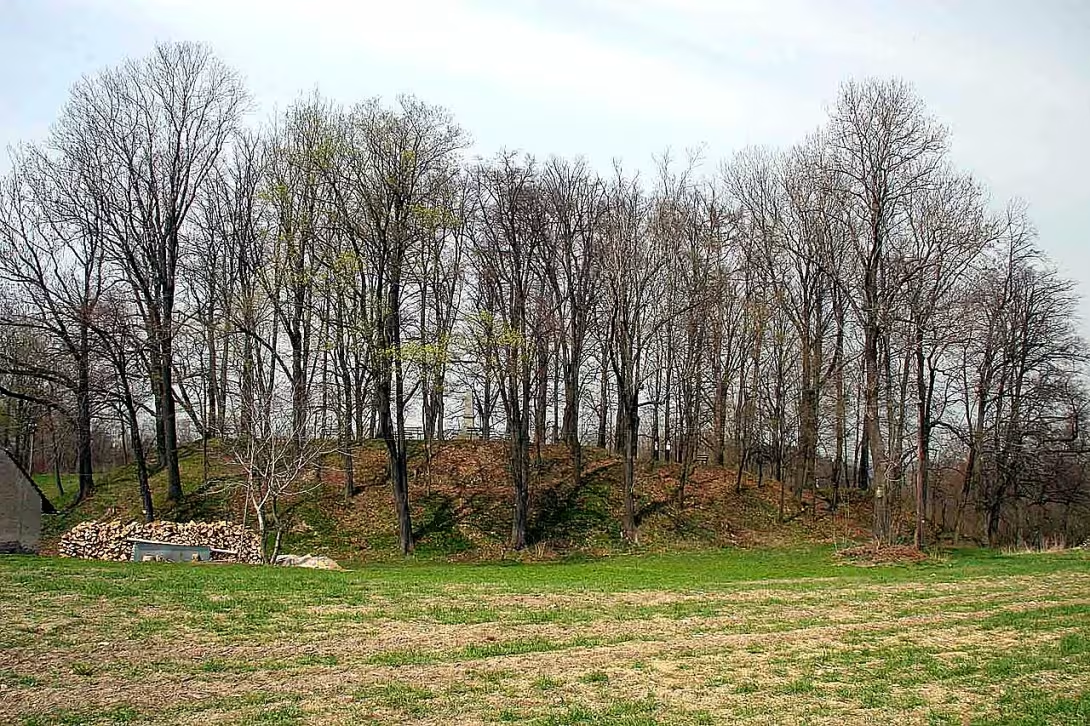
Vraclav is an early medieval archaeological site on the northern edge of the village of the same name in Ústí nad Orlicí district in the Pardubice region. This site was an important castle from the eleventh to the thirteenth century and served as a fictional administrative centre near the Trstenice Road.
The island area was already inhabited in the late Bronze period, from which the findings of the spleen-paying culture came. The mornings of the medieval castle, in period springs called Vratislav (Wratizlau), arose as an administrative center. Traditionally, Prince Vratislav II. is considered to be its founder, but coin findings suggest that the fort was probably built at the turn of the tenth and eleventh centuries.
The site is located on an island in Svitavské horkatina at an altitude of approximately 330 metres. The south-east side of the acropolis was protected by a wall from which a wall of six metres is still preserved. There was a burial ground in the central part. If the pavement has been fortified, the traces of this fortification have died as a result of agricultural activity; Archaeologically, only shallow and insignificant moat was detected.
At the turn of the twelfth and thirteenth centuries the castle was won by Děpoltici. In 1226 his chastelán Byčen was his administrator. The importance of the fort in the 13th century fell, as the administrative centre of the region moved to the High Myth. In the second half of the thirteenth century, the castle was abandoned and the Dalimena Chronicle from the beginning of the fourteenth century listed it as desolate and overgrown.
The important events associated with this place are 1108, when Prince Svatopluk had members of the House of Vršovce slaughtered here. The first archaeological research was carried out by Josef Ladislav Pic at the turn of the nineteenth and twentieth centuries. Most of the information about the settlement of the acropolis comes from the research of Louis Skružný and Ladislav Hrdlíčka from 1961-1963. Newer surface collection and detector surveys in the area of the foothold have revealed artisan workshops and connections with the business path. On the hall of acropolis is a monument from 1908, built for the eighth anniversary of the killing of Vršovce.
The castle is today protected as a cultural monument and is freely accessible by green marked tourist route from Vraclavi to St. Nicholas. The location is important for understanding early medieval settlements and political processes in the region. It serves as a valuable witness to the history of the old administration centers.
Then and now
Drag the slider to compare how the landmark may have looked when it was built with the view today.
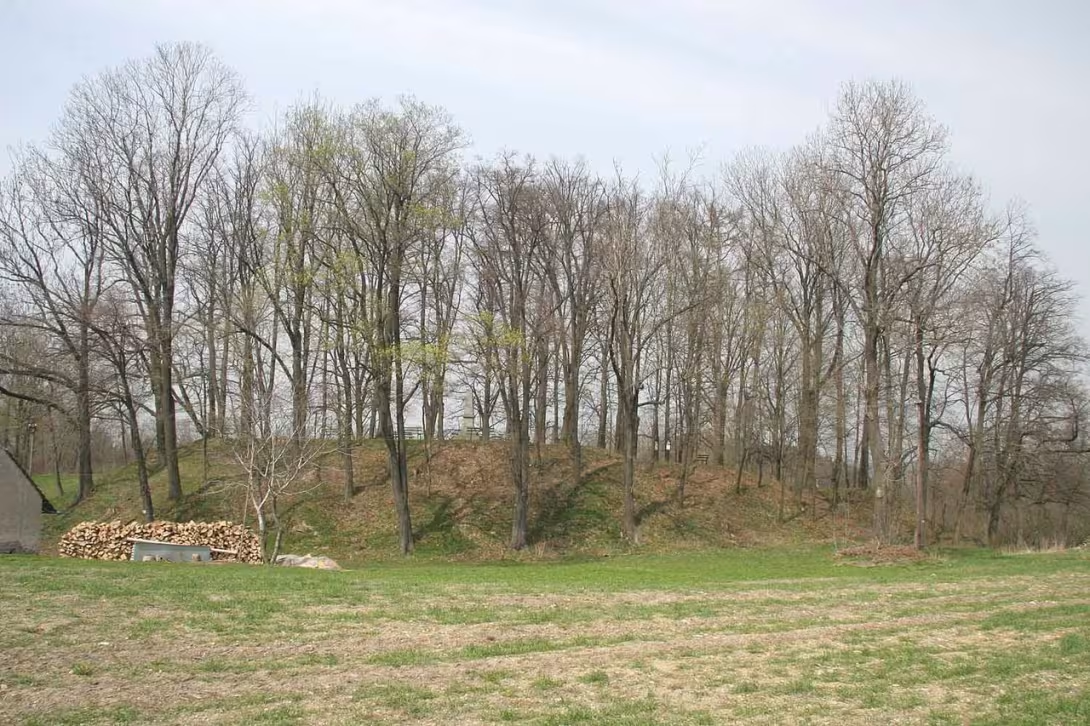
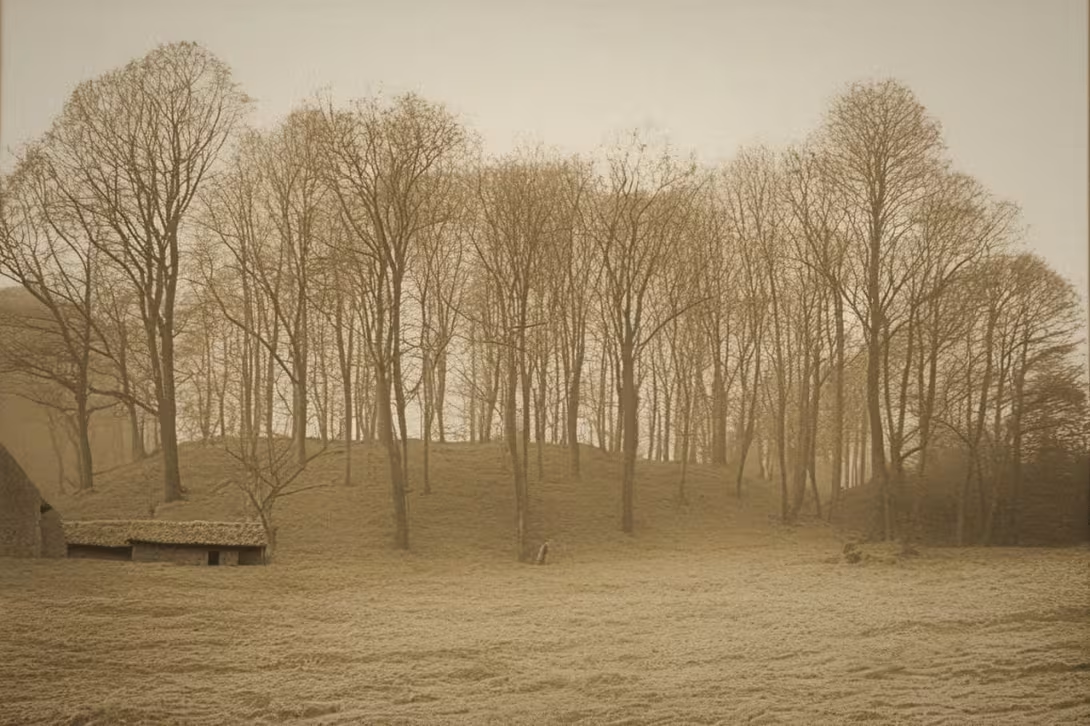
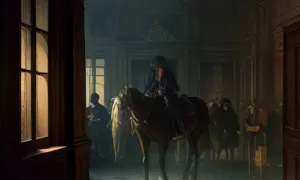
The historical appearance on the left is an AI-generated visualisation and serves as inspiration only.
Historical milestones
- 1108
- The slaughter of members of the House of Vršovce by Prince Svatopluk.
- 1908
- The status of the memorial for the eighth anniversary of the Vršovce killings.
Architectural development
The castle Vraclav was built on an island in Svitavskaya hill. The acropolis had a protective wall with a wall of up to six meters high, while the foothold probably had a fortifications that had not been preserved. There was a burial ground in the central part of the acropolis.
Historical events
- 1108
- The slaughter of members of the House of Vršovce by Prince Svatopluk.
- 1226
- The castle manager was Castelan Byčen.
Points of interest
- The fort was an important administrative centre from the 11th to the 13th century. - The island area was already inhabited in the late Bronze period, from which the findings of the spleen-paying culture came. In 1108, Prince Svatopluk had members of the House of Vršovce slaughtered here. - There's a 1908 memorial on the acropolis, built for the eighth anniversary of the Vršovce killings. - Newer surveys in the area of the foothold revealed craft workshops and connections to the trade path.
Guide
Show guide text
This text was created by artificial intelligence and has not been editorially reviewed. It may contain inaccuracies.
Welcome to the archaeological site Vraclav. You are standing in a place that can now act as a peaceful part of the village Svatý Mikuláš, but under your steps there is a layer of history that goes deep into the dark past. The first impression you might think of here is the feeling of untouchable strength and calm that radiates this landscape. Even if you don't see tall castle walls or monumental towers here today, it is here, at this point, that events have taken place in the past that have had a major impact on the fate of the whole family and the whole state. Feel this atmosphere, feel the silence, which is only apparent, for every clay and every piece of this terrain tells the story of power, blood and the permanent settlement of man.
Now let's go deeper into time and understand what you see before you. Vraclav was not just an ordinary residence. This place was inhabited in the ancient past, at a time when people were only learning to control the surrounding nature. Already in the late Bronze era there was a settlement from which rare findings associated with the spleen-paying culture came. This shows us that this particular point in the landscape has always been attractive to people, perhaps due to its strategic position or its natural protection. However, what we see today as the main historical entity is an early medieval fortified fort. This fort was an important administrative centre which maintained its stability and influence from the eleventh to the thirteenth century. Imagine this place at the time - as a fortified point that controlled the surroundings and served as a centre of administration and power in this part of the country.
Now pay attention to how this history manifests itself in the very form of a place. Even though archaeological clues are particularly apparent here today, pay attention to the shape of the terrain. Notice how the earth changes around here, how it creates certain elevated shapes. What you see is the remnants of the fortifications back then. Look at the walls surrounding the castle. These structures were not just a mass of countries, but key defence elements to protect the population and the administrator from attacks. In the heart of this castle there is a so-called island, or acropolis. It is the highest placed and most important place that served as a safe haven and a symbol of dominance. Even though these shapes are now softened by time and nature, their original purpose remains apparent. If you go to the edge of these waves, you can also see the monument. He was built in nineteen hundred and eight to commemorate the eighth anniversary of an event that has forever combined this place with tragedy and political struggle.
Let us now immerse ourselves in the most dramatic stories this castle holds. The history of Vraclava is tied to characters whose names appear in our chronicles at times of greatest tension. We must return to the year one thousand hundred and eight. Imagine the political situation at that time, the constant struggle for power and the fragile balance between princes and powerful generations. It was here, in this castle, that an event took place that shook the foundations of the society at that time. Prince Svatopluk had members of the powerful and influential House of Vršovce slaughtered here. It was an act of cruelty, but politically decisive, which helped strengthen the prince's power. This moment is one of the most important points in the history of this place. In connection with this era there are also other important personalities such as King Vratislav II., or figures like Děpoltici or Byčen. Each of these names carries with it the story of ambition, loyalty and the struggle for the political takeover that took place in this very territory.
Perhaps you are now being told why people would choose such drastic steps here. That leads us to one interesting thing that might interest you. Vraclav was not just a military or administrative center, it was a place where different layers of time and culture collided. It is fascinating that the place where the fate of noble families was decided in the eleventh century was already thousands of years ago home of the Bronze Age people. This continuity of the settlement suggests that this place had some strange, almost magical or strategic value that people in different epoch constantly rediscovered. It is the secret of a country that hides under your feet for thousands of years of human effort, security and the desire for power.
Now, however, I will no longer hold you in this vocabulary. I suggest you go ahead and explore the surrounding terrain. Walk along the valleys, perceive the atmosphere of this place and try to imagine what life was like on the castle thousands of years ago. Look at the monument and remember the tragic fate of the House of Vršovce. Every step of this archaeological site is the way back to the past. Thank you for visiting Vraclav and for trying to discover a piece of this fascinating history with us. We wish you a pleasant walk and many more experiences while exploring our sights. Goodbye.
Tips for visitors
The best time to visit the castle Vraclav is late afternoon or early morning hours when light is softer and shadows better highlight archaeological structures in the field. Ideal periods are spring and autumn months when the weather is more pleasant for walking in open space.
You can reach the location by car and public transport. The current transport connections are best checked in the internet search engine.
Since it is a ruin in the natural environment, we recommend to bring comfortable shoes, plenty of drinking water and possibly repellent. For families with children, the place is suitable for natural exploration, but it is necessary to be more careful when moving in the indented terrain of the castle.
For photography it is best to use elevated places that offer a view of the overall range of the castle. The best lighting conditions for capturing the site's history are during late afternoon hours.
Frequently asked questions
Can the monument be visited?
This is an archaeological site. Often there is little to see on the ground and the land may be private. We have not verified access.
Where is the monument?
Location: Svatý Mikuláš, Pardubický kraj. The map on this page shows the exact spot.
Why is the monument protected?
It is listed in the Central List of Cultural Monuments of the Czech Republic as a cultural monument (register no. 1000135959).
Businesses nearby
Do you run a restaurant, accommodation, shop, museum, rental, wellness or other visitor service near this monument? Show yourself directly to the people heading to it — this is how they will see you in the app and on the web:
Nearby
🏰 Historic sites (119)
- Hradiště Vraclav 0.1 km
- pomník Vršovcům 0.1 km
- 1918-2018: 100 let ČSR a 910 let od vyvraždění Vršovců na Vraclavi 0.1 km
- bývalé lázně 0.1 km
- pomník Františka Ladislava Riegera 2.4 km
- památník padlým v 1. světové válce 2.6 km
- František Skočílek 2.9 km
- Tvrziště Popovec 3.5 km web
- +5.5.1945 Alexandr Lepšín Sáška 4.2 km
- Památník padlým v 1. světové válce 4.3 km
- Tvrziště Štěnec 4.5 km web
- Na Valech 4.6 km web
- Václav Jaroslav Klofáč 4.6 km web
- „Stánina vyhlídka“ 4.6 km web
- Přemysl Otakar II. 5.0 km
- památník M. Tyrše 5.1 km
- Pamětní deska Josefa Sodomky ml. 5.2 km
- Mariánský sloup 5.2 km
- Jaroslav Brož 5.2 km
- Muzeum českého karosářství 5.3 km web
🍽️ Restaurants and dining (63)
- Cedrový penzion 4.7 km
- Rest Münster 4.8 km
- Chráněná dílna - Kavárna Coffee club Berenika 4.8 km
- Druzba 4.9 km
- Smé Café 4.9 km web
- Hotel Slávie 5.0 km
- Pod věží 5.1 km +420 465 322 529 web
- restaurace Tošovský 5.2 km
- Kavárna LaCasa 5.4 km Litomyšlská 57 web
- Kavárna LaCasa 5.4 km Litomyšlská 57 +420 737 467 007 web
- Via Ironia 5.4 km +420 465 635 732 web
- Motorest Cha Cha 6.8 km
- Restaurace mlýn Jangelec 7.2 km Kpt. Poplera 180 web
- Grand 7.3 km náměstí Josefa Haška 6
- BBQ Smokehouse 8.8 km +420 778 545 945 web
- Fontánka 8.8 km
- Borová šiška 9.3 km Polská 1320
- U Osla 9.3 km
- Restaurace Vídeň 9.6 km
- Café Kupé 9.8 km Pernerova 400 web
🏨 Accommodation (10)
- Hotel Kobylka 5.0 km
- Pod věží 5.1 km +420 465 322 529 web
- Via Ironia 5.4 km +420 465 635 731 web
- Pension mlýn Jangelec 7.2 km Kpt. Poplera 180 +420 465 421 000 web
- Camping Na Venkově 8.4 km +420720302683 web
- Hana 9.4 km
- Hotel Vídeň 9.6 km
- Hotel Peliny 10.0 km náměstí Tyršovo 298
- Penzion Karafiát 13.2 km Štěpánov 50 +420 777 300 494 web
- BezKempu 14.6 km
🚲 Rentals and sport (13)
- Donocykl 5.0 km
- Cyklosport Bendl 5.3 km
- Sportisimo 6.0 km
- Karting Vysoke Myto 6.6 km
- Autodrom Vysoké Mýto 6.7 km web
- Stadion HZS 6.8 km
- Zimní stadion 8.8 km
- Cyclosport KOLMO 9.8 km Dolní 286 +420 739 556 030 web
- Cycli 10.0 km
- Vomit 13.2 km Nádražní 242
- Sportovní hala 13.5 km Holubova 1037
- Motokrosová trať Holice 14.7 km
- Koupaliště Roudná 14.9 km
🥾 Hiking and nature (79)
- Kamanec 0.5 km
- Homole 1.3 km
- Bětník 3.2 km
- Šejval 3.3 km
- Tvrziště Hradisko 4.0 km web
- Stráň u Trusnova 4.5 km
- Borek 4.6 km
- Pravěká studna 5.0 km web
- Masarykovy sady 5.0 km
- Havlíčkovy sady 5.0 km
- park Otmara Vaňorného 5.1 km
- U Koruny 5.3 km
- Pramen a historické máchadlo 5.3 km
- Jungmannovy sady 5.4 km
- Bučkův kopec 5.4 km
- Boršov u Litětin 6.4 km
- 50. rovnoběžka Sruby 6.8 km
- Čertova studánka 7.1 km web
- Původní Čertův dub 7.4 km
- Lokace zrušené vojenské střelnice. 7.6 km
Accommodation nearby
Themed route
1. Entry Exposure - Type: Exhibition. Here you will get a basic overview of the site history and see the selected findings. 2. Vraclav (archaeological site) - Type: Memorial. The main point of the visit where you can directly observe traces of ancient human settlement. 3. Area park - Type: Natural space. Walk in the immediate surroundings, which allows you to calm down and look at the whole complex.
Seasonal recommendations
In spring, the ruins of Vraclav and Svatý Mikuláš wake up together with nature. Fresh things begin to bloom around the stone remains, which gives the place freshness and colour. The lighting is very pleasant to observe the details of architecture thanks to the softer sun. We recommend wearing layered clothes because the morning cold can quickly vary with heat. There are fewer visitors in this period than in the high season, which allows for quiet reflection.
Summer months bring intense sunlight and hot air to the archaeological site. The landscape is dry and surrounding vegetation full of life, which creates a lively but sometimes heated atmosphere. Due to high temperatures and larger crowds, it is best to arrive just after sunrise to enjoy a cooler morning clock. Don't forget the headgear, enough drinking water and light, breathable clothes.
Autumn visit offers melancholy beauty and deep shadows. The golden shades of leaves and morning fog surrounding the ruins create a magical, even mysterious mood. The ideal time for walking is in the morning, when the sun slowly rises above the horizon. Due to wet soil and possible rain, it is recommended that footwear with good grip and waterproof jacket be comfortable.
In winter, it is a place where bare branches of trees and possible snow highlight the fragility of historical remains. The atmosphere is quiet, lonely and very calm. Given the short days and the low sun, it is best to plan a visit around noon. It is necessary to prepare for frost with strong winter clothes and firm shoes, because the terrain can be slippery.
Visualizations and artistic views


The visualisations are generated by artificial intelligence and serve as inspiration.
Photos from the area
Real photos taken near the monument


Zdroj a licence jsou uvedeny u každého snímku.
Tips from visitors
No tips yet. Be the first!
Log in and add your tip.
Sources and literature
Photos: Zp at Czech Wikipedia / CC BY-SA 3.0 — Wikimedia Commons. The author and licence also appear when you hover over the image.
Faktickým podkladem tohoto textu byl článek na Wikipedii, jehož autory jsou přispěvatelé Wikipedie. Článek je dostupný pod licencí CC BY-SA 4.0.
Location on the map
More monuments – Svatý Mikuláš
Show all in the municipality

Příběhy a pověsti
Legendy, pověsti a příběhy spjaté s touto památkou
Fotografie návštěvníků
Zatím žádné fotografie. Buďte první, kdo přidá fotografii z návštěvy!
Log in a přidejte svou fotografii nebo hodnoťte.
Za ověřenou návštěvu v aplikaci získáte víc bodů — poznáme podle GPS, že jste na místě.
Reviews and comments