






zájezdní hostinec Spiegel Castle
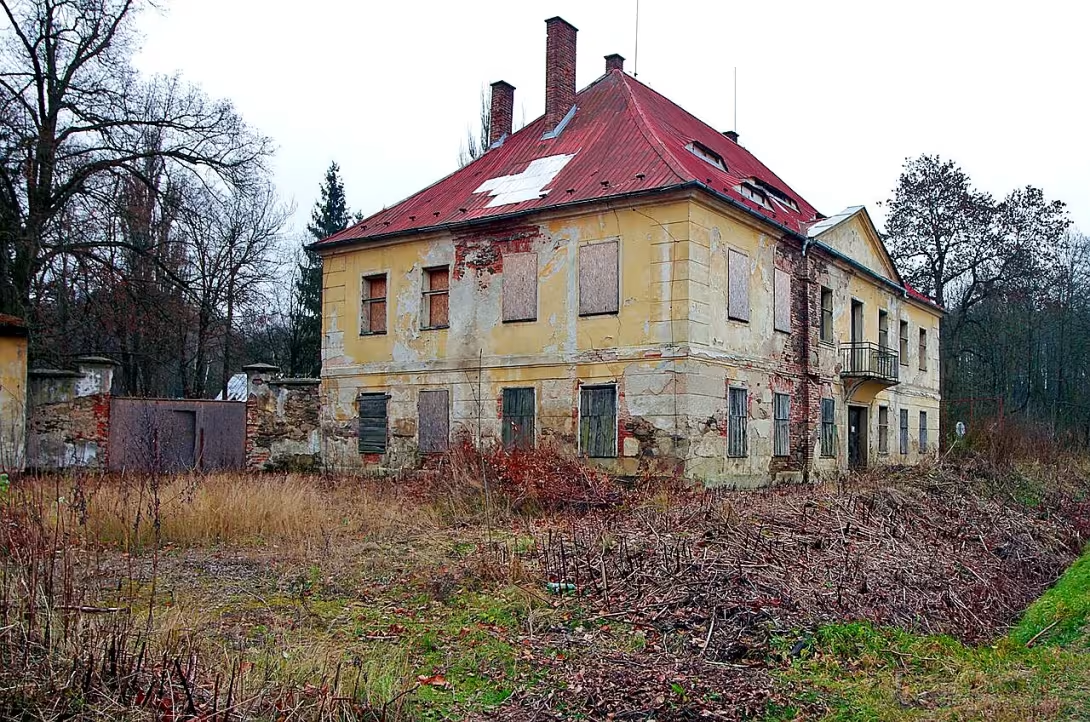
The Spiegel Castle is a classicist building situated in the village of Arnoltov, near the town of Březová in the Karlovarský kraj region of the Czech Republic. Built in 1834 by Gottlieb Henneberg-Spiegel, the castle has a rich history as a noble house and later a guesthouse. Today, it stands as a testament to the region's transformation over the centuries, and its current state of disrepair serves as a poignant reminder of the changing fortunes of this once-grand structure.
The castle's origins date back to the 19th century, when the region underwent significant changes. The construction of the castle was likely influenced by the growing tourism industry in the area. The castle's design reflects the classicist style of the time, with a simple yet elegant architecture that has been modified over the years to accommodate different uses.
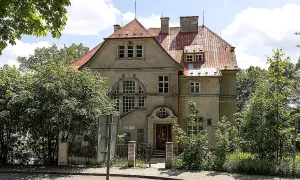
The castle's architecture features a simple, two-story building with a rectangular floor plan. The main facade is marked by a shallow, three-part central risalit with a balcony facing the main road. The building has a valled roof and a courtyard surrounded by a stone wall. The original layout was modified when it was converted into office space.
The castle has had several owners throughout its history, including Gottlieb Henneberg-Spiegel, Státní statky Sokolov, and Agrokombinát Sokolov. The castle's fortunes have waxed and waned over the years, with periods of use as a guesthouse and office space. Today, it stands as a neglected monument to the region's past.
One significant event in the castle's history was its declaration as a cultural monument in 1996. This recognition highlights the importance of preserving the castle's architectural and historical significance. Despite its protected status, the castle remains in a state of disrepair, with a wild, overgrown landscape surrounding it.
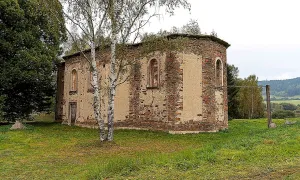
The castle's current state is a testament to the neglect and abandonment that has befallen it. The once-grand structure now stands as a shadow of its former self, with a small pond in its park and a ruined outbuilding. Despite its current state, the castle remains an important part of the region's history and architecture.
Visitors can still see the remnants of its former grandeur, including the small pond and the ruined outbuilding. Although the castle is not currently open to the public, its significance as a cultural monument makes it worth visiting. As a reminder of the region's rich history and the importance of preserving cultural heritage, the Spiegel castle is a must-see for anyone interested in the region's past.
Then and now
Drag the slider to compare how the landmark may have looked when it was built with the view today.
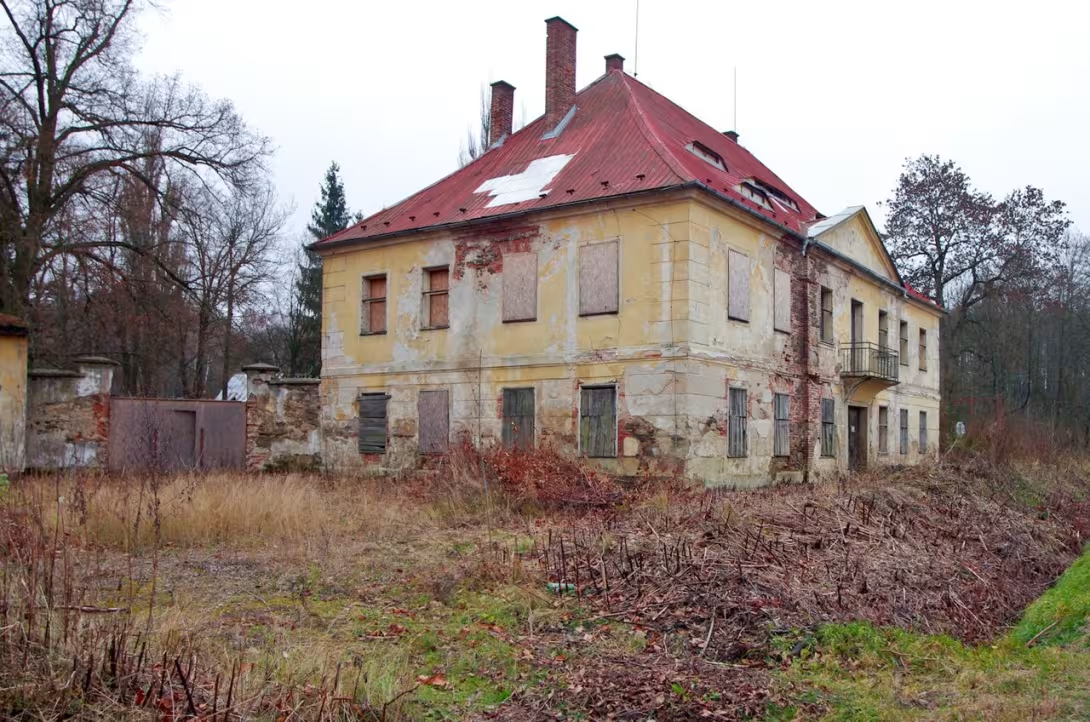

The historical appearance on the left is an AI-generated visualisation and serves as inspiration only.
Historical milestones
- 1834
- Construction of the Spiegel Castle
- 1996
- Declaration as a cultural monument
Architectural development
The castle is a simple, two-story building with a rectangular floor plan. It has a shallow, three-part central risalit with a balcony facing the main road. The building has a valled roof and a courtyard surrounded by a stone wall. The original layout of the building was modified when it was converted into office space.
Historical events
- 1750
- Arnoltov was annexed to Kostelní Bříza
- 1834
- The castle was built
- 1996
- The castle was declared a cultural monument
Owners
Gottlieb Henneberg-Spiegel, Státní statky Sokolov, Agrokombinát Sokolov
Points of interest
– The Spiegel Castle was originally built as a noble house, but it has also served as a guesthouse, office space, and even a state-owned property at some point in its history.
– The castle's design was influenced by the growing tourism industry in the region, which was a significant factor in its construction in the 19th century.
– The castle's current state of disrepair is a poignant reminder of the changing fortunes of this once-grand structure, which has been neglected and abandoned over the years.
– The castle has been recognized as a cultural monument since 1996, but despite its protected status, it remains in a state of disrepair.
– The castle's original layout was modified when it was converted into office space, which suggests that it has undergone significant changes throughout its history.
Guide
This guide is narrated by a synthetic voice generated by artificial intelligence.
Show guide text
This text was created by artificial intelligence and has not been editorially reviewed. It may contain inaccuracies.
Spiegel, also called Špígl in Czech, is a classicist manor house on the northern edge of Arnoltov, which today belongs to the town of Březová on Sokolovska. It was named after the noble family's surname. Throughout its existence, it has served several purposes: it was a manor residence, a roadside inn, and offices. Since 1996 it has been protected as a cultural monument.
The manor house was built around 1834 by Gottlieb Henneberg-Spiegel, the then owner of the Kostelní Bříza estate. The Arnoltov property had belonged to that estate since 1750. The new residence possibly replaced an older residence of the previous estate owners, which then served only as a farm court. At first, the estate owners only visited here occasionally. However, a newly completed imperial road from Karlovy Vary to Cheb ran right past the manor, and the building was converted into a roadside inn. This too was not permanent. In the seventies of the nineteenth century, a section of the Buštěhrad railway from Karlovy Vary to Cheb was built, interest in the inn dropped significantly, and the house returned to serving the nobility's needs.
This continued until the end of the Second World War. After that, the manor was confiscated and the area was used by State Farms Sokolov, later renamed to Agrokombinát Sokolov. When converting it to offices, the original partitions disappeared and the layout was partially changed. The building deteriorated, and by the late eighties of the twentieth century, its demolition was being considered. After the Velvet Revolution, it was used by shepherds and prostitutes. In 1993, the manor was acquired by the Sokolov company Stani and received a grant for reconstruction. However, the company ran into financial difficulties and the partners sold it. Today the building is in a completely dilapidated state and the surroundings are overgrown with vegetation. The National Heritage Institute lists it among endangered monuments.
The building itself is simple and two-storied. It stands on a rectangular ground plan of approximately 24 by 13 meters and is covered with a hipped roof. The main facade faces the road. It is emphasized by a shallow central risalit with three bays and a balcony. The courtyard facade also has a balcony. The ground floor is decorated with pilaster strips and is symmetrically divided by a passage. Some rooms have flat ceilings, others barrel vaults. Behind the house lies a rectangular courtyard enclosed by a stone wall. At its outer side, ruins of farm buildings remain. There is a small pond in the manor park.
Frequently asked questions
Can the monument be visited?
Some buildings of this kind are open for guided tours, others serve another purpose or are privately owned. We have not verified whether and when this monument is open – please ask the operator. According to the heritage register the structure is in poor condition – do not enter it and take care nearby.
What are the opening hours and admission?
We have not verified the opening hours or admission. Current information is published by the operator.
Where is the monument?
Location: Arnoltov č.p. 52, Březová, Karlovarský kraj. The map on this page shows the exact spot.
Why is the monument protected?
It is listed in the Central List of Cultural Monuments of the Czech Republic as a cultural monument (register no. 11318/4-5077).
Businesses nearby
Do you run a restaurant, accommodation, shop, museum, rental, wellness or other visitor service near this monument? Show yourself directly to the people heading to it — this is how they will see you in the app and on the web:
Events nearby
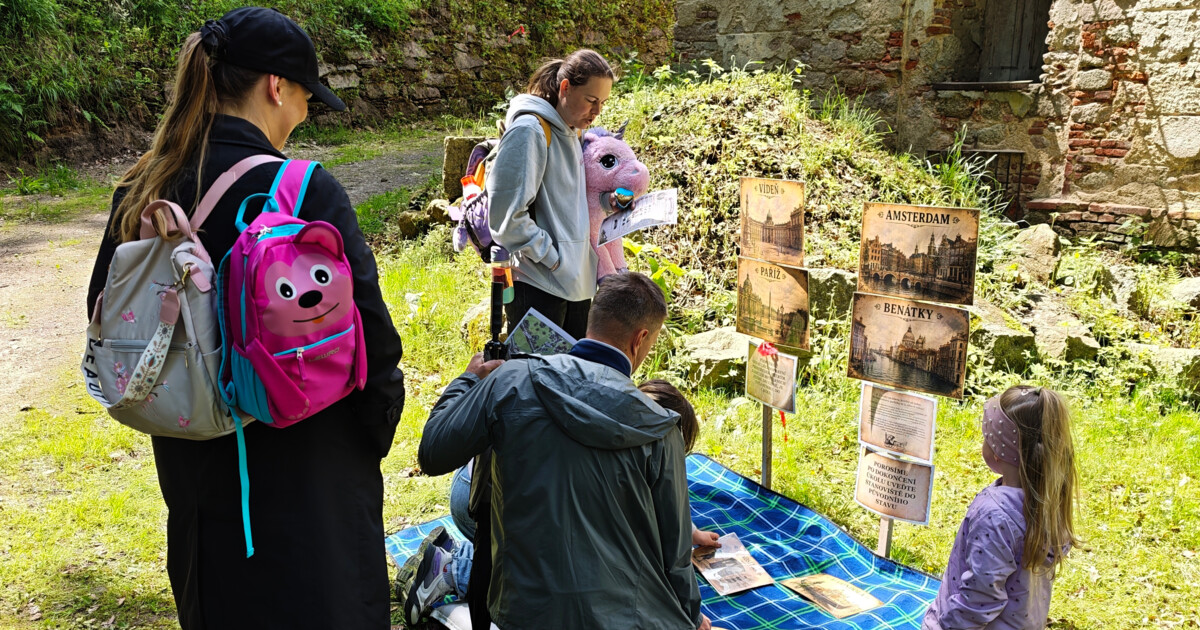

Zdroj akcí: otevřená data měst a obcí ČR (Národní katalog otevřených dat) a kalendář akcí Národního památkového ústavu.
Nearby
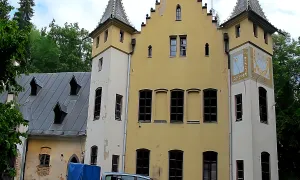
The castle is located in the midst of a wild, overgrown landscape near the village of Arnoltov.
Accommodation nearby
Trips and activities nearby
Guided tours, tickets and activities nearby from GetYourGuide
Affiliate link: if you buy from the partner, we may receive a commission. The price for you does not change.
Search tours and activities →Themed route
Trasa: Arnoltovské skrýš
1. Arnoltov (typ: obec, proč stojí za návštěvu: malá vesnička s historií sahající do středověku, kde se nachází zájezdní hostinec Spiegel)
2. Zájezdní hostinec Spiegel (typ: zámek, proč stojí za návštěvu: romantický zájezdní hostinec s bohatou historií, kde se můžete ubytovat a ochutnat místní kuchyni)
3. Les Arnoltov (typ: les, proč stojí za návštěvu: divoce zanedbaný les, který nabízí možnost procházek a objevování přírody)
4. Kaple svatého Jana Nepomuckého (typ: kaple, proč stojí za návštěvu: malá, ale působivá kaple, která nabízí klid a pohodu)
5. Památník padlým (typ: památník, proč stojí za návštěvu: pomník, který připomíná historické události a hrdiny, kteří položili své životy za svou zemi)
Seasonal recommendations
Jaro:
In the spring season, the Spiegel guesthouse in Arnoltov is surrounded by blooming trees and lush nature. The atmosphere is calm and quiet, with a gentle breeze. We recommend visiting the guesthouse during the spring if you wish to avoid crowds of tourists.
Summer:
In the summer season, the Spiegel guesthouse in Arnoltov is very popular, so it often has a large number of visitors. We recommend arriving before 9:00 AM to avoid crowds and comfortably explore both the interior and exterior of the guesthouse.
Autumn:
In the autumn season, the Spiegel guesthouse in Arnoltov is surrounded by beautifully colored foliage. The atmosphere is calm and quiet, with a gentle breeze. We recommend visiting the guesthouse during the autumn if you wish to avoid crowds of tourists and experience a tranquil atmosphere.
Winter:
We recommend visiting the guesthouse in winter if you want to experience a calm and quiet atmosphere and explore the guesthouse without crowds. Don't forget to bring warm clothing, as it is cold outside during this time.
Visualizations and artistic views


The visualisations are generated by artificial intelligence and serve as inspiration.
Photos from the area
Real photos taken near the monument

Zdroj a licence jsou uvedeny u každého snímku.
Tips from visitors
No tips yet. Be the first!
Log in and add your tip.
Sources and literature
Photos: Lubor Ferenc / CC BY-SA 3.0 — Wikimedia Commons. The author and licence also appear when you hover over the image.
Faktickým podkladem tohoto textu byl článek na Wikipedii, jehož autory jsou přispěvatelé Wikipedie. Článek je dostupný pod licencí CC BY-SA 4.0.
Location on the map
Příběhy a pověsti
Legendy, pověsti a příběhy spjaté s touto památkou
Fotografie návštěvníků
Zatím žádné fotografie. Buďte první, kdo přidá fotografii z návštěvy!
Log in a přidejte svou fotografii nebo hodnoťte.
Za ověřenou návštěvu v aplikaci získáte víc bodů — poznáme podle GPS, že jste na místě.
Reviews and comments