



zámek Chrámce Chateau
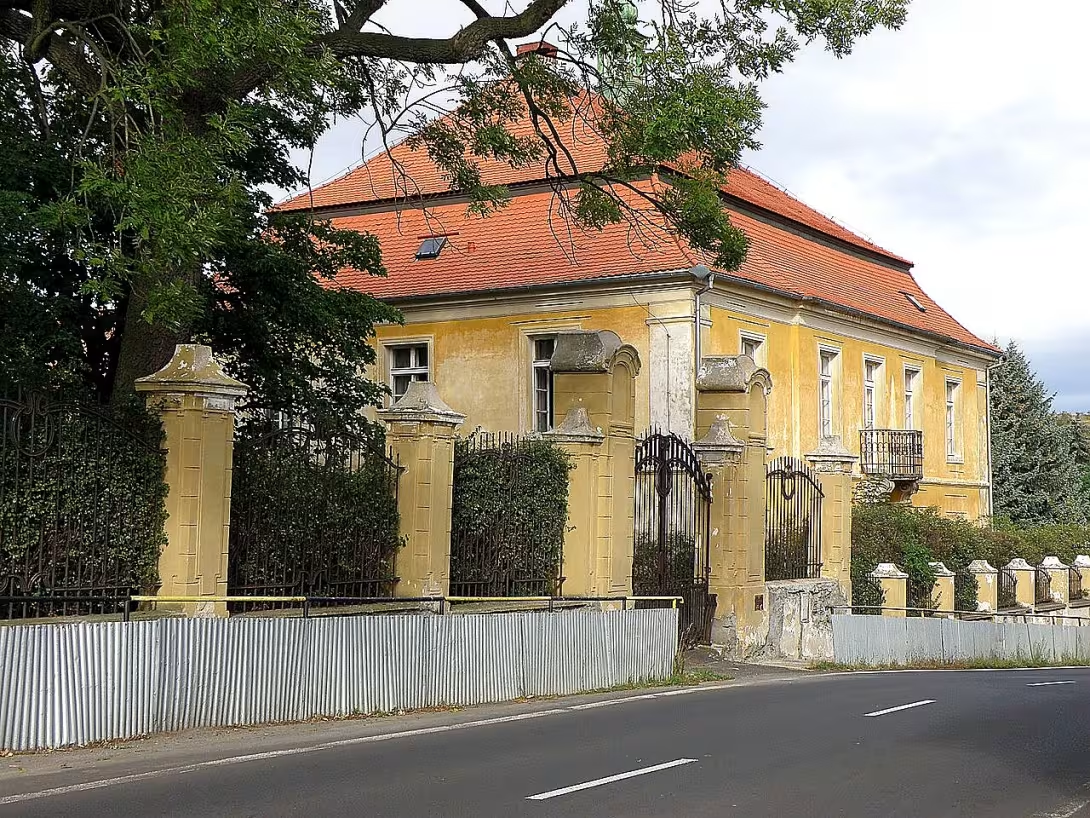
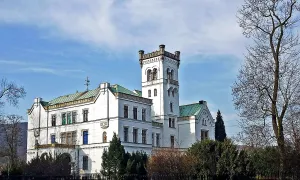
Chrámce Castle is a significant example of architectural development from the Gothic to the Renaissance and Classical styles, reflecting its rich history and cultural significance in the Czech landscape. Located in the village of Chrámce, part of the municipality of Skršín in the Most District, the castle dominates the surrounding landscape. The castle's renaissance core, consisting of four rooms with vaulted ceilings, dates back to the 16th century.
The original Gothic fortress was built in the 14th century, but little is known about its early history. The first written records of the castle date back to 1381, when it was owned by Jan de Kystern. In 1570, Anna Kateřina z Chrámců had the fortress rebuilt into a Renaissance castle, a significant architectural movement in Europe at the time. The castle's façade features a symmetrical composition and a central entrance with a portico.
The castle's renaissance core, consisting of four rooms with vaulted ceilings, dates back to the 16th century. Its façade is characterized by a symmetrical composition and a central entrance with a portico. In 1795-1805, hrabě Josef Leopold d'Elbeuf rebuilt the castle in the Classical style. The original Gothic fortress was built in the 14th century.
Throughout its history, the castle has had many owners. In 1720, Jiří Oldřich Zessner ze Spitzenberka purchased the castle, and in 1795, hrabě Josef Leopold d'Elbeuf rebuilt it in the Classical style. In 1843, svobodný pán Johann Maxmilian z Ehrenberku acquired the castle, and in 1864, hrabě Rudolf Chotek became the owner. A major reconstruction took place in 1972-1974, during which the original fresco was replaced with a new one.
The castle sits atop a rocky outcrop and lacks a basement. The castle's renaissance core, consisting of four rooms with vaulted ceilings, dates back to the 16th century. Its façade features a symmetrical composition and a central entrance with a portico. In 1795-1805, hrabě Josef Leopold d'Elbeuf rebuilt the castle in the Classical style.
Today, Chrámce Castle is a significant cultural and historical monument, reflecting the architectural development of the region. The castle is open to visitors, offering a glimpse into its rich history and cultural significance. Visitors can explore the castle's renaissance core and admire its symmetrical façade with a central entrance and portico. The castle's surroundings offer a picturesque landscape with rolling hills and forests.
Then and now
Drag the slider to compare how the landmark may have looked when it was built with the view today.
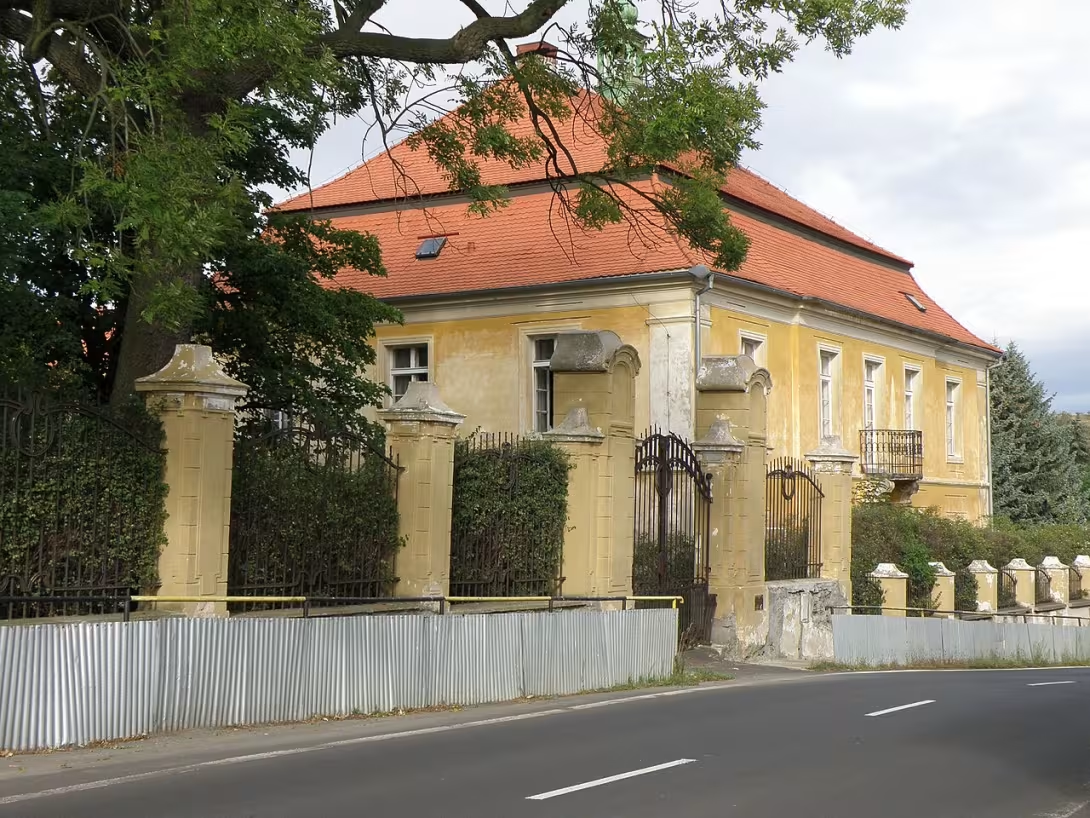
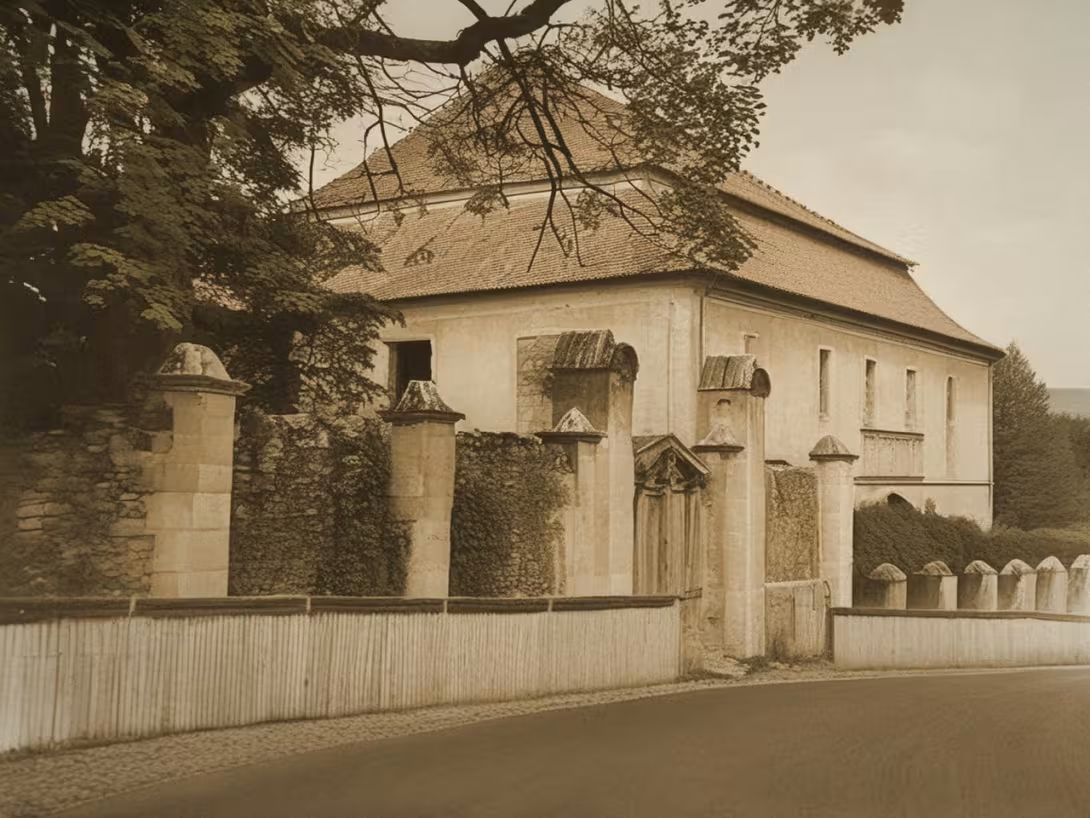
The historical appearance on the left is an AI-generated visualisation and serves as inspiration only.
Historical milestones
- 1381
- Jan de Kystern owned the castle
- 1408
- Jíra Vchynský z Vchynic owned the castle
- 1570
- Anna Kateřina z Chrámců had the fortress rebuilt into a Renaissance castle
- 1720
- Jiří Oldřich Zessner ze Spitzenberka bought the castle
- 1795
- Hrabě Josef Leopold d'Elbeuf rebuilt the castle in the Classical style
- 1972
- The castle underwent a major reconstruction
Architectural development
The castle's renaissance core, consisting of four rooms with vaulted ceilings, dates back to the 16th century. The castle's façade is characterized by a symmetrical composition and a central entrance with a portico. The castle was rebuilt in the Classical style by hrabě Josef Leopold d'Elbeuf in 1795-1805. The original Gothic fortress was built in the 14th century.
Historical events
The original Gothic fortress was built in the 14th century.
Anna Kateřina z Chrámců had the fortress rebuilt into a Renaissance castle in 1570-1571.
The castle was rebuilt in the Classical style by hrabě Josef Leopold d'Elbeuf in 1795-1805.
The castle underwent a major reconstruction in 1972-1974, during which the original fresco was replaced with a new one.
Owners
Jan de Kystern (1381), Jíra Vchynský z Vchynic (1408, 1421), Pavel z Černčic (1499), Anna Kateřina z Chrámců (1542), Hedvika z Chrámců (1556), Kašpar Rejský z Dubnice (1603), Kryštof Rejský z Dubnice (1615), Jiří Oldřich Zessner ze Spitzenberka (1720), Johann Franz Zessner ze Spitzenberka (1745, 1762), hrabě Josef Leopold d'Elbeuf (1767), svobodný pán Johann Maxmilian z Ehrenberku (1843), hrabě Rudolf Chotek (1864), Emerich Chotek (1871), Rudolf Chotek ml. (1881), Carl a Marie Kurchbergerovi z Prahy (1888), Jan Rudolf Čermák (1898), Jan Christián Čermák (1945), Marie Chlupáčová (1945)
Points of interest
– The castle's original Gothic fortress was built in the 14th century, but little is known about its early history, making it a mysterious and intriguing piece of Czech history.
– The castle has had many owners throughout its history, including Jiří Oldřich Zessner ze Spitzenberka, who purchased it in 1720, and hrabě Rudolf Chotek, who owned it in 1864.
– A major reconstruction took place in 1972-1974, during which the original fresco was replaced with a new one, altering the castle's original artistic integrity.
– The castle sits atop a rocky outcrop and lacks a basement, making it a unique and dramatic architectural feature in the Czech landscape.
– Chrámce Castle is a significant cultural and historical monument, reflecting the architectural development of the region, and its picturesque surroundings offer a glimpse into the region's natural beauty.
Guide
This guide is narrated by a synthetic voice generated by artificial intelligence.
Show guide text
This text was created by artificial intelligence and has not been editorially reviewed. It may contain inaccuracies.
Chrámecký zámek stands in the village of Chrámce, a local part of the municipality of Skršín in the Mostecko region. It is a classicist building in private ownership, registered on the list of cultural monuments. The castle stands on elevated rocky ground, and therefore is a natural landmark of the municipality. Because it is built directly on the rock, it has no basement.
Its origins date back to the fourteenth century, when a Gothic fortress was built here. The first written mention comes from the year 1381. At that time, the local fortress was owned by Jan de Kystern. Later, it was ruled by Jíra Vchynský z Vchynic and the family from Černčic. The heiress Hedvika z Chrámců brought the manor as a dowry to Pavel Šavel z Vlkové. Between 1570 and 1571, the fortress was rebuilt as a Renaissance castle.
In the seventeenth and eighteenth centuries, Chrámce belonged to the Rejský z Dubnice family and later to the Zessners ze Spitzenberka. In 1767, it was purchased by Count Josef Leopold d'Elbeuf, who emigrated to Austria before the French Revolution. It was he who had the castle rebuilt between 1795 and 1805 into its present form. The Renaissance core and remains of the Gothic fortress on the ground floor were preserved, but the first floor was completely rebuilt in the classicist style.
The oldest part consists of a Renaissance core with four vaulted rooms with perimeter walls approximately 120 centimeters thick. In the entrance hall, two Renaissance columns support low flat vaults. On the first floor, however, there is a clear effort to open the living spaces to the sun.
From 1864, the castle was owned by the Chotkové family. They mainly devoted themselves to the farm buildings. They expanded the park around the entire castle, which separated the farm operations from the residential part, and built a granary for agricultural operations. Later, the estate was acquired by the Kurchbergers from Prague and the Čermáks also held a share in it.
After the occupation of the Sudetenland, the castle was confiscated from its Czech owners and converted into the Reich Postal Office. In 1949, the estate was nationalized and the State Farm Most used the castle as a recreational facility. During reconstruction between 1972 and 1974, the great hall received a new fresco in place of the destroyed one, and a fireplace was created in the entrance hall where the original Renaissance one had been. However, the old tiled stove disappeared at the same time.
From 1994, the castle returned to its original owners through restitution. Their family has been running the adjacent estate since 1996 in an ecological agriculture program. At the turn of 1997 and 1998, the castle received a new roof, after 40 years the castle clock was repaired, and the granary also underwent reconstruction.
Frequently asked questions
Can the monument be visited?
Some buildings of this kind are open for guided tours, others serve another purpose or are privately owned. We have not verified whether and when this monument is open – please ask the operator.
What are the opening hours and admission?
We have not verified the opening hours or admission. Current information is published by the operator. Official website: https://www.zameckesadychramce.com/
Where is the monument?
Location: Chrámce č.p. 14, Skršín, Ústecký kraj. The map on this page shows the exact spot.
Why is the monument protected?
It is listed in the Central List of Cultural Monuments of the Czech Republic as a cultural monument (register no. 43206/5-432).
Businesses nearby
Do you run a restaurant, accommodation, shop, museum, rental, wellness or other visitor service near this monument? Show yourself directly to the people heading to it — this is how they will see you in the app and on the web:
Events nearby
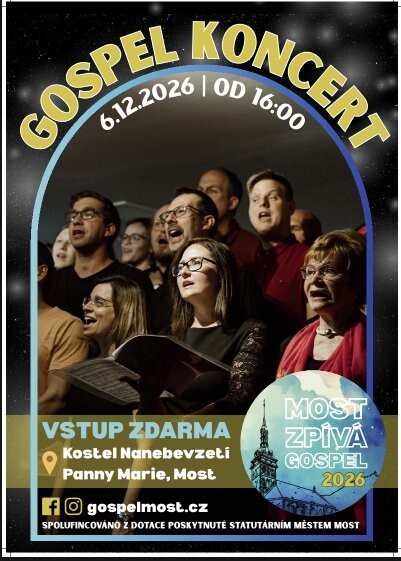
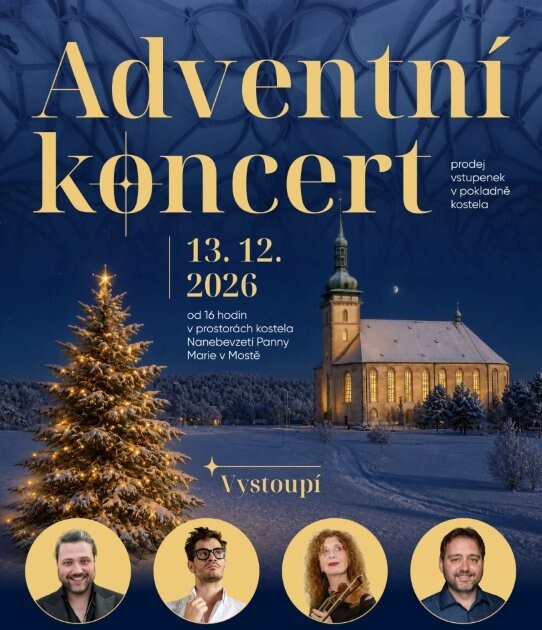
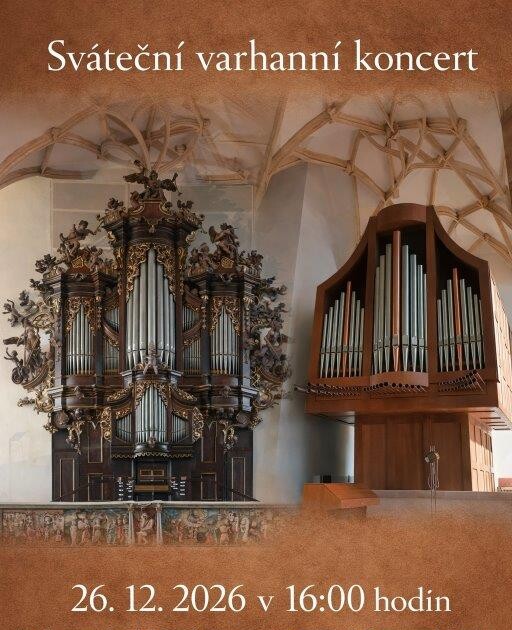
Zdroj akcí: otevřená data měst a obcí ČR (Národní katalog otevřených dat) a kalendář akcí Národního památkového ústavu.
Nearby
The castle is situated in the village of Chrámce, which is part of the municipality of Skršín in the Most District. The surrounding landscape is characterized by rolling hills and forests.
Accommodation nearby
Trips and activities nearby
Guided tours, tickets and activities nearby from GetYourGuide
Affiliate link: if you buy from the partner, we may receive a commission. The price for you does not change.
Search tours and activities →Themed route
Trasa: Chrámce Castle and its surroundings
1. Chrámce Castle (Zámek Chrámce) - The main goal of this tour is to visit the Chrámce Castle, a beautiful and historic castle that offers a glimpse into the region's rich history. The castle's architecture and scenic location make it a must-see destination.
2. Skršín Village (Obec Skršín) - As we make our way to the castle, we can explore the charming village of Skršín, which is home to a few shops, restaurants, and cafes. The village offers a glimpse into traditional Czech rural life.
3. Chrámce Village (Obec Chrámce) - After visiting the castle, we can stroll through the village of Chrámce, which is known for its picturesque streets, historic houses, and friendly locals. The village is a great place to experience the local culture and way of life.
4. Chrámce Forest (Les Chrámce) - For nature lovers, a short walk through the Chrámce Forest offers a chance to explore the surrounding woods and enjoy the scenic views of the rolling hills and countryside. The forest is a peaceful oasis that provides a refreshing contrast to the castle's grandeur.
Seasonal recommendations
Jaro
In the spring, Chrámce Castle is surrounded by blooming trees and flowers, creating a pleasant atmosphere. The lighting is natural, with sunlight streaming in to illuminate the interiors. This season is ideal for visiting the castle to enjoy nature and warm weather. We recommend visiting when it's open, as there are many families with children during the spring holidays.
Léto
In summer, Chrámce Castle is a popular destination for families with children and tourists. The lighting is natural, with sunlight streaming in to illuminate the interiors. We suggest visiting early in the morning or late afternoon to avoid tourist crowds.
Podzim
In autumn, Chrámce Castle is surrounded by colorful foliage, creating a pleasant atmosphere. The lighting is natural, with sunlight streaming in to illuminate the interiors. This season is ideal for visiting the castle to enjoy nature and cool weather. We recommend visiting when it's open, as there are fewer people during the autumn holidays.
Zima
In winter, Chrámce Castle is quiet and peaceful, creating a pleasant atmosphere. The lighting is artificial to help visitors navigate better. Additionally, it's advisable to bring warm clothing for comfort.
Visualizations and artistic views


The visualisations are generated by artificial intelligence and serve as inspiration.
Photos from the area
Real photos taken near the monument


Zdroj a licence jsou uvedeny u každého snímku.
Tips from visitors
No tips yet. Be the first!
Log in and add your tip.
Sources and literature
Photos: MAKY.OREL / CC BY-SA 3.0 — Wikimedia Commons. The author and licence also appear when you hover over the image.
Faktickým podkladem tohoto textu byl článek na Wikipedii, jehož autory jsou přispěvatelé Wikipedie. Článek je dostupný pod licencí CC BY-SA 4.0.
Location on the map
Příběhy a pověsti
Legendy, pověsti a příběhy spjaté s touto památkou
Fotografie návštěvníků
Zatím žádné fotografie. Buďte první, kdo přidá fotografii z návštěvy!
Log in a přidejte svou fotografii nebo hodnoťte.
Za ověřenou návštěvu v aplikaci získáte víc bodů — poznáme podle GPS, že jste na místě.
Reviews and comments