



Zámek Jablonná Chateau
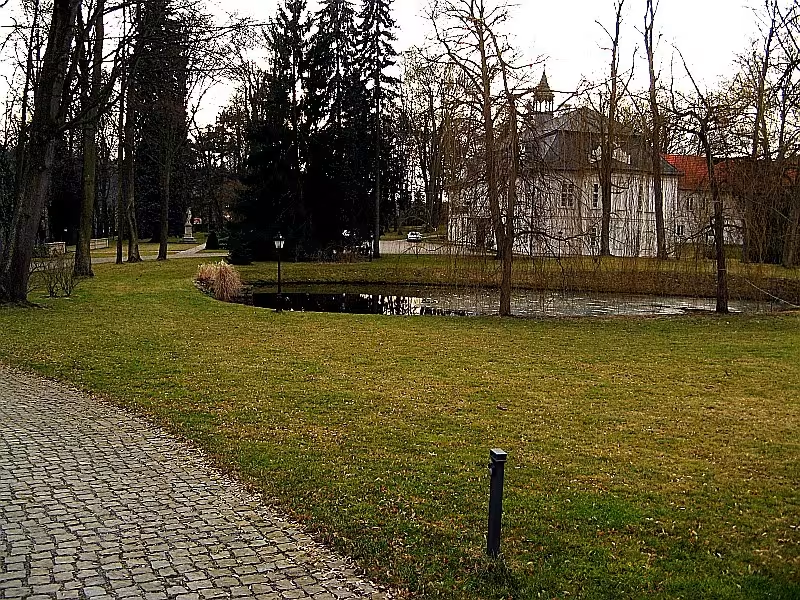
Zámek Jablonná nad Vltava is located in a village of the same name, which is part of the town of Neveklov in the district of Benešov, Středočeský kraj. This Classicist building is an interesting document by its architecture and history on the fate of Czech nobility and history in Czech countries.
The beginnings of the residence fall back to 1318, when the water fort belonging to Eberhard of Jablonné was built there. Around 1450 it was acquired by Netvorští rytíři z Březí and subsequently dominated the entire village with it. Since 1621 he was the owner of the Přibík Netvorský z Březí. His descendants guarded Jablonna for 108 years until 1729.
In 1729 Jan Vojtěch Netvorský sold the castle to Count Josef Jan Kinski. This change of ownership became decisive for the construction. According to a survey of the building and unveiled paintings, the original building of the former fortress was converted into a Baroque castle at this time. Kinský was a progressive aristocrat who wished to modernize his property.
In 1763 the German noblewoman Rosalia von Neuberg bought the castle. Her noble family owned the castle and the village together until 1805. Subsequently, the owners quickly took turns and were mainly members of a lower rural nobility, indicating a gradual decline in the prestige of the property.
1939 brought a tragic transformation. SS troops have expropriated and evacuated the village. The castle and its surroundings became part of a Nazi military training ground. These periods have left deep traces of local history and memory.
The castle is currently open to the public. 5300 people visited it in 2015. The construction was also noticed by the Czech Television, which recorded a feature of the popular TV show "Strolling Camera." Zámek Jablonná thus remains a place that tells of the long duration of Czech nobility, architectural changes and drama of the twentieth century.
Then and now
Drag the slider to compare how the landmark may have looked when it was built with the view today.
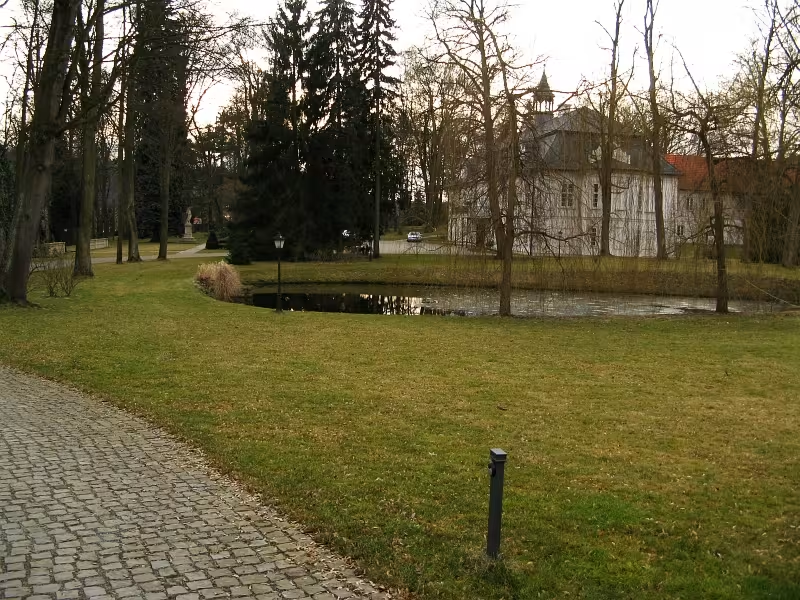

The historical appearance on the left is an AI-generated visualisation and serves as inspiration only.
Historical milestones
- 1318
- Status of the original fort
- 1939
- Eviction of the village by SS units and use as a Nazi training ground
Architectural development
Zámek Jablonná started as a water fort built around 1318. Over the years, especially since 1729, it was rebuilt into a Baroque style and later transformed into a classical castle for the ownership of Count Josef Jan Kinski. This architectural evolution reflects changes in property ownership and the cultural context of the period.
Historical events
- 1939
- Eviction of the village by SS units and use as a Nazi training ground
- 2015
- Tour of the castle 5300 visitors
Owners
- 1318
- 1450
- 1621-1729
- 1729
- 1763- 1805
- after 1805
Points of interest
- Zámek Jablonná nad Vltavou is a classical building with rich history and architecture.
- The first mention of the residence at this place dates back to 1318, when the water fort belonging to Eberhard of Jablonné was built.
- In 1729 the castle was rebuilt into a Baroque castle under the leadership of Count Josef Jan Kinski, which was crucial for its architectural development.
- In 1939, the castle and its surroundings were expropriated by SS units and converted into Nazi military training grounds, which had a profound impact on local history.
- In 2015, 5300 people visited the castle and was used as a location for filming the episode of the "Strolling Camera.".
Guide
This guide is narrated by a synthetic voice generated by artificial intelligence.
Show guide text
This text was created by artificial intelligence and has not been editorially reviewed. It may contain inaccuracies.
The castle in Jablonná nad Vltavou is a classicist building in a village that today belongs to the city of Neveklov in the Benešov district.
Its origins date back to the year 1318. At that time, a water fortress was built on this site, which belonged to Eberhard of Jablonná. Around 1450, the fortress and the entire village were acquired by the Netvorský knights of Březí. From 1621 onwards, Přibík Netvorský of Březí is recorded as the owner in the land registries. His descendants held Jablonná for one hundred and eight years.
In 1729, Jan Vojtěch Netvorský sold the estate to Count Joseph Jan Kinsky. It was under this progressive nobleman that the old fortress was rebuilt into a Baroque castle. This is documented by structural research of the building and by paintings that were successfully uncovered.
In 1763, the castle was purchased by the German noblewoman Rosalia von Neuberg. Her family owned the castle and the village until 1805. After that, the owners changed hands rapidly. They were mostly members of the lower rural nobility.
A heavy blow came in 1939. SS units evacuated the village at that time and the entire area became part of a Nazi military training ground.
The castle attracts visitors today. In 2015, it was visited by five thousand three hundred people. Czech Television also filmed here, specifically one episode of the program Toulavá kamera.
Tips for visitors
The best time to visit the castle Jablonná is in the spring or autumn season when the natural beauty surrounding it in its full glory and temperature is not too extreme. Visiting the castle during these months allows you to enjoy a quiet walk around the park without hot summer sun or cold winter.
When visiting the castle it is recommended to bring sun protection clothes, shoes suitable for walking along lawn or stone paths and in case of colder weather warm coat. Also remember the good camera batteries, because the lock offers many photogenic places.
It's best to use the lights for photography before the sun starts, morning or evening. The best look at the castle from the east or west side, where lighting is the most beautiful and medieval character architecture is best highlighted. Photography from the park wall offers views of the castle structure.
For families with children, the surrounding forests and streams offer the opportunity to explore nature and play outside.
Frequently asked questions
Can the monument be visited?
Some buildings of this kind are open for guided tours, others serve another purpose or are privately owned. We have not verified whether and when this monument is open – please ask the operator.
What are the opening hours and admission?
We have not verified the opening hours or admission. Current information is published by the operator.
Where is the monument?
Location: Jablonná č.p. 1, Neveklov, Středočeský kraj. The map on this page shows the exact spot.
Why is the monument protected?
It is listed in the Central List of Cultural Monuments of the Czech Republic as a cultural monument (register no. 10952/2-63).
For kids
Imagine going back to the past, when the lock Jablonná was still young and full of life. It was located in the village of Jablonná above Vltava, part of the town of Neveklov, where people lived in harmony with nature.
It was like a small kingdom where nobles and craftsmen lived together in peace and love. The castle was their seat, where festivities and religions took place. People gathered at the gates of the castle to hear the royal organist who played his instruments.
Businesses nearby
Do you run a restaurant, accommodation, shop, museum, rental, wellness or other visitor service near this monument? Show yourself directly to the people heading to it — this is how they will see you in the app and on the web:
Nearby
Ambient landscape, natural elements.
Accommodation nearby
Themed route
Route Zámek Jablonná:
1. Zámek Jablonná - Main destination of the route. The castle is worth visiting thanks to its unique architecture and rich history. It is one of the few preserved Renaissance castles in Bohemia. 2. Church of St. Nicholas - church in the village Jablonná. The church is worth visiting because of its unique architecture and history. It's an important cultural monument in the village. 3. Memorial of the fallen in World War I - memorial in the village Jablonná. The monument is worth visiting because of its symbolic value and historical significance. The memorial resembles the victims of the First World War. 4. Cemetery in Jablonná - cemetery in the village Jablonná. The cemetery is worth visiting because of its historical value and unique architecture. The cemetery is an important part of the cultural heritage of the village.
Seasonal recommendations
Spring: Spring is the perfect time to visit the castle Jablonná. The castle is veiled in a green garden that develops and comes to life. The atmosphere is full of life and energy. The tour of the castle is pleasant and comfortable because it is still cold but not freezing. Don't put your siege shoes on for a walk in the garden.
Summer: Summer is the main season for visitors to the castle Jablonná. We recommend visiting the castle in June or July when the weather is sunny and warm. Come before the high summer season starts to avoid crowds. Don't put your sunglasses on and your sun hat on.
Autumn: Autumn is a time when nature turns into colors and the castle is covered in beautiful colors. The atmosphere is calm and distant from the crowds. Don't put on warm clothes because it's still cold.
Winter: Winter is a time when the castle is calm and quiet. The atmosphere is excellent for those who love peace and quiet. Do not put on warm clothes and snow shoes to avoid the inconvenience.
Visualizations and artistic views


The visualisations are generated by artificial intelligence and serve as inspiration.
Photos from the area
Real photos taken near the monument


Zdroj a licence jsou uvedeny u každého snímku.
Atmosphere of the place
This atmospheric visualisation of the place and period was generated by artificial intelligence. It is not real footage of the location.
Tips from visitors
No tips yet. Be the first!
Log in and add your tip.
Sources and literature
Photos: Sovicka169 / CC BY-SA 3.0 — Wikimedia Commons. The author and licence also appear when you hover over the image.
Faktickým podkladem tohoto textu byl článek na Wikipedii, jehož autory jsou přispěvatelé Wikipedie. Článek je dostupný pod licencí CC BY-SA 4.0.
Location on the map





Příběhy a pověsti
Legendy, pověsti a příběhy spjaté s touto památkou
Fotografie návštěvníků
Zatím žádné fotografie. Buďte první, kdo přidá fotografii z návštěvy!
Log in a přidejte svou fotografii nebo hodnoťte.
Za ověřenou návštěvu v aplikaci získáte víc bodů — poznáme podle GPS, že jste na místě.
Reviews and comments