






zámek Jesenný Chateau
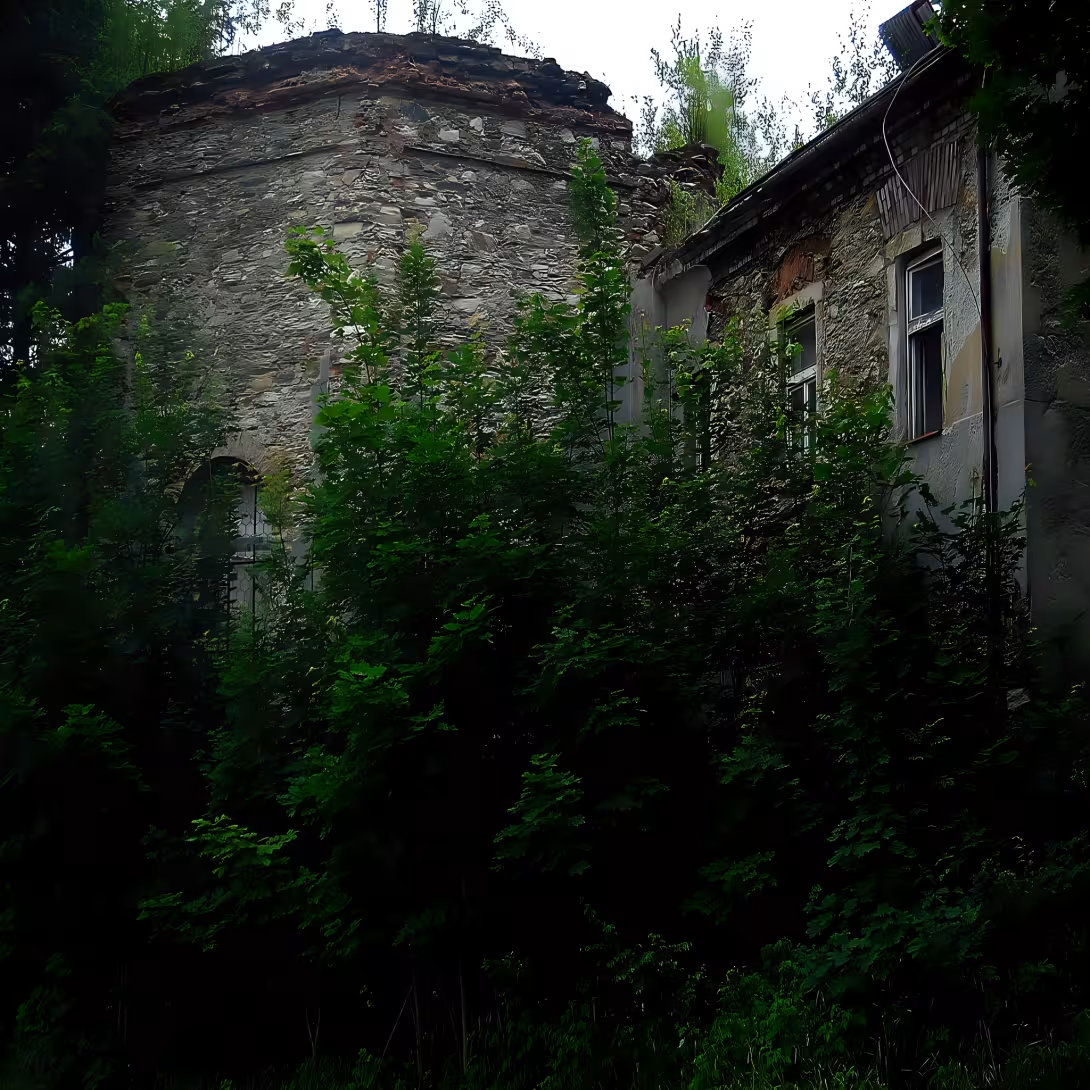
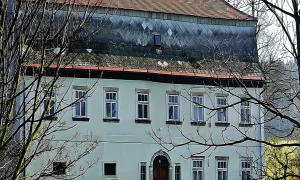
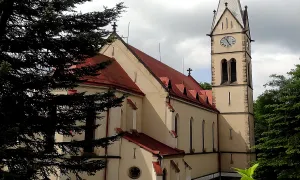
Zámek Jesenný stands as a testament to the architectural evolution from Renaissance fortification to Baroque grandeur in the village of Jesenný, located within the Semily District of Liberecký kraj. This historical monument is notable for its transformation post-1664 and its role as an administrative and economic hub for the surrounding area. Despite suffering a devastating fire on April 22, 2007, which left it roofless, Zámek Jesenný remains significant due to its rich history and architectural heritage.
The origins of Zámek Jesenný trace back to a period after 1664 when Vincent Lamotte inherited the estate following Gertruda Lamottová's death. The transformation from a Renaissance fortress into a Baroque chateau marked a pivotal moment in its history, reflecting broader cultural and architectural trends under Habsburg rule during this era. This period was characterized by significant development across Bohemia, with arts and architecture flourishing throughout Europe.
Architecturally, Zámek Jesenný evolved significantly after 1664. The addition of a chapel with a domed roof and an altar dedicated to Saint John the Baptist in 1715 stands out as a key enhancement, showcasing the Baroque style's grandeur and elaborate detail. This architectural evolution reflects broader cultural shifts of the time, emphasizing ornate design and artistic expression.
Ownership of Zámek Jesenný has seen several notable transitions. Initially under Vincent Lamotte, the estate was later divided among his sons, with Maxmilián Rudolf inheriting Jesenný. The chateau's ownership changed hands again in 1794 when Maxmilián Karel Lamotte sold it to Dejmové ze Stříteže, who integrated it into the Semily estate by 1810. These changes highlight the dynamic history of property and power within the region.
Key events at Zámek Jesenný include its architectural transformation post-1664 and the addition of the chapel in 1715. The sale to Dejmové ze Stříteže in 1794 marked another significant moment, integrating it into a larger estate. However, perhaps the most dramatic event was the fire on April 22, 2007, which left the chateau roofless and sparked discussions about its potential demolition.
Today, Zámek Jesenný stands as a roofless monument, reflecting both its historical significance and current challenges. While accessibility may be limited due to its state of disrepair, it remains an intriguing site for those interested in exploring the architectural and cultural history of the region. Visitors are invited to witness this unique piece of Bohemian heritage, offering insights into the past while contemplating its future.
Zámek Jesenný's enduring legacy lies in its ability to encapsulate a significant period of architectural transformation and historical change. Despite its current state, it continues to be a site of interest for historians, architects, and tourists alike, inviting exploration and reflection on its storied past.
Then and now
Drag the slider to compare how the landmark may have looked when it was built with the view today.
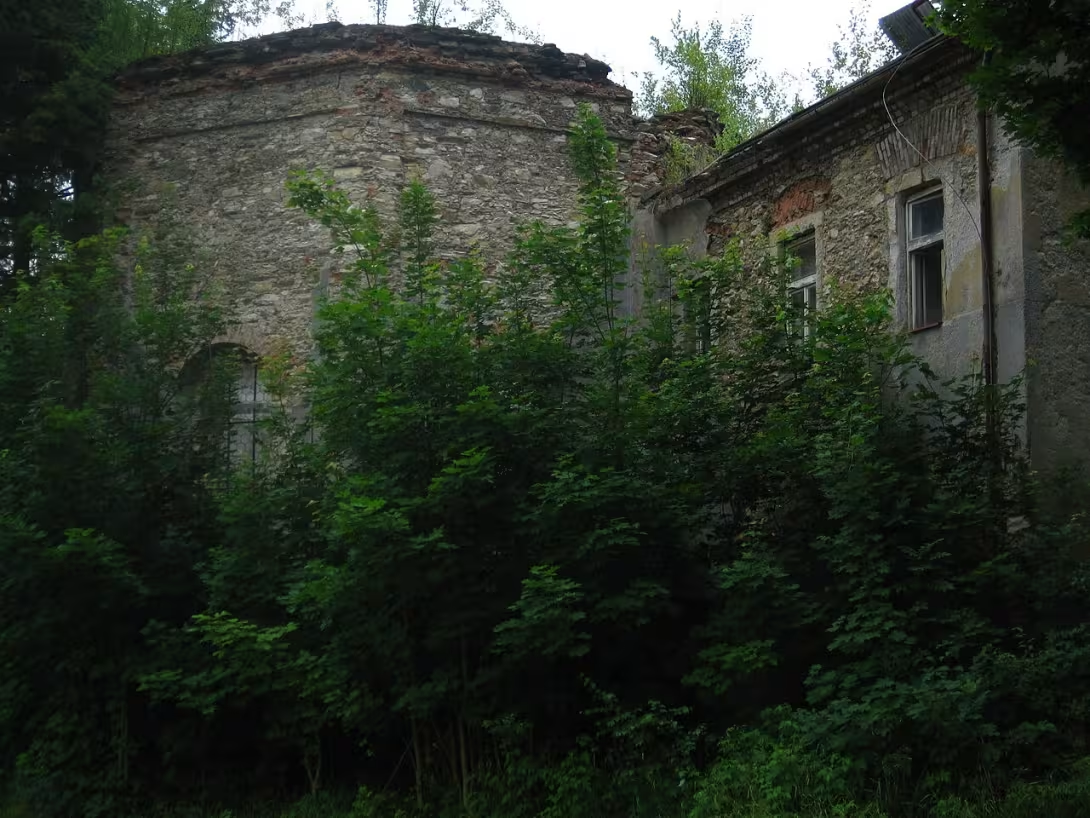
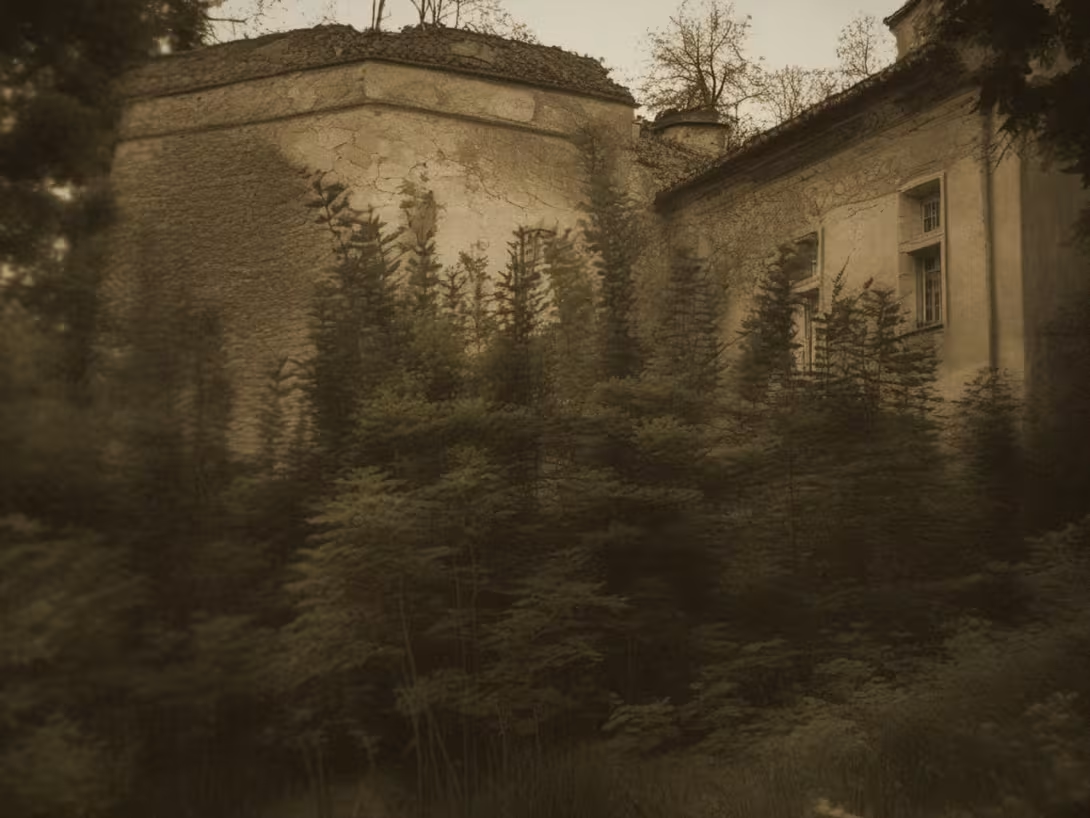
The historical appearance on the left is an AI-generated visualisation and serves as inspiration only.
Historical milestones
- 1664
- Vincent Lamotte inherited the estate, initiating its transformation into a baroque chateau.
- 1715
- A chapel with a domed roof and an altar dedicated to Saint John the Baptist was added.
- 1794
- The estate was sold by Maxmilián Karel Lamotte to Dejmové ze Stříteže.
- 2007
- A fire destroyed the chateau, leaving it roofless.
Architectural development
Zámek Jesenný evolved from a Renaissance fortress to its current baroque form after 1664. The addition of a chapel with a domed roof and an altar dedicated to Saint John the Baptist in 1715 marked a significant architectural enhancement.
Historical events
Baroque reconstruction post-1664, transforming a Renaissance fortress into the current chateau.
Addition of a chapel with a domed roof and an altar dedicated to Saint John the Baptist in 1715.
The chateau was sold by Maxmilián Karel Lamotte to Dejmové ze Stříteže in 1794, later integrated into the Semily estate in 1810.
A fire destroyed the chateau on April 22, 2007.
Owners
Vincent Lamotte (after 1664)
Jan Jakub Lamotte
Maxmilián Rudolf Lamotte (until his death)
Dejmové ze Stříteže (from 1810)
Guide
This guide is narrated by a synthetic voice generated by artificial intelligence.
Show guide text
This text was created by artificial intelligence and has not been editorially reviewed. It may contain inaccuracies.
The castle in Jesenný in the Semilsko region was created sometime after 1664 through a Baroque reconstruction of an older Renaissance fortified house. The estate included the village of Jesenný itself, surrounding hamlets, and five mills.
At that time, Vincent Lamotte acquired the fortified house and estate, which he inherited in 1664 following the death of Gertruda Lamottová. He separated Jesenný from Návarov castle and attached the Albrechtice estate to it. After Vincent's death, his sons divided his property. Jan Jakub acquired Sychrov, Starý Dub, and Domaslavice, while Maxmilián Rudolf kept Jesenný. He continued to expand the estate: in 1708 he purchased Stračov and in 1728 Holovousy.
In 1715 a chapel with a barrel vault and an altar of Saint John the Baptist was added to the castle.
The Lamotte family held Jesenný until the end of the eighteenth century. In 1794, Maxmilián Karel sold the estate to the Dejmové family from Stříteže. In 1810 they incorporated it into the Semily estate. The castle thereby ceased to be a residence and subsequently served only as an agricultural and administrative center. Between 1948 and 1989 it was owned by the local unified agricultural cooperative.
On April 22, 2007, the castle caught fire. Since then it has remained without a roof and there has been discussion about demolishing it.
Tips for visitors
The best time to visit Zámek Jesenný is during the late spring or early autumn months, when the weather is pleasant for exploring the chateau grounds and surrounding areas without the crowds of peak tourist season. During these times, you can enjoy the lush greenery and blooming flowers in the gardens, which add a picturesque backdrop to your visit.
Public transportation options are also accessible; you can use regional buses that connect nearby towns and villages to Jesenný. For the most current travel information, consult a local transport service or online search.
When planning your visit to Zámek Jesenný, consider bringing comfortable walking shoes as there may be some uneven paths within the chateau grounds. Additionally, carrying a light jacket is recommended due to variable weather conditions in the area. Don't forget to bring water and snacks if you plan on spending several hours exploring.
For photography enthusiasts, the best spots for capturing Zámek Jesenný are from the garden terraces that offer panoramic views of the chateau and surrounding landscape. The soft morning light is ideal for photographing the intricate baroque architecture. Additionally, the late afternoon provides a warm glow that enhances the natural beauty of the area.
Within 30 minutes of Zámek Jesenný, you can explore nearby hamlets and enjoy the scenic landscapes typical of the Liberec Region. These areas offer opportunities to experience local culture and nature trails. For families with children, consider visiting these nearby spots for a relaxing walk or picnic in the open countryside.
Frequently asked questions
Can the monument be visited?
Some buildings of this kind are open for guided tours, others serve another purpose or are privately owned. We have not verified whether and when this monument is open – please ask the operator. According to the heritage register the structure is in poor condition – do not enter it and take care nearby.
What are the opening hours and admission?
We have not verified the opening hours or admission. Current information is published by the operator.
Where is the monument?
Location: Jesenný, Liberecký kraj. The map on this page shows the exact spot.
Businesses nearby
Do you run a restaurant, accommodation, shop, museum, rental, wellness or other visitor service near this monument? Show yourself directly to the people heading to it — this is how they will see you in the app and on the web:
Nearby
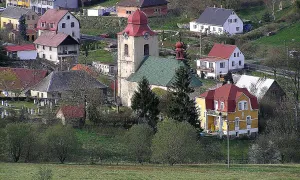
The surrounding area of Zámek Jesenný includes the village of Jesenný and nearby hamlets. The landscape is typical of the Liberec Region with its rolling hills and forests.
Accommodation nearby
Trips and activities nearby
Guided tours, tickets and activities nearby from GetYourGuide
Affiliate link: if you buy from the partner, we may receive a commission. The price for you does not change.
Search tours and activities →Themed route
Jesenný Castle Hike
Stop 1: Zámek Jesenný (Jesenný Chateau) The main attraction of the hike is the Jesenný Chateau, a beautiful Baroque chateau with a rich history dating back to the 17th century. The chateau's architecture and interior design make it a must-see destination.
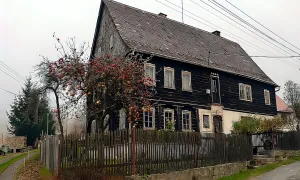
Stop 2: Jesenný Village The village of Jesenný is a charming place to explore, with its traditional Czech houses and a picturesque atmosphere. Take a stroll through the village and get a feel for local life.
Stop 3: Hamlet of Nová Ves** The hamlet of Nová Ves is a small, peaceful settlement surrounded by rolling hills and forests. It's a great place to relax and enjoy the natural beauty of the Liberec Region.
Stop 4: Hamlet of Studenec** The hamlet of Studenec is another charming settlement in the area, with its own unique character and history. Take a walk through the hamlet and discover its hidden gems.
Stop 5: Castle Park The chateau park is a beautiful green oasis in the heart of the village, perfect for a relaxing walk or picnic. The park is surrounded by the chateau walls and offers stunning views of the surrounding countryside.
Seasonal recommendations
Jaro
Specific: In the spring season, Jesenný Chateau is surrounded by blooming trees and flowers, creating a pleasant atmosphere. The lighting is soft and gentle, allowing for observation of architectural details and gardens.
Practical Tips: The best time to visit the chateau is in late spring when there are fewer visitors. We recommend bringing comfortable shoes and clothing suitable for nature walks.
Léto
Specific: During the summer season, Jesenný Chateau is full of life and energy. Children can play in the garden while adults enjoy the pleasant weather and atmosphere. The lighting is bright and clear, allowing for a full observational experience.
Practical Tips: The best time to visit the chateau is during the morning hours to avoid crowds of visitors. We recommend bringing an umbrella and sunglasses to protect against the sun.
Podzim
Specific: In the autumn season, Jesenný Chateau is surrounded by the beautiful colors of falling leaves, creating a unique atmosphere. The lighting is soft and gentle, allowing for observation of architectural details and gardens.
Practical Tips: The best time to visit the chateau is in late autumn when there are fewer visitors. We recommend bringing warm clothing and comfortable shoes to avoid cold weather.
Zima
Specific: In the winter season, Jesenný Chateau is quiet and peaceful, with gentle lighting creating a pleasant atmosphere. Snow and icicles on windows create unique scenes.
Practical Tips: The best time to visit the chateau is in late winter when there are fewer visitors. We recommend bringing warm clothing and shoes with good grip to avoid icy surfaces.
Visualizations and artistic views


The visualisations are generated by artificial intelligence and serve as inspiration.
Photos from the area
Real photos taken near the monument


Zdroj a licence jsou uvedeny u každého snímku.
Tips from visitors
No tips yet. Be the first!
Log in and add your tip.
Sources and literature
Photos: MartinVeselka / CC BY-SA 4.0, rozlišení zvýšeno umělou inteligencí — Wikimedia Commons. The author and licence also appear when you hover over the image.
Faktickým podkladem tohoto textu byl článek na Wikipedii, jehož autory jsou přispěvatelé Wikipedie. Článek je dostupný pod licencí CC BY-SA 4.0.
Location on the map
Příběhy a pověsti
Legendy, pověsti a příběhy spjaté s touto památkou
Fotografie návštěvníků
Zatím žádné fotografie. Buďte první, kdo přidá fotografii z návštěvy!
Log in a přidejte svou fotografii nebo hodnoťte.
Za ověřenou návštěvu v aplikaci získáte víc bodů — poznáme podle GPS, že jste na místě.
Reviews and comments