



zámek Kněžice (Petrovice u Sušice) Chateau
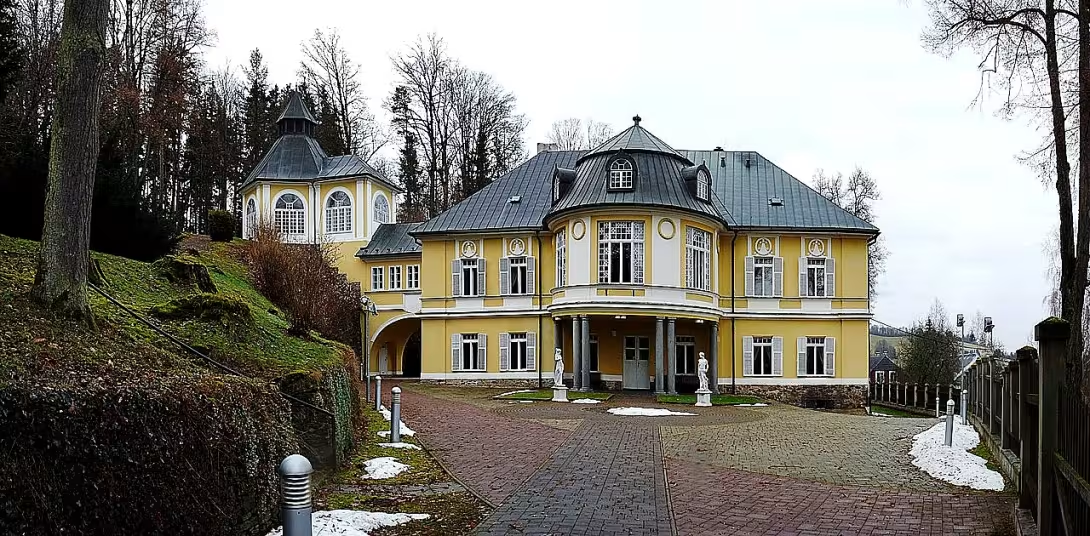
The Priestess Chateau is located in the northern part of the village Petrovice u Sušice in the district of Klatovy and is a shining example of how property changes over centuries. The village itself has existed as part of the Velhartic estate since the Middle Ages, but it didn't reach its decisive shape until the late Renaissance.
In the 1990s, a fortress was established, a fortified mansion, which was not intended for eternity. In the first half of the 18th century, the owners converted it into a Baroque chateau with a valba roof, which has acquired the character that we recognize to date. Over the next six hundred years, eleven noble families were included, including the Czech Hubatius (Hubáček) and the Knights of Kotnov. Their government lasted a long time and the property grew.
At the beginning of the twentieth century, the estate had reached a respectable size of a thousand seventy-one hectares. Over the next decade, the chateau has undergone the most extensive modification of its newer history. The project was processed by renowned Silesian architect Leopold Bauer in 1906 to order the owner of Oskar Heintschel von Heinegge. The chateau also joined the modern network - from the adjacent village Vojetice the electric current was introduced into the building, brand of modernization at the time.
But economic prosperity has been interrupted by the economic crisis. The following owners got into financial difficulties, and since 1929 the estate has been gradually parked and sold to farmers and industrial enterprises. Similarly, it was cyclical decades after World War II - the chateau was nationalized in 1945 and Petrovice never managed to get it back into possession. From 1955 until 2002, the building served as a retirement home, a function that at least protected it from disintegration.
The current fate of the object is a twist that would surprise its middle owners. In 2003 it was purchased by a foreign company that converted it into a restaurant and hotel. The operation started in 2004. The chateau was also of small glory - the 6th and 7th series of TV series Yes, boss! However, the hotel closed one year after shooting; an indication of his other fate is unknown.
In the park north of the chateau grows the Pnežický klen, a memorable tree led under the number 102432, which became part of the list of protected natural elements. The visit to the Priest thus offers a link between the history of the building and the nature surrounding it.
Then and now
Drag the slider to compare how the landmark may have looked when it was built with the view today.
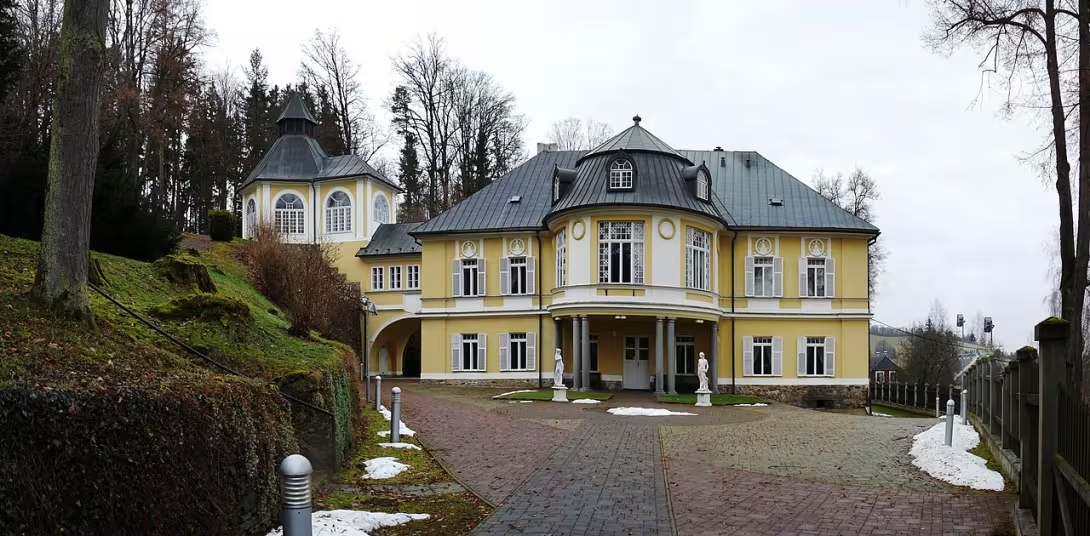
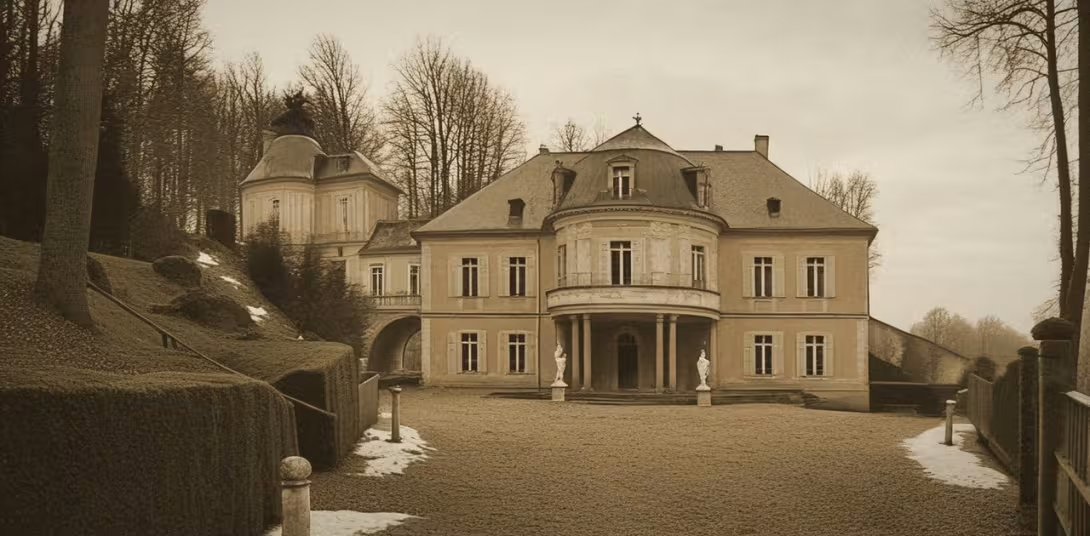
The historical appearance on the left is an AI-generated visualisation and serves as inspiration only.
Historical milestones
- 1906
- Processing of the chateau reconstruction project by architect Leopold Bauer.
- 1929
- The opening of parcelation and the sale of the estate land due to the ownership debt.
- 1955
- Start of operation of the retirement home in the chateau premises.
- 2004
- Opening of the hotel and restaurant after total reconstruction of the building.
Architectural development
The original medieval fortress was rebuilt in the first half of the 18th century. Significant modifications took place in the early 20th century according to the design of architect Leopold Bauer. The building has a wall roof and is surrounded by a park garden.
Historical events
In the 1990s, a fortress was established. In 1906 a reconstruction was carried out according to the Leopold Bauer project. From 1955 to 2002, the building served as a retirement home. In 2004 it was opened as a hotel with a restaurant.
Owners
Eleven noble families, including Hubatius (Hubatius) of Kotnov, Oskar Heintschel von Heinegg, after 1945 state, since 2003 foreign company.
Points of interest
- In the 1990s, a fortress was established on the ground, which was rebuilt in the first half of the 18th century into a Baroque chateau with a valbed roof. - In six hundred years, the chateau belonged to eleven noble families, such as Hubatius or Kotnov knights. - In 1906 the Silesian architect Leopold Bauer processed the project of extensive modifications of the chateau and electric current was introduced from nearby Vojetic. From 1955 to 2002, the building served as a retirement home, protecting it from disintegration. - In the park north of the chateau, the historic tree of the Knežický klen is growing, which is led under the number 102432 in the list of protected natural elements.
Guide
This guide is narrated by a synthetic voice generated by artificial intelligence.
Show guide text
This text was created by artificial intelligence and has not been editorially reviewed. It may contain inaccuracies.
Kněžice is a former castle in the village of the same name, which today belongs to the municipality of Petrovice u Sušice in the Klatovy district. The castle stands in the northern part of the village. In the park garden to the north of it grows the Kněžický elm, a notable tree.
The village of Kněžice has belonged to the Velhartice estate since the Middle Ages. A fortified tower was built here in the nineteen nineties of the sixteenth century. In the first half of the eighteenth century it was rebuilt into a Baroque castle with a hip roof.
Over six hundred years, eleven noble families held Kněžice in succession. Among them were the Czech Hubatiuses, also called Hubáčkové, knights from Kotnov. At the beginning of the twentieth century, the estate managed a total of one thousand seventy-one hectares. In the following decade, the castle and its farm buildings underwent a major renovation. This was based on a project by the Silesian architect Leopold Bauer from nineteen hundred six, commissioned by Oskar Heintschel von Heinegg. At that time, they brought electric power to the castle from the neighbouring village of Vojetice.
The subsequent owners became indebted, and so from nineteen twenty-nine onwards, the estate's land was divided and sold to farmers and industrial enterprises. After nineteen forty-five, the castle was nationalized. The municipality of Petrovice never managed to acquire it into its ownership. From nineteen fifty-five to two thousand two it served as a retirement home. In two thousand three it was bought by a foreign company and converted into a hotel with a restaurant, which opened in two thousand four.
Hanns Georg Heintschel-Heinegg was born at the castle, an Austrian poet who lived from nineteen nineteen to nineteen forty-four. He was involved in the Austrian anti-Nazi movement.
The castle also appeared on television. The sixth and seventh episodes of the second series of the programme Ano, šéfe were filmed here. A year after filming, the hotel with restaurant was closed and later the entire building was offered for sale.
Tips for visitors
The best time to visit is during the late spring or early autumn, when the surrounding landscape of Petrovic near Susice is the most photogenic and weather wishes to walk in the chateau area.
If you use public transport, check the current connection in the respective connection search engine.
For photography I recommend using the morning or evening light, which beautifully depicts the historical facade of the chateau. The best pictures are taken from adjacent roads around the chateau area.
When visiting with children, I recommend to pack fixed shoes for exploring the surroundings and snacks. In the vicinity of the chateau there is a memorable tree of the Knežický klen, which is a great destination for a short family expedition.
In the vicinity of the chateau you can visit the picturesque village Petrovice u Sušice, admire the memorable tree of the Knižický klen or go for a walk in the nearby village of Vojetice, which offers a quiet atmosphere of Šumava foothills.
Frequently asked questions
Can the monument be visited?
Some buildings of this kind are open for guided tours, others serve another purpose or are privately owned. We have not verified whether and when this monument is open – please ask the operator.
What are the opening hours and admission?
We have not verified the opening hours or admission. Current information is published by the operator.
Where is the monument?
Location: Petrovice u Sušice, Plzeňský kraj. The map on this page shows the exact spot.
For kids
Hey, you want to get on an adventure full of secrets and beauty? Then get ready! Just a few more steps and you will be at the chateau of the Priestess, which is like a real royal ship in the middle of Central Bohemia. This Baroque treasure is located in Petrovice near Susice and has a story so old it could tell the whole book.
Businesses nearby
Do you run a restaurant, accommodation, shop, museum, rental, wellness or other visitor service near this monument? Show yourself directly to the people heading to it — this is how they will see you in the app and on the web:
Events nearby
Zdroj akcí: otevřená data měst a obcí ČR (Národní katalog otevřených dat) a kalendář akcí Národního památkového ústavu.
Nearby
The village of Petrovice u Sušice, the memorable tree of the Priest Klen, the village of Vojetice.
Accommodation nearby
Themed route
Thematic cruise route castle Priestess
1. Priest Chateau (Petrovice u Sušice) * Type: * Historical landmark * Why is it worth visiting: * Priestry Chateau is one of the most characteristic examples of Baroque architecture in the region. Its impressive construction and rich historical background offer visitors a view of the life of the nobles of the past.
2. The Memorial Tree of the Priest Klen * Type: * Natural landmark * Why is it worth visiting: * This ancient clone is not only nature of noble appearance, but also a place full of secrets and legends. Its age and size make it a unique natural phenomenon worth exploring.
3. Ves Vojetice * Type: * Historical village * Why is it worth a visit: * Walk on the streets of the old village of Vojetice offers a view of traditional Czech architecture and an opportunity to get acquainted with local life. The village is surrounded by beautiful landscapes that provide a path of peace and authenticity.
This route offers a combination of historical and natural experiences in the picturesque surroundings of Petrovic near Susice.
Seasonal recommendations
Spring around the castle Priests bring freshness and awakening nature. Green trees and the first flowers create pleasant sets for the tour. The atmosphere is calm and full of new energy. We recommend wearing layered clothes because spring weather can be very variable. The best is to arrive in the morning when the light is the purest and best illuminated building.
The summer season is characterized by intense sun and rich vegetation. In the main summer season there are more people at the monument, so it is advisable to come right at the beginning of the operating time to avoid the biggest crowds and the highest heat. For comfortable movement in the gardens, choose lighter but practical shoes and don't forget enough fluids.
Autumn offers a nostalgic atmosphere and wonderful color shades around the chateau. The morning fog and golden leaves add a mystery to the site that perfectly matches the historical construction. For a visit it is ideal to choose waterproof shoes and warmer layers of clothing. The best time to capture the beauty of the surroundings is in the afternoon when the light is softer and the colors are the most distinctive.
In winter time, the chateau is very peaceful and almost fairytale, especially if snow covers the surroundings. The atmosphere is quiet and freezing. Due to lower temperatures and shorter daylight, it is necessary to dress carefully - remember the warm jacket, hat and scarf. In advent time or during freezing days we recommend planning a visit in clear hours to enjoy as much as possible a view of historical spaces.
Visualizations and artistic views


The visualisations are generated by artificial intelligence and serve as inspiration.
Photos from the area
Real photos taken near the monument


Zdroj a licence jsou uvedeny u každého snímku.
Atmosphere of the place
This atmospheric visualisation of the place and period was generated by artificial intelligence. It is not real footage of the location.
Tips from visitors
No tips yet. Be the first!
Log in and add your tip.
Sources and literature
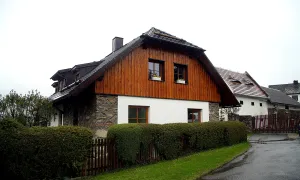
Photos: Czeva / CC BY-SA 3.0 — Wikimedia Commons. The author and licence also appear when you hover over the image.
Faktickým podkladem tohoto textu byl článek na Wikipedii, jehož autory jsou přispěvatelé Wikipedie. Článek je dostupný pod licencí CC BY-SA 4.0.
Location on the map
More monuments – Petrovice u Sušice
Show all in the municipality



Příběhy a pověsti
Legendy, pověsti a příběhy spjaté s touto památkou
Fotografie návštěvníků
Zatím žádné fotografie. Buďte první, kdo přidá fotografii z návštěvy!
Log in a přidejte svou fotografii nebo hodnoťte.
Za ověřenou návštěvu v aplikaci získáte víc bodů — poznáme podle GPS, že jste na místě.
Reviews and comments