



Zámek Kyjov Chateau
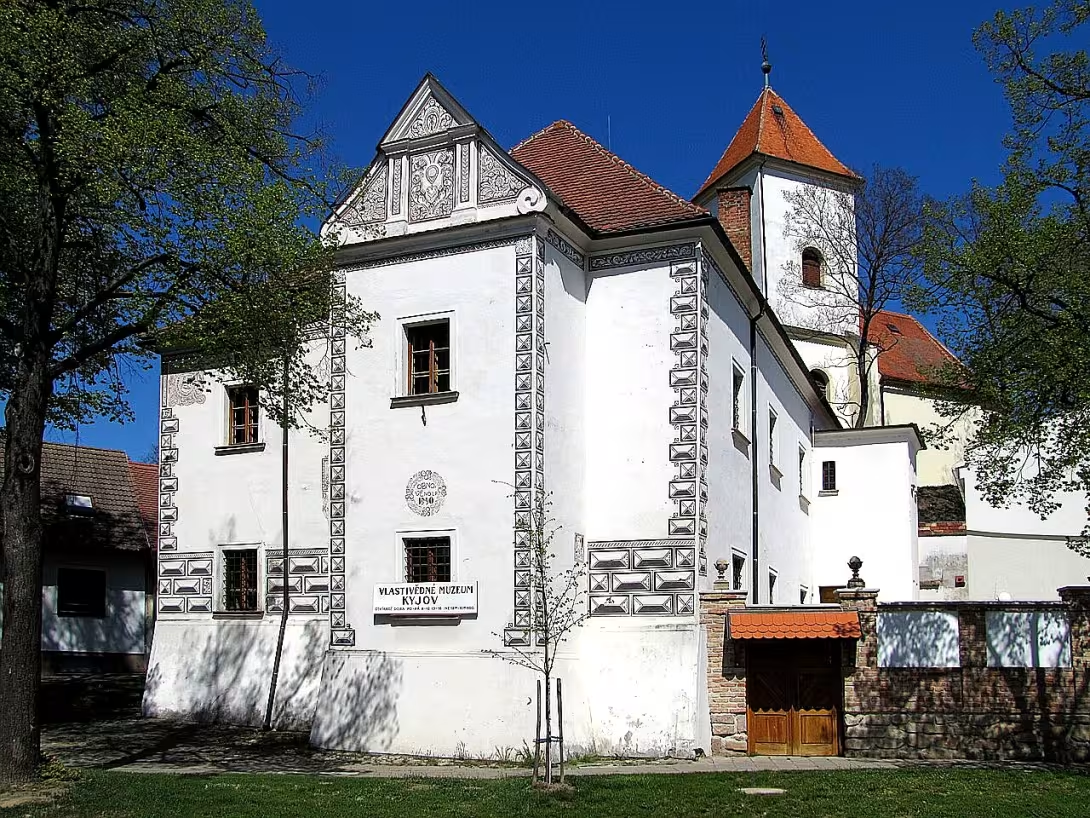
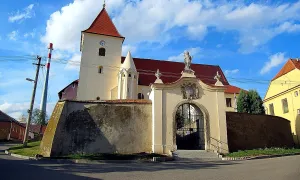
Zámek Kyjov stands as a testament to Renaissance architecture in Kyjov, Moravia. Constructed around 1540, it is recognized as the town’s oldest surviving building and holds significant historical value due to its varied roles over the centuries, including administrative and military functions. Today, Zámek Kyjov serves as the home for the Vlastivědné muzeum (Regional Museum), making it a cultural landmark of the region.
The origins of Zámek Kyjov trace back to the mid-16th century when Jan Kuna z Kunštátu acquired the Kyjovský state in 1539 after leasing it from the Premonstratensian monastery Hradisko. Following his death in 1540, his sons sold the estate and castle to Jan Kryštof Kropáč z Nevědomí in 1544. By 1548, Kyjov had bought its freedom from feudal obligations, acquiring ownership of the castle. This transition marked a significant shift as the castle began serving various community functions over time.
Architecturally, Zámek Kyjov is characterized by its Renaissance style, featuring a single-story structure with smooth plaster facades adorned with sgraffito paintings. These artistic elements were added in 1911 by painter Jano Köhler, depicting scenes from the town's history. The castle underwent significant changes after a fire in 1636, leading to reconstruction and Baroque modifications within its interior spaces.
Throughout its history, Zámek Kyjov has seen several owners and served multiple purposes. Initially built as an administrative center for Jan Kuna z Kunštátu, it later functioned as a parish church, barracks, hospital, or school. The castle also housed town servants and officers of the town's garrison.
Key events in the castle’s history include its partial destruction by fire in 1636, followed by reconstruction with Baroque influences. In 1911, the facades were enhanced with sgraffito work, and between 1926-1928, the Vlastivědné muzeum moved into the castle, where it remains to this day. An archaeological discovery in 2018 suggested the existence of a structure on the site dating back to the late 15th century, adding another layer to its historical narrative.
Today, Zámek Kyjov is not only an architectural marvel but also a cultural hub due to its role as the Regional Museum's home. Visitors can explore its rich history and appreciate the artistic sgraffito work that adorns its facades. The castle’s location near Masarykovo náměstí makes it easily accessible, offering insights into Kyjov’s past while contributing to its present cultural landscape.
Zámek Kyjov stands as a valuable piece of Moravian heritage, inviting visitors to delve into the layers of history and artistry that define this Renaissance castle. Its enduring presence in the heart of Kyjov makes it an essential destination for those interested in exploring the region's architectural and historical richness.
Then and now
Drag the slider to compare how the landmark may have looked when it was built with the view today.
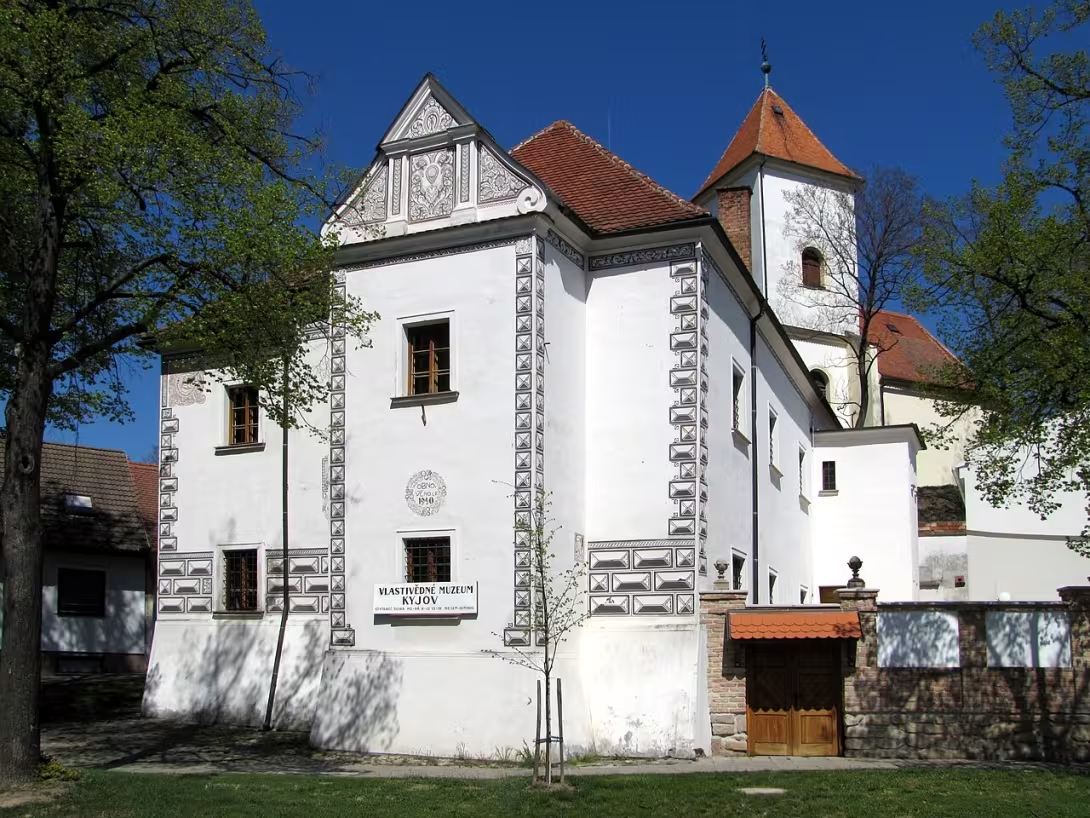

The historical appearance on the left is an AI-generated visualisation and serves as inspiration only.
Historical milestones
- 1539
- Jan Kuna z Kunštátu leased Kyjovský state.
- 1540
- Construction of Zámek Kyjov began.
- 1544
- Estate and castle sold to Jan Kryštof Kropáč z Nevědomí.
- 1548
- Kyjov bought freedom from feudal obligations, acquiring castle ownership.
- 1636
- Castle partially destroyed by fire and later reconstructed with Baroque modifications.
- 1911
- Sgraffito paintings added to the facades by Jano Köhler.
Architectural development
Originally built as a Renaissance structure around 1540, Zámek Kyjov underwent significant changes after a fire in 1636. The interior was modified to reflect Baroque styles during its reconstruction. In 1911, the facades were enhanced with sgraffito paintings depicting scenes from the town's history.
Historical events
In 1636, part of the castle burned down and was subsequently reconstructed with Baroque modifications.
In 1911, the castle facades were adorned with sgraffito work by painter Jano Köhler.
Between 1926-1928, the Vlastivědné muzeum moved into the castle.
Owners
The original owner was the Premonstratensian monastery Hradisko. In 1538, Jan Kuna z Kunštátu leased and then purchased Kyjovský state in 1539. After his death in 1540, his sons sold it to Jan Kryštof Kropáč z Nevědomí in 1544. The town of Kyjov bought its freedom from feudal obligations in 1548, acquiring the castle.
Points of interest
- Despite its Renaissance origins, Zámek Kyjov's facades were significantly altered in 1911 with the addition of sgraffito paintings by Jano Köhler, a unique artistic touch that vividly brings the town’s history to life on its walls.
- The castle experienced a dramatic transformation after a fire in 1636, which led not only to reconstruction but also introduced Baroque elements into its interior design, blending two distinct architectural styles within one structure.
- An intriguing archaeological discovery in 2018 revealed evidence of an earlier structure dating back to the late 15th century on the site of Zámek Kyjov, suggesting that the area's historical significance predates even this Renaissance masterpiece.
- Originally serving as an administrative center for Jan Kuna z Kunštátu, the castle later transitioned through various roles including a parish church, barracks, hospital, and school, reflecting its adaptability and importance to the community over centuries.
- In 1548, Kyjov achieved a significant milestone by purchasing its freedom from feudal obligations, which included gaining ownership of Zámek Kyjov. This pivotal moment marked the beginning of the castle's role as a central hub for local governance and communal activities.
Guide
This guide is narrated by a synthetic voice generated by artificial intelligence.
Show guide text
This text was created by artificial intelligence and has not been editorially reviewed. It may contain inaccuracies.
Welcome to the historic Zámek Kyjov, a jewel nestled in the heart of Kyjov, Moravia. As you stand here today, imagine stepping back into the Renaissance era when this castle first rose from the ground around 1540. It's the oldest surviving building in the town, and its presence tells tales of centuries past.
Let's begin our journey through time by exploring how Zámek Kyjov came to be. In 1539, Jan Kuna z Kunštátu leased the Kyjovský state, setting the stage for what would become a significant architectural endeavor. By 1540, construction began under his vision, and just four years later, in 1544, the estate and castle were sold to Jan Kryštof Kropáč z Nevědomí. A pivotal moment came in 1548 when Kyjov acquired its freedom from feudal obligations, securing ownership of the castle—a testament to the town's growing autonomy.
As you gaze upon the structure before you, take note of its single-story architecture, a hallmark of Renaissance design with smooth plaster facades that have stood the test of time. Although originally built in this style, the castle underwent significant transformations, particularly after a fire in 1636. The subsequent reconstruction introduced Baroque modifications, adding layers to its architectural narrative.
Now, let's delve into some captivating stories and figures connected to Zámek Kyjov. Jan Kuna z Kunštátu was instrumental not only in leasing but also in the castle's early development. Later on, Klášter Hradisko played a role in the region's history, adding depth to the cultural tapestry of this place.
One of the most intriguing aspects of Zámek Kyjov is its facades, which were dramatically altered in 1911 with the addition of sgraffito paintings by Jano Köhler. These vivid artworks bring the town’s rich history to life on the castle's walls, offering a unique artistic touch that distinguishes it from other Renaissance structures.
As we near the end of our visit, consider how this castle has transformed over time—from its origins in the 16th century through fires and renovations—to become the home of the Vlastivědné muzeum (Regional Museum). Each layer of history adds to its charm and complexity.
We invite you to continue exploring Zámek Kyjov, perhaps wandering around its grounds or delving deeper into its museum exhibits. Thank you for joining us on this journey through time, and we hope the stories of Zámek Kyjov have sparked your curiosity about this remarkable place. Safe travels as you discover more of Kyjov's treasures!
Tips for visitors
The best time to visit Zámek Kyjov is during the late spring or early autumn months, ideally from May to September. During this period, the weather is generally pleasant, allowing visitors to comfortably explore both the castle grounds and its surrounding landscapes. The mild temperatures make it ideal for walking around the Renaissance architecture without the discomfort of summer heat or winter cold. Additionally, these seasons often coincide with local festivals and events that can enrich your visit.
Visitors can also use public transportation; however, it's advisable to check current routes and schedules via a local transit website or app before your visit. The central location of the castle in Kyjov makes it easily accessible by foot from various parts of the town.
When planning your visit to Zámek Kyjov, consider bringing comfortable walking shoes as you'll likely explore both indoors and outdoors. A camera is recommended for capturing the stunning architecture and picturesque landscapes surrounding the castle. Additionally, carrying a light jacket or sweater can be useful due to varying weather conditions throughout the day.
Photography enthusiasts will find several spots around Zámek Kyjov ideal for capturing its beauty. The best lighting usually occurs during the golden hours of early morning or late afternoon when the sunlight enhances the castle's features and the surrounding Moravian landscapes.
For families with children visiting Zámek Kyjov, there are several attractions within a 30-minute drive that can complement your visit. The nearby town of Hodonín offers various family-friendly activities and sites, including parks and museums. Additionally, the surrounding Moravian countryside provides ample opportunities for nature walks or picnics, making it an ideal setting for a day out with the whole family.
Frequently asked questions
Can the monument be visited?
Some buildings of this kind are open for guided tours, others serve another purpose or are privately owned. We have not verified whether and when this monument is open – please ask the operator.
What are the opening hours and admission?
We have not verified the opening hours or admission. Current information is published by the operator.
Where is the monument?
Location: Kyjov, Jihomoravský kraj. The map on this page shows the exact spot.
Why is the monument protected?
It is listed in the Central List of Cultural Monuments of the Czech Republic as a cultural monument (register no. 1000144704).
Businesses nearby
Do you run a restaurant, accommodation, shop, museum, rental, wellness or other visitor service near this monument? Show yourself directly to the people heading to it — this is how they will see you in the app and on the web:
Nearby
Zámek Kyjov is situated near Masarykovo náměstí, surrounded by the town's central area. The region features typical Moravian landscapes with rolling hills and agricultural fields.
Accommodation nearby
Themed route
Tematická výletní trasa zámek Kyjov a okolí
1. Zámek Kyjov
Typ: Historický zámek
Proč stojí za návštěvu: Zámek Kyjov, s jeho bohatou historií sahající do 16. století, je architektonickým dílem plným barokních prvků a krásné zahrady v italském stylu. Je to nejen kulturní památka, ale také centrum místního života s historickou expozicí.
2. Masarykovo náměstí
Typ: Historické náměstí
Proč stojí za návštěvu: Nacházející se uprostřed centra Kyjova, Masarykovo náměstí je ideálním místem pro pochopení historie a kultury obce. Náměstí je domovem významných budov a poskytuje pohled na životní prostředí zámku, které je charakteristické pro Moravu.
3. Kostel svatého Mikuláše
Typ: Kostel
Proč stojí za návštěvu: Tento barokní kostel se nachází nedaleko zámku a je významnou duchovní a architektonickou památkou. Jeho bohaté interiéry a historie přitahují návštěvníky, kteří chtějí prozkoumat více o místním dědictví.
4. Zámeková zahrada
Typ: Historická zahrada
Proč stojí za návštěvu: Zahrada v italském stylu je součástí zámku a nabízí krásnou procházku mezi kvetoucími rostlinami, sochařskými díly a klidnými bazény. Je to ideální místo pro relaxaci a užívání si přírody v centru Kyjova.
5. Kyjovské muzeum
Typ: Muzeum
Proč stojí za návštěvu: Toto muzeum je součástí zámku a poskytuje hluboký vhled do historie Kyjova a jeho okolí. Jeho expozice pokrývají různé období a aspekty místního života, což je nezbytné pro každého, kdo chce pochopit kontext zámku v širším historickém rámci.
Tato trasa nabízí kombinaci kulturních a historických zážitků, které ilustrují bohatou minulost Kyjova a jeho okolí.
Seasonal recommendations
Spring: Visiting the Kyjov Castle during spring offers a vibrant experience as nature awakens with blooming flowers and lush greenery surrounding the historic site, creating an enchanting atmosphere. The soft sunlight enhances the castle's architectural details, making it ideal for photography enthusiasts. Visitors should be prepared for occasional rain showers, so carrying a light waterproof jacket is advisable. Since this season marks the beginning of tourist influx, arriving early can help avoid larger crowds and ensure a more peaceful exploration.
Summer: Summer at Kyjov Castle provides an opportunity to enjoy long daylight hours under clear skies, perfect for leisurely strolls through its expansive grounds. The warm weather invites visitors to explore outdoor exhibits or relax in shaded areas around the castle. It's advisable to wear comfortable clothing and bring sun protection, such as hats and sunscreen. Due to the popularity of summer tourism, planning your visit during weekdays or arriving early can help avoid peak times when visitor numbers are at their highest.
Autumn: The autumn season transforms Kyjov Castle into a picturesque setting with warm hues of reds, oranges, and yellows decorating the landscape. The cooler temperatures make for comfortable exploration without the summer heat, while the gentle breeze adds to the serene ambiance. This is an excellent time for photography, capturing the castle amidst the fall foliage. Visitors should dress in layers to accommodate fluctuating temperatures throughout the day.
Winter: Winter at Kyjov Castle offers a unique charm with snow-dusted surroundings that create a magical atmosphere around the historic structure. The shorter days mean visiting earlier in the day is wise to make the most of available daylight and castle operating hours, which may be reduced during this season. It's essential to dress warmly in layers and wear waterproof footwear for potential icy conditions. Despite fewer visitors compared to other seasons, the quieter environment allows for a more intimate experience with the castle’s history.
Visualizations and artistic views


The visualisations are generated by artificial intelligence and serve as inspiration.
Photos from the area
Real photos taken near the monument


Zdroj a licence jsou uvedeny u každého snímku.
Tips from visitors
No tips yet. Be the first!
Log in and add your tip.
Sources and literature
Photos: Radek Linner / CC BY-SA 3.0 — Wikimedia Commons. The author and licence also appear when you hover over the image.
Faktickým podkladem tohoto textu byl článek na Wikipedii, jehož autory jsou přispěvatelé Wikipedie. Článek je dostupný pod licencí CC BY-SA 4.0.
Location on the map



Příběhy a pověsti
Legendy, pověsti a příběhy spjaté s touto památkou

Fotografie návštěvníků
Zatím žádné fotografie. Buďte první, kdo přidá fotografii z návštěvy!
Log in a přidejte svou fotografii nebo hodnoťte.
Za ověřenou návštěvu v aplikaci získáte víc bodů — poznáme podle GPS, že jste na místě.
Reviews and comments