



kaple svatého Rocha (Kyjov) Chapel
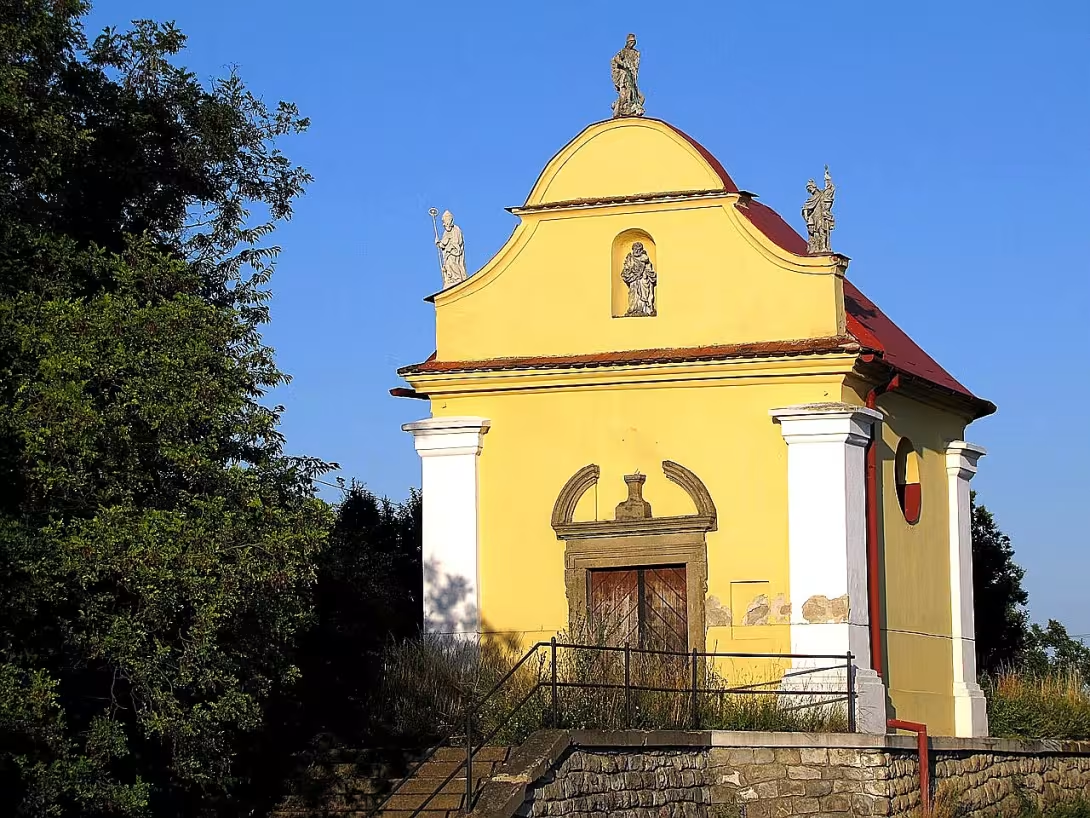
The Chapel of St. Roch is a small but significant Baroque chapel situated on the eastern outskirts of Kyjov, near the road to Vlkoš. Built in 1716, it stands at the highest point of the municipality, offering a panoramic view of the town. This chapel is notable for its unique history and the circumstances of its construction, which were directly linked to the devastating plague epidemic that swept through the Czech lands in the early 18th century.
The plague epidemic of 1711-1716 had a profound impact on the region, claiming between 100,000 to 200,000 lives in the Czech lands. Kyjov was fortunate to have escaped the worst of the outbreak, and in gratitude, the local magistratum decided to build a chapel dedicated to St. Roch, the patron saint of Christians against the plague. The chapel was constructed on the highest point of the municipality, providing a striking visual presence and a poignant reminder of the town's good fortune.
The Chapel of St. Roch is a simple yet elegant Baroque building with a rotunda shape and a dome. Its interior is currently empty, although it once housed a metal painting of a burning Kyjov. The chapel's exterior is adorned with a chronogram above the entrance, which reads 'TransIens InspICe sVb hoC praesIDIo tVta MansIt a peste', translating to 'Traveler, look, under this protection, the plague was averted'. This inscription serves as a testament to the town's gratitude and the chapel's purpose.
The chapel's history is closely tied to the plague epidemic, and it is assumed that it was built as a place of thanksgiving for the town's escape from the disaster. The chapel was secularized and used as a gunpowder storage during the Josephine reforms in 1782, but it was later restored to its original purpose. In 1834, a road to Vlkoš was built near the chapel, further solidifying its connection to the surrounding landscape.
Today, the Chapel of St. Roch stands as a poignant reminder of the town's history and the devastating impact of the plague epidemic. Although it is no longer used as a place of worship, its significance remains, and it is now protected as a cultural monument of the Czech Republic. Visitors can still see the chapel's exterior, including the chronogram above the entrance, and appreciate its unique history and architectural style.
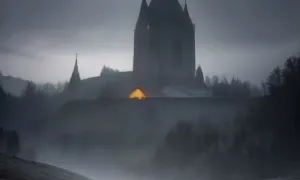
Then and now
Drag the slider to compare how the landmark may have looked when it was built with the view today.
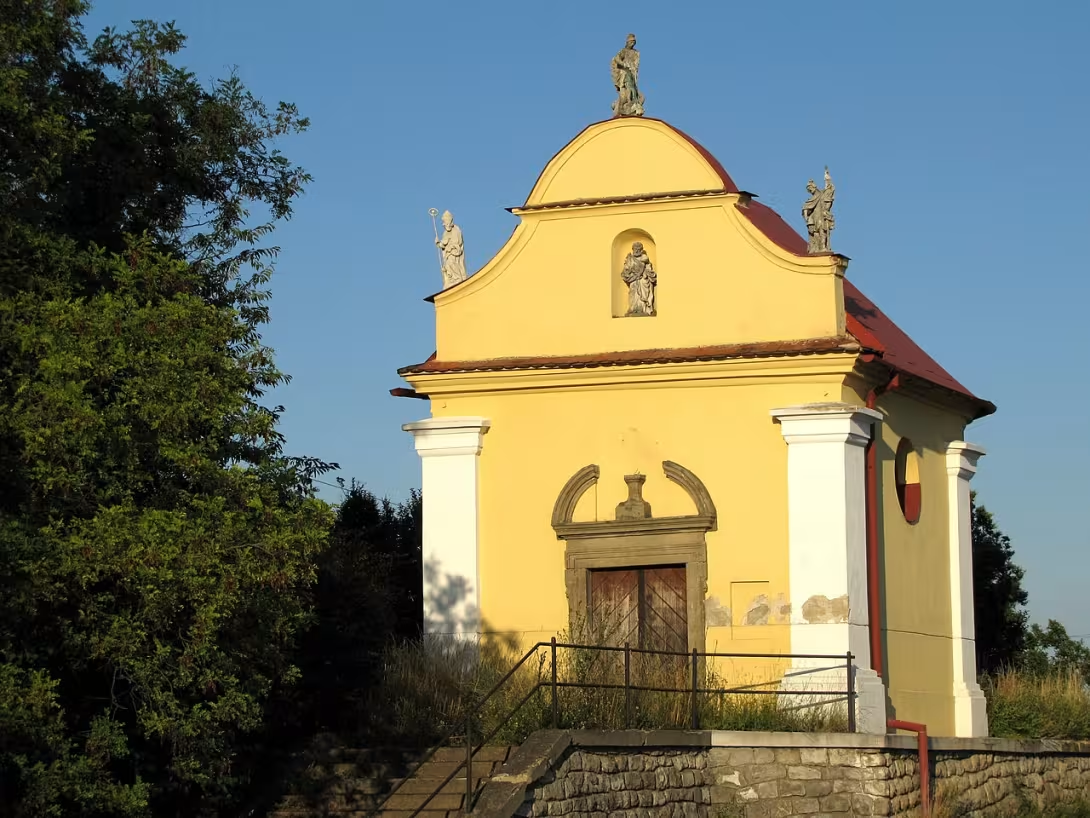

The historical appearance on the left is an AI-generated visualisation and serves as inspiration only.
Historical milestones
- 1716
- The Chapel of St. Roch is built on the highest point of the municipality of Kyjov.
- 1782
- The chapel is secularized and used as a storage for gunpowder during the Josephine reforms.
- 1834
- A road to Vlkoš is built near the chapel.
Architectural development
The chapel is a Baroque building with a rotunda shape. It has a dome and a bell tower. The interior is currently empty, but it once had a painting of a burning Kyjov made of metal.
Historical events
1711: The plague epidemic breaks out in Istanbul and spreads to Europe.
1713-1716: The plague epidemic kills 100,000 to 200,000 people in the Czech lands.
1716: The Chapel of St. Roch is built on the highest point of the municipality of Kyjov.
1782: The chapel is secularized and used as a storage for gunpowder during the Josephine reforms.
1834: A road to Vlkoš is built near the chapel.
Points of interest
– The chapel was built on the highest point of the municipality, providing a striking visual presence and a poignant reminder of the town's good fortune.
– The local magistratum decided to build the chapel as a token of gratitude for the town's escape from the devastating plague epidemic of 1711-1716.
– The chapel's exterior is adorned with a chronogram above the entrance, which reads 'TransIens InspICe sVb hoC praesIDIo tVta MansIt a peste', translating to 'Traveler, look, under this protection, the plague was averted'.
– The chapel was secularized and used as a gunpowder storage during the Josephine reforms in 1782, but it was later restored to its original purpose.
– The chapel is a simple yet elegant Baroque building with a rotunda shape and a dome, and its interior is currently empty, although it once housed a metal painting of a burning Kyjov.
Guide
This guide is narrated by a synthetic voice generated by artificial intelligence.
Show guide text
This text was created by artificial intelligence and has not been editorially reviewed. It may contain inaccuracies.
Welcome! You are standing in front of the Chapel of Saint Roch, a Baroque building that dominates the eastern part of Kyjov. The chapel is located at the highest point in the town, offering a stunning view of the entire city. Let's move closer and take a look.
The Chapel of Saint Roch was built in 1716 during a time when an outbreak of plague spread across the Czech lands. This disaster claimed the lives of hundreds of thousands of people, including 3,000 in Kyjov itself. The local magistracy decided to build the chapel as an expression of gratitude for the town's escape from the greatest devastation. Now, take notice of its façade. Observe its simplicity and symmetry. The chapel has a simple floor plan and modest dimensions, but its decorated facades and sculptures create an impression of monumentality.
Let's move closer and examine the façade. Notice that it is adorned with ornaments and figurative motifs. The chapel is dedicated to Saint Roch, the patron against plague. His statue is located at the top of the façade and symbolizes protection from diseases.
Note that the chapel was built on the highest point in the town. This makes it visible from a large part of the city and creates an impression of a dominant position. The Chapel of Saint Roch is a symbol of gratitude and resistance against plague. Its construction is proof that even in the worst times, there is hope and faith.
Let's move even closer to explore the interior of the chapel. Notice how spacious and airy it is. The chapel is equipped with simple pews and an altar. Observe that the altar is decorated with ornaments and figurative motifs similar to those found on the façade.
The Chapel of Saint Roch is a remarkable monument offering stunning views of Kyjov and symbolizing resistance against plague. Its simple architecture and decorated facades create an impression of monumentality and symbolize faith and hope. Enjoy having seen this beautiful chapel, and I hope you liked it.
Frequently asked questions
Can the monument be visited?
Religious buildings are usually open mainly during services; at other times a visit is normally arranged with the parish or the operator. We have not verified specific times.
Where is the monument?
Location: Kyjov, Jihomoravský kraj. The map on this page shows the exact spot.
Why is the monument protected?
It is listed in the Central List of Cultural Monuments of the Czech Republic as a cultural monument (register no. 32415/7-2297).
Businesses nearby
Do you run a restaurant, accommodation, shop, museum, rental, wellness or other visitor service near this monument? Show yourself directly to the people heading to it — this is how they will see you in the app and on the web:
Nearby
The chapel is located on the eastern outskirts of Kyjov, near the road to Vlkoš.
Accommodation nearby
Themed route
Trasa 1: Kyjovské historické jádro
1. Kaple svatého Rocha (hlavní cíl): Navštivte kapli svatého Rocha, která je dominantou východní části Kyjova. Kaple je zajímavá svou architekturou a nachází se v blízkosti silnice vedoucí do Vlkoše.
2. Kostel svatého Jakuba (0,2 km, 3 minuty chůze): Po prohlídce kaple se vydejte do historického jádra Kyjova a navštivte kostel svatého Jakuba. Kostel je dominantou města a stojí za návštěvu pro svou krásnou architekturu a bohatou historii.
3. Fara a kostelní zahrada (0,3 km, 5 minut chůze): Odsud se vydejte do blízké fary a kostelní zahrady. Fara je krásnou ukázkou barokní architektury a kostelní zahrada nabízí klidné místo pro odpočinek a prohlídku.
4. Náměstí (0,2 km, 3 minuty chůze): Po prohlídce fary a kostelní zahrady se vydejte do historického náměstí, kde najdete několik historických budov a zajímavých památek.
Seasonal recommendations
Jaro
Spring is the ideal time to visit the Chapel of Saint Roch in Kyjov. The atmosphere is full of life and nature is in full bloom. Green trees and flowers create a beautiful backdrop for photography. The lighting is natural, giving the chapel a fresh and vibrant look. We recommend visiting the chapel during the spring season when there are fewer tourists, allowing you to fully enjoy the atmosphere and beauty of the chapel.
Summer
In summer, the Chapel of Saint Roch in Kyjov is very popular. We suggest arriving early in the morning or later in the afternoon to avoid crowds of tourists. The lighting remains natural and nature is still in full bloom. The atmosphere is relaxed and calm, ideal for relaxation. Don't miss the opportunity to explore the chapel and its surroundings, which offer many beautiful views.
Autumn
Autumn is a time of beautiful nature, and the Chapel of Saint Roch in Kyjov is exceptionally stunning during this period. The lighting remains natural, and forests are in autumn colors. The atmosphere is calm and relaxed, perfect for exploring the chapel and its surroundings. We recommend visiting the chapel during the autumn season when there are fewer tourists, allowing you to fully enjoy the beauty of the chapel and nature.
Winter
In winter, the Chapel of Saint Roch in Kyjov is closed, but if you manage to arrive on time, you can view its interior. The lighting is artificial but still pleasant. We recommend visiting the chapel early in the morning or later in the afternoon to avoid any potential visitors. The atmosphere is calm and quiet, ideal for relaxation. Don't miss the opportunity to explore the chapel and its interior.
Visualizations and artistic views


The visualisations are generated by artificial intelligence and serve as inspiration.
Photos from the area
Real photos taken near the monument

Zdroj a licence jsou uvedeny u každého snímku.
Tips from visitors
No tips yet. Be the first!
Log in and add your tip.
Sources and literature
Photos: Radek Linner / CC BY-SA 3.0 — Wikimedia Commons. The author and licence also appear when you hover over the image.
Faktickým podkladem tohoto textu byl článek na Wikipedii, jehož autory jsou přispěvatelé Wikipedie. Článek je dostupný pod licencí CC BY-SA 4.0.
Location on the map



Příběhy a pověsti
Legendy, pověsti a příběhy spjaté s touto památkou
Fotografie návštěvníků
Zatím žádné fotografie. Buďte první, kdo přidá fotografii z návštěvy!
Log in a přidejte svou fotografii nebo hodnoťte.
Za ověřenou návštěvu v aplikaci získáte víc bodů — poznáme podle GPS, že jste na místě.
Reviews and comments