






zámek Lesonice Chateau
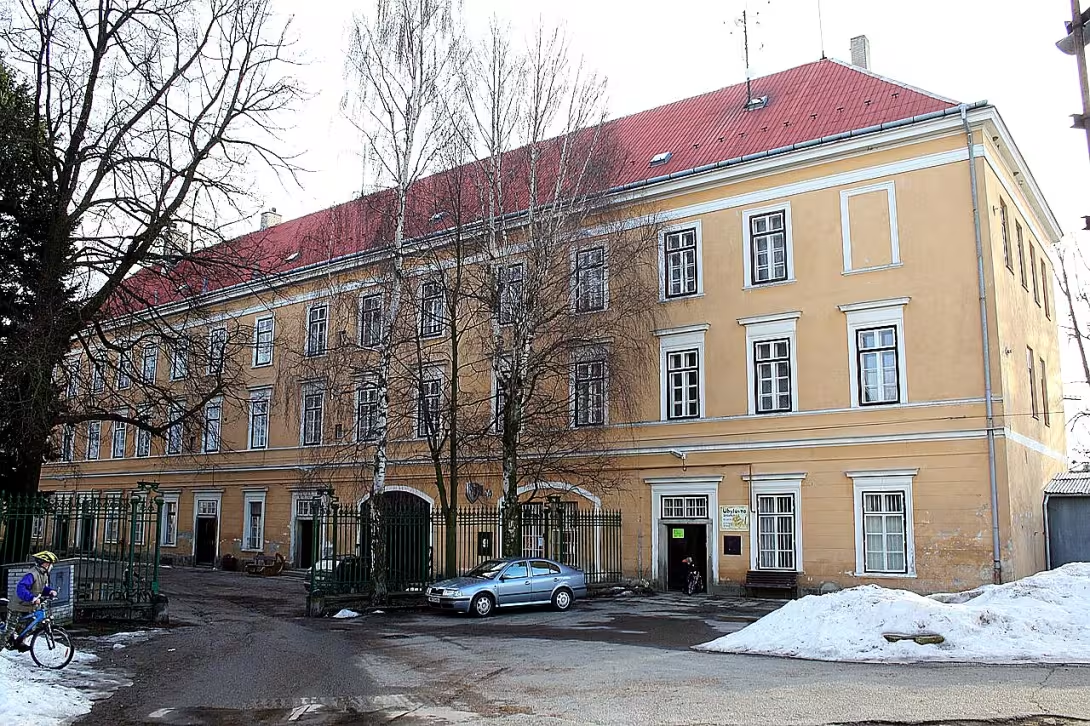
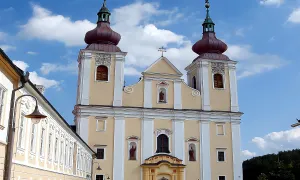
Zámek Lesonice is a historical monument located in the heart of Lesonice, within the Třebíč District of the Vysočina Region. Originally constructed as a fortress either in 1225 or 1364, it was transformed into a Renaissance chateau by the lords of Čechtín during the late 16th century. By around 1830, under the ownership of the Reichenbach family, the existing structure was demolished to make way for two new buildings designed in the neoclassical style. Today, Zámek Lesonice serves various community functions and is notable for housing a museum dedicated to folk bands.
The origins of Zámek Lesonice trace back to its initial construction as a fortress, with historical records suggesting it was built either in 1225 or 1364. By the late 16th century, during a period marked by significant cultural and political changes under Habsburg rule in Bohemia, the lords of Čechtín transformed this fortress into a Renaissance chateau. This transformation reflected broader trends in architecture influenced by Italian Renaissance styles that were prevalent across Europe at the time.
In around 1830, the Reichenbach family, who had acquired the estate in 1823 and were known as Reichenbach z Lesonic, decided to replace the existing Renaissance structure with two new buildings. These were constructed in a neoclassical style, marking another significant architectural evolution for Zámek Lesonice. The Reichenbachs' decision to rebuild was part of broader trends during that era, where many estates underwent renovations or reconstructions to reflect contemporary tastes and styles.
Ownership of the castle changed hands over the centuries, with the lords of Čechtín being notable early owners who initiated its transformation into a Renaissance chateau. The Reichenbach family's acquisition in 1823 marked another significant period in the castle’s history, during which they undertook major architectural changes by constructing new neoclassical buildings around 1830. Since 1975, Zámek Lesonice has been owned by the municipality of Lesonice.
Throughout its history, Zámek Lesonice has witnessed several key events and developments. In the late 16th century, it was transformed from a fortress into a Renaissance chateau under the lords of Čechtín. Around 1830, the Reichenbach family replaced this structure with two neoclassical buildings. In modern times, parts of the castle have been repurposed for community use; in 2014, a section began housing the Museum of Folk Bands, which includes an exhibition space called "Krčma" featuring key moments from uprisings on the Lesonice estate.
Today, Zámek Lesonice is accessible to visitors and serves multiple functions. The castle's right wing hosts a health center and continues to function as a primary school. Additionally, its historical significance and community role make it an intriguing destination for those interested in Czech history and architecture. The castle is conveniently located near several tourist trails, including a red-marked path leading from Vícenice to Bítovánky and Želetava, making it easily accessible by road.
Zámek Lesonice stands as a testament to the architectural evolution and historical significance of the region. Its transformation over centuries—from a medieval fortress to a Renaissance chateau, and finally into neoclassical buildings—reflects broader cultural shifts in Europe. Visitors are invited to explore this remarkable site, where history is preserved not only through its architecture but also through its ongoing role within the community.
Then and now
Drag the slider to compare how the landmark may have looked when it was built with the view today.
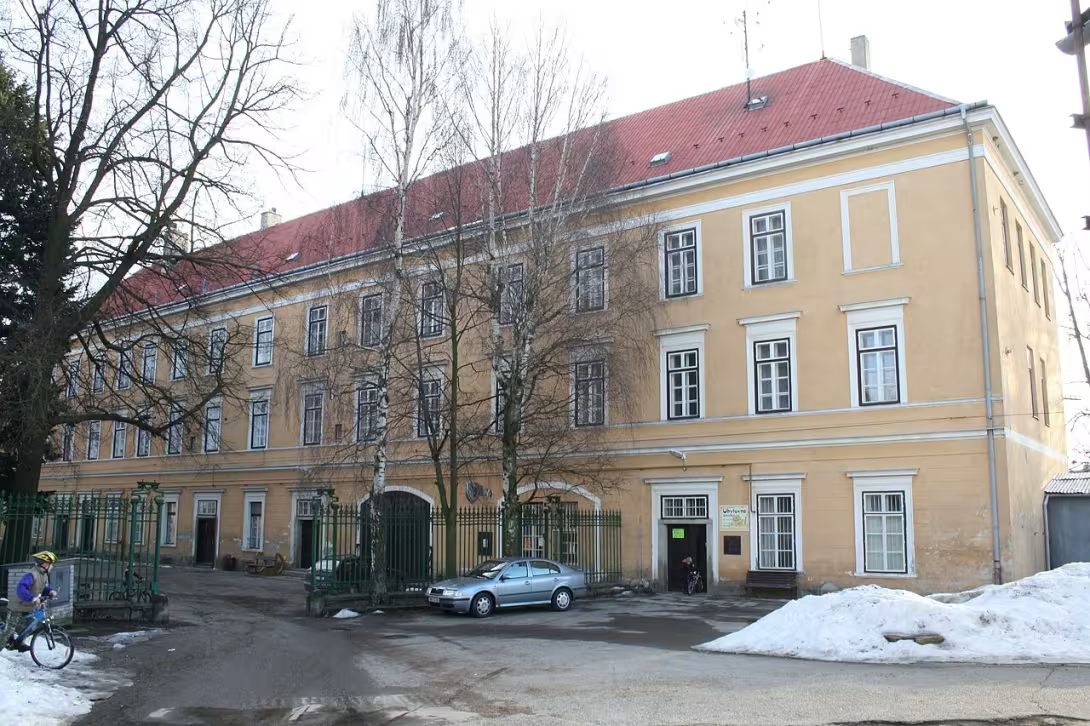

The historical appearance on the left is an AI-generated visualisation and serves as inspiration only.
Historical milestones
- 1225
- The Lesonice Castle was built as a fortress.
- 1364
- An alternative date for the castle's creation.
- end of the 16th century
- The fortress was transformed into a Renaissance château.
- 1823
- The Reichenbach family from Lesonice became the owners of the château.
- c. 1830
- The existing buildings were demolished and new neoclassical structures were built.
- 1975
- The Château of Lesonice became the property of the municipality of Lesonice.
Architectural development
Zámek Lesonice underwent significant architectural changes over its history. Initially built as a fortress in either 1225 or 1364, it was transformed into a Renaissance chateau by the lords of Čechtín in the late 16th century. In around 1830, the Reichenbach family demolished this structure to construct two new neoclassical buildings.
Historical events
In the late 16th century, the lords of Čechtín transformed a fortress into a Renaissance chateau.
Around 1830, the Reichenbach family replaced the existing structure with two neoclassical buildings.
Owners
The castle was initially associated with the lords of Čechtín in the late 16th century. From 1823, it belonged to the Reichenbach family, who were known as Reichenbach z Lesonic. Since 1975, the property has been owned by the municipality of Lesonice.
Points of interest
- The Zámek Lesonice has a mysterious dual origin story with its construction date debated between 1225 and 1364, reflecting the turbulent historical periods that shaped its early existence.
- During its transformation into a Renaissance chateau in the late 16th century, it is speculated that Italian architects might have influenced the design, as was common across Europe during this era of cultural exchange under Habsburg rule.
- The Reichenbach family's decision to demolish the existing structure around 1830 for neoclassical buildings reflects a broader European trend where aristocratic families sought to modernize their estates in line with contemporary architectural styles.
- In an intriguing twist, Zámek Lesonice was once rumored to be a secret meeting place during uprisings against Habsburg rule, although concrete evidence of such events remains elusive and part of local folklore.
- The castle's "Krčma" exhibition space within the Museum of Folk Bands uniquely combines cultural heritage with historical narratives, showcasing not just musical instruments but also artifacts related to local resistance movements.
Guide
This guide is narrated by a synthetic voice generated by artificial intelligence.
Show guide text
This text was created by artificial intelligence and has not been editorially reviewed. It may contain inaccuracies.
Lesonice Castle stands in the very centre of the village of Lesonice in the Třebíč district. Its present appearance is Classicist in style, but the history of this place goes back much further.
The castle was preceded by a fortress. Historical sources disagree on when it was built. It is said to have been either 1225 or 1364. In the second half of the sixteenth century, the Lesonice estate belonged to the lords of Čechtín. They had the fortress rebuilt as a Renaissance castle.
Major changes came in the nineteenth century. From 1823, the estate was held by the Reichenbachs, who took the title of nobility from Lesonice. Around 1830, they had the Renaissance castle demolished. In its place, two buildings of a new Classicist castle were erected. However, the nobility made little use of it from that time on. The castle mainly served the administration of the estate.
From 1890 onwards, a school has been housed in the castle building. In 1950, a forestry training school moved into the left wing. Today, the Secondary Vocational School of Crafts and Services in Moravské Budějovice has its office there. In the right wing there is a health centre and further on there is also a primary school. In 1975, the castle underwent modernization. At present, it is owned by the village of Lesonice.
Since August 2014, the castle has had another purpose. In the right wing, in the spaces of the former fire station, the Museum of Folk Bands was opened. It also includes what is called the Tavern. On its pictures are depicted the main moments of the uprising that occurred on the Lesonice estate.
Tips for visitors
The best time to visit Zámek Lesonice is during the late spring or early autumn months, from May to September. During these times, the weather is typically mild and pleasant, making it ideal for exploring both the castle grounds and the surrounding nature trails. Additionally, visiting in this period allows you to enjoy blooming gardens and vibrant foliage without the peak summer crowds.
The area can be accessed via roads connecting to nearby villages such as Babice and Šebkovice, or by taking a short drive from the I/38 highway near Martínkovo. Public transport is available, with routes connecting to local towns; however, it's recommended to check current schedules online for precise information.
When planning your visit, consider bringing comfortable walking shoes as there are several trails in the vicinity, including a red-marked path from Vícenice to Bítovánky and Želetava. A camera or smartphone is also recommended for capturing the picturesque landscapes and architectural details of the castle. Additionally, bring along water, snacks, and perhaps a picnic blanket if you plan to enjoy a meal outdoors.
For photography enthusiasts, Zámek Lesonice offers several excellent spots to capture its beauty. The best light conditions are usually in the early morning or late afternoon when the sunlight is softer, highlighting the castle's features and surrounding landscapes. Try capturing images from the main entrance for an iconic shot of the Renaissance chateau, or explore the gardens and nearby trails for unique perspectives.
In terms of nearby attractions within a 30-minute drive, visitors can explore the charming village of Babice or take a scenic route to Šebkovice. Both offer quaint settings and local culture that complement your visit to Zámek Lesonice. For families with children, these areas provide opportunities for leisurely walks and exploration, ensuring an enjoyable experience for all ages.
Frequently asked questions
Can the monument be visited?
Some buildings of this kind are open for guided tours, others serve another purpose or are privately owned. We have not verified whether and when this monument is open – please ask the operator.
What are the opening hours and admission?
We have not verified the opening hours or admission. Current information is published by the operator.
Where is the monument?
Location: Lesonice, Kraj Vysočina. The map on this page shows the exact spot.
Businesses nearby
Do you run a restaurant, accommodation, shop, museum, rental, wellness or other visitor service near this monument? Show yourself directly to the people heading to it — this is how they will see you in the app and on the web:
Nearby
Zámek Lesonice is situated near several tourist trails, including a red-marked path leading from Vícenice to Bítovánky and Želetava. The area is also accessible via roads connecting to Babice, Šebkovice, the I/38 highway near Martínkovo, and Cidlina.
Accommodation nearby
Trips and activities nearby
Guided tours, tickets and activities nearby from GetYourGuide
Affiliate link: if you buy from the partner, we may receive a commission. The price for you does not change.
Search tours and activities →Themed route
Thematic Tour Itinerary: Zámek Lesonice and Surroundings
1. Zámek Lesonice
Type: Castle
Why Visit: Begin your journey at the historic Zámek Lesonice, a stunning example of Renaissance architecture nestled in the picturesque landscape of Vysočina. Explore its beautifully preserved interiors, including grand halls and intricate stucco work, which offer a glimpse into the opulent lifestyle of past aristocracy.
2. Red-marked Trail from Vícenice to Bítovánky
Type: Hiking Trail
Why Visit: Embark on an invigorating hike along this scenic red-marked trail that starts near Zámek Lesonice and winds through lush forests and rolling hills. This path offers a peaceful escape into nature, providing opportunities for bird watching and enjoying the serene countryside vistas.
3. Šebkovice Road Connection
Type: Scenic Drive/Short Walk
Why Visit: Take a leisurely drive or short walk along the road connecting to Šebkovice. This route offers charming views of traditional Czech villages, with their quaint architecture and vibrant gardens, making it perfect for photography enthusiasts and those looking to experience local life.
4. I/38 Highway near Martínkovo
Type: Roadside Exploration
Why Visit: As you approach the I/38 highway near Martínkovo, take a moment to explore the surrounding area. This location provides a unique vantage point for observing regional landscapes and serves as an excellent spot for picnicking amidst nature.
5. Cidlina River Path
Type: Nature Walk
Why Visit: Conclude your tour with a tranquil walk along the Cidlina river path, which is easily accessible from nearby roads. This area offers peaceful surroundings perfect for reflection and relaxation, as you enjoy the gentle sounds of flowing water and rustling leaves.
This itinerary provides a balanced mix of cultural exploration at Zámek Lesonice and immersive natural experiences in its surrounding areas, ensuring a memorable visit to this charming part of Vysočina.
Seasonal recommendations
Spring: Visiting the Lesonice Castle during spring offers a unique experience as nature awakens around this historic site. The blooming gardens and lush greenery create an enchanting atmosphere, making it a perfect time for photography enthusiasts to capture vibrant landscapes. As flowers begin to bloom, the castle grounds are particularly picturesque with colorful displays that enhance their historical charm. Visitors should consider wearing comfortable walking shoes and layers, as temperatures can vary throughout the day. While the site might not be overly crowded, arriving early is advisable to enjoy a more peaceful exploration before larger groups typically arrive.
Summer: Summer at Lesonice Castle is ideal for those who appreciate both history and nature in full bloom. The long daylight hours allow visitors ample time to explore the extensive grounds and immerse themselves in the castle's rich history. However, it's important to note that this period can attract more tourists, so arriving early or visiting on weekdays could provide a less crowded experience. Comfortable clothing is recommended due to warmer temperatures, along with sun protection like hats and sunscreen. The lush gardens are at their peak during summer, offering a perfect backdrop for outdoor activities.
Autumn: Autumn brings a unique charm to Lesonice Castle, as the surrounding landscape transforms into a palette of warm hues. The changing leaves create a picturesque setting that enhances the castle's historic allure, making it an ideal time for photography and leisurely walks through the grounds. Cooler temperatures mean visitors can comfortably explore without the summer heat, but layering is advisable to accommodate fluctuating weather conditions. This season also tends to have fewer tourists compared to summer, allowing for a more relaxed visit.
Winter: Winter at Lesonice Castle offers a serene and magical experience as snow blankets the historic site, creating a fairy-tale-like atmosphere. The castle takes on a quiet beauty during this time, with shorter daylight hours encouraging early visits to make the most of limited opening times. Visitors should dress warmly in layers, including hats, gloves, and insulated boots, to stay comfortable while exploring. While winter may see fewer tourists, it's important to check for any seasonal closures or reduced access to certain areas due to weather conditions.
Visualizations and artistic views


The visualisations are generated by artificial intelligence and serve as inspiration.
Photos from the area
Real photos taken near the monument


Zdroj a licence jsou uvedeny u každého snímku.
Tips from visitors
No tips yet. Be the first!
Log in and add your tip.
Sources and literature
Photos: Jiří Sedláček - Frettie / CC BY-SA 3.0 — Wikimedia Commons. The author and licence also appear when you hover over the image.
Faktickým podkladem tohoto textu byl článek na Wikipedii, jehož autory jsou přispěvatelé Wikipedie. Článek je dostupný pod licencí CC BY-SA 4.0.
Location on the map


Příběhy a pověsti
Legendy, pověsti a příběhy spjaté s touto památkou
Fotografie návštěvníků
Zatím žádné fotografie. Buďte první, kdo přidá fotografii z návštěvy!
Log in a přidejte svou fotografii nebo hodnoťte.
Za ověřenou návštěvu v aplikaci získáte víc bodů — poznáme podle GPS, že jste na místě.
Reviews and comments