



zámek Lužec Chateau
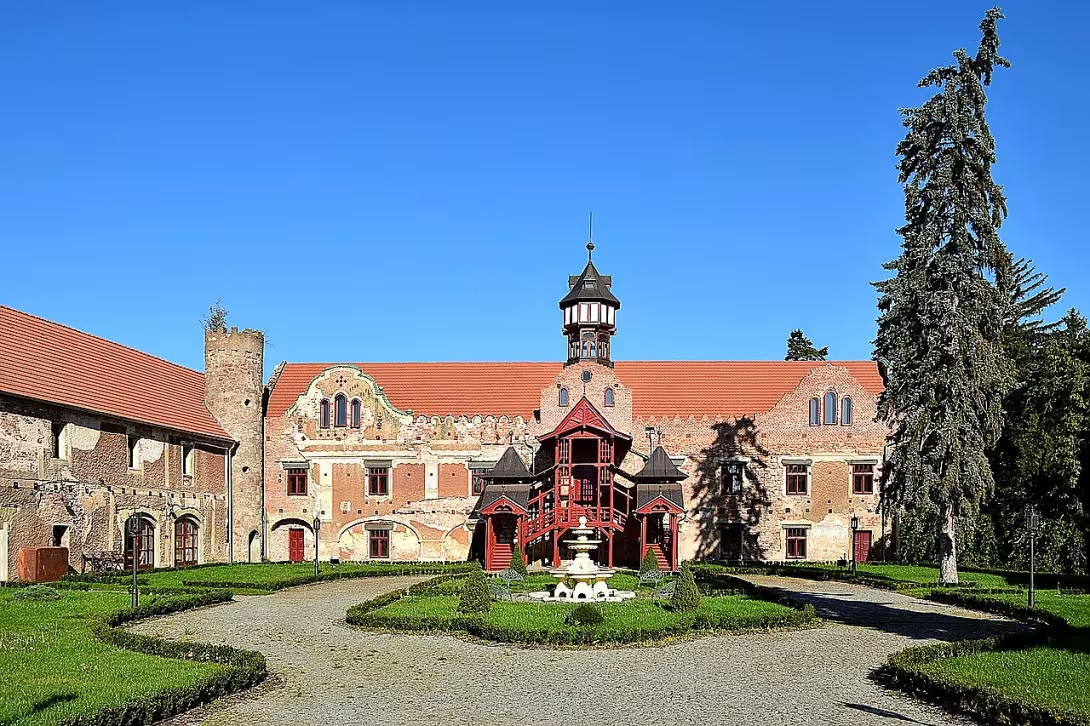
Lužec Castle is a baroque castle situated in Lužec village, about 3 km southwest of Vroutek in Ústecký kraj. Built around 1664 by Franz Rudolf Neslinger, it was later transformed into a romantic style under Josef Maria Bärenreither's direction. Recognized as a cultural monument, the castle is notable for its historical significance and architectural evolution over centuries.
The origins of Lužec Castle date back to a knight's fortress mentioned in 1447, owned by Ojíř z Očedělic. This early structure was confirmed during the reconstruction of an economic building between 2008 and 2010. The site evolved through various ownerships, reflecting broader historical shifts within Bohemia as part of the Habsburg Monarchy during Europe's baroque cultural flourishing. Franz Rudolf Neslinger initiated the construction of the early baroque castle post-1664, marking a significant development in its architectural history.
Architecturally, Lužec Castle began as an early baroque structure and was later expanded into a romantic style by Josef Maria Bärenreither in the late 19th century. The main building features a gable roof with an octagonal towerlet added after 1908. A neglected English park surrounds the castle on its northern side, enhancing the estate's aesthetic appeal. Economic wings and a gatehouse also form part of the architectural ensemble.
Throughout history, Lužec Castle has seen various owners who influenced its development. Initially built by Franz Rudolf Neslinger post-1664, it was acquired by Kryštof Štampach ze Štampachu in 1670, whose family retained ownership until Marie Pachtová inherited it in the 1830s. Subsequent owners included Johann Anton ze Starku and Johann Riedl von Riedenstein, followed by Josef Maria Bärenreither who transformed its style. Later figures such as Frederic Quitton de Saint Quentin, Geza Schiffmann, Zdeněk Stopka, and Fišerovi held ownership until 1918.
Key events in the castle's history include its use as a filming location for František Vláčil's movie 'Adelheid' after World War II. Following the war, it was confiscated under law 142/1947 and used as an inn by the Lubenecký state farm before falling into disrepair. The castle underwent significant changes in ownership and purpose over time, reflecting broader socio-political shifts.
Today, Lužec Castle stands as a testament to its rich history and architectural evolution. Although it has experienced periods of neglect, recent redevelopments have aimed at preserving its cultural significance. Visitors can explore the castle's unique blend of baroque and romantic styles while appreciating its historical context within Bohemia. The neglected English park adds an intriguing element for those interested in landscape architecture.
Lužec Castle offers a fascinating glimpse into the past, inviting visitors to explore its storied halls and grounds. Its cultural heritage and architectural beauty make it a worthwhile destination for anyone interested in history or architecture.
Then and now
Drag the slider to compare how the landmark may have looked when it was built with the view today.
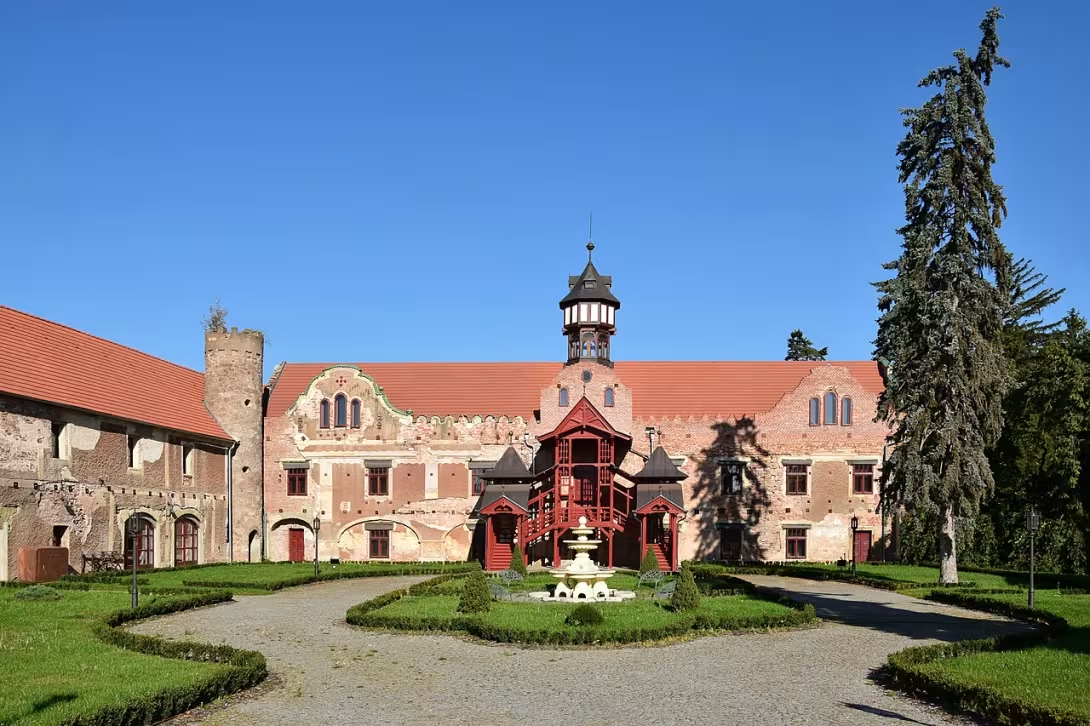
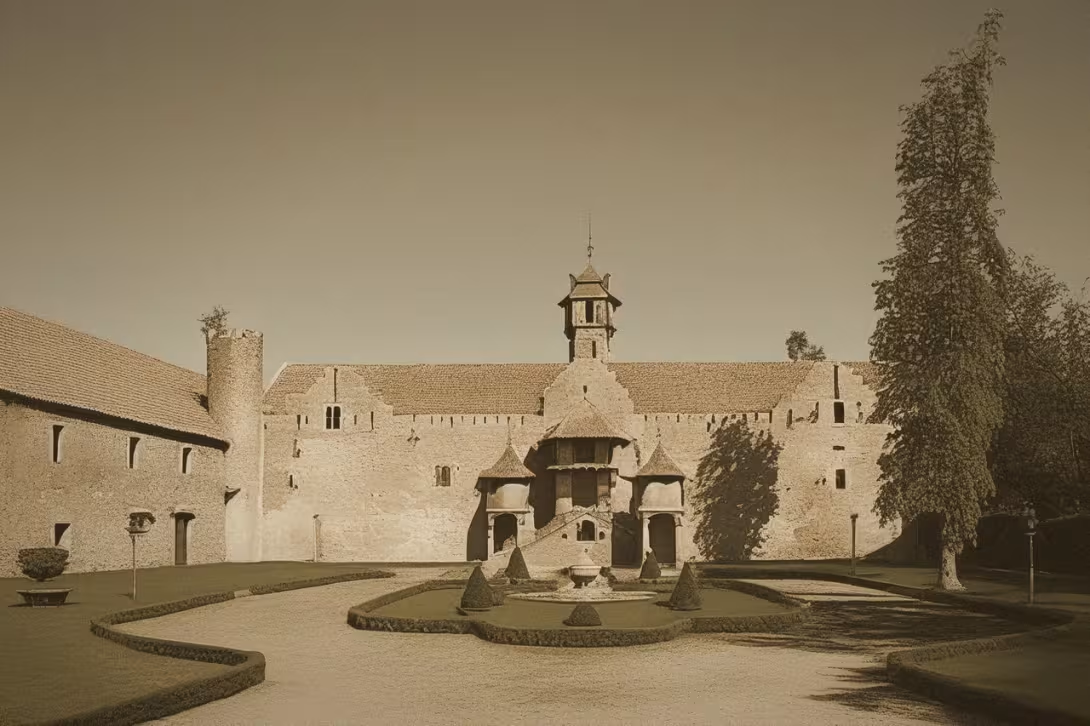
The historical appearance on the left is an AI-generated visualisation and serves as inspiration only.
Historical milestones
- 1447
- Existence of a knight's fortress confirmed.
- 1664
- Franz Rudolf Neslinger built the early baroque castle.
- 1868
- Josef Maria Bärenreither acquired the estate and transformed it into a romantic style.
Architectural development
The castle began as an early baroque structure, later expanded and modified into a romantic style by Josef Maria Bärenreither. It features a main building with a gable roof and an octagonal towerlet added post-1908. The estate includes various architectural elements such as economic wings and a gatehouse.
Historical events
Reconstruction of the economic building in 2008–2010 confirmed the existence of a knight's fortress dating back to 1447.
Franz Rudolf Neslinger built the early baroque castle post-1664.
Josef Maria Bärenreither transformed the castle into a romantic style in the late 19th century.
Owners
Franz Rudolf Neslinger (after 1664)
Kryštof Štampach ze Štampachu (1670-1830)
Marie Pachtová, née Štampachová (1830s)
Johann Anton ze Starku and Johann Riedl von Riedenstein (1855-1868)
Josef Maria Bärenreither (after 1868)
Fredric Quitton de Saint Quentin, Geza Schiffmann, Zdeněk Stopka
The Fišer Family (1918)
Points of interest
- Despite its current baroque architecture, Lužec Castle's origins trace back to a knight's fortress from 1447, hinting at a much older and tumultuous history than the elegant structures suggest.
- The castle underwent a significant transformation under Josef Maria Bärenreither in the late 19th century when he converted it into a romantic style, adding an octagonal towerlet after 1908 which is not commonly found in other baroque castles.
- After World War II, Lužec Castle served as a filming location for František Vláčil's movie 'Adelheid', showcasing its dramatic and picturesque setting beyond its historical role as a noble residence.
- The castle was confiscated under law 142/1947 after the war, reflecting broader socio-political shifts in post-war Czechoslovakia, and it was repurposed as an inn by the Lubenecký state farm before falling into disrepair.
- An intriguing aspect of Lužec Castle is its neglected English park on the northern side, which adds a layer of mystery and charm to the estate, inviting exploration beyond its architectural confines.
Guide
This guide is narrated by a synthetic voice generated by artificial intelligence.
Show guide text
This text was created by artificial intelligence and has not been editorially reviewed. It may contain inaccuracies.
Lužec is a castle in the village of the same name in the Louny district, approximately three kilometers southwest of Vroutek. It originally arose as a Baroque building and was later romantically reconstructed. Today it is protected as a cultural monument.
A knight's fortified house once stood on this site, which is mentioned in records from 1447. It belonged at that time to Ojíř from Očedělic. That the fortified house truly existed was confirmed by the reconstruction of one of the outbuildings between 2008 and 2010. Ojíř's son Pechanec connected Lužec to the Lubeneč estate and the farmstead then remained for a long time part of larger properties. In 1577, Mikuláš from Lobkovic pawned the estate with the fortified house to Jindřích Brozanský from Vřesovic. Adam Ferdinand Údrčský from Údrče acquired it from him and after 1597 had a demesne farm established there.
In 1627, Jan Ludvík Neslinger from Selchengrab purchased the estate from the royal chamber. His descendant Franz Rudolf Neslinger built an early Baroque castle there sometime after 1664. Already in 1670, Kryštof Štampach from Štampach bought it and his family held the castle until 1830. Then it was inherited by Marie Pachtová, born Štampachová, who enlarged the castle and established an English park.
In the second half of the nineteenth century the owners changed frequently. In 1868, Josefína Bärenreitherová purchased the estate and Josef Maria Bärenreither then had the castle reconstructed in a historicizing Romantic style. Among the later owners was also the English consul Frederic Quitton de Saint Quentin. In 1918, the married couple the Fišers became the last private owners.
After the Second World War, the castle was confiscated. In 1951 it fell to the Lubeneč state farm, which established a hostel in it, but did not maintain the building. The castle underwent repairs only in 1967, when František Vláčil filmed the movie Adelheid there. Subsequently it served as a grain storage and continued to deteriorate. A new owner only began reconstruction in 2008.
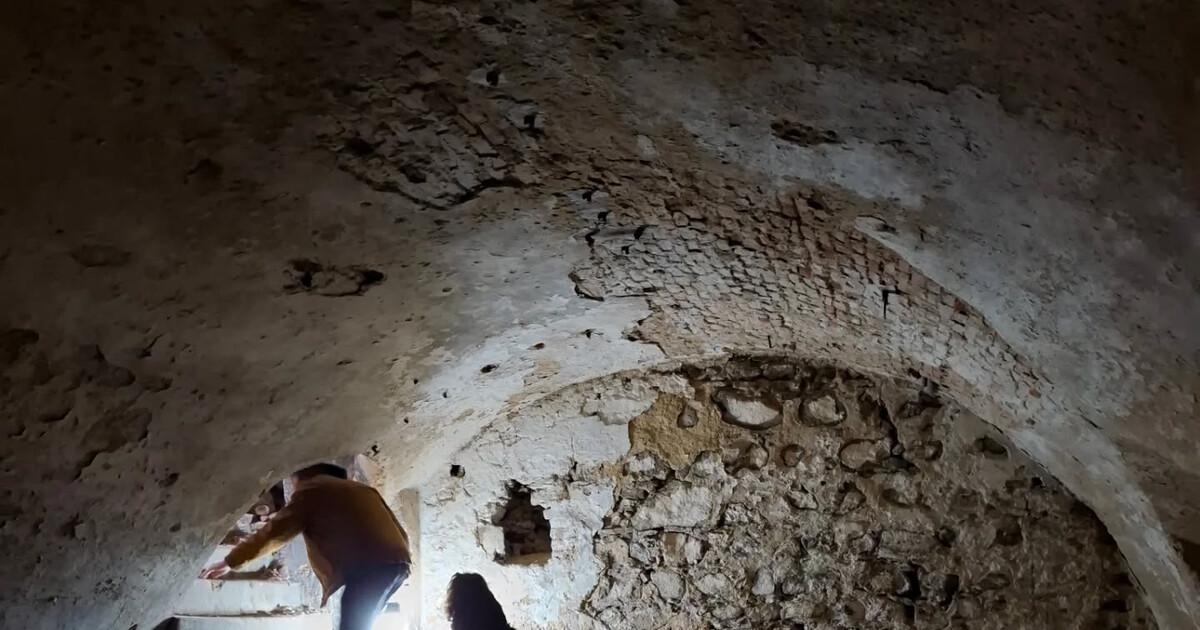
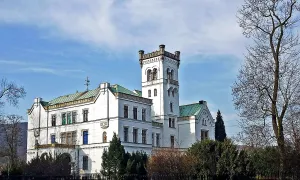
The complex has approximately a square ground plan. On the north stands the main two-story building with a gabled roof, from which an octagonal turret once rose. Access to the upper floor is from the courtyard via a protruding wooden staircase. On the west, an outbuilding wing adjoins the castle and in the corner between them is a Romantic cylindrical tower with crenellations, built after 1908. The eastern side is formed by a residential building, originally an outbuilding. From the south a wall with a gate closes off the courtyard and from the north an neglected English park adjoins the castle.
Frequently asked questions
Can the monument be visited?
Some buildings of this kind are open for guided tours, others serve another purpose or are privately owned. We have not verified whether and when this monument is open – please ask the operator.
What are the opening hours and admission?
We have not verified the opening hours or admission. Current information is published by the operator. Official website: http://www.zamekluzec.cz/
Where is the monument?
Location: Lužec č.p. 1, Vroutek, Ústecký kraj. The map on this page shows the exact spot.
Why is the monument protected?
It is listed in the Central List of Cultural Monuments of the Czech Republic as a cultural monument (register no. 42581/5-1126).
Businesses nearby
Do you run a restaurant, accommodation, shop, museum, rental, wellness or other visitor service near this monument? Show yourself directly to the people heading to it — this is how they will see you in the app and on the web:
Events nearby
Zdroj akcí: otevřená data měst a obcí ČR (Národní katalog otevřených dat) a kalendář akcí Národního památkového ústavu.
Nearby
The surrounding landscape includes a neglected English park and is located near Vroutek. The area features natural beauty typical of Ústecký kraj, with no other major monuments within close proximity.
Accommodation nearby
Themed route
Tematická výletní trasa zámek Lužec
1. Zámek Lužec
Typ: Historický zámek
Proč stojí za návštěvu: Zámek Lužec je krásným příkladem historické architektury, který nabízí pohled na bohatou minulost oblasti. Jeho elegantní stavby a pevnostné prvky vás zavedou do éry, kdy byl důležitým centrem místního života.
2. Zanedbaný anglický park
Typ: Park
Proč stojí za návštěvu: Tento zahradní útvar nabízí jedinečnou atmosféru, kde příroda a historie prolínají. Jeho neupravený charakter vytváří idylické prostředí pro relaxaci a procházky, což je ideální místo pro ty, kteří hledají klid ve stylu anglických zahrad.
3. Náměstí u zámku
Typ: Nádvoří
Proč stojí za návštěvu: Nádvoří před zámkem je ideálním místem pro odpočinek po prozkoumání samotného zámku. Jeho historické architektonické prvky a klidná atmosféra vytvářejí dokonalý prostor pro užívání si okolních pohledů.
4. Vrchol poblíž Vroutka
Typ: Přírodní oblast
Proč stojí za návštěvu: Krátce od zámku se nachází malebný vrchol, který nabízí vynikající pohledy na okolní krajinu Ústeckého kraje. Je to perfektní místo pro ty, kteří chtějí užít si přírodní krásy a vzduch čerstvého venkovského prostředí.
5. Výhledová terasa zámku
Typ: Výhledová oblast
Proč stojí za návštěvu: Terasa nabízí nejlepší pohledy na celou lokalitu a okolní krajinu. Je to skvělý způsob, jak uzavřít své prozkoumání zámku Lužec, s výhledem, který vás připomene krásu a historii této oblasti.
Tato trasa nabízí nejen pohled na historické památky, ale také příležitost prozkoumat přírodní i kulturní bohatství okolí zámku Lužec.
Seasonal recommendations
Spring: Visiting Zámek Lužec during spring offers a unique experience as the castle grounds burst into life with vibrant colors from blooming flowers and lush greenery. The soft, warm light of early spring mornings casts a gentle glow over the historic architecture, creating an enchanting atmosphere perfect for photography. During this time, it's advisable to wear comfortable layers that can be adjusted as temperatures fluctuate throughout the day. While visitor numbers start to increase, arriving earlier in the morning can help you avoid larger crowds and enjoy a more peaceful exploration of the castle’s grounds.
Summer: Summer at Zámek Lužec is characterized by long daylight hours and warm weather, making it ideal for leisurely strolls through the expansive gardens. The lush foliage provides ample shade, offering respite from the sun while enhancing the picturesque setting of this historic site. This is also the peak tourist season, so expect larger crowds; planning your visit early in the day can help you avoid the busiest times. Comfortable walking shoes and light clothing are recommended to stay cool and comfortable during your exploration.
Autumn: Autumn at Zámek Lužec transforms the landscape into a tapestry of fiery reds, oranges, and yellows as deciduous trees shed their leaves. The cooler temperatures and softer light create a serene and reflective atmosphere, perfect for capturing stunning photographs or simply enjoying a quiet walk. This is an excellent time to visit if you prefer fewer crowds, as many tourists have yet to return from summer vacations. Wearing layers will help you adjust to the changing weather throughout the day, ensuring your comfort during your visit.
Winter: Winter at Zámek Lužec offers a magical experience with snow-covered grounds and frosty air that accentuates the castle’s historic charm. The shorter days mean fewer visitors, allowing for a more intimate exploration of the site. However, be prepared for limited access to some outdoor areas due to weather conditions. Dressing warmly in layers is essential, along with wearing sturdy footwear suitable for potentially icy paths. Visiting during daylight hours will ensure you make the most of your time at this enchanting winter wonderland.
Visualizations and artistic views


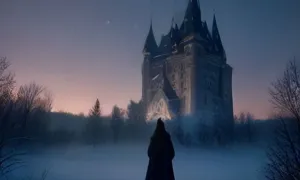
The visualisations are generated by artificial intelligence and serve as inspiration.
Photos from the area
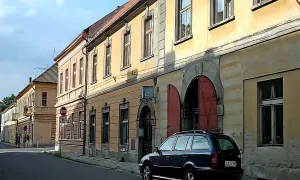
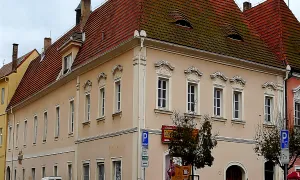
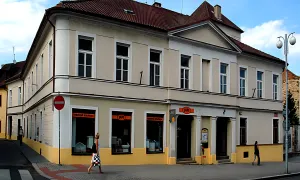
Real photos taken near the monument


Zdroj a licence jsou uvedeny u každého snímku.
Tips from visitors
No tips yet. Be the first!
Log in and add your tip.
Sources and literature
Photos: Petr Kinšt / CC BY-SA 4.0 — Wikimedia Commons. The author and licence also appear when you hover over the image.
Faktickým podkladem tohoto textu byl článek na Wikipedii, jehož autory jsou přispěvatelé Wikipedie. Článek je dostupný pod licencí CC BY-SA 4.0.
Location on the map
Příběhy a pověsti
Legendy, pověsti a příběhy spjaté s touto památkou
Fotografie návštěvníků
Zatím žádné fotografie. Buďte první, kdo přidá fotografii z návštěvy!
Log in a přidejte svou fotografii nebo hodnoťte.
Za ověřenou návštěvu v aplikaci získáte víc bodů — poznáme podle GPS, že jste na místě.
Reviews and comments