






zámek Sedlec Chateau
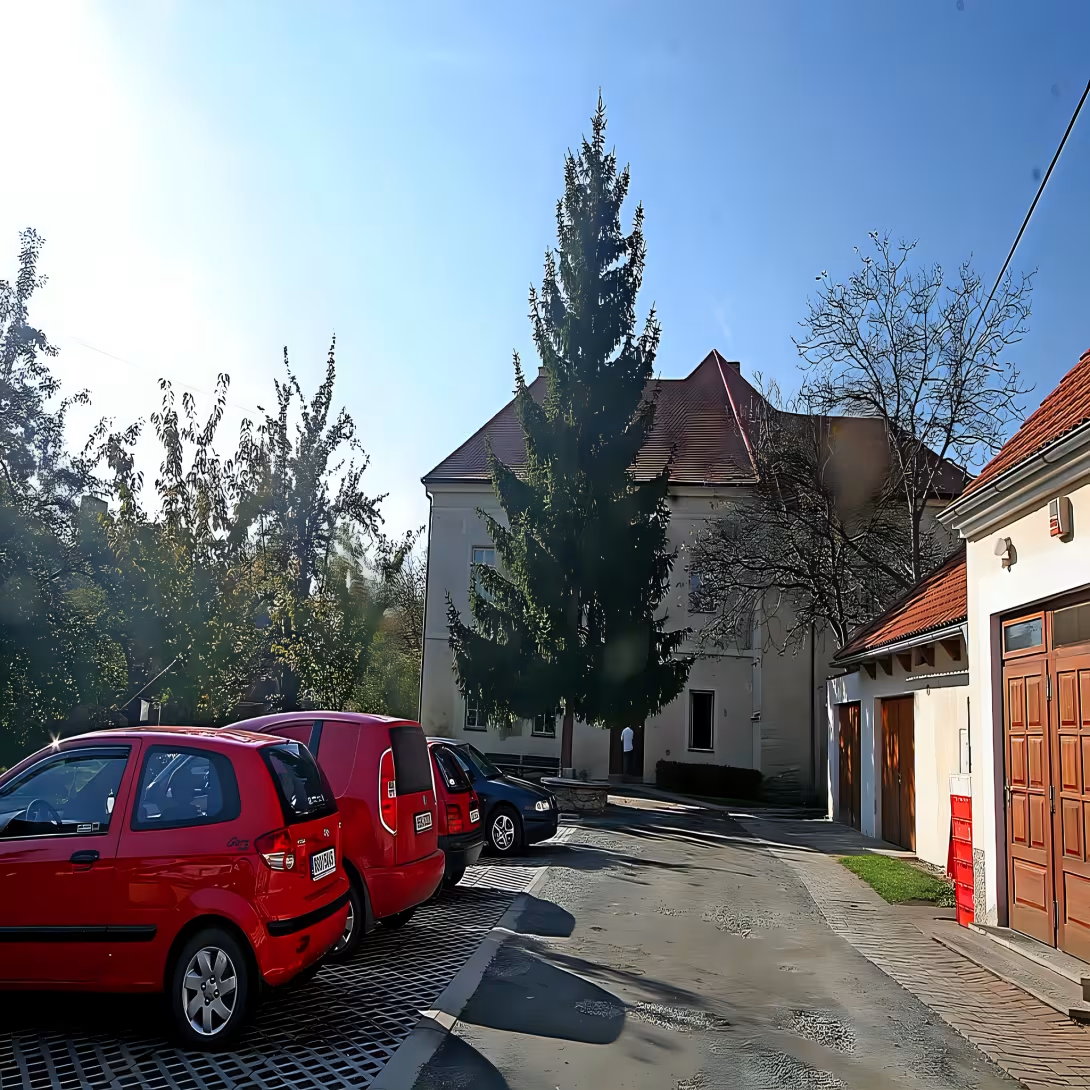
Zámek Sedlec, located near Kutná Hora in the town of Sedlec, stands as a remarkable testament to architectural evolution from medieval monastic life through early 19th-century classicism. Originally part of a Cistercian monastery founded in 1142, this site has undergone significant transformations over centuries, reflecting broader political and cultural shifts within Czech history. Recognized as a cultural monument since 1966, Zámek Sedlec highlights its historical significance.
The origins trace back to 1142 when the Cistercian monastery was established in Sedlec. Over time, it became an important religious center, with initial constructions completed by the second half of the 12th century. The monastery's history is marked by both growth and adversity; notably, it was destroyed and burned by Hussite forces in 1421. Despite this setback, reconstruction efforts began around 1454, leading to significant architectural developments throughout the centuries. By the late 17th century, a major transformation occurred when Jan Blažej Santini-Aichel completed the reconstruction of the conventual church dedicated to the Assumption of the Virgin Mary and St. John the Baptist in 1708.
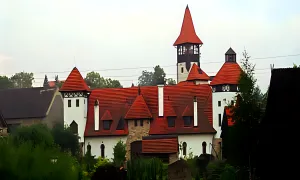
Architecturally, Zámek Sedlec showcases an evolution from Gothic through Baroque to Classicism. The original Cistercian structures were replaced by baroque buildings at the start of the 18th century, altering the medieval character of the site. In the early 19th century, the Schwarzenberg family transformed the former provost's building into a classicist chateau, which served administrative purposes until 1945. The main chateau structure is characterized by its four-winged layout with an irregular floor plan, reflecting architectural styles from the Gothic period to Classicism.
Ownership of Zámek Sedlec has seen dramatic changes over time. Initially part of the Cistercian order, it later came under the control of the Schwarzenberg family until 1945 when state administration took over. In a significant restitution event in 1993, Karel Schwarzenberg regained ownership, although no suitable use for the chateau has been found since then.
Today, Zámek Sedlec stands as an intriguing historical site with its main building secured by a metal fence to prevent unauthorized access. Despite some conservation efforts, such as roof repairs on the classicist structure, parts of the area have deteriorated over time. The site includes remnants of medieval structures and other historic buildings like the former brewery, which has been acquired for reconstruction.
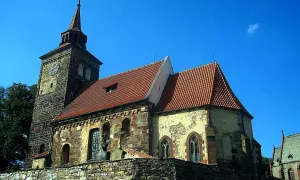
Visitors can explore not only the chateau itself but also nearby historical monuments that enrich its context. These include the Church of All Saints with its ossuary and Santini's Church of the Assumption of the Virgin Mary and St. John the Baptist. The site offers a unique glimpse into the layered history of Bohemia, from its medieval religious significance to its transformation through various architectural styles.
Zámek Sedlec is more than just an architectural relic; it is a window into the past that reflects centuries of cultural and historical evolution. Its preservation as a cultural monument underscores its importance in Czech heritage. Visitors are invited to explore this site, where history comes alive amidst the remnants of monastic life and classicist architecture.
Then and now
Drag the slider to compare how the landmark may have looked when it was built with the view today.
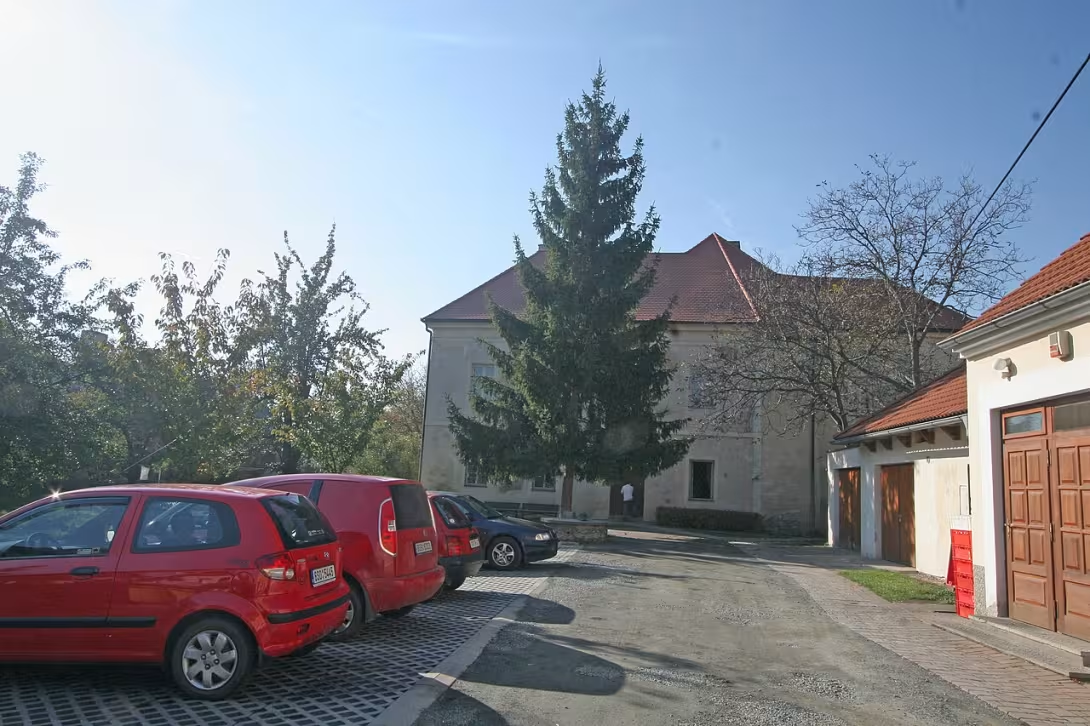

The historical appearance on the left is an AI-generated visualisation and serves as inspiration only.
Historical milestones
- 1142
- Založení cisterckého kláštera v Sedlci.
- 1421
- Klášter zničen a zapálen husity.
- 1454
- Počátek rekonstrukce kláštera.
- 1708
- Rekonstrukce konventuálního kostela Janem Blažejem Santini-Aichel.
- 1966
- Zámek uznán jako kulturní památka.
Architectural development
The site has seen architectural development from the Gothic period through to Classicism. The original Cistercian monastery was transformed into a classicist chateau in the early 19th century by the Schwarzenberg family, replacing earlier baroque structures.
Historical events
Cistercian monastery founded in 1142.
Monastery destroyed and burned by Hussite forces in 1421.
Significant reconstruction completed by Jan Blažej Santini-Aichel in 1708.
Owners
The estate was owned by the Schwarzenberg family until 1945, after which it was used by the state for administrative purposes. In 1993, Karel Schwarzenberg regained ownership through restitution, although no suitable use for the chateau has been found since then.
Points of interest
- The ossuary beneath the Church of All Saints is one of the most macabre yet fascinating aspects of Sedlec's history; it holds an estimated 40,000 skeletons artistically arranged, reflecting medieval attitudes towards death and remembrance.
- Jan Blažej Santini-Aichel, a prominent Baroque architect known for his unique style blending Gothic and Baroque elements, played a crucial role in the reconstruction of the conventual church at Sedlec, showcasing his distinctive architectural vision in 1708.
- Despite its rich history, Zámek Sedlec has faced challenges with preservation; after Karel Schwarzenberg regained ownership in 1993, finding a sustainable use for the chateau remains an ongoing issue, leading to parts of it deteriorating over time.
- The transformation from a Cistercian monastery to a classicist chateau under the Schwarzenberg family illustrates the adaptability and changing functions of historical sites; this transition reflects broader socio-political changes in Czech history throughout the centuries.
- Zámek Sedlec's architectural evolution is marked by diverse styles, including Gothic, Baroque, and Classicism, making it a unique example of how buildings can encapsulate different eras and cultural influences within their structures.
Guide
This guide is narrated by a synthetic voice generated by artificial intelligence.
Show guide text
This text was created by artificial intelligence and has not been editorially reviewed. It may contain inaccuracies.
Welcome to the Sedlec Chateau, one of the most significant historical landmarks in the Czech Republic. You stand before an enormous complex towering over the town of Sedlec, near Kutná Hora. Around you are massive walls that encircle the courtyard and facade of the building. Welcome to a world where you have just stepped into the heart of the Middle Ages.
Let's move back in time and see how this complex developed from a medieval monastery to an elegant neoclassical chateau. Originally, it was part of a Cistercian monastery founded in 1421. Over the centuries, the complex underwent many changes reflecting significant events in Czech history. In 1421, the monastery was destroyed and burned by the Hussites, but reconstruction began as early as 1454. In 1708, the conventual church was reconstructed by Jan Blažej Santini-Aichel, known for his work on many other important buildings in Bohemia.
Notice how the architecture here evolved from the Middle Ages to neoclassicism. The chateau's facade is adorned in the spirit of neoclassical architecture, with smooth lines and symmetrical design solutions. Look up and see how the chateau roof unfolds beneath green trees and foliage. The atmosphere here is serene and closely connected to history.
Jan Blažej Santini-Aichel, one of the most significant Baroque architects, became a key figure in the life of Sedlec Chateau. His work on this complex is remarkable and reflects his exceptional talent. Welcome to a world where you have just stepped into the heart of Baroque.
Now let's focus on one of the most interesting parts of the chateau - the ossuary under the Church of All Saints. It is one of the most beautiful and macabre things you can see in the Czech Republic. The ossuary contains approximately 40,000 skeletons artistically arranged to reflect medieval attitudes towards death and remembrance. It's a fascinating and somewhat eerie glimpse into history.
In conclusion, I would like to invite you on another tour of Sedlec Chateau. It is a place that will captivate you and accompany you through the centuries. Allow me to guide you on this journey back in time.
Frequently asked questions
Can the monument be visited?
Some buildings of this kind are open for guided tours, others serve another purpose or are privately owned. We have not verified whether and when this monument is open – please ask the operator. According to the heritage register the structure is in poor condition – do not enter it and take care nearby.
What are the opening hours and admission?
We have not verified the opening hours or admission. Current information is published by the operator.
Where is the monument?
Location: Zámecká 16, Sedlec, Kutná Hora, Středočeský kraj. The map on this page shows the exact spot.
Why is the monument protected?
It is listed in the Central List of Cultural Monuments of the Czech Republic as a cultural monument (register no. 32487/2-1084).
Businesses nearby
Do you run a restaurant, accommodation, shop, museum, rental, wellness or other visitor service near this monument? Show yourself directly to the people heading to it — this is how they will see you in the app and on the web:
Nearby
Nearby monuments include the Church of All Saints with its ossuary and Santini's Church of the Assumption of the Virgin Mary and St. John the Baptist, both adding to the historical richness of the area.
Accommodation nearby
Trips and activities nearby
Guided tours, tickets and activities nearby from GetYourGuide
Affiliate link: if you buy from the partner, we may receive a commission. The price for you does not change.
Search tours and activities →Themed route
This 3.5-hour walking tour takes you through the historic town of Sedlec, a UNESCO World Heritage Site. The tour starts at the Church of All Saints with its unique ossuary, a must-see attraction featuring thousands of human skeletons arranged in intricate designs. The church's history dates back to the 12th century, and its ossuary is a testament to the town's rich history.
From the church, head to the nearby Santini's Church of the Assumption of the Virgin Mary and St. John the Baptist, a stunning example of Baroque architecture designed by architect Jan Santini-Aichel. The church's unique blend of Gothic and Baroque styles makes it a standout feature of the town.
The tour then takes you to the Zámek Sedlec, the main attraction of the tour. This stunning Renaissance chateau has a long and complex history, with various owners and renovations over the centuries. The chateau's architecture is a mix of Gothic, Renaissance, and Baroque styles, making it a fascinating sight to behold.
The chateau's beautiful gardens and courtyards offer a peaceful oasis in the heart of the town. Take a stroll through the gardens and explore the chateau's nooks and crannies, and be sure to visit the chateau's impressive chapel and museum.
Seasonal recommendations
Jaro
Specific: In the spring, Sedlec Chateau is surrounded by blooming trees and flowers, creating a pleasant atmosphere. Sunny weather allows visitors to stroll around the courtyards and grounds. The ambiance is calm and serene.
Practical Tips: The best time to visit Sedlec Chateau in the spring is from April to May when the weather is mild and not too hot. We recommend bringing sunglasses and comfortable shoes for walking on the grounds. Visitors should be prepared for possible rain and temperature fluctuations.
Léto
Specific: In summer, Sedlec Chateau is full of life and energy. Visitors can enjoy sunny weather and stroll around the courtyards and grounds. The atmosphere is relaxed and laid-back.
Practical Tips: The best time to visit Sedlec Chateau in the summer is from June to August when the weather is sunny and warm. We recommend visiting earlier before crowds gather, so visitors can explore the grounds without issues. Visitors should be prepared for possible heat and sun exposure.
Podzim
Specific: In autumn, Sedlec Chateau is surrounded by beautiful colors and scents of falling leaves. The atmosphere is calm and soothing.
Practical Tips: The best time to visit Sedlec Chateau in the autumn is from September to October when the weather is mild and not too cold. We recommend bringing warm clothing and comfortable shoes for walking on the grounds. Visitors should be prepared for possible rain and temperature fluctuations.
Zima
Specific: In winter, Sedlec Chateau is quiet and peaceful. Visitors can enjoy the calm weather and stroll around the courtyards and grounds.
Practical Tips: The best time to visit Sedlec Chateau in the winter is from December to March when the weather is cold and there are fewer visitors. We recommend bringing warm clothing and shoes with good grip for walking on wet surfaces.
Visualizations and artistic views


The visualisations are generated by artificial intelligence and serve as inspiration.
Photos from the area
Real photos taken near the monument

Zdroj a licence jsou uvedeny u každého snímku.
Tips from visitors
No tips yet. Be the first!
Log in and add your tip.
Sources and literature
Photos: Petr1888 / CC BY-SA 3.0, rozlišení zvýšeno umělou inteligencí — Wikimedia Commons. The author and licence also appear when you hover over the image.
Faktickým podkladem tohoto textu byl článek na Wikipedii, jehož autory jsou přispěvatelé Wikipedie. Článek je dostupný pod licencí CC BY-SA 4.0.
Location on the map
Příběhy a pověsti
Legendy, pověsti a příběhy spjaté s touto památkou
Fotografie návštěvníků
Zatím žádné fotografie. Buďte první, kdo přidá fotografii z návštěvy!
Log in a přidejte svou fotografii nebo hodnoťte.
Za ověřenou návštěvu v aplikaci získáte víc bodů — poznáme podle GPS, že jste na místě.
Reviews and comments