






zámek Třebíč Chateau
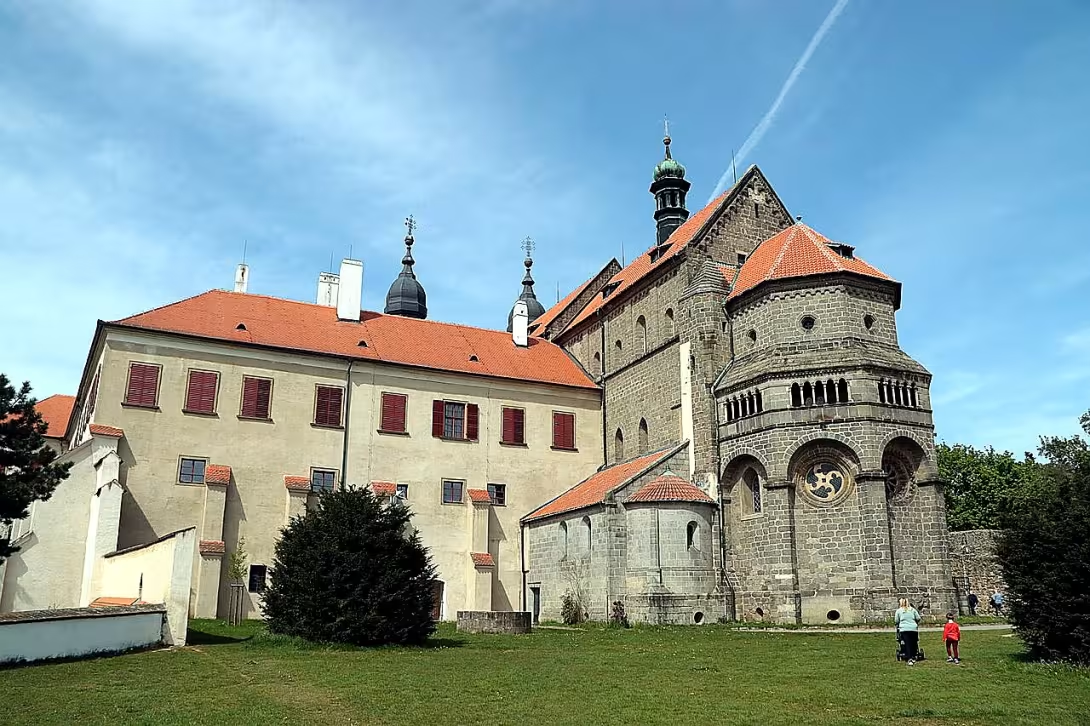
Zámek Třebíč, originally established as a Benedictine monastery in 1101 by Litold Znojemský and Oldřich Brněnský, stands today as a national cultural monument located in Podklášteří. This site has undergone significant transformations over the centuries, evolving from its monastic origins into a fortified Renaissance castle during the 16th century. Its historical significance is further underscored by its inclusion on the UNESCO World Heritage List in 2018, alongside other notable sites in Třebíč such as the Jewish Quarter, Basilica of St. Procopius, and the Jewish Cemetery.
The origins of Zámek Třebíč date back to a period when Bohemia was under the rule of the Přemyslid dynasty, marked by efforts towards consolidation and Christianization. The monastery's foundation at a strategic crossroads of trade routes enhanced its importance in medieval Europe. Initially serving as an educational center with a monastic school offering subjects like grammar, logic, and music, it played a crucial role in the region's intellectual life during the 13th and 14th centuries.
Architecturally, the original 12th-century monastery no longer exists; however, its influence is evident in the later Renaissance castle structure. By the early 13th century, a three-winged complex with a church was constructed, remnants of which are preserved in the cellar and ground floor walls of the current castle. In the mid-15th century, under opat Trojan, the site was fortified into a robust stronghold featuring defensive walls, towers, and gates.
Ownership of Zámek Třebíč has changed hands multiple times throughout its history. After serving as a monastery until the 16th century, it became part of the Třebíč estate. In 1472, Matyáš Korvín transferred the monastery to the Lords of Šternberk as compensation for damages incurred during his service. The site later transitioned into secular hands and underwent significant transformations, including its conversion into a Renaissance castle by various owners such as the Osovští z Doubravice.
Key historical events at Zámek Třebíč include its siege and occupation by Hungarian forces in 1468, which resulted in substantial damage. Despite these challenges, the site continued to evolve, reflecting the turbulent history of medieval Bohemia through its architectural adaptations and changing ownerships.
Today, Zámek Třebíč serves as the home of Muzea Vysočiny Třebíč, following extensive renovations completed between 2011 and 2012. These efforts included the reconstruction of the castle's interiors, zámecký park, and other significant features such as a baroque bridge and fountain. The museum now hosts various exhibitions, including "Svět neživé přírody" (The World of Inanimate Nature) and "Valdštejnové na Třebíči" (The Waldsteins in Třebíč), offering visitors a glimpse into the region's rich history.
Zámek Třebíč is not only a testament to the architectural and historical transformations over centuries but also a cultural hub that continues to educate and inspire. Its inclusion on the UNESCO World Heritage List highlights its global significance, making it a must-visit destination for those interested in exploring the depths of Bohemian history and heritage.
Then and now
Drag the slider to compare how the landmark may have looked when it was built with the view today.
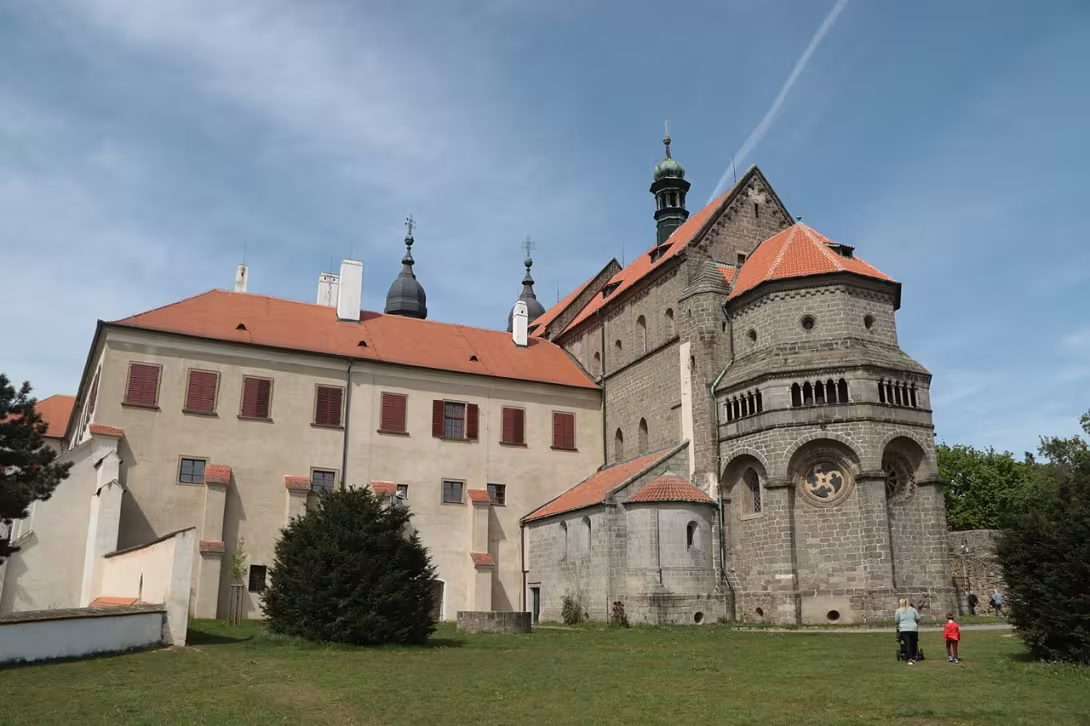
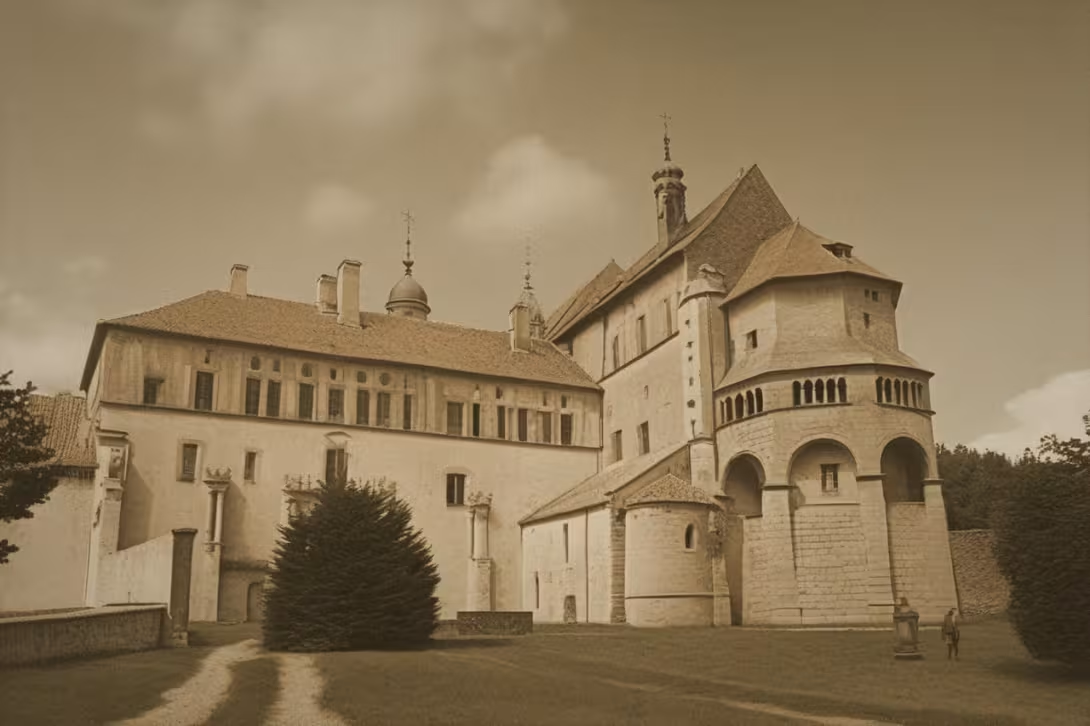
The historical appearance on the left is an AI-generated visualisation and serves as inspiration only.
Historical milestones
- 1101
- Foundation of the Benedictine monastery by Litold Znojemský and Oldřich Brněnský.
- 1468
- Siege and occupation by Hungarian forces, leading to significant damage.
Architectural development
The original 12th-century Benedictine monastery no longer exists, but its foundations influenced the later Renaissance castle structure. By the early 13th century, a three-winged complex with a church was constructed, remnants of which are preserved in the cellar and ground floor walls of the current castle. In the mid-15th century, opat Trojan fortified it into a robust stronghold featuring defensive walls, towers, and gates.
Historical events
Foundation as a Benedictine monastery in 1101.
Transformation into a fortified castle in the mid-15th century under opat Trojan.
Siege by Hungarian forces and subsequent occupation from May to June 1468.
Owners
Benedictine Monastery (1101-16th century)
Třebíč Estate Owners (post-16th century)
Matyáš Korvín to Lords of Šternberk (1472-1479)
Západomoravské muzeum and later Muzea Vysočiny Třebíč (since 1957)
Points of interest
- The monastery at Zámek Třebíč was originally founded by two brothers, Litold Znojemský and Oldřich Brněnský, who were instrumental in the Christianization efforts during the Přemyslid dynasty's rule. - Despite its destruction over time, remnants of the original 12th-century monastery can still be found in the cellar and ground floor walls of the current Renaissance castle structure. - In a notable historical event, Zámek Třebíč was besieged and occupied by Hungarian forces in 1468, leading to significant damage that required later fortifications under opat Trojan. - The site's ownership changed significantly over time; notably, Matyáš Korvín transferred the monastery to the Lords of Šternberk as compensation for damages incurred during his service. - After its transformation into a Renaissance castle, Zámek Třebíč became part of the Třebíč estate and underwent ownership changes involving families such as the Osovští z Doubravice.
Guide
This guide is narrated by a synthetic voice generated by artificial intelligence.
Show guide text
This text was created by artificial intelligence and has not been editorially reviewed. It may contain inaccuracies.
Welcome to Třebíč Castle, one of the most significant historical landmarks in this region. You stand before a national cultural monument with a rich history dating back to 1101 when the Benedictine monastery was founded by Litold Znojemský and Oldřich Brněnský. Let's step into the past and discover how this building has transformed over the centuries.
Let's move to the 12th century, when the monastery served as an important educational and religious center. At that time, it housed extensive buildings for accommodating monks, schools, and churches. The monastery was also a center of Christian mission in this area, with its founders, Litold Znojemský and Oldřich Brněnský, playing key roles in the process of Christianization during the reign of the Přemyslids.
Now, take notice of Třebíč Castle's architecture. The building before you is the result of renovations that took place in the 16th century. It has lost its original form but still retains part of its historical character. Notice how the building reflects on the surface of the Jihlava River nearby. The atmosphere here is calm and serene, as if time itself has stopped.
One key story associated with this place is the fate of the Benedictine monastery. After 1468, when the monastery was occupied by Hungarian troops, it suffered significant damage. Although some parts of the building were restored, its original form could never be fully recovered.
An interesting fact is that despite its destruction, remnants of the original 12th-century monastery remain with us. Whenever you stop here, you can notice traces of the past still present. Take a look at the facade of the building and observe how different architectural elements are combined.
Třebíč Castle is a place that invites further exploration. It's where you can immerse yourself in history and bask in the atmosphere of bygone times. Allow yourself to explore other parts of the building and uncover its mysteries.
Tips for visitors
The best time to visit Zámek Třebíč is during the late spring or early fall, when the weather is pleasant and the crowds are smaller compared to peak summer months. These seasons offer a comfortable climate for exploring both the castle grounds and nearby UNESCO sites like the Jewish Quarter and Basilica of St. Procopius. Additionally, visiting in these periods allows you to enjoy outdoor activities without the discomfort of extreme heat or cold.
Parking is available near Zámek Třebíč, but it's advisable to check for any restrictions or availability updates on the official website before your visit. Public transportation options are also accessible; however, specific bus or tram numbers should be verified through a local transport search tool closer to your travel date. This ensures you have the most current information regarding routes and schedules.
When visiting Zámek Třebíč, it's recommended to bring comfortable walking shoes as there is quite a bit of ground to cover within the castle grounds and surrounding areas. A hat or umbrella might be useful depending on the weather forecast. Additionally, carrying water and snacks can enhance your visit, especially if you plan to explore nearby attractions like the Jewish Cemetery.
For photography enthusiasts, Zámek Třebíč offers several picturesque spots, particularly during golden hour in the early morning or late afternoon when the light is soft and warm. The castle's architecture provides stunning backdrops, while the surrounding gardens can capture beautiful natural scenes. Be sure to check for any restrictions on photography within certain areas of the castle.
Nearby attractions within a 30-minute drive include the Jewish Quarter, Basilica of St. Procopius, and the Jewish Cemetery, all part of the UNESCO World Heritage site in Třebíč. These sites offer rich historical insights and are perfect for extending your visit beyond the castle itself. Exploring these areas provides a deeper understanding of the region's cultural heritage.
Businesses nearby
Do you run a restaurant, accommodation, shop, museum, rental, wellness or other visitor service near this monument? Show yourself directly to the people heading to it — this is how they will see you in the app and on the web:
Nearby
Zámek Třebíč is surrounded by significant historical sites including the Jewish Quarter, Basilica of St. Procopius, and the Jewish Cemetery, all part of the UNESCO World Heritage listing.
Accommodation nearby
Themed route
Třebíč Historical Walk
1. Jewish Quarter: Explore the narrow streets of the Jewish Quarter, a UNESCO World Heritage Site, and get a glimpse into the history of the Jewish community in Třebíč. 2. Basilica of St. Procopius: Visit this stunning basilica, a masterpiece of Romanesque architecture, and admire its intricate stone carvings and beautiful stained-glass windows. 3. Jewish Cemetery: Wander through the peaceful Jewish Cemetery, a poignant reminder of the community's history and culture. 4. Zámek Třebíč: Visit the Třebíč Castle, a stunning example of Gothic architecture, and explore its beautiful courtyards, towers, and exhibitions. 5. St. Procopius' Church: End your walk at the charming St. Procopius' Church, a beautiful example of Romanesque architecture with a unique blend of Gothic and Baroque elements.
Seasonal recommendations
Jaro
In the spring season, Třebíč Castle is surrounded by beautiful nature awakening from its winter slumber. The forests are covered with blooming trees and flowers, creating a pleasant atmosphere. The lighting is natural, with sunny rays illuminating the castle's façade and parks full of life. We recommend visiting the castle in the spring to enjoy nature at its peak.
Practical Tips: We suggest visiting Třebíč Castle in the spring from April to May when it is open from 9:00 AM to 6:00 PM. It's advisable to wear appropriate clothing for a walk in nature, as the forests are still somewhat damp.
Léto
In the summer season, Třebíč Castle is full of life and energy. The forests are filled with blooming flowers and trees at their peak. Parks are bustling with people enjoying the sunshine and nature. The lighting is natural, with sunlight illuminating the castle's façade and parks full of life. We recommend visiting the castle in summer to enjoy nature at its peak.
Practical Tips: We suggest visiting Třebíč Castle in the summer earlier to avoid larger crowds and long lines. It’s also a good idea to bring sunglasses and an umbrella for sun protection.
Podzim
In the autumn season, Třebíč Castle is surrounded by beautiful nature preparing to sleep. The forests are covered with yellow, red, and golden hues, creating a pleasant atmosphere. The lighting is natural, with sunny rays illuminating the castle's façade and parks full of life. We recommend visiting the castle in autumn to enjoy nature at its peak.
Practical Tips: We suggest visiting Třebíč Castle in the autumn from September to October when it is open from 9:00 AM to 5:00 PM. It's advisable to wear appropriate clothing for a walk in nature, as the forests are still somewhat damp.
Zima
In the winter season, Třebíč Castle is surrounded by calm and quiet nature. The forests are covered with snow and ice, creating a pleasant atmosphere. The lighting is artificial, illuminating the castle's façade while parks remain serene. We recommend visiting the castle in winter to enjoy the peace and tranquility of nature.
Practical Tips: We suggest visiting Třebíč Castle in the winter from December to February when it is open from 9:00 AM to 4:00 PM. It's advisable to wear warm clothing and boots for protection against cold and frost.
Visualizations and artistic views


The visualisations are generated by artificial intelligence and serve as inspiration.
Photos from the area
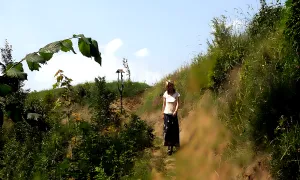
Real photos taken near the monument


Zdroj a licence jsou uvedeny u každého snímku.
Tips from visitors
No tips yet. Be the first!
Log in and add your tip.
Sources and literature
Photos: Jiří Sedláček / CC BY-SA 4.0 — Wikimedia Commons. The author and licence also appear when you hover over the image.
Faktickým podkladem tohoto textu byl článek na Wikipedii, jehož autory jsou přispěvatelé Wikipedie. Článek je dostupný pod licencí CC BY-SA 4.0.
Location on the map



Příběhy a pověsti
Legendy, pověsti a příběhy spjaté s touto památkou
Fotografie návštěvníků
Zatím žádné fotografie. Buďte první, kdo přidá fotografii z návštěvy!
Log in a přidejte svou fotografii nebo hodnoťte.
Za ověřenou návštěvu v aplikaci získáte víc bodů — poznáme podle GPS, že jste na místě.
Reviews and comments