



zámek Újezd Svatého Kříže Chateau
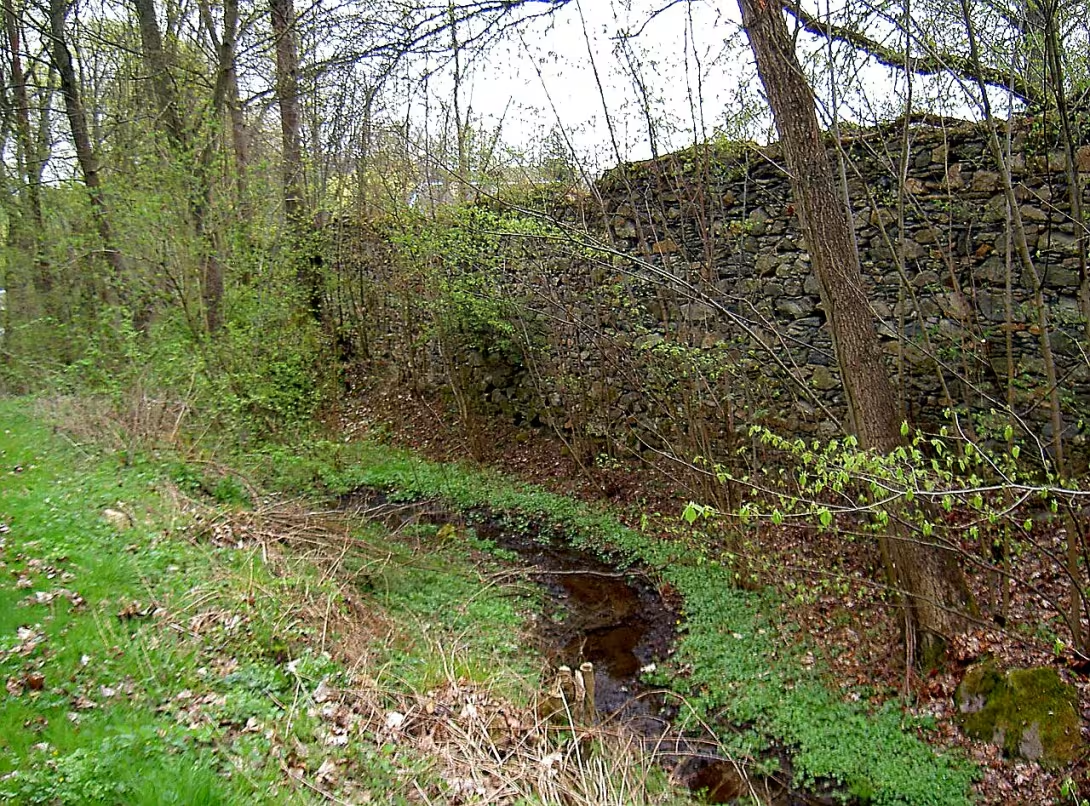
Objekt se nedochoval — na místě dnes nestojí. Následující text popisuje jeho historii, ne současnou návštěvu.
Zámek Újezd Svatého Kříže is a historical site in the village of Újezd Svatého Kříže near Bělá nad Radbuzou, Plzeňský kraj. Originally established as a fortress at the turn of the 14th and 15th centuries, it was transformed into a Baroque castle between 1683 and 1686 under Kašpar Zdeňek Kaplíř ze Sulevic. The site is notable for its rich history, architectural evolution from medieval fortress to Baroque elegance, and cultural significance marked by an extensive library and artistic patronage.
The origins of Zámek Újezd Svatého Kříže trace back to the late medieval period when it was established as a fortress. By 1480, the Bavarian Lamingen family from Albenreuth acquired the property. The estate saw several transitions in ownership within the Lamingen lineage until Volf Vilém Lamingen inherited it in 1630. Following his death in 1660, his son Volf Maxmilián sold the estate to Kašpar Zdeňek Kaplíř ze Sulevic, who initiated its transformation into a Baroque castle.
Architecturally, the site transitioned from a medieval fortress to a Baroque-style castle under Kašpar Zdeňek Kaplíř ze Sulevic between 1683 and 1686. This period marked significant cultural and architectural developments in Bohemia as part of the Habsburg Monarchy, influenced by broader European trends. The transformation included establishing a library with over 1,500 volumes and creating an adjoining park, reflecting the era's emphasis on art and knowledge.
Ownership of Zámek Újezd Svatého Kříže changed hands several times through notable families. After Kašpar Zdeňek Kaplíř ze Sulevic's death in 1686, his wife Anna Tereza Cukrová z Tamfeldu inherited the property. The estate remained with the Cukrové family until 1796 when it was passed to the Kocové z Dobrše family, who maintained ownership until 1945. During their tenure, Kristián Koc z Dobrše hosted artists such as painter Josef Mánes at the castle.
Throughout its history, Zámek Újezd Svatého Kříže has been a site of cultural and intellectual activity. The extensive library established by the Cukrové family housed over 1,500 volumes, serving as a testament to the estate's commitment to knowledge and culture. Additionally, the park created around the castle added to its aesthetic and recreational appeal.
Today, Zámek Újezd Svatého Kříže no longer stands as it once did. After becoming property of the Border Guard post-1945, the castle was eventually demolished in 1978. Despite its absence, the site remains a point of historical interest due to its rich past and cultural contributions. Visitors can explore the area where the castle once stood, reflecting on its architectural evolution and the notable figures who shaped its history.
Zámek Újezd Svatého Kříže holds significant value as a testament to the cultural and architectural developments of its time. Its story offers insights into the lives of noble families and their influence on Bohemian society. While the physical structure is no longer present, the legacy of Zámek Újezd Svatého Kříže invites visitors to explore its historical context and appreciate its contributions to regional heritage.
Then and now
Drag the slider to compare how the landmark may have looked when it was built with the view today.
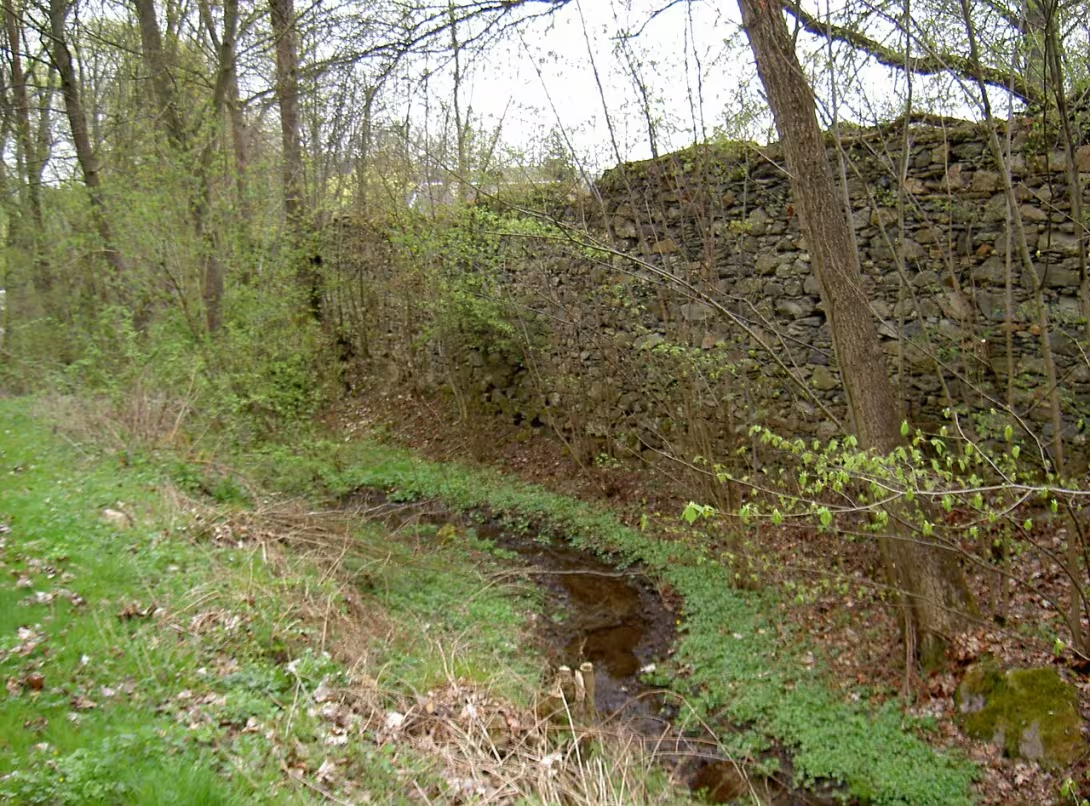

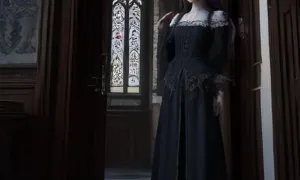
The historical appearance on the left is an AI-generated visualisation and serves as inspiration only.
Historical milestones
- 1480
- The fortress came into possession of the Bavarian Lamingen family from Albenreuth.
- 1602
- After Volf Jáchym Lamingen's death, his son Volf Bedřich inherited the estate.
- 1683
- Kašpar Zdeňek Kaplíř ze Sulevic purchased the estate and initiated its transformation into a Baroque castle.
- 1686
- Following Kašpar's death, his wife Anna Tereza Cukrová z Tamfeldu inherited the property.
Architectural development
The site began as a medieval fortress and was later converted into a Baroque-style castle by Kašpar Zdeňek Kaplíř ze Sulevic between 1683 and 1686. The transformation included the establishment of a library with over 1,500 volumes and the creation of an adjoining park.
Historical events
The original fortress was established at the turn of the 14th and 15th centuries.
In 1683, Kašpar Zdeňek Kaplíř ze Sulevic transformed the fortress into a Baroque castle.
Post-1945, the castle became property of the Border Guard before its demolition in 1978.
Owners
Lamingen family (1480s)
Volf Jáchym Lamingen (until 1602)
Volf Bedřich Lamingen (1602-1630)
Volf Vilém Lamingen (1630-1660)
Volf Maxmilián Lamingen (1660-1683)
Kašpar Zdeňek Kaplíř ze Sulevic (1683-1686)
Cukrové z Tamfeldu family (1686-1796)
Kocové z Dobrše family (1796-1945)
Pohraniční stráž (Border Guard) post-1945
Points of interest
- The transformation of Zámek Újezd Svatého Kříže from a medieval fortress to a Baroque castle was completed in just three years, between 1683 and 1686, showcasing the rapid architectural evolution during Kašpar Zdeňek Kaplíř ze Sulevic's ownership.
- The library at Zámek Újezd Svatého Kříže held over 1,500 volumes, reflecting the estate’s commitment to intellectual pursuits and cultural enrichment, a rarity for such estates in that era.
- Despite its eventual demolition in 1978, the castle was briefly used as property by the Border Guard after World War II, illustrating its strategic importance even into modern times.
- The park created around Zámek Újezd Svatého Kříže during its Baroque transformation not only served aesthetic purposes but also highlighted the era's emphasis on combining art with nature for recreational enjoyment.
- Notably, Kristián Koc z Dobrše hosted the renowned painter Josef Mánes at the castle, indicating the site’s role as a cultural hub and patronage center within Bohemian society.
Guide
This guide is narrated by a synthetic voice generated by artificial intelligence.
Show guide text
This text was created by artificial intelligence and has not been editorially reviewed. It may contain inaccuracies.
The castle in Újezd Svatého Kříže no longer exists. It stood in the village near Bělá nad Radbuzou and its history dates back to the turn of the 14th and 15th centuries, when the original fortress was built there.
In 1480, the fortress was acquired by the Bavarian Lamingens from Albenreuth. At the end of the 16th century, it was owned by Wolf Joachim Lamingen and his cousins Wolf Christopher and Wolf Charles. They bought the local community out of its feudal obligations. When Wolf Joachim died in 1602, his son Wolf Frederick Lamingen took over the estate. However, after the Battle of White Mountain, it was confiscated from him.
The family returned to Újezd in 1630. It was then purchased by Wolf William Lamingen, who obtained the title of Baron in 1623. After his death in 1660, his son Wolf Maximilian inherited the estate. He sold it in 1683 to Caspar Zdeněk Kaplíř of Sulevice.
The new owner had the old fortress rebuilt. Between 1683 and 1686, a Baroque castle was built on its site. However, Caspar Zdeněk Kaplíř died in 1686 and the estate passed to his wife Anna Theresa Cukrová of Tamfeldt.
The Cukrové of Tamfeldt held the estate until 1796. They established a library in the castle that contained approximately 1500 volumes, and built a park around the castle. After them, the estate was inherited by the Kocs of Dobrše, who also owned the hunting castle Valdorf. The estate remained with their family until 1945. One of the owners was Christian Koc of Dobrše. He hosted a number of artists at the castle, including painter Joseph Mánes.
After 1945, the castle was taken over by the Border Guard, and during their occupation it was demolished. When the soldiers left, the building continued to deteriorate. In 1978, the castle was torn down.
Businesses nearby
Do you run a restaurant, accommodation, shop, museum, rental, wellness or other visitor service near this monument? Show yourself directly to the people heading to it — this is how they will see you in the app and on the web:
Visualizations and artistic views


The visualisations are generated by artificial intelligence and serve as inspiration.
Photos from the area
Real photos taken near the monument


Zdroj a licence jsou uvedeny u každého snímku.
Tips from visitors
No tips yet. Be the first!
Log in and add your tip.
Sources and literature
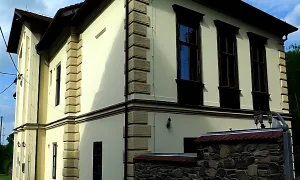
Photos: Allexkoch / CC BY-SA 3.0 — Wikimedia Commons. The author and licence also appear when you hover over the image.
Faktickým podkladem tohoto textu byl článek na Wikipedii, jehož autory jsou přispěvatelé Wikipedie. Článek je dostupný pod licencí CC BY-SA 4.0.
Location on the map
More monuments – Újezd Svatého Kříže
Show all in the municipality



Příběhy a pověsti
Legendy, pověsti a příběhy spjaté s touto památkou
Fotografie návštěvníků
Zatím žádné fotografie. Buďte první, kdo přidá fotografii z návštěvy!
Log in a přidejte svou fotografii nebo hodnoťte.
Za ověřenou návštěvu v aplikaci získáte víc bodů — poznáme podle GPS, že jste na místě.
Reviews and comments