






Zámek Zduchovice Chateau
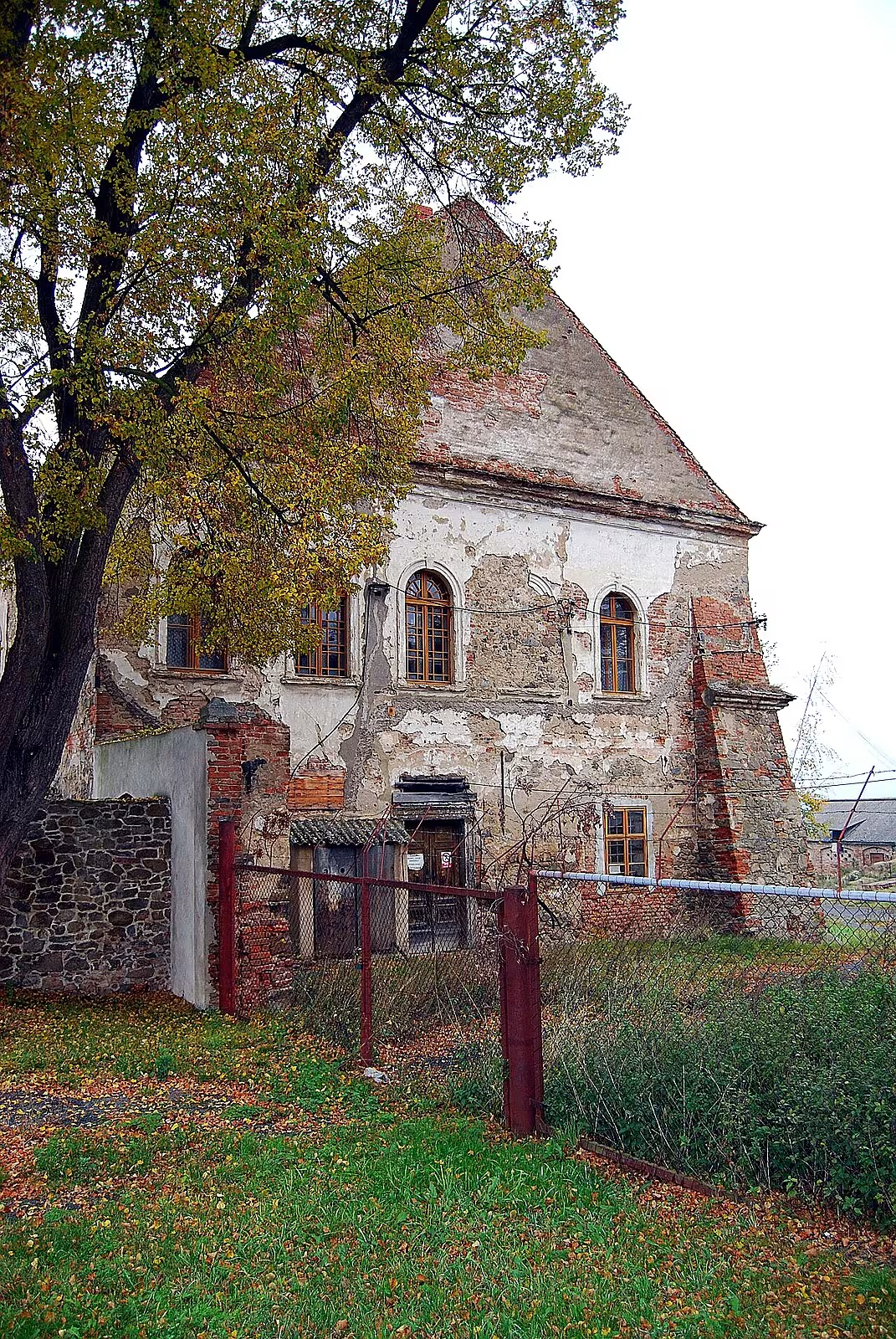
Zámek Zduchovice is a Baroque building located in the same-name village in the district of Příbram in the Central Bohemian Region. The building was created by the reconstruction of the original Renaissance fortress and since 1958 it has been protected as a cultural monument.
The original Renaissance fortress was built in the 16th century by Vojkovští z Milhostic. In the second half of the 17th century it was rebuilt into a Baroque chateau. In 1682 Jan František z Kaisersteinu replaced Zduchovice with Matej Leopold from Rosenfeld with Olešná. Matej Leopold died shortly afterwards and in 1686 he referred the residence to the Strahov monastery.
The architectural chateau forms the core of the complex including the farm yard, park and the fenced wall with gates. The building itself is massive, single storey and underlaid; above it stands the saddle roof. Important building elements include the chapel of St. Norbert, which was built to the chateau in 1730-1740.
After the period of monastery administration the chateau served various tenants. Until 1885, Nebeský z Příbrami operated here, followed by Jan Novák. Its activities, lasting until 1908, brought a significant boom and foundation of the park. After Novak's death, he took over the castle František Jiroutek on the way through the carriage from Dobří. After the land reform in 1926, the chateau and the rest of the court Karel Havlík bought. A significant break occurred in 1948 when the building was nationalized and the local national committee built a cultural house. After 1989, the chateau was returned to the original owners, but at that time it was in bad condition.
The chateau has become a film scene in the past. In 2018 there was a film * Summer with a gentleman * with Jaromír Hanzlik in the lead.
The chateau is currently part of the Zduchovice Resort and can be used for various occasions, for example for weddings. The historical development from the Renaissance fortress to the Baroque chateau makes this building an interesting goal for people interested in architecture and history of the region.
Then and now
Drag the slider to compare how the landmark may have looked when it was built with the view today.
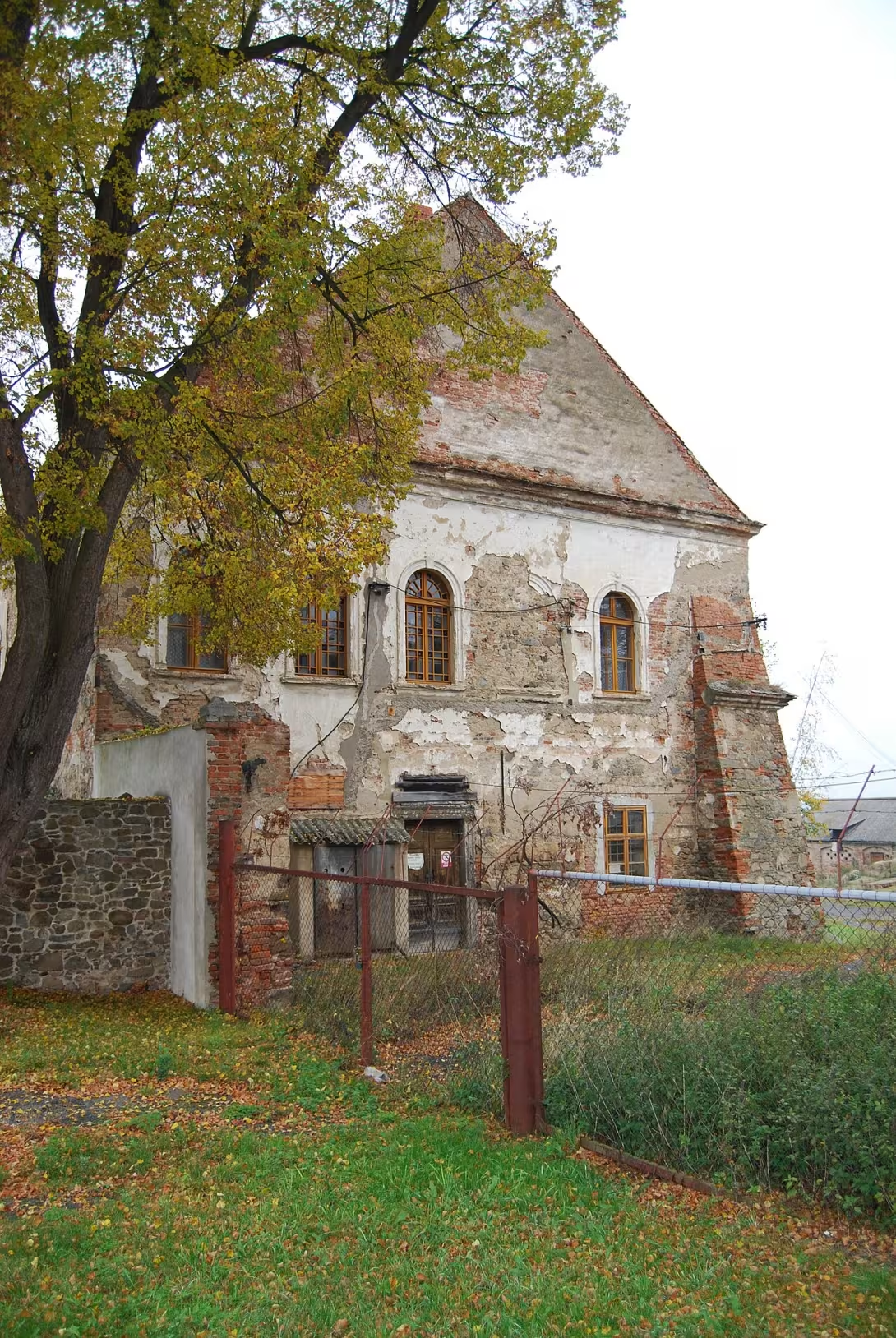
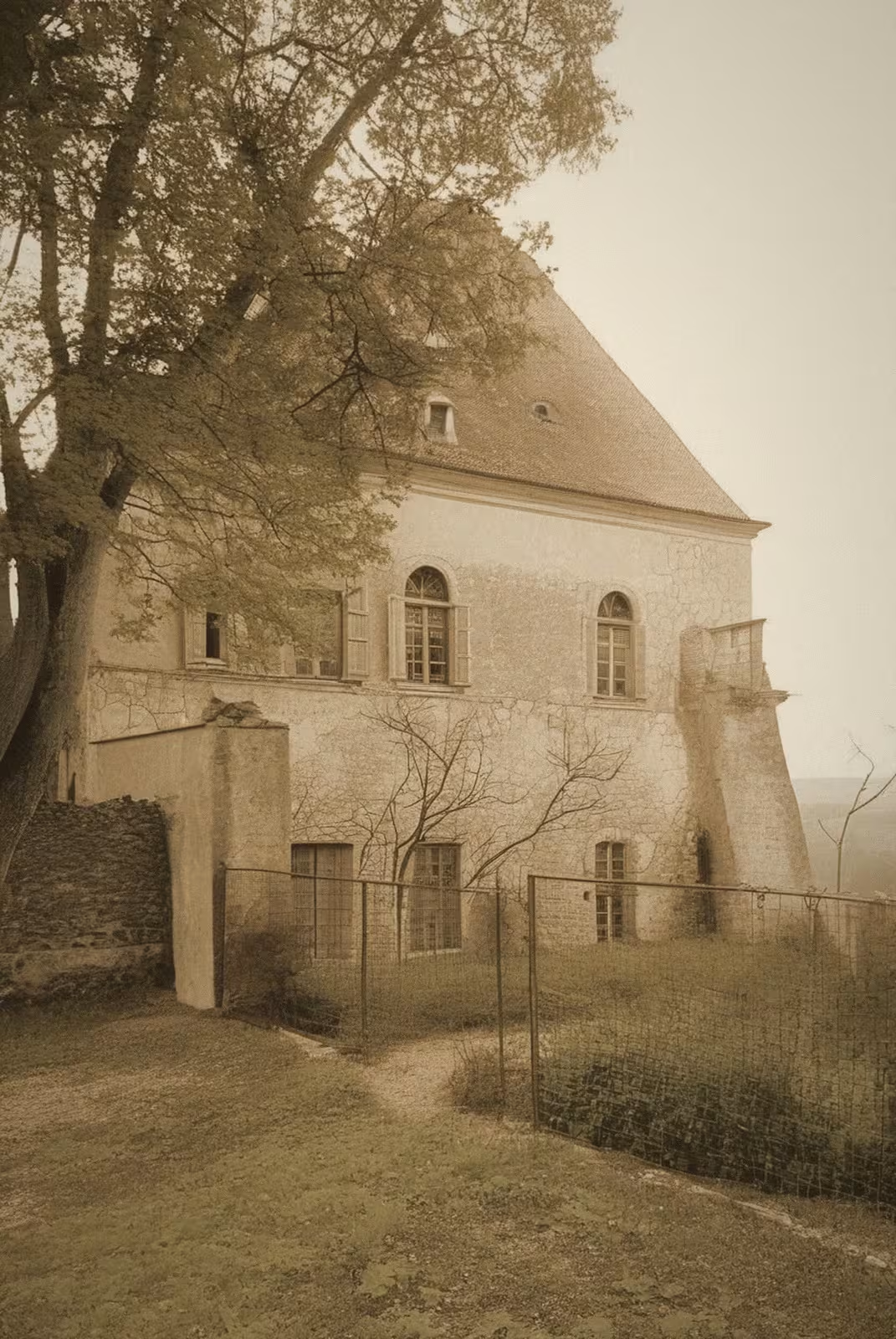
The historical appearance on the left is an AI-generated visualisation and serves as inspiration only.
Historical milestones
- 1550
- Renaissance fortress built by Vojkovsky of Milhostc
- 1675
- Reconstruction of Renaissance fortress to Baroque chateau
- 1682
- Exchanges Zduchovic between Jan František and Matej Leopold
- 1686
- Matej Leopold bequeathed the chateau to Strahov Monastery
- 1735
- The chapel of St. Norbert was introduced
- 1948
- Chateau nationalized and converted into a cultural house
Architectural development
The original Renaissance fortress was converted into a Baroque chateau in the second half of the 17th century. In 1730-1740 the chapel of St. Norbert was added to it, which enriched the architectural character of the complex.
Points of interest
- The building was created by reconstruction of the original Renaissance fortress and since 1958 it has been protected as a cultural monument. - The original Renaissance fortress was built in the 16th century by Vojkovští z Milhostic. - Important building elements include the chapel of St. Norbert, which was built to the chateau in 1730-1740. - Jan Novák's work until 1908 brought the chateau a significant boom and foundation of the park. - In 1948, the building was nationalized and the local national committee built a cultural house.
Guide
Show guide text
This text was created by artificial intelligence and has not been editorially reviewed. It may contain inaccuracies.
Welcome to the quiet and peaceful environment of Zduchovice, where time seems to have slowed down its run. You are standing in front of the facade of Zduchovice Chateau, a building that at first sight acts as a peaceful witness to many centuries of history. Look at each other in front of you, this Baroque building, which today serves as a cultural house, but whose roots go deep into the past. The atmosphere here is specific, calm, without the rush of big cities, and it will allow you to better perceive the details and the story of this place. The chateau is erected in a place where the Renaissance fortress once stood, and even though its appearance changed over the years, it maintained its dignity and character. It has been protected as a cultural monument since 1958, which shows its importance for the Czech cultural heritage. Now that your headphones are on, let me show you the history and architectural elements surrounding you.
Let's move back a few steps in time to understand how this building came into being. At first there was no chateau, but a smaller Renaissance fortress. It was built in 1550 by the Vojkovsky family of Milhostc. It was a typical condition for the noble families of the time, who built their mansions in the countryside so they could manage their manor and have a safe haven at the same time. The fort performed both defence and residential functions. But the advent of the new century changed in pieces and the needs of the nobles. The Renaissance fort was no longer enough, and so a major reconstruction took place. In 1675, this old fort was converted into a Baroque chateau. This transformation meant the end of an era of rough defense walls and the arrival of an era of representation, elegance and comfort. The Baroque style, which was spread throughout Europe at that time, has also been promoted here, and the chateau has acquired a new, more festive character.
Now pay attention to the architectural elements you see before you. Even though the architects who implemented this reconstruction are now unknown, their work is still visible. The Baroque lock is characterized by symmetry and harmony, which is typical of this style. Take a look at the facade where simplicity and dignity combine. One of the most significant elements you should notice is the chapel of St. Norbert. This chapel was not part of the original fortress, but it was attached to the chateau later, namely between 1730 and 1740. Its existence shows that there was a strong spiritual component and that the chateau was not only a seat, but also a place of prayer and cult. The chapel of St. Norbert is an important building element, which enriches the overall appearance of the chateau and resembles its connection to the church.
The history of this place is closely linked to the fate of several important families and institutions. After the conversion to the Baroque chateau there was an exchange of ownership between Jan František and Matej Leopold in 1682. This event suggests that Zduchovice was a prized asset that was changing from hand to hand. In 1686, the history of the chateau turned to another important point when Matìj Leopold bequeathed the chateau to the Strahov monastery. This legacy had profound consequences for further development of the site. Strahovský klášter, known for its spiritual and cultural activities, became the new administrator and owner. During the following centuries the chateau served various purposes, including the management of monastery priests. This means that there were not only aristocrats, but also clerics, who managed the property here and often devoted themselves to cultural and educational activities. The chateau thus performed the role not only of the mansion but also of the center of community life at the time.
Among the personalities associated with this place, we find names that play an important role in local history. In addition to the Vojkovsky of Milhost, who founded the original fort, and Matìj Leopold, who bequeathed the chateau to the monastery, there are other names in history. Jan František z Kaisersteinu, Nebeský z Příbrami, Jan Novák, František Jiroutek and Karel Havlík are names written in the history of this estate. Each of them contributed to the face and fate of the chateau in a way. Although the details of their specific activities may be less known to the wider public today, their presence in history reminds us that this chateau was not an isolated island, but was part of a wider network of relations and events in the region and the country.
The interesting thing that can be intrigued is that the chateau has passed through several stages of ownership and modification, which has affected its appearance and function. After nationalization in 1948, there was a fundamental change. The chateau was converted into a cultural house. This transformation meant that the chateau stopped serving as a private residence and became a place for public activities, performances and meetings. After 1989, when political changes occurred in the country, the chateau was returned to its original owners, the Strahov monastery. This return to original ownership is an important moment in the history of the monument, which symbolizes the restoration of historical ties and cultural heritage.
Today, when you stand in front of this chateau, you have the ability to perceive the atmosphere of a place that has experienced so many changes. The Baroque facade, the chapel of St. Norbert and the general sense of peace and dignity are the consequences of centuries of history. Even if the architects are unknown, their work is still visible and impressive. Zámek Zduchovice is not only a building but a story that has been written since 1550, when Vojkovští z Milhostic built the first fortress, to the present time, when it is protected as a cultural monument.
An invitation to explore again is to take your time and look around the chateau. Although we can't look inside now because the chateau serves as a cultural house and access can be limited, you can enjoy the atmosphere outside. Take a look at the facade details, consider how St. Norbert's Chapel affects the overall appearance of the building, and think about the people who lived and worked here. Every stone, every window has a story, even though we don't know it completely today.
In conclusion, I want to thank you for taking the time to put on your headphones so you can hear this story. I hope you have gained a new view of the chateau of Zduchovice and that you have realised its value as cultural monuments. Have a good time and I look forward to meeting you again in front of another historical monument. Let's say goodbye.
Tips for visitors
Best time to visit the chateau Zduchovice is a period of spring or autumn, when the weather is pleasant and the surroundings offer a quieter atmosphere to explore Baroque architecture.
The chateau can be reached by car and public transport. Please check the current connection and traffic possibilities in the search engine and check the parking information on site.
During the visit we recommend taking drinking water and comfortable shoes. The most suitable moments for photography are the sunset, when the light highlights the Baroque details of the building beautifully.
It is an interesting opportunity for families with children to know the history of the place where the Baroque chateau stands in the place of the former Renaissance fortress. There are no other monuments in the area, so we recommend focusing on the site itself.
Businesses nearby
Do you run a restaurant, accommodation, shop, museum, rental, wellness or other visitor service near this monument? Show yourself directly to the people heading to it — this is how they will see you in the app and on the web:
Nearby
XXXHistorical monuments (35)
- Chateau Zduchovice 0.0 km
- Fallen 2.9 km
- sv Jan Nepomucký 5.4 km
- Memorial T. G. Masaryk and A. Svehly 5.4 km
- Vach's spyster 5.5 km web
- Panna Maria 6.2 km
- _ 7.1 km
- ♪ ♪ 7.2 km web
- Thumb 7.2 km
- Memorial to victims of World War I 10.5 km
- Castle Chestnuts 10.9 km
- Castle Long Lhotax 11.4 km
- Slivický memorial (last shots of World War II) 11.8 km
- Tráz Jakub Krčín z Jelčan 12.2 km
- Pam. victims of war 12.4 km
- Small Kolo 12.6 km
- Skanzen High Chlumec 12.7 km + 420 733 371 546
- Large Col. 13.1 km
- _ 13.2 km
- High Chlumec 13.2 km
Restaurant and catering (53)
- U Švarcu 0.2 km
- U White rose 3.0 km
- U Vltav 3.0 km
- Guesthouse U Turkey 3.2 km
- Our bistro 3.6 km
- Guesthouse Kamejk 3.7 km Kamýk nad Vltavou 217 + 420 724 468 222 web
- U Rys 3.8 km
- _ 3.9 km
- Cinderella 4.3 km
- VS Petrol 5.0 km web
- Guesthouse Dresden 5.4 km Drazkov 2 + 420 603 482 538
- Restaurant near Kalicha 5.6 km web
- _ 5.6 km + 420605132233 web
- The Fools 6.0 km
- Na Sále 6.0 km + 420 776 448 765 web
- Coffee & pastries 6.8 km web
- Sporthotel Market 6.9 km
- U BobraxZ4ZX 7.0 km
- U Phase 7.0 km + 420 774 809 777 web
- Restaurant guesthouse near the pond 7.1 km
Accommodation (36)
- U Švarcu 0.2 km
- Mysk's Mill 2.6 km
- Penzion Cascade Solenice 2.8 km web
- Dolní Líšnice 3.0 km
- Penzion Paták 3.2 km + 420 222 539 539 web
- Guesthouse Kamejk 3.7 km Kamýk nad Vltavou 217 + 420 724 468 222 web
- Solenice 4.2 km
- Kemp Cinderella 4.4 km
- Autocamp Roviště 4.4 km + 420607561114 web
- Táboríště Lavičky, s.r.o. 6.9 km
- Kemp Market 7.0 km + 420773259690
- Chats Freak 7.2 km web
- Statek Vletice 8.0 km Vletice 11 + 420 607 102 674 web
- Hotel U JezeraxZ4ZX 9.8 km
- Hotel Orlik 10.9 km Vystrkov 179 + 420602359388 web
- Hotel Orlík - Villa 9 11.0 km web
- Hotel Orlík - Villa 11 11.0 km web
- Hotel Orlík - Vila 10 11.0 km web
- Hotel Orlík - Villa 12 11.1 km web
- Hotel Orlík - Garni 11.1 km web
▶ Rental and Sport (7)
- TJ Falcon Kamýk nad Vltavou 2.7 km
- Cinderella 4.2 km
- Statek Vletice 8.0 km
- JUMP- TANDEM Sky Centrum 12.1 km Drasov 222 + 420724002001 web
- Marina Orlík 13.3 km
- Centre 14.5 km
- Spartak 14.8 km
© Tourism and Nature (192)
- Lake 0.7 km
- Humna 1.2 km
- Na gazebo 1.2 km
- Over horseshoe 1.4 km
- Red willow 1.4 km
- Homole 1.5 km
- Perdlák 1.8 km
- Na waiting 1.8 km
- Bukovec 1.8 km
- Fuch 2.0 km
- Čepel 2.0 km
- Sosmi 2.1 km
- Trojan vrshe 2.3 km
- Smolní 2.5 km
- Chotin 2.6 km
- Čelák 2.7 km
- Varta 2.7 km
- U cross 2.9 km
- Ravonice 3.3 km
- Radodolka 3.5 km
Accommodation nearby
Themed route
1. Zámek Zduchovice (monument) - First stop for a tour of historical architecture and the appearance of the building. 2. Internal courtyard (area) - Walk through the central space that reveals the layout of the entire object. 3. Chateau exposition (interior) - A tour of the inner spaces with historical objects and cultural exhibitions. 4. Chateau park (area) - Final rest in a quiet green area right by the chateau.
Seasonal recommendations
Spring: In spring, Zduchovice Chateau is opened in a beautiful sunlight, which highlights ancient architectural elements. Flowers and trees are beginning to bloom, which brings a lively color to the chateau area. The atmosphere is full of hope and renewal, when nature awakens from its winter sleep. It is recommended to visit on the early days of Sunday or Wednesday to avoid large crowds of tourists enjoying a short spring day. It is advisable to come up with light clothes and perhaps even an umbrella, because the weather can sometimes be relentless.
Summer: During the summer season Zduchovice Chateau is a celebration of natural beauty and warm days. The sun fills the surroundings with intense light, which may be wonderful for photographing historical architectural details. Summer brings the largest crowd of visitors, therefore it is recommended to visit the chateau in the early afternoon or at the end of the week when there are fewer people. Don't forget to wear protective sunglasses and plenty of drinking, because temperatures can be high.
Autumn: In autumn, Zduchovice Chateau offers a unique atmosphere with colourfully folded leaves and a quieter environment. The sun becomes less intense, creating mild light ideal for walking around the chateau. This is a good time for those who seek a quieter visit without large crowds. It is recommended to come up with warmer clothes and perhaps even with an umbrella, because autumn can be wet.
Winter: Winter visit to the chateau Zduchovice offers a quiet and quiet environment where the surrounding area is covered with snow. Light becomes less intense, which creates a completely different atmosphere than in other times of the year. The chateau only opens during certain hours of the day because of shorter days and cold temperatures, so it is important to inform yourself before visiting. It is necessary to carry warm clothes, including hat and gloves, and suitable shoes for walking on ice.
Visualizations and artistic views


The visualisations are generated by artificial intelligence and serve as inspiration.
Photos from the area
Real photos taken near the monument

Zdroj a licence jsou uvedeny u každého snímku.
Tips from visitors
No tips yet. Be the first!
Log in and add your tip.
Sources and literature
Fotografie: Richenza / CC BY-SA 3.0 — Wikimedia Commons. The author and licence also appear when you hover over the image.
Faktickým podkladem tohoto textu byl článek na Wikipedii, jehož autory jsou přispěvatelé Wikipedie. Článek je dostupný pod licencí CC BY-SA 4.0.
Location on the map
Příběhy a pověsti
Legendy, pověsti a příběhy spjaté s touto památkou
Fotografie návštěvníků
Zatím žádné fotografie. Buďte první, kdo přidá fotografii z návštěvy!
Přihlaste se a přidejte svou fotografii nebo hodnoťte.
Za ověřenou návštěvu v aplikaci získáte víc bodů — poznáme podle GPS, že jste na místě.
Reviews and comments