






Zemánkův dům House
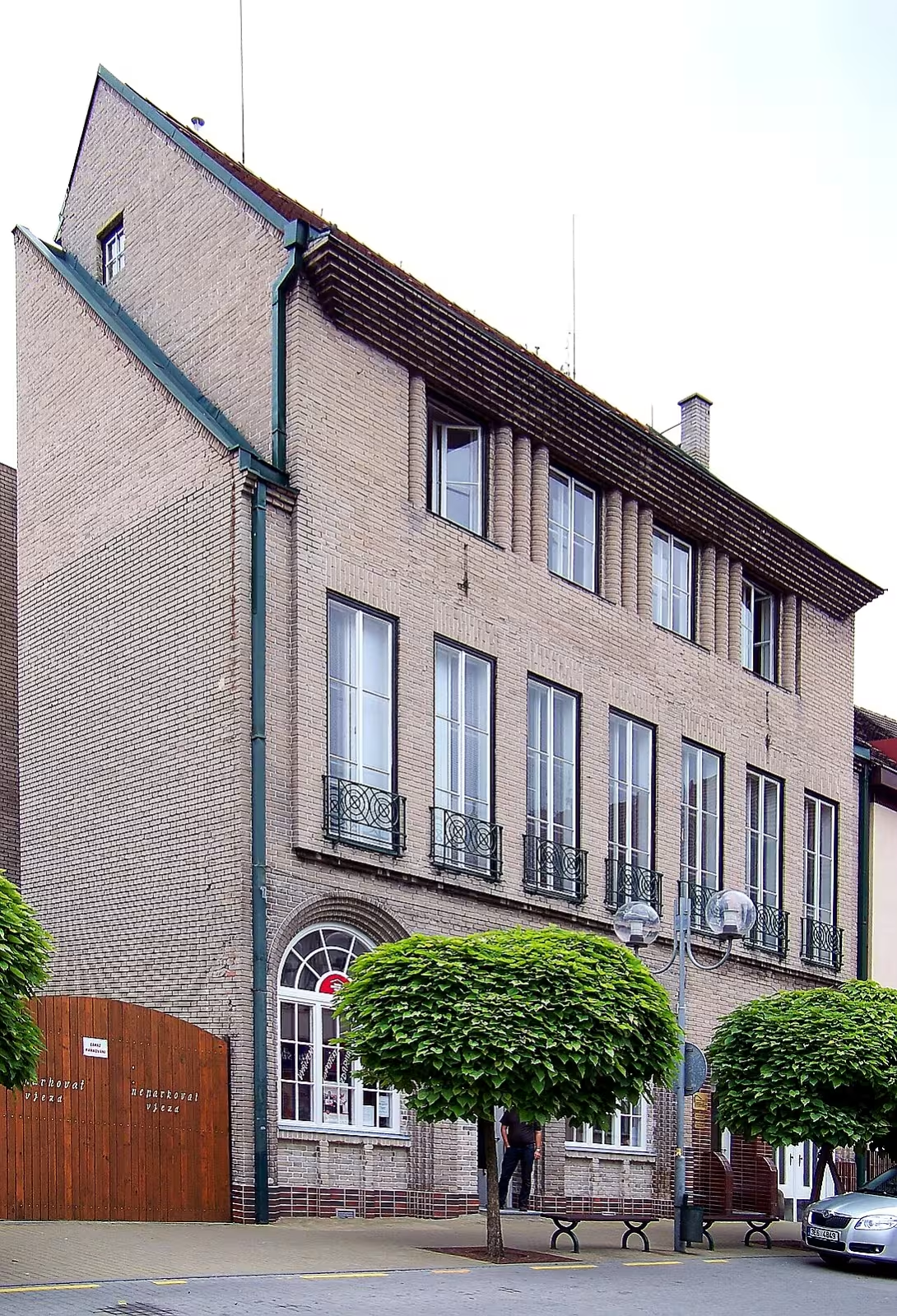
Zemánkův dům is a notable historical monument located at T. G. Masaryka Square in Holice, Czech Republic. Constructed between 1911 and 1912 by architect Otakar Novotný, this residential building exemplifies the rationalist modern style influenced by Dutch brick architecture and theories of Henrich Petrus Berlage. It served as both a residence for Dr. Čeněk Zemánek, a local physician and philanthropist, and his medical practice. The design thoughtfully arranges public spaces facing the square while private areas are oriented towards the garden.
The origins of Zemánkův dům date back to the early 20th century when Czech architecture was shifting towards modernism and functionalism, influenced by broader European movements. Dr. Čeněk Zemánek, an active Sokol member and philanthropist, commissioned Otakar Novotný for its construction. Inspired by his study of Dutch brick architecture during a 1908 trip to the Netherlands, Novotný also designed the nearby Sokolovna. This influence is evident in the building's design, which integrates international styles into local architectural practices.
Architecturally, Zemánkův dům stands out for its rationalist modern style characterized by simplicity and functionality. The three-story structure features Flemish bond brickwork with a facade that originally included three stepped-profiled round arches at the ground level. These elements were restored to their original form in the 1990s after alterations made in the 1930s. Public spaces such as the waiting room, office, and music salon are on the lower floors, while private living quarters are situated above, emphasizing a clear distinction between social and private areas.
Ownership of Zemánkův dům transitioned from Dr. Čeněk Zemánek to architect Karel Vrbický in 1990. Vrbický played a crucial role in restoring the building to its original state, removing inappropriate additions like ground-floor extensions and reinstating the architectural integrity of the facade.
Key events associated with Zemánkův dům include its construction completion between 1911 and 1912 under Otakar Novotný's design. Another significant event was Karel Vrbický's restoration efforts in the 1990s, which returned the building to its original architectural form.
Today, Zemánkův dům stands as a cultural monument, reflecting early 20th-century modernist architecture and the influence of European styles on Czech design. Its preservation allows visitors to appreciate the thoughtful integration of public and private spaces within a residential context. The house's historical significance and architectural beauty make it a worthwhile visit for those interested in exploring the evolution of modernist architecture in the Czech Republic.
Zemánkův dům offers a unique glimpse into the past, showcasing how international influences shaped local architectural practices. Its preservation as a cultural monument ensures that future generations can appreciate its historical and aesthetic value. Visitors are invited to explore this remarkable building and experience firsthand the legacy of early 20th-century modernism in Holice.
Then and now
Drag the slider to compare how the landmark may have looked when it was built with the view today.
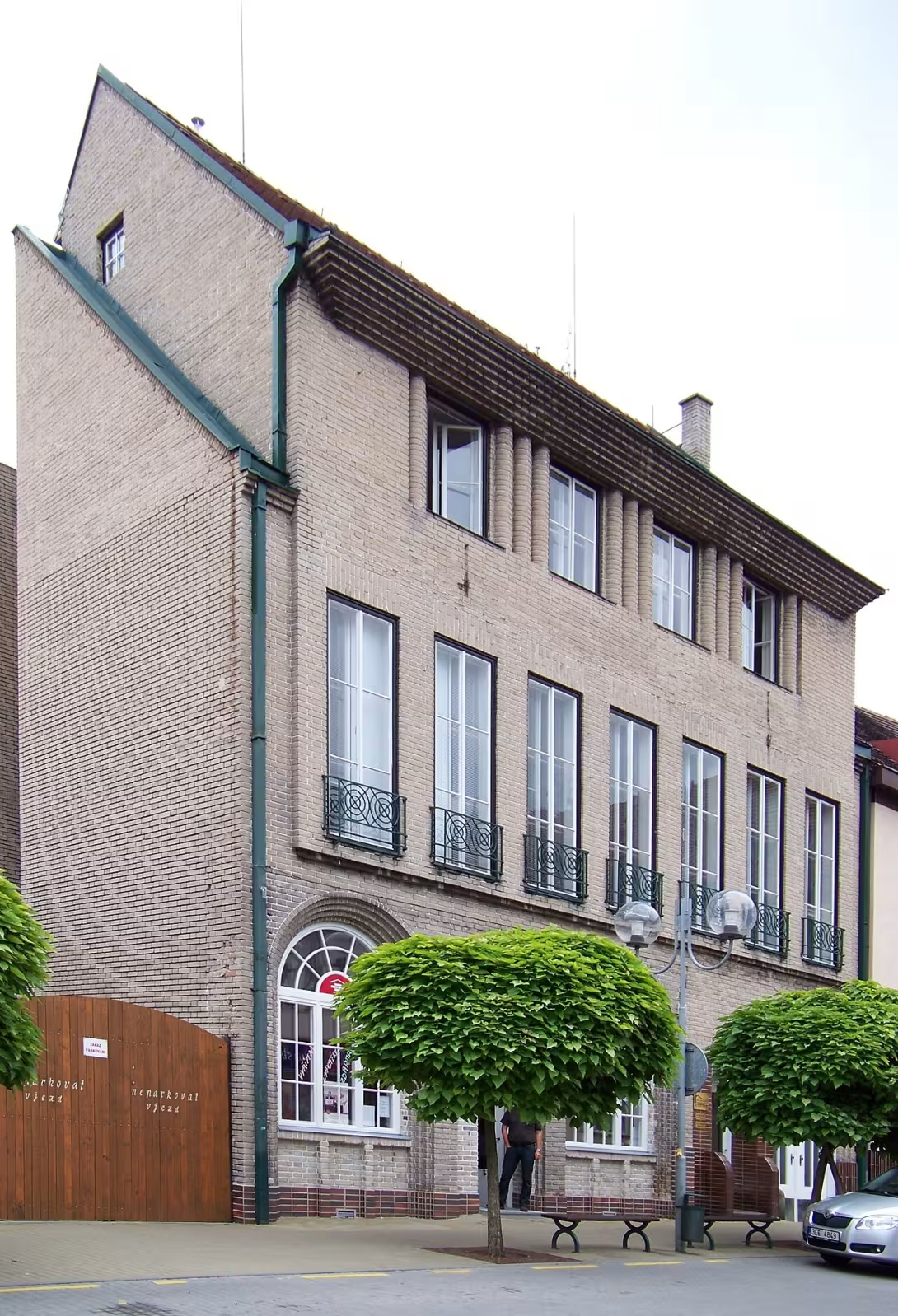
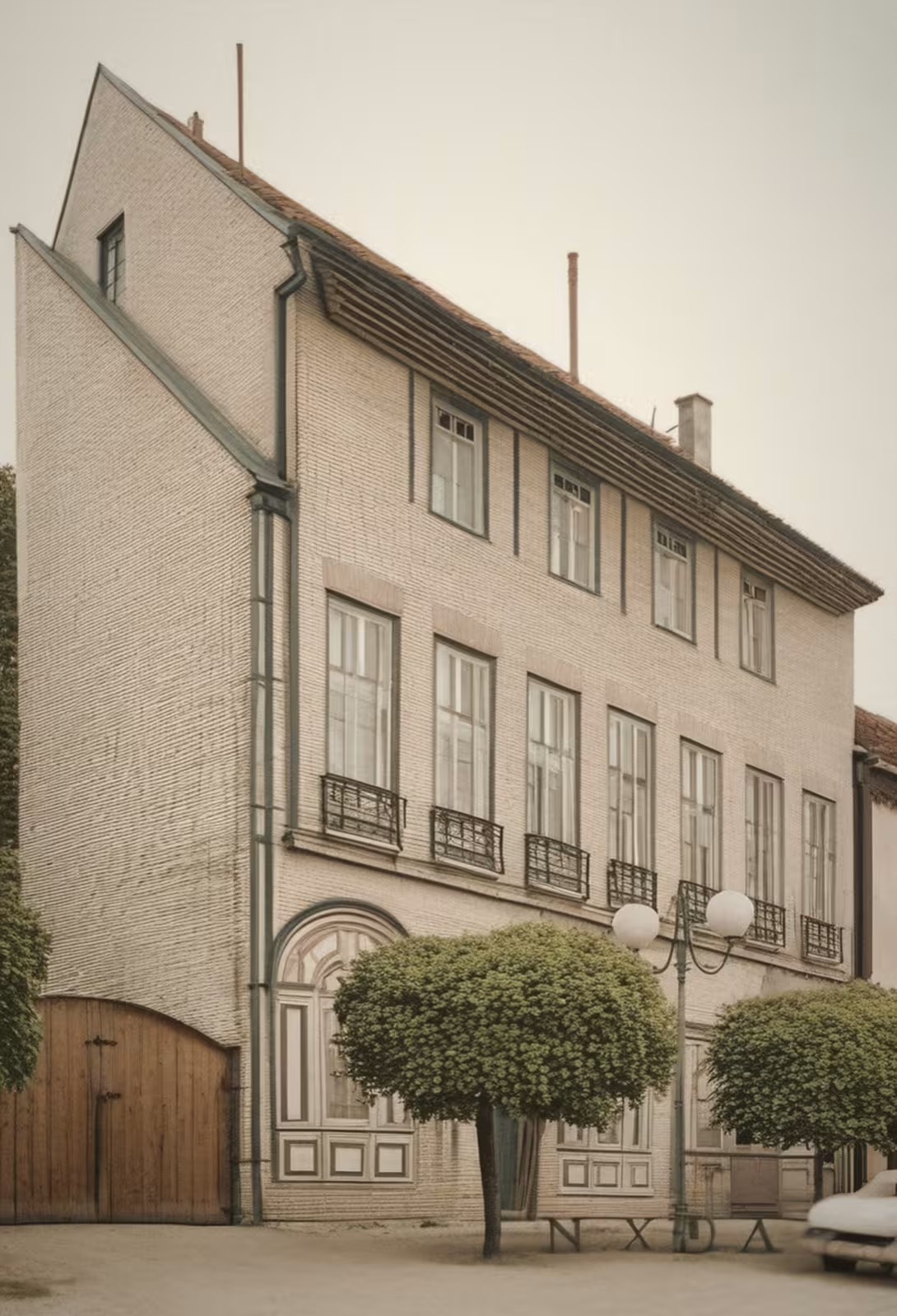
The historical appearance on the left is an AI-generated visualisation and serves as inspiration only.
Historical milestones
- 1911
- Beginning of construction of the Zemanek House
- 1912
- Completion of the Zemanek House construction
- 1908
- Otakar Březina's travels to the Netherlands
- 1930
- Modifications made to the Zemanek House
- 1990
- Transfer of ownership to Karel Vrbický
- 1990
- Restoration of the Zemanek House to its original state
Architectural development
Zemánkův dům was built in a rationalist modern style with influences from Dutch brick architecture. The three-story structure features a simple facade with Flemish bond brickwork, originally including three stepped-profiled round arches at the ground level. In the 1990s, Karel Vrbický restored these elements to their original form after they had been altered in the 1930s.
Historical events
Construction completed between 1911 and 1912 under the design of Otakar Novotný.
In 1990, architect Karel Vrbický moved into the building and restored it.
Owners
Originally owned by MUDr. Čeněk Zemánek (1911-1930), later used as an office for architect Karel Vrbický in 1990, who restored it to its original state.
Points of interest
- Although Zemánkův dům is known for its rationalist modern style influenced by Dutch architecture, it originally had three stepped-profiled round arches at the ground level that were removed in the 1930s and later restored to their original form in the 1990s.
- The architect Otakar Novotný was inspired by his trip to the Netherlands in 1908, which influenced not only Zemánkův dům but also led him to design the nearby Sokolovna, showcasing how international travel impacted local architectural practices.
- Dr. Čeněk Zemánek, for whom the house was built, was an active member of the Sokol movement, a Czech gymnastic organization that promoted physical fitness and national identity, highlighting his involvement in cultural as well as medical communities.
- The transition of ownership from Dr. Čeněk Zemánek to architect Karel Vrbický in 1990 marked a significant effort to restore the building's original architectural integrity by removing inappropriate additions like ground-floor extensions.
- Despite its modernist design, Zemánkův dům was built during a period when Czech architecture was shifting towards functionalism and simplicity, reflecting broader European trends while maintaining distinct local characteristics.
Guide
This guide is narrated by a synthetic voice generated by artificial intelligence.
Show guide text
This text was created by artificial intelligence and has not been editorially reviewed. It may contain inaccuracies.
The residential house of physician Čeněk Zemánek stands in Holice on Tomáše Garrigua Masaryka Square and bears the address number 24. It was built in the years 1911 to 1912 according to a design by architect Otakar Novotný and is listed as a cultural monument.
The builder was the Holice physician and philanthropist Čeněk Zemánek, who lived from 1865 to 1930. He was also an active Sokol member and played a role in the creation of another significant modernist building in the town, the Sokol Hall in Holice. Otakar Novotný designed this building as well.
The house is built in the style of rationalist modernism. Novotný was influenced by Dutch architecture made from exposed brick, which he encountered on a study trip to the Netherlands in 1908. The influence of the theories of Henrik Petrus Berlage is also reflected here.
The three-story house stands on a trapezoidal plot and served both as a residence and a medical practice. On the ground floor there was a waiting room, a surgery, and the physician's office. The first floor belonged to a music salon and a living room, and on the second floor the family lived. The social and public rooms face the square, while the bedrooms, bathroom, and other private spaces face the garden instead. Novotný also designed all the interior furnishings.
The facade facing the square is simple and smooth, made of exposed brick in Flemish bond. On the ground floor there were originally three identical, stepped profiled circular arches. In the nineteen thirties this section was marred by the insertion of a shop. On the first floor there are seven French windows in the face of the brick, supplemented by grilles at the height of the parapet. The second floor has four windows with rounded reveals and above them a stepped, rectangular profiled cornice.
Facing the courtyard is a semicircular risalit with a balcony supported by two columns. In the courtyard stands a simple single-story utility building with a garage and a flat roof in the same style. The architect also designed the house garden.
The house regained its original appearance in the nineties. In 1990, the design office of Karel Vrbický moved into it. He contributed to the removal of inappropriate alterations, particularly the shop windows on the ground floor, and to restoring the house to its original state.
Tips for visitors
The best time to visit Zemánkův dům is during the late spring or early autumn months when the weather is pleasant, allowing for a comfortable exploration of T. G. Masaryka Square and its surroundings. These seasons offer mild temperatures and are ideal for enjoying outdoor activities in Holice. Additionally, visiting outside of peak tourist season can provide a more intimate experience with fewer crowds.
G. Masaryka Square. For those relying on public transit, it's advisable to check the latest schedules and routes in advance to ensure a smooth journey. Walking is also a viable option for exploring the immediate vicinity of the square.
When planning your visit, consider bringing comfortable walking shoes as you'll likely be doing some walking around T. G. Masaryka Square and its nearby attractions. A camera or smartphone with a good camera can help capture the architectural beauty of Zemánkův dům and other modernist structures in the area. Additionally, carrying water and sunscreen is recommended if visiting during warmer months.
For photography enthusiasts, early morning or late afternoon light offers the best conditions for capturing Zemánkův dům's architectural details. The soft lighting at these times can highlight the building's features and create a more dramatic effect in your photographs. Exploring different angles around T. G. Masaryka Square may also reveal unique perspectives of the structure.
Families with children will find the area around Zemánkův dům interesting, especially if they enjoy architecture or history. While exploring the square and nearby modernist buildings like Sokolovna, parents can engage their children in discussions about architectural styles and historical context. The proximity of these attractions within a 30-minute walk makes it convenient for family outings.
Nearby, within a 30-minute distance from Zemánkův dům, visitors can explore other modernist structures like Sokolovna, which offers insight into the region's architectural evolution. These sites provide additional context and appreciation for the historical significance of Holice's urban landscape.
Frequently asked questions
Can the monument be visited?
This is a residential or farm building, not a museum with opening hours. Please view it from public space and respect the owners' privacy. We have no information about access to the interior.
Where is the monument?
Location: Holice, Pardubický kraj. The map on this page shows the exact spot.
Why is the monument protected?
It is listed in the Central List of Cultural Monuments of the Czech Republic as a cultural monument (register no. 1000140482).
Businesses nearby
Do you run a restaurant, accommodation, shop, museum, rental, wellness or other visitor service near this monument? Show yourself directly to the people heading to it — this is how they will see you in the app and on the web:
Nearby
Zemánkův dům is situated on T. G. Masaryka Square in Holice, near other modernist structures like the Sokolovna.
Accommodation nearby
Themed route
Tematická výletní trasa Holice
1. Zemánkův dům
- Typ: Historický dům
- Proč stojí za návštěvu: Zemánkův dům je klíčovou památkou v Holicích, která představuje architektonické umění 19. století. Je to nejen historicky významný objekt, ale také místem, kde se dnes konají různé kulturní akce a výstavy.
2. Sokolovna
- Typ: Modernistická budova
- Proč stojí za návštěvu: Sokolovna je fascinujícím příkladem modernistické architektury, který se nachází ve stejném kvartu jako Zemánkův dům. Je to místo s bohatou historií sportivních a kulturních aktivit v Holicích.
3. T. G. Masaryka Square
- Typ: Veřejný prostor
- Proč stojí za návštěvu: Tento náměstí je centrem místního života a slouží jako spojovací čtverec mezi Zemánkův dům a Sokolovnou. Je ideálním místem pro relaxaci, obdiv k architektuře a příležitost pro krátké setkání s historií města.
Tato trasa nabízí pohled na různorodost architektonických stylů v Holicích a ukazuje, jak se historie prolíná s moderním životem.
Seasonal recommendations
Spring: Visiting Zemánkův dům during spring offers a unique experience as nature awakens around the historic site. The blooming flowers and fresh greenery create an enchanting atmosphere, making it an ideal time for photography enthusiasts. As daylight hours increase, the house is bathed in soft, warm light that enhances its architectural details. Visitors should dress in layers to accommodate the unpredictable spring weather, which can range from mild to chilly. Although crowds are generally moderate at this time, arriving early can ensure a more tranquil exploration of the site.
Summer: Summer brings vibrant energy and longer days to Zemánkův dům, making it an excellent period for a leisurely visit. The lush surroundings and warm weather provide a picturesque backdrop for outdoor activities or simply enjoying the historic ambiance. However, this is also peak tourist season, so expect larger crowds, especially during midday. To avoid congestion, consider visiting in the morning or late afternoon when the site is less crowded. Light, breathable clothing is advisable to stay comfortable under the summer sun.
Autumn: Autumn at Zemánkův dům offers a serene and colorful experience as the foliage transforms into shades of gold, orange, and red. The cooler temperatures create a cozy atmosphere perfect for exploring the historic site without the discomfort of summer heat. This season is ideal for photography, capturing the rustic charm of Holice in its autumnal glory. Visitors should dress warmly in layers to adapt to the fluctuating weather, which can include crisp mornings and mild afternoons. The visitor numbers are typically lower compared to summer, allowing for a more relaxed visit.
Winter: Winter transforms Zemánkův dům into a tranquil retreat, with snow often blanketing the landscape and adding a magical touch to its historic architecture. While some facilities might have reduced hours or be closed due to winter conditions, the site offers a peaceful atmosphere away from the hustle of tourist-heavy seasons. Visitors should dress warmly in insulated layers and wear waterproof footwear if venturing outside during snowy days. Arriving early is advisable as daylight hours are shorter, giving you ample time to appreciate the quiet beauty of the property.
Visualizations and artistic views


The visualisations are generated by artificial intelligence and serve as inspiration.
Photos from the area
Real photos taken near the monument


Zdroj a licence jsou uvedeny u každého snímku.
View from the area
This animation was generated by artificial intelligence from a real photograph of the surroundings. The motion and details are not real footage of the location.
Tips from visitors
No tips yet. Be the first!
Log in and add your tip.
Sources and literature
Photos: the original photo taken by ŠJů / CC BY-SA 3.0 — Wikimedia Commons. The author and licence also appear when you hover over the image.
Faktickým podkladem tohoto textu byl článek na Wikipedii, jehož autory jsou přispěvatelé Wikipedie. Článek je dostupný pod licencí CC BY-SA 4.0.
Location on the map


Příběhy a pověsti
Legendy, pověsti a příběhy spjaté s touto památkou
Fotografie návštěvníků
Zatím žádné fotografie. Buďte první, kdo přidá fotografii z návštěvy!
Log in a přidejte svou fotografii nebo hodnoťte.
Za ověřenou návštěvu v aplikaci získáte víc bodů — poznáme podle GPS, že jste na místě.
Reviews and comments