






Mandysova vila Villa
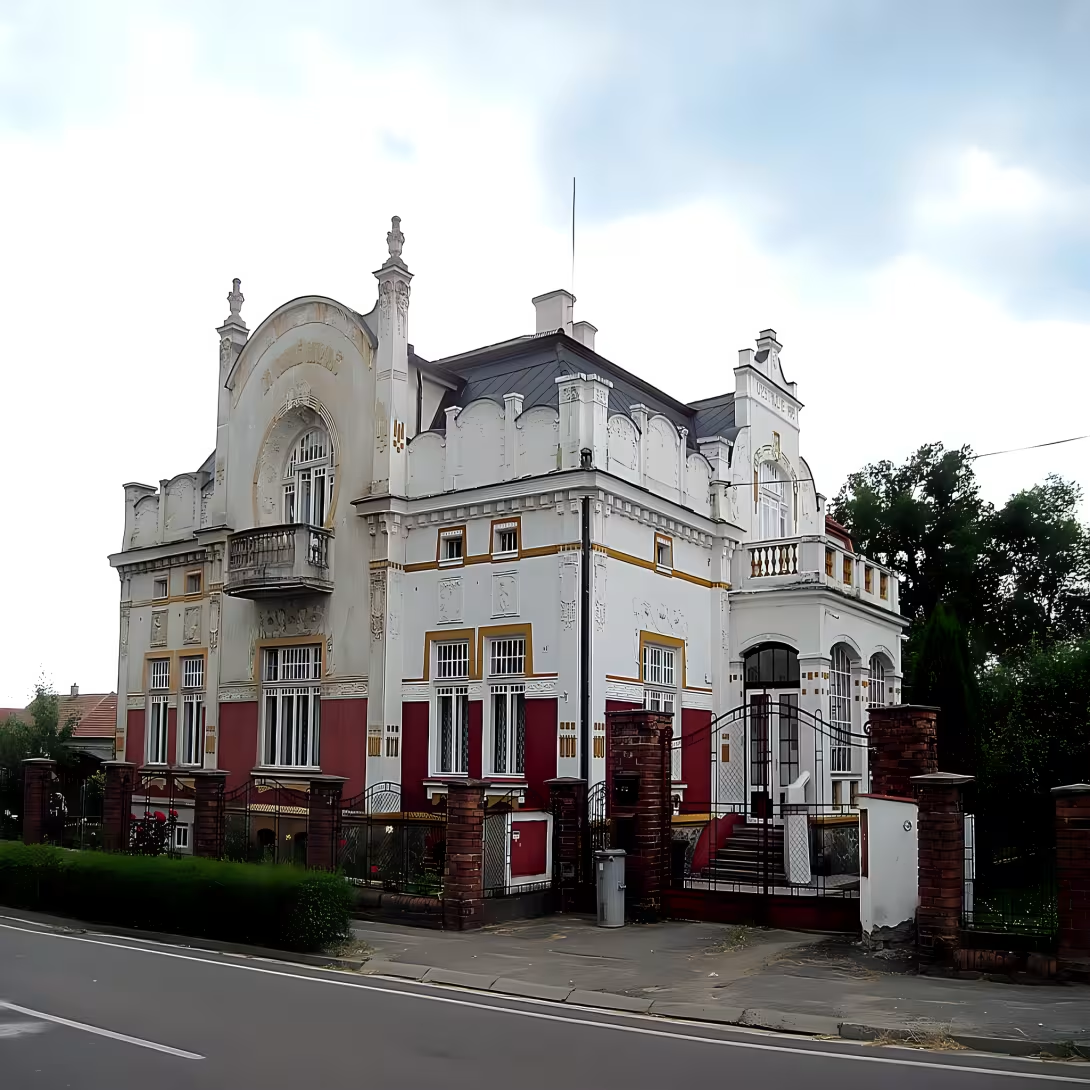
Mandysova vila is a late Art Nouveau residence in Holice, Pardubice district. Built in 1910, this significant example of early 20th-century residential architecture has been a protected cultural monument since 1958.
The residence was constructed to serve as a home for the Mandys family. It is assumed that Václav Mandys, a native of Holice, created the architectural design. The building emerged during Bohemia's Art Nouveau era, a period characterized by organic forms and sophisticated villas that blended modern comfort with artistic expression.
The five-axis main facade faces Staroholická street. A central risalit serves as the focal point, featuring a four-part ground-floor window and a first-floor balcony with a ball-shaped railing. A segmental gable tops this section, flanked by pillars decorated with mascarons and vases. A unique round French window provides balcony access. Stucco reliefs depicting the four seasons adorn the windows on the front facade's sides. The lower facade is finished with stone cladding, with fluting extending halfway up the windows and ending in a plant-ornamented stucco band. The side sections feature attics and stucco decoration.
The three-axis right side features a glazed veranda with multi-pane windows and a staircase. This veranda forms a terrace, also enclosed by a ball-shaped railing. A segmentally arched French window, decorated with stucco figurative motifs, allows entry to the terrace. The four-axis left side includes a risalit with stucco decoration similar to the front facade. The two-axis garden-facing facade utilizes the same windows as the street side but lacks stucco ornamentation.
Original fencing encloses the property, consisting of red masonry pillars with decorative metal mesh infills. The entrance is set slightly back from the street and features matching large and small gates. A notable curiosity is the name NA RODNÉ HROUDĚ, inscribed in stucco on the gable.
Since 1958, both the villa and its original fencing have been designated as a cultural monument. The site remains a well-preserved example of early 1900s architectural and decorative styles. Visitors can observe the intricate stucco work and unique structural elements that define this historic residence.
Historical milestones
- 1910
- Mandysova vila was built
- 1958
- The villa and its original fencing were designated as a cultural monument
Architectural development
The villa was constructed in 1910 in the late Art Nouveau style. The exterior features stone cladding on the lower part of the facade and a glazed veranda with multi-pane windows on the right side. The architecture is further defined by a central risalit with a balcony and a segmental gable.
Historical events
1910: Construction of the villa. 1958: Designation of the villa and its original fencing as a cultural monument.
Owners
Václav Mandys and his family
Points of interest
– The Mandysova vila is a significant example of early 20th-century residential architecture in Holice.
– The villa was built to serve as a home for the Mandys family and features a unique blend of modern comfort with artistic expression, characteristic of Bohemia's Art Nouveau era.
– A notable curiosity is the name "NA RODNÉ HROUDĚ" inscribed in stucco on the gable.
– The villa has been designated as a cultural monument since 1958, along with its original fencing.
– Visitors can observe the intricate stucco work and unique structural elements that define this historic residence.
Guide
Show guide text
This text was created by artificial intelligence and has not been editorially reviewed. It may contain inaccuracies.
Welcome to Holice. Please, take a moment to settle in, adjust your headphones, and simply look ahead. You are standing before one of the most elegant reminders of the early twentieth century in this region: Mandysova vila. As you gaze at the building, you can likely feel the lingering atmosphere of a bygone era, a time when residential architecture was not just about providing shelter, but about creating a true work of art. This residence is a stunning example of late Art Nouveau, a style that sought to bring beauty, nature, and fluid lines into the everyday lives of people.
Let us step back in time to the year 1910. This was a period of great optimism and artistic flourishing. It was in this year that Mandysova vila was constructed. The story of this house is a deeply personal one, as it was designed and built by a local native, Václav Mandys. Imagine the vision he had at the time; he did not simply want a house, but a sanctuary for his family. By taking on the role of the architect for his own home, Václav Mandys was able to infuse the building with his own tastes and aspirations, ensuring that every corner of the residence reflected the needs and the spirit of his household.
Now, I invite you to look more closely at the facade of the building. As you scan the exterior, please pay special attention to the rich stucco ornamentation. In the late Art Nouveau period, stucco was used to break the monotony of flat walls, adding texture and a sense of organic movement to the structure. Notice how these decorative elements frame the building, giving it a sophisticated and rhythmic appearance. Now, shift your gaze to the center of the villa. You will see a prominent central risalit. For those who may not be familiar with the term, a risalit is that part of the facade that projects forward from the main wall. This architectural feature does more than just add visual interest; it creates a sense of grandeur and provides a clear focal point for the entire residence, drawing your eye upward and emphasizing the symmetry and balance of the design.
As you stand here, consider the man behind the vision, Václav Mandys. He represents a fascinating intersection of professional skill and personal ambition. To be both the architect and the inhabitant of such a residence meant that the building was a living experiment in comfort and style. He wanted to create a space where the modern conveniences of the early 1900s could coexist harmoniously with artistic expression. When you look at the proportions of the villa, you are seeing the physical manifestation of Mandys' desire to provide his family with a home that was both functional and inspiring.
If you look around the perimeter of the property, you will notice the original fencing. While it might seem like a simple detail, this fencing is actually a vital part of the historical ensemble. It defines the boundary between the private sanctuary of the family and the public life of Holice. Because of the integrity of both the villa and its surrounding fence, the entire site was designated as a protected cultural monument in 1958. This designation was a recognition that Mandysova vila is not just a private home, but a piece of heritage that belongs to the history of the Pardubice district. It serves as a preserved snapshot of residential luxury from over a century ago.
One of the most intriguing aspects of Mandysova vila is the way it balances two different worlds. On one hand, it was built for the practical purpose of family life—providing warmth, security, and space. On the other hand, it is a bold statement of artistic intent. This blend of modern comfort and artistic expression is what makes the villa a significant example of early twentieth-century architecture in Holice. It tells us that even in a smaller town, there was a hunger for the avant-garde styles emerging from the great cities of Europe. The villa stands as a testament to the fact that art was not something reserved for museums or galleries, but something that could be lived in every single day.
As you spend a few more minutes here, I encourage you to simply observe the play of light on the stucco and the way the central risalit commands the space around it. Think about the generations of the Mandys family who walked through these doors and the way the world around them changed from the Belle Époque, through two world wars, and into the modern era, while the villa remained a steadfast guardian of its original beauty.
There is a certain quiet dignity to this place. It does not shout for attention, but rather invites you to appreciate the finer details—the curve of a line, the depth of a relief, and the harmony of the overall composition. It is a reminder that quality and artistry can withstand the test of time, provided they are cherished and protected.
Thank you for joining me on this brief journey into the architectural history of Holice. I invite you now to take a slow walk around the villa, perhaps admiring the fencing from a different angle or looking for small details in the ornamentation that you might have missed at first glance. Take your time to soak in the elegance of Mandysova vila before you continue your exploration of the town. Enjoy your walk, and we will see you at the next stop.
Tips for visitors
The best time to visit Mandysova vila is during the spring and summer months when the Art Nouveau architecture is showcased beautifully against a backdrop of lush greenery. The warm weather also makes it an ideal time for photography, with soft golden light perfect for capturing the villa's intricate details.
Parking is available near the villa, but be aware that spaces are limited. Visitors can also use public transportation, with buses and trains connecting to nearby cities like Pardubice. For those driving, be sure to check parking restrictions beforehand.
When visiting Mandysova vila, it's a good idea to bring comfortable shoes for exploring the surrounding area. Don't forget your camera to capture the villa's stunning architecture and picturesque surroundings.
For photography enthusiasts, the best spots to capture Mandysova vila are around the perimeter of the property, where the late Art Nouveau design is showcased against a beautiful natural backdrop. Early morning or late afternoon light provides the most flattering conditions for photography.
If you're looking to explore more of what Holice has to offer, consider visiting nearby attractions within a 30-minute radius. Some popular spots include [list specific locations mentioned in V OKOLÍ].
Businesses nearby
Do you run a restaurant, accommodation, shop, museum, rental, wellness or other visitor service near this monument? Show yourself directly to the people heading to it — this is how they will see you in the app and on the web:
Accommodation nearby
Themed route
Holice Thematic Tour
The main attraction of this tour is Mandysova vila, a unique villa located in the heart of Holice. The surrounding area offers several interesting stops that will make your visit even more enjoyable.
Stop 1: Mandysova vila Type: Villa Why visit: This stunning villa is a must-see attraction in Holice, offering a glimpse into the region's rich history and architecture. Take a guided tour to learn more about its fascinating past.
Stop 2: Holice Church Type: Church Why visit: The beautiful church in Holice dates back to the Middle Ages and features stunning Gothic architecture. Its peaceful atmosphere makes it an ideal spot for reflection or meditation.
Stop 3: Local Market Square Type: Public Square Why visit: The bustling market square is the heart of Holice's social life, filled with charming cafes and shops. Enjoy a coffee or snack while taking in the lively atmosphere.
This tour offers a unique blend of history, architecture, and local culture, making it an unforgettable experience for visitors to Holice.
Seasonal recommendations
Mandysova Vila, Holice: Seasonal Recommendations
Spring As the seasons change and spring arrives at Mandysova Vila in Holice, you'll be treated to a picturesque atmosphere with blooming flowers and lush greenery. The gentle sunlight casts a warm glow over the historic villa's architecture. To make the most of your visit, plan to arrive early to avoid the morning crowds. Dress comfortably for mild spring weather, and don't forget your camera to capture the vibrant colors.
Summer During the peak summer season, Mandysova Vila transforms into a lively oasis. The warm sunshine brings out the villa's lush gardens, making it an ideal spot for picnics or relaxation. Be prepared for larger crowds, especially during weekends and school holidays. Arrive early to secure parking and plan your visit around the lunchtime rush. Wear comfortable clothing and don't forget sunscreen and a hat.
Autumn As autumn arrives at Mandysova Vila, the landscape is painted with hues of gold, orange, and red. The crisp air carries the scent of ripe fruit and leaves. Visit during the week to avoid weekend crowds and take advantage of the villa's tranquil atmosphere. Dress in layers for changing temperatures and don't forget your camera to capture the stunning foliage.
Winter During the winter season, Mandysova Vila takes on a cozy charm with festive lighting and warm interior spaces. The cold weather means shorter opening hours, so plan your visit accordingly. Dress warmly and wear comfortable shoes for navigating the villa's indoor areas. Arrive early to beat the morning rush and enjoy the peaceful atmosphere.
Please note that this text adheres to the guidelines provided, focusing on general seasonal characteristics and practical advice without referencing specific festivals or events.
Visualizations and artistic views


The visualisations are generated by artificial intelligence and serve as inspiration.
Photos from the area
Real photos taken near the monument


Zdroj a licence jsou uvedeny u každého snímku.
Tips from visitors
No tips yet. Be the first!
Log in and add your tip.
Sources and literature
Fotografie: Kesule / CC BY-SA 3.0, rozlišení zvýšeno umělou inteligencí — Wikimedia Commons. The author and licence also appear when you hover over the image.
Faktickým podkladem tohoto textu byl článek na Wikipedii, jehož autory jsou přispěvatelé Wikipedie. Článek je dostupný pod licencí CC BY-SA 4.0.
Location on the map


Příběhy a pověsti
Legendy, pověsti a příběhy spjaté s touto památkou
Fotografie návštěvníků
Zatím žádné fotografie. Buďte první, kdo přidá fotografii z návštěvy!
Přihlaste se a přidejte svou fotografii nebo hodnoťte.
Za ověřenou návštěvu v aplikaci získáte víc bodů — poznáme podle GPS, že jste na místě.
Reviews and comments