






Africké muzeum Dr. Emila Holuba Museum
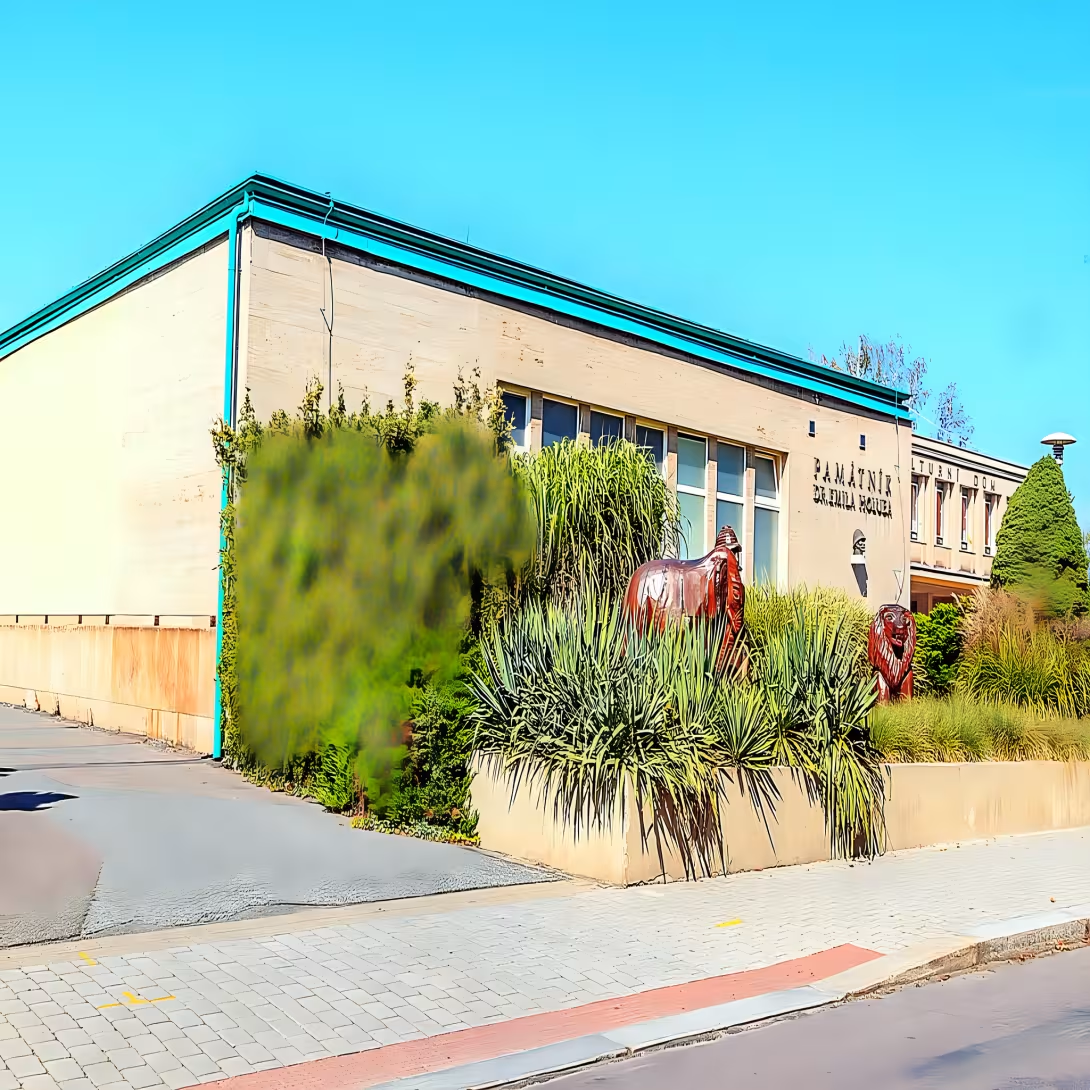
Africké muzeum Dr. Emila Holuba in Holice in Pardubice Region is a unique testimony about the life and travels of a local native. Emil Holuba, an African traveler and a doctor, became famous in the 19th century with his expeditions to far-off Africa. The museum dedicated to its legacy has become an important place to explore its adventures and to preserve the African collection it brought from the continent.
The road to the museum was long and complicated. After Holub's death in 1902, the idea of creating a memorial hall arose in Holice. The first attempt took place in 1925 when the local council released a room in the town hall where several items and documents were displayed from his travels. But this early exhibition was destroyed in 1945 by a fire during the May uprising. In 1947, re-efforts brought together other documents and collections to commemorate the 100th anniversary of Holub's birth. After the 1950 Ministerial Decree, Holub's collections concentrated in Holíc, where the Committee on their care was established in 1953. On 1 May 1956 the memorial hall was finally opened in the local parish. A key moment became the legacy of Holub's wife Rose, who, after her death on 28 September 1958, donated to the city his complete collection and study.
The museum's own building was created from 1962 to 1966 according to the design of the Bratislava architect Štefan Imrich. The opening ceremony took place on 30 April 1966 under the name Dr. Emil Holub Memorial. The construction represents an elegant one-storey hall building in the spirit of international modernity, surrounded by white travertine. The architectural feature is the vertical layout of the windows highlighting the entrance staircase with a thin awning above the main entrance. The interior preserved original surfaces and decorative elements. Since 2024, the building together with the adjacent cultural house has been protected as a памятка.
The exhibition links traditional museum items with audiovisual elements. Visitors see the Pigeons' personal effects, his study, orders and gifts from the Native Chiefs. The heart of the exhibition is a functional model of Victoria Falls with an illusion of flowing water and a stylized African village with sounds of nature and African music. The illusion of the African landscape with flying birds and dispersing with savanna, the sounds of wild animals and the pappanine of Holub's lion prince - all these elements create an absorbing atmosphere. Interactive touch screens, mysterious lockers with hidden African collection and play corner with puzzles are mainly addressed by families with children. The short film by the directors Milan Šteindler and Martin Kopp revives Holuba's travels with animation.
In 2012, after visiting more than 1,34 million people and subsequent reconstruction, the museum was reopened under the new name Africké muzeum Dr. Emila Holuba. Modern exhibition was designed by architect and theatrician David Vávra. Today it is one of the most original museums in the Czech Republic, which can present authentic collections and history in a way attractive to contemporary visitors.
Then and now
Drag the slider to compare how the landmark may have looked when it was built with the view today.
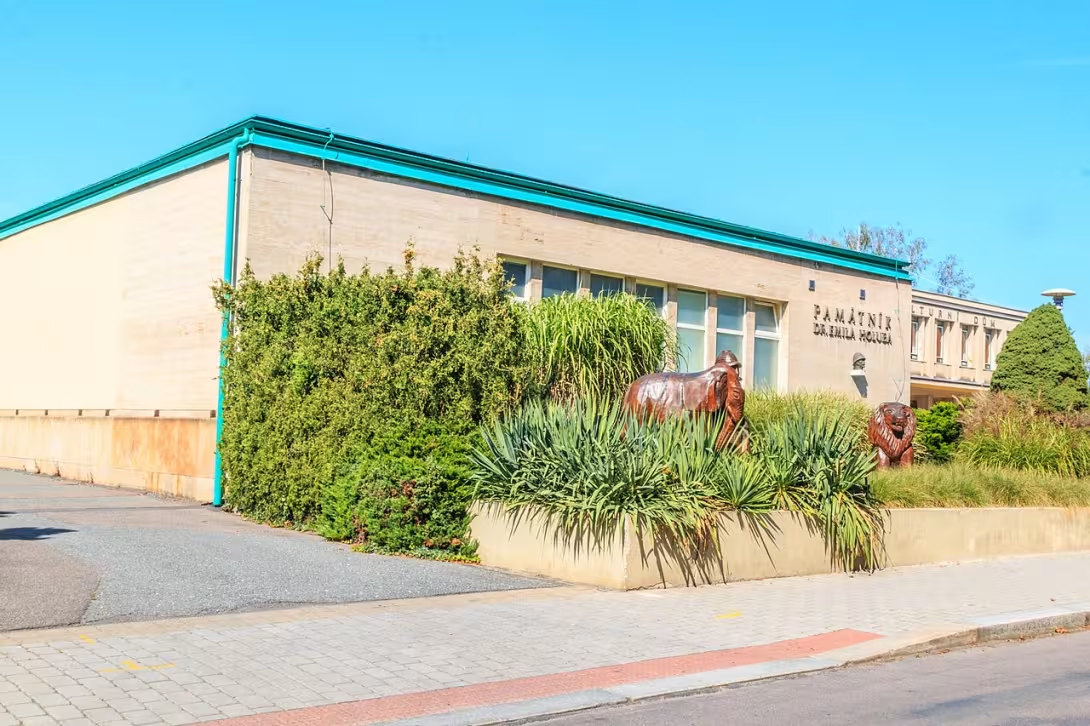

The historical appearance on the left is an AI-generated visualisation and serves as inspiration only.
Historical milestones
- 1956
- The foundation of the memorial hall on the local parish.
- 1966
- The museum opening ceremony under the name Dr. Emil Holub Memorial.
- 2012
- Reopening after reconstruction as Africké muzeum Dr. Emila Holuba.
- 2024
- Establishment of a monument protection building of the museum and adjacent cultural house.
Architectural development
A single-storey hall structure lined with white travertine with elements of international modernity and reeling socialist realism. The vertical layout of the windows and the entrance staircase with awning are an important motive. In the interior are preserved original surfaces and decorative elements.
Historical events
In 1966, Dr. Emil Holub Memorial was ceremonially opened. In 2012 the museum was reopened after reconstruction under a new name. In 2024, the building was declared a cultural monument.
Owners
City of Holice
Points of interest
- Africké muzeum Dr. Emila Holuba is a unique testimony about the life and travels of local native Emil Holuba. - After Holub's death in 1902, the idea was to create a memorial hall for him, which eventually became a museum. - The museum's own building was built by self-help between 1962 and 1966 according to the design of architect Štefan Imrich. - Since 2024 the building and the adjacent cultural house have been protected as a monument facility. - The museum exhibition combines traditional museum items with audiovisual elements, creating an immersive atmosphere.
Guide
This guide is narrated by a synthetic voice generated by artificial intelligence.
Show guide text
This text was created by artificial intelligence and has not been editorially reviewed. It may contain inaccuracies.
Welcome to Holice. You're standing in front of a place that's a lot more than just a rock and concrete building. In front of your eyes is Africké muzeum Dr. Emila Holuba, a place that serves as a bridge between our quiet Czech landscape and the endless, fascinating spread and diversity of the African continent. Feel this atmosphere. Do you feel the strange combination of the peace of a small town and the excitement of the unknown hidden within these walls? This building, which now looks so elegant and balanced on you, is a symbol of human curiosity and a desire to know the world.
But let us first go back in time and understand why this place is standing here. To understand the meaning of this building, we must first understand the man whose name he bears. Emil Holub wasn't just an ordinary native from Holc. He was a man who, with his courage and scientific reasoning, was crossing the borders of the world back then. As a doctor and traveller, he was exploring areas that were almost unattainable to the then Europeans. His life was a constant movement, searching for and documenting what humanity had never known. When he died in 1902, he left not only a huge scientific legacy, but also a deep gap in the hearts of people who admired his work.
The idea that his legacy should be preserved right here in his hometown began to form shortly after his death. The first steps towards this goal were taken in 1956, when the memorial hall was founded directly on the local parish. But that was only the beginning of a long journey. A real breakthrough occurred in the 1960s. From 1962 to 1966, a building began to be a permanent home for rare collections and a monument to this extraordinary man. In 1966 there was a ceremonial opening under the name Dr. Emil Holub Memorial.
Now look at the building that surrounds you. Notice her form. It's not just an ordinary house. This elegant hall building is exhibited in the spirit of international modernity. Its lines are clean, balanced and very modern, despite decades gone by. The work of two important experts, Stefan Imrich and David Vávra, is behind this architectural perception. If you look at its facade and its overall structure now, you will see how architecture tries to achieve harmony and simplicity, which is typical of the creative thinking at that time. This building is not just a vessel for objects, it itself is an artwork that reflects the era when the world began to open up to new forms of expression. And thanks to this high aesthetic and historical value, the building of the museum and the adjacent cultural house in 2024 were created by a monument protection. This means that what you are seeing right now is a protected heritage that we must share together for future generations.
But to understand how the monument became today's unique African world, we need to mention another essential figure. It wasn't just Emil's courage, it was the loyalty of the people who were left behind. His wife, Růžena Holubová, played a key role in preserving his legacy. It was thanks to her hands and her decision that rare collections were dedicated to the city of Holecks. Without her efforts, today's visitors would not be able to touch real history and see the artifacts that Emil Holub acquired during its travels. It's a beautiful love story that's turned into an immortal gift for the whole city and the world.
You may now wonder how this monument turned into what we see today. In 2012 the museum underwent major reconstruction and reopening. That's when it officially became Dr. Emil Holub's African Museum. This has enabled the personal history of a native to be linked to the wider, global context of his discoveries. Now in the interior, it meets a very personal one with a very distant one.
I want to tell you one interesting thing that gives this place a human dimension. This building was not built only by state resources or large companies. Between 1962 and 1966, this building was built in a spirit of self-help. Imagine the effort, the energy of the local people who wanted to have their memorial on their hero. This collective effort to create something lasting is still felt in the foundation of the museum. Every stone and every line in this building carries a trail of human will and common purpose.
Now that you know the roots of this place, it's time to move on. In front of you is a world that is full of colors, textures and unexpected stories. Inside you will have an exhibition that will not only passive educate you, but will communicate with you. You will see authentic artifacts that come from deep within Africa, Dr. Holub's personal effects that will bring you closer to his everyday life, and also modern interactive elements that will allow you to better understand distant cultures.
So let's go in together. Let yourself be carried away by the stories that have taken place here, and let yourself be surprised by the beauty of the things that were once so far away from us, but now they are here, right in the heart of Holc. I wish you a fascinating journey through time and space. Welcome to the world of Emil Holub.
Tips for visitors
For a quiet experience of tour of ethnographic collections we recommend visiting in the morning or on working days where fewer visitors are present. The location is easily accessible by car and public transport; Check the current connection and parking possibilities in the internet search engine. With us we recommend to take comfortable shoes and a notebook to record attractions about African cultures and travel experiences. When shooting, focus on detailed artifacts from Dr. Holub's travels, while natural light in the museum premises helps to capture the authentic atmosphere of the exhibits. In the immediate vicinity we recommend visiting the adjacent cultural house of the city Holice. For families with children, the museum is a great opportunity to get to know exotic continents and inspirational life of a doctor and adventurer.
Frequently asked questions
Is Africké muzeum Dr. Emila Holuba open to the public?
Yes, it's open to the public from Tuesday to Sunday from 10: 00 to 6: 00.
How do I get to the place by car / public transport?
You can use public transport line number 26 or taxi. There are also several parking lots nearby.
How much is the entrance fee and is it paid on the spot?
Payment is made on site.
Is the tour suitable for children and seniors?
Yes, it's suitable for all ages. You can also order a special tour for seniors or families with children.
How long does the tour take?
The tour takes approximately 1-2 hours, but you can spend more time in the exhibitions and outdoor areas of the museum.
What are the opening times and booking is required?
Opening hours are from Tuesday to Sunday from 10: 00 to 6: 00. Reservation is not mandatory, but we recommend it for larger groups or special events.
What's interesting in the immediate vicinity?
There are other cultural institutions and historical monuments in Prague such as the National Museum or Old Town Hall. You can also visit local parks and squares.
For kids
Imagine coming back 60 years. Until our country was still young and wild. When people lived here who were just like us, but also completely different.
It was like "Time Raiders." How would you feel if you could go back to the past? It would be a great adventure! And it happened. In 1966, when Africké muzeum Dr. Emila Holuba became a reality.
How did it look here? Who lived here? What happened here? It was like an African fairy tale. This country was inhabited by people who were hunting and collecting. They were beautiful hunters who knew every rock and river.
Businesses nearby
Do you run a restaurant, accommodation, shop, museum, rental, wellness or other visitor service near this monument? Show yourself directly to the people heading to it — this is how they will see you in the app and on the web:
Nearby
The adjacent cultural house of the city Holice.
Accommodation nearby
Themed route
Thematic cruise route: Africké muzeum Dr. Emila Holuba
1.Africké muzeum Dr. Emila Holuba - Type: Museum - Why is it worth visiting: This museum is dedicated to the life and work of Dr. Emil Holub, one of the most famous personalities of Czech exoticism of the 19th century. Visit the exhibition about his travels around Africa where you can see authentic artifacts and objects collected during his adventure.
2. Adjoining Cultural House - Type: Cultural equipment - Why is it worth a visit: This cultural house offers various performances and events that enrich understanding of local culture. It is an ideal place for those who want to shine into the life of the people of Holc and their cultural heritage.
3. Tanks Museum - Type: Historical area - Why is it worth a visit: The museum's reservoir is beautifully built and offers a peaceful atmosphere for relaxation. It is also a place where various outdoor events or performances can be held that complement the museum visit.
4. Exhibition Hall - Type: Exposition area - Why is it worth visiting: The exhibition hall is home to time exhibits and exhibitions that change regularly. Here you can see current exhibitions related to travel history or African culture.
5. Park adjacent to the museum - Type: Park - Why is it worth a visit: A beautifully wooded park offers wide pavement and quiet spaces, ideal for a short walk after visiting the museum. It is also a place where you can enjoy the natural environment around Holc.
This route offers a comprehensive view of the life and work of Dr. Emil Holub, while allowing you to explore the cultural and natural beauty of the village Holice.
Seasonal recommendations
Spring: In the spring period Africké muzeum Dr. Emila Holuba offers a unique experience thanks to sunny lighting, which emphasizes the details of the exhibits of artifacts and the natural beauty of surrounding park spaces. Flowers begin to bloom, which gives the atmosphere a mild temperature and life. It is advisable to bring light clothes and shoes on grassy surfaces for a visit. The best time to visit is early spring months, when the crowds are not too many, which allows you to explore the exhibitions more calmly.
Summer: In summer, the museum is lit for long days, which increases the attractiveness of visitors. Nature offers full flowers and lively colors in the surroundings, which contributes to a comfortable and refreshing environment. In the main summer season it is recommended to visit the museum earlier in the day or in the shade of the afternoon to avoid excessive temperatures and crowds. Hot clothes with sun protection are ideal for visiting.
Autumn: In the autumn months, the African Museum offers a peaceful experience when tree leaves in the surroundings turn into colour shades. The sunny days are often accompanied by cold evenings, which brings a mild and peaceful atmosphere suitable for exploring history and culture. Dress up for variable conditions with a warm handkerchief or top suit because temperatures can be low, especially in the afternoons.
Winter: Winter visit to the African Museum offers a quiet atmosphere with few visitors and beautiful snowy surroundings. Sunshine days are rare, but lighting in the museum's equipped spaces is ideal for exploring exhibitions. It is necessary to prepare warm clothes, durable shoes and protection against rain or snow. The museum opening hours may be shorter, so it is advisable to plan a visit in the morning for maximum entertainment.
Visualizations and artistic views


The visualisations are generated by artificial intelligence and serve as inspiration.
Photos from the area
Real photos taken near the monument


Zdroj a licence jsou uvedeny u každého snímku.
Tips from visitors
No tips yet. Be the first!
Log in and add your tip.
Sources and literature
Fotografie: Petr1888 / CC BY-SA 4.0, rozlišení zvýšeno umělou inteligencí — Wikimedia Commons. The author and licence also appear when you hover over the image.
Faktickým podkladem tohoto textu byl článek na Wikipedii, jehož autory jsou přispěvatelé Wikipedie. Článek je dostupný pod licencí CC BY-SA 4.0.
Location on the map
Příběhy a pověsti
Legendy, pověsti a příběhy spjaté s touto památkou
Fotografie návštěvníků
Zatím žádné fotografie. Buďte první, kdo přidá fotografii z návštěvy!
Přihlaste se a přidejte svou fotografii nebo hodnoťte.
Za ověřenou návštěvu v aplikaci získáte víc bodů — poznáme podle GPS, že jste na místě.
Reviews and comments