



Židovská nemocnice Hospital
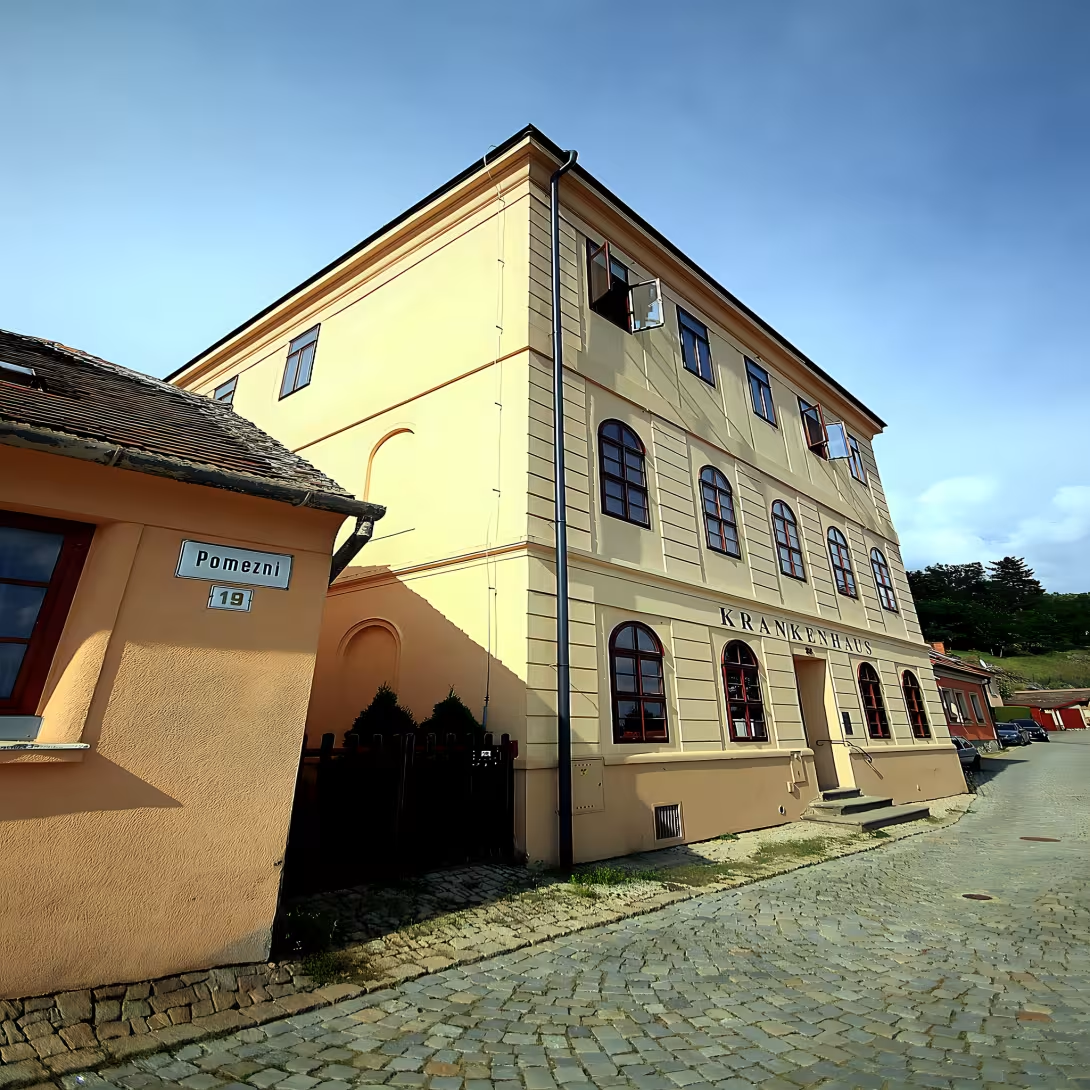
Židovská nemocnice is a historical building in part Zámostí in Trebič. It served as a medical facility for the Jewish community. The current building dates back to the mid-19th century and has been listed in the list of cultural monuments of the Czech Republic since 2011.
The first hospital in the Jewish quarter in Třebíč was established in 1654. At some point, as a medical facility, the municipal house served. The current monument-protected building was built in 1852, some sources mention the year 1856. It arose during the expansion of the industrial revolution and the gradual emancipation of Jewish communities in the Austrian Empire. Its construction took place after the formal demise of the ghetto. The first leading physician was Sigmund Schusny, in some sources referred to as Shimon Schulny.
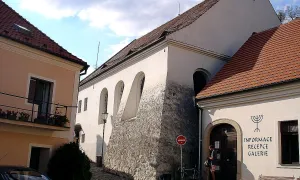
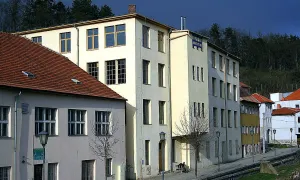
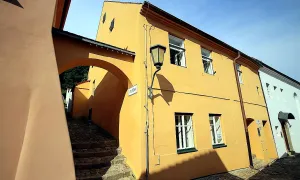
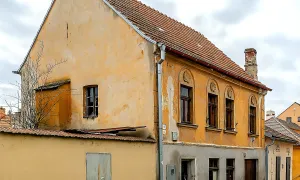
The building is a two-storey building of a square floor plan. Its facade is oriented south to Postradní street. The main building includes a courtyard and economic background, which consists of a L-shaped building. The whole area is bounded by a brick wall and a concrete bridge leads from the building to the second part of the yard. The interior is preserved in original form and available.
The capacity of the hospital was set at 24 patients. In 1901 the building was handed over to the Jewish political and non-religious community. In 1927, the ground floor was built on the third floor, although the existence of the second floor is not historically documented. Since 1949, the building has served as an apartment building.
In 2009 the registration of the building was designed in the list of cultural monuments of the Czech Republic. The town of Třebíč initially rejected it because the building was inhabited by socially weak citizens. The situation changed in 2010 when the construction was sold to Capucín for 601 thousand crowns. It subsequently reconstructed it as an apartment building. Officially, the building became a cultural monument on March 5, 2011.
Today, the building serves for living, although it has preserved its historical character and original interior space. It is an important addition to the Jewish quarter in Třebič.
The monument represents tangible evidence of health care and organization of the Jewish community in the 19th century. Her visit allows a better understanding of the history of part Zámostí and the architecture of this period.
Then and now
Drag the slider to compare how the landmark may have looked when it was built with the view today.
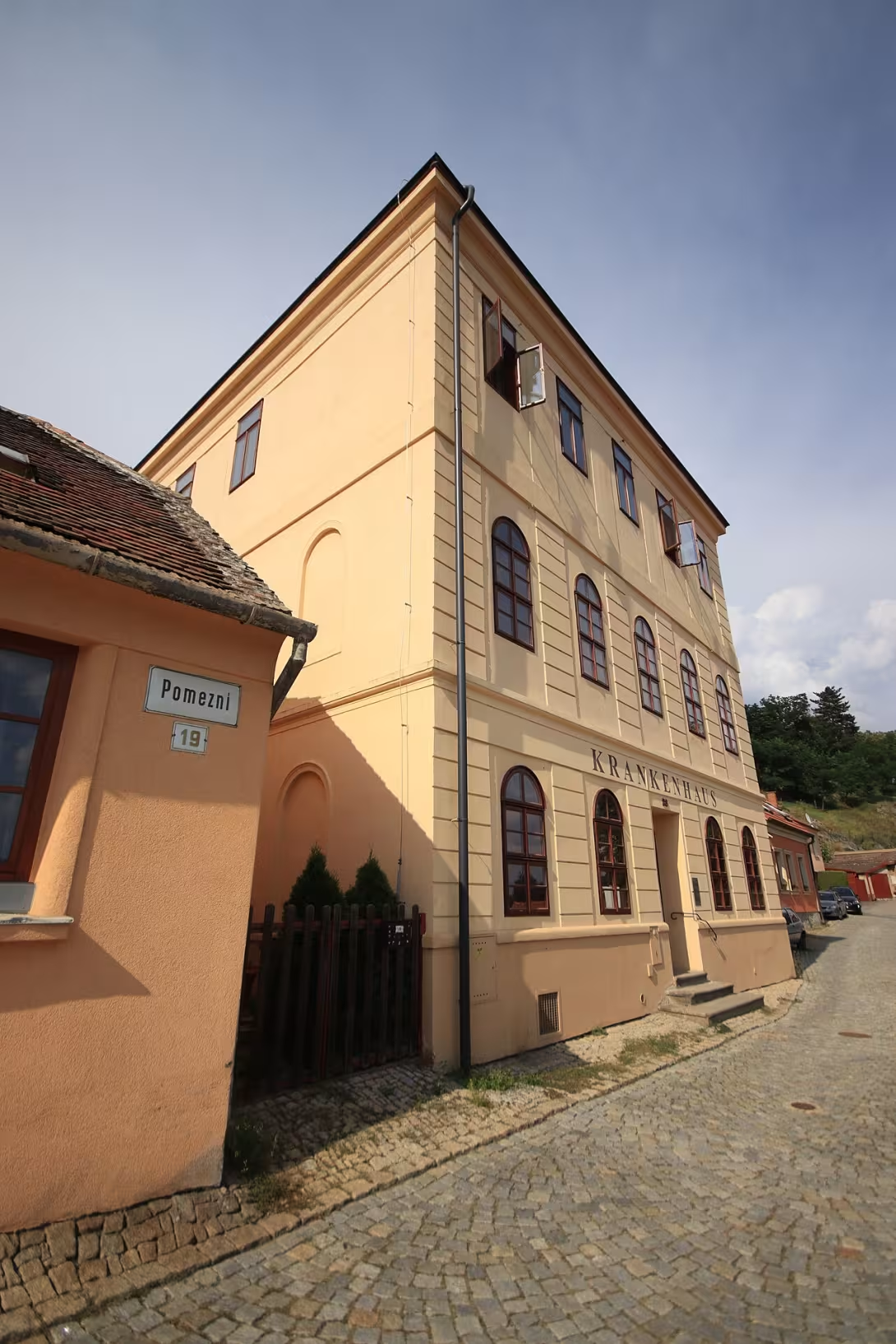
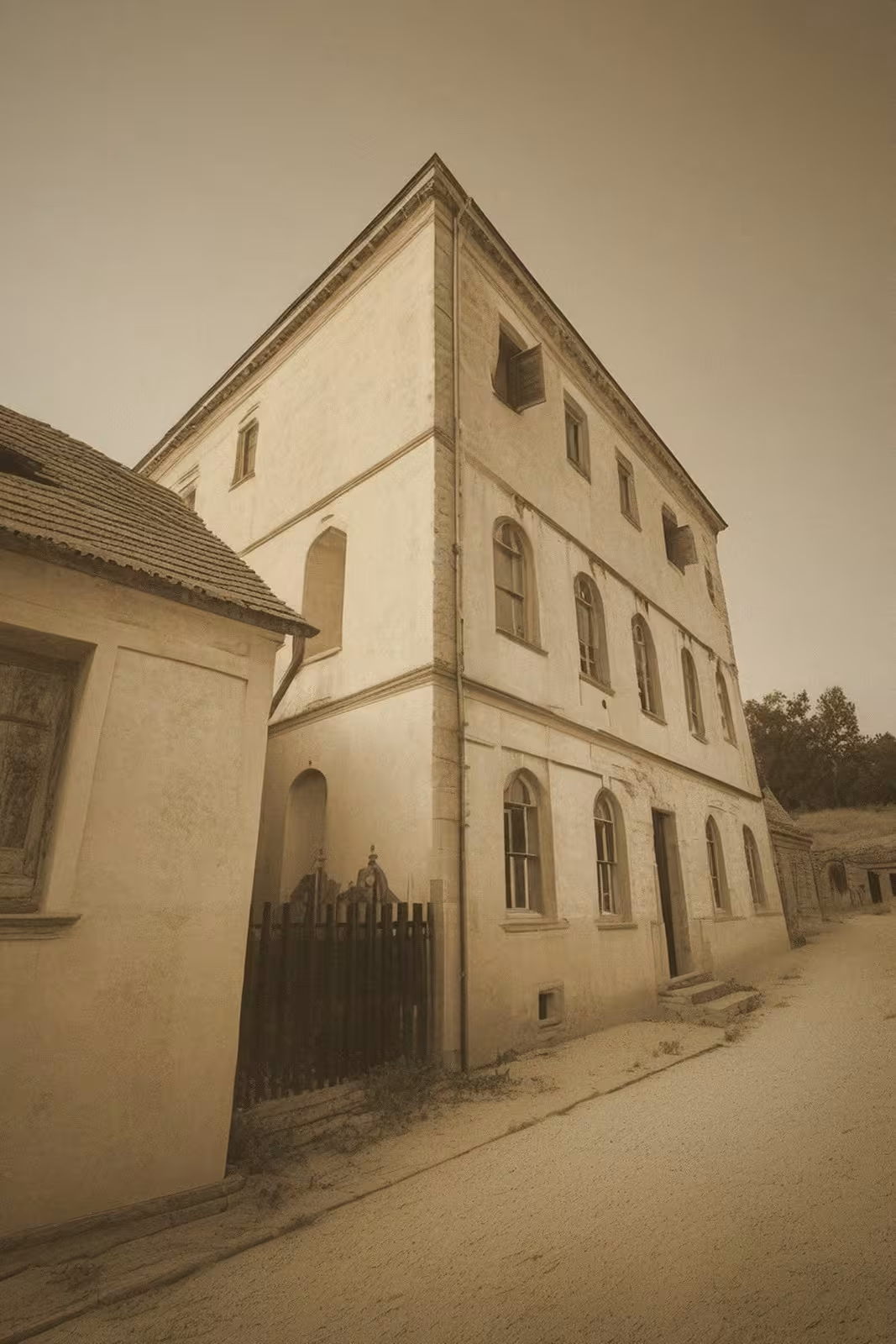
The historical appearance on the left is an AI-generated visualisation and serves as inspiration only.
Historical milestones
- 1654
- the establishment of an original hospital in jewish quarter
- 1856
- building of the current hospital building
- 1901
- transfer of the building to the property of the jewish village
- 2011
- inclusion in the list of Cultural Monuments of the Czech Republic
Architectural development
Originally, it was a two-story square plan with L-shaped economic background. In 1927, the building was built on the third floor. The whole area is bounded by a brick wall.
Historical events
1852 / 1856 construction of contemporary building, 1949 change of use to residential house, 2011 entry into the list of cultural monuments of the Czech Republic.
Owners
Jewish municipality (from 1901), town Třebich, company Kapucín (from 2010)
Points of interest
The first hospital in the Jewish quarter in Třebíč was founded in 1654. - The current building was built in 1852 or 1856 and its capacity was 24 patients. - The first lead physician was Sigmund Schusny, in some sources referred to as Simon Schesny. - In 1927 there was an extension of the ground floor by the third floor. Since 1949, the building has served as an apartment building.
Guide
Show guide text
This text was created by artificial intelligence and has not been editorially reviewed. It may contain inaccuracies.
Welcome to the trivia part of Zámostí. You're standing in front of a building that carries a deep history of caring for a neighbor and testifying to the life of the Jewish community in this city. A former Jewish hospital stands before you. When you look at it today, you see a residential house, but there have been stories of pain, hope and recovery behind these walls for many decades. Stop for a moment, take a breath and feel the atmosphere of this place, which today is duly registered as a cultural monument of the Czech Republic.
In order to understand why this building is so important, we have to go far back in time. The first establishment of this type in the Jewish quarter was established in six hundred and fifty-four. So imagine that caring for the sick in this area is not news, but a tradition of hundreds of years. The original hospital served the community when health was very simple and often dependent on charity and mutual assistance. Over time, however, needs grew and the original space was no longer sufficient. This led to the fact that in the mid-nineteenth century, namely in the year one thousand eight hundred fifty-two or one thousand eight hundred fifty-six, a building was built that you see before you.
Now pay attention to the architecture itself. Although the building has undergone extensive reconstruction to serve as an apartment building, it still retains its characteristic features. Notice her floor plan. The building is designed as a square, which gives it a sense of stability and closure, which was typical of the medical facility at the time. Look at the facade and perceive compliance with the surrounding Zámostí construction. Although we do not know the names of the particular architects who proposed this project, it is clear that the aim was functionality. Inner spaces were designed to provide optimal care for the capacity of 24 patients. Imagine the daily routine of doctors and nurses in these corridors in mutually quiet. It's fascinating that the building preserved an interior that allows us to look back and imagine what the hospital looked like over a century ago.
Let's focus now on the people who were connected to this place. Each hospital has its own guardian, and here it was the first lead physician, Mr Sigmund Schusny, in some records also mentioned as Simon Schulny. He was responsible for patients' health at a time when medicine was developing rapidly. Imagine him walking through these rooms, checking his patients' condition and trying to help anyone who came to him for help. It's a story about professional devotion within a small, coherent community. The building later, in a thousand and nine hundred and one, officially became the property of a Jewish community, which only confirms how important this hospital played in the social life of the neighborhood.
If you continue to observe the building, you may find one interesting thing about her appearance. If you look at the overall height and structure, it's good to know that in the year one thousand nine hundred twenty-seven there was an extension of the original ground-floor structure. This means that the building you see today is not entirely identical to the one from the mid-nineteenth century, but it has evolved along with the needs of the time. It's kind of a quiet dialogue between different generations of builders.
It's fascinating to think of how many times emotions have changed here over the centuries. From anxiety to relief from recovery. In the year two thousand one, the building was included in the list of cultural monuments, which is the recognition that this place is not just a pile of bricks and mortar, but a living archive of the history of Třebíč. Even though people live in the building today in the privacy of their apartments, the history of the hospital remains etched into its foundations.
Now that you know the story of this house, I suggest you go around it again slowly and try to imagine what Zámostí looked like when Sigmund Schusny treated his patients here. Feel the contrast between the calm of living today and the dynamics of a former medical facility.
This concludes the stop at the former Jewish hospital. I hope this short trip to the past has helped you better understand the importance of this place. We now invite you to explore the beautiful corners of Třebíč and its unique Jewish district. We wish you a pleasant continued journey and many new discoveries. Goodbye.
Tips for visitors
The best time to visit is spring or autumn, when the colors of surrounding nature are finer and the building in part Zámostí excels with its architecture. Transportation to this place is possible by car and public connections, check specific routes in maps.
On arrival we recommend to bring comfortable shoes for walking along the surrounding streets. Since this is a building in operation, no special equipment is needed to enter the building because the inspections do not take place.
For the best photos we recommend morning or late afternoon light that highlights the details of the facade from the middle of the nineteenth century. The most interesting views offer nearby alleys that frame the view of the former medical facility.
In the vicinity, within a short walk, visit the Jewish Quarter in Třebíč, which forms a whole with this building.
Families with children can use a visit to tell about how care for the sick in the past looked, and together explore the exterior appearance of a building that once possessed 22 beds.
Frequently asked questions
Can the monument be visited?
The building is in use (offices, a school, shops and the like). The interior is generally accessible only during operating hours and tours are not usually offered; we have not verified the details. You can see the exterior from the street.
Where is the monument?
Location: Zámostí. The map on this page shows the exact spot.
Why is the monument protected?
It is listed in the Central List of Cultural Monuments of the Czech Republic as a cultural monument (register no. 1295483955).
Businesses nearby
Do you run a restaurant, accommodation, shop, museum, rental, wellness or other visitor service near this monument? Show yourself directly to the people heading to it — this is how they will see you in the app and on the web:
Nearby
Židovská čtvrť v Třebíči
Accommodation nearby
Themed route
Here is the design of the thematic route:
1. Jewish quarter in Trebic - historical area. Walk through narrow streets offers a unique atmosphere of the old Jewish ghetto.
2. Židovská nemocnice - the main monument. The building was used to care for the sick and today represents an important architectural element within the area.
Seasonal recommendations
In the spring, the surrounding area of the building awakens to life and the young greenery accompany the walk on Zámostí. The light is delicate and pleasant, which allows a detailed view of the facade from the outside. We recommend light spring clothes and a visit in the morning when the air is the cleanest.
Summer brings intense sun that highlights the colors of historical walls and creates sharp shadows. The atmosphere is hot and there's a major season on the streets. It is advisable to choose breathable substances, a sun hat and find a place in the early morning to avoid the greatest heat.
In autumn, the landscape is painted in gold and brown tones, creating a melancholy mood. Light is soft and golden, ideal for viewing architecture. It's practical to bring a waterproof jacket and tight shoes, because the surfaces can be wet.
Zimą rules in the area of calm and freezing air. The building excels in contrast with grey sky or white snow, especially in advent time when the surroundings are more cosy. Hot winter clothes, hats and gloves are essential, with the best visit during the short daylight.
Visualizations and artistic views


The visualisations are generated by artificial intelligence and serve as inspiration.
Photos from the area
Real photos taken near the monument


Zdroj a licence jsou uvedeny u každého snímku.
Tips from visitors
No tips yet. Be the first!
Log in and add your tip.
Sources and literature
Photos: Jiří Sedláček / CC BY-SA 4.0, rozlišení zvýšeno umělou inteligencí — Wikimedia Commons. The author and licence also appear when you hover over the image.
Faktickým podkladem tohoto textu byl článek na Wikipedii, jehož autory jsou přispěvatelé Wikipedie. Článek je dostupný pod licencí CC BY-SA 4.0.
Location on the map
More monuments – Zámostí
Show all in the municipality
Příběhy a pověsti
Legendy, pověsti a příběhy spjaté s touto památkou
Fotografie návštěvníků
Zatím žádné fotografie. Buďte první, kdo přidá fotografii z návštěvy!
Log in a přidejte svou fotografii nebo hodnoťte.
Za ověřenou návštěvu v aplikaci získáte víc bodů — poznáme podle GPS, že jste na místě.
Reviews and comments