






Židovská radnice v Praze-Josefově Synagogue
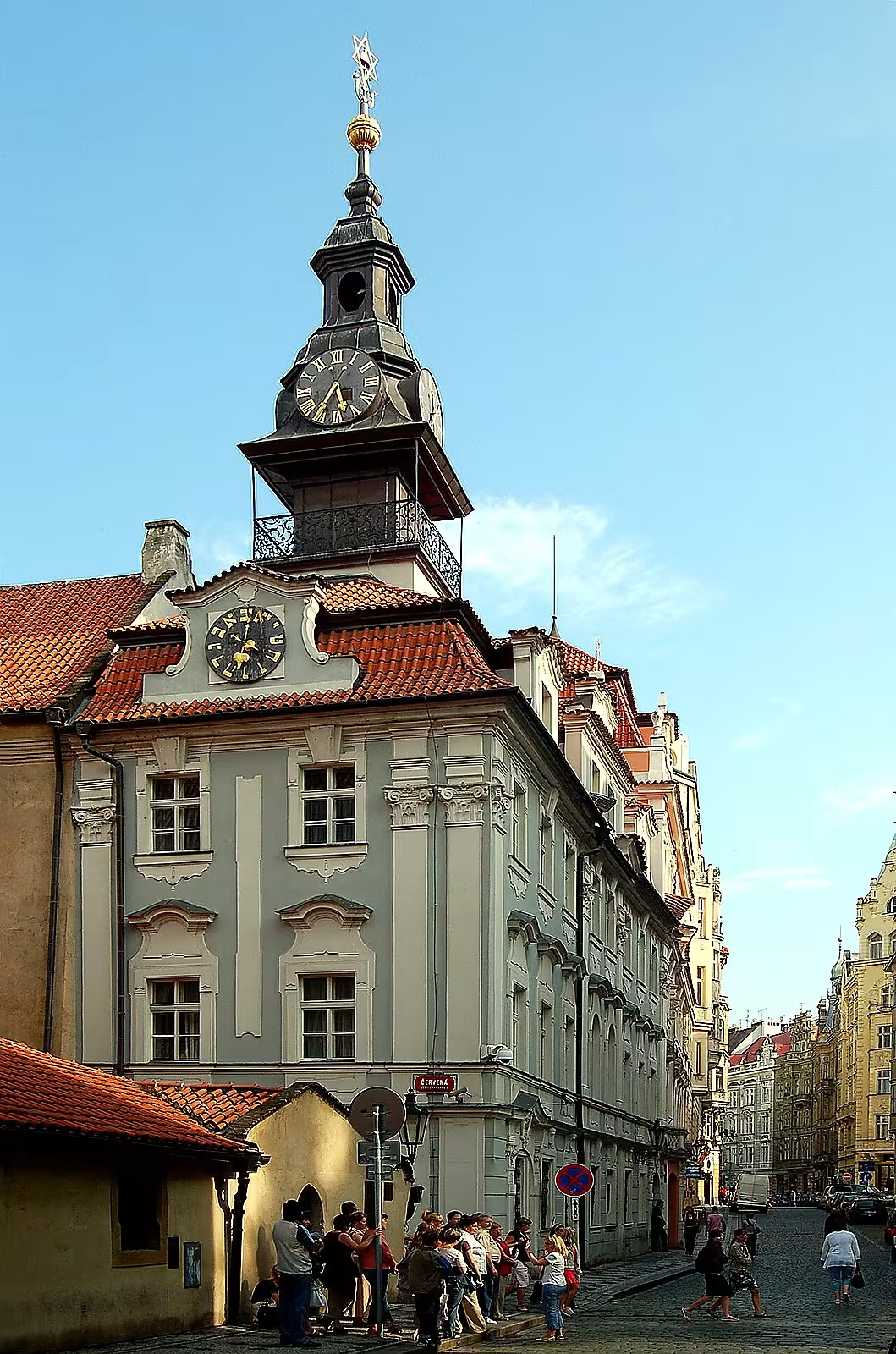
The Jewish Town Hall in Prague's Josefov is a significant historical monument dating back to 1577, making it one of the oldest and most notable buildings in the Jewish Quarter. Located at the corner of Maiselova and Červená Ulice, it was constructed in the Renaissance style under the sponsorship of Mayor Mordechai Maisel. The building is notable for its unique feature - a clock with Hebrew numerals that moves in the opposite direction to the standard clock, and its rich history as the main meeting house of the local Jewish community.
Built during a time of significant growth for Prague's Jewish community in the 16th century, the exact circumstances surrounding its construction are not well-documented. However, it is known that the building was rebuilt after a fire in 1689 and again after a fire in 1754, acquiring its current Baroque appearance. The new part of the town hall was added in 1908. The building's original Renaissance style and subsequent rebuilds reflect the changing needs of the community over the centuries.
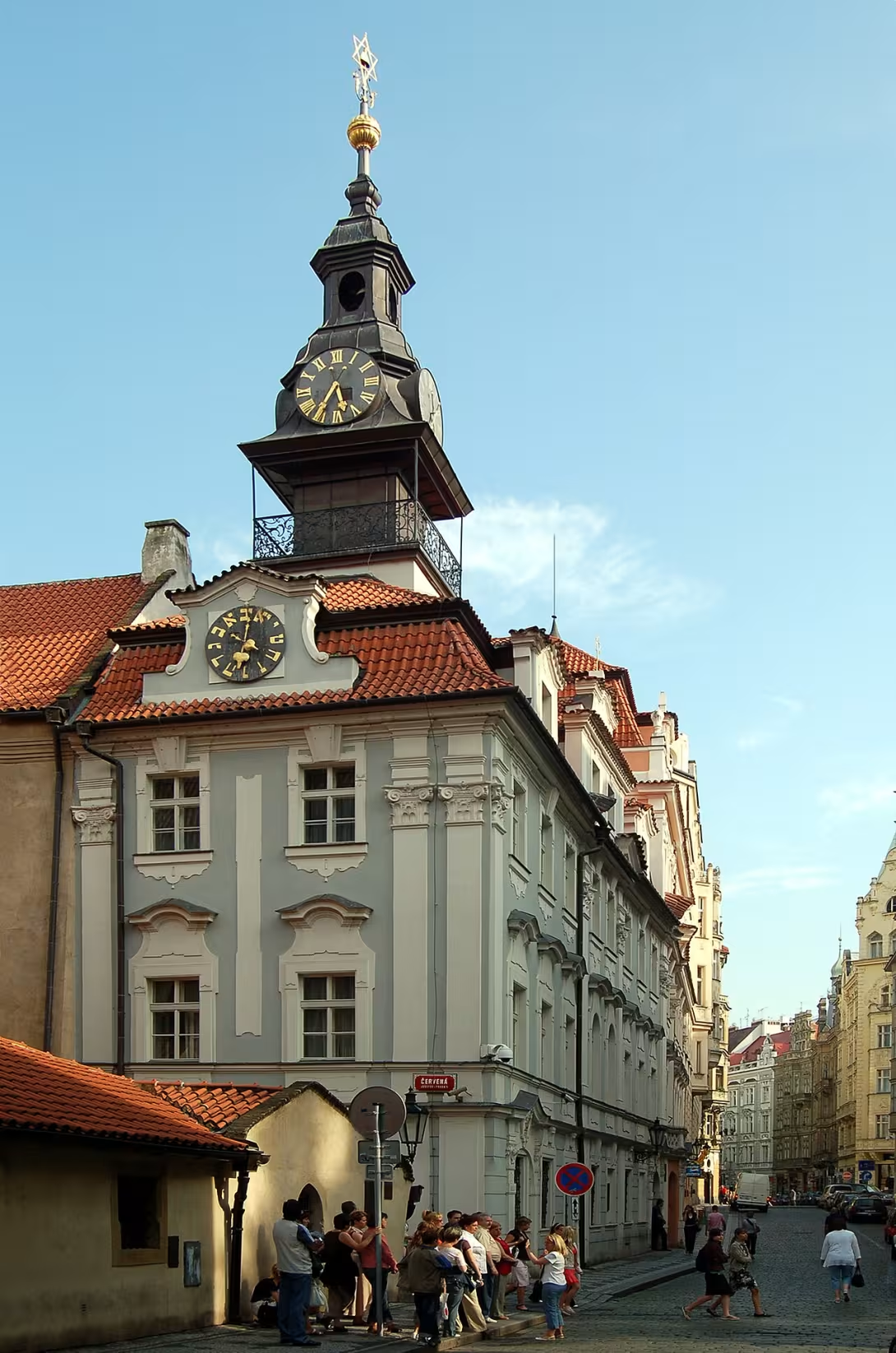
The Jewish Town Hall's architecture is a blend of Renaissance and Baroque styles, featuring a unique clock tower with Roman numeral markings and a lower clock with Hebrew numerals that begin with aleph and continue counterclockwise around the clock dial. The building's exterior was expanded and renovated in the 18th century, and a new building was added in the early 20th century. The interior is not open to the public, but the exterior is a notable feature of the Jewish Quarter.
Throughout its history, the Jewish Town Hall has been owned by the Jewish community and the Federation of Jewish Communities. It is currently closed to the public, but its unique clock and historical significance make it a notable landmark in the city. The town hall is also home to a kosher restaurant and a rabbinical court.
One of the most interesting features of the Jewish Town Hall is its clock with Hebrew numerals. This clock is powered by a hand-wound clockwork from 1764 and is a rare example of a clock that moves in the opposite direction to the standard clock. The town hall's location in the heart of the Jewish Quarter, surrounded by other historic synagogues and buildings, makes it a significant part of the city's cultural and historical heritage.
Today, the Jewish Town Hall is a must-visit destination for anyone interested in history, architecture, and culture. Its unique clock and rich history make it a fascinating piece of Prague's past, and its location in the heart of the Jewish Quarter provides a glimpse into the city's vibrant cultural scene. Visitors can admire the building's exterior and learn more about its history and significance, making it a valuable addition to any tour of Prague's historic landmarks.
Then and now
Drag the slider to compare how the landmark may have looked when it was built with the view today.
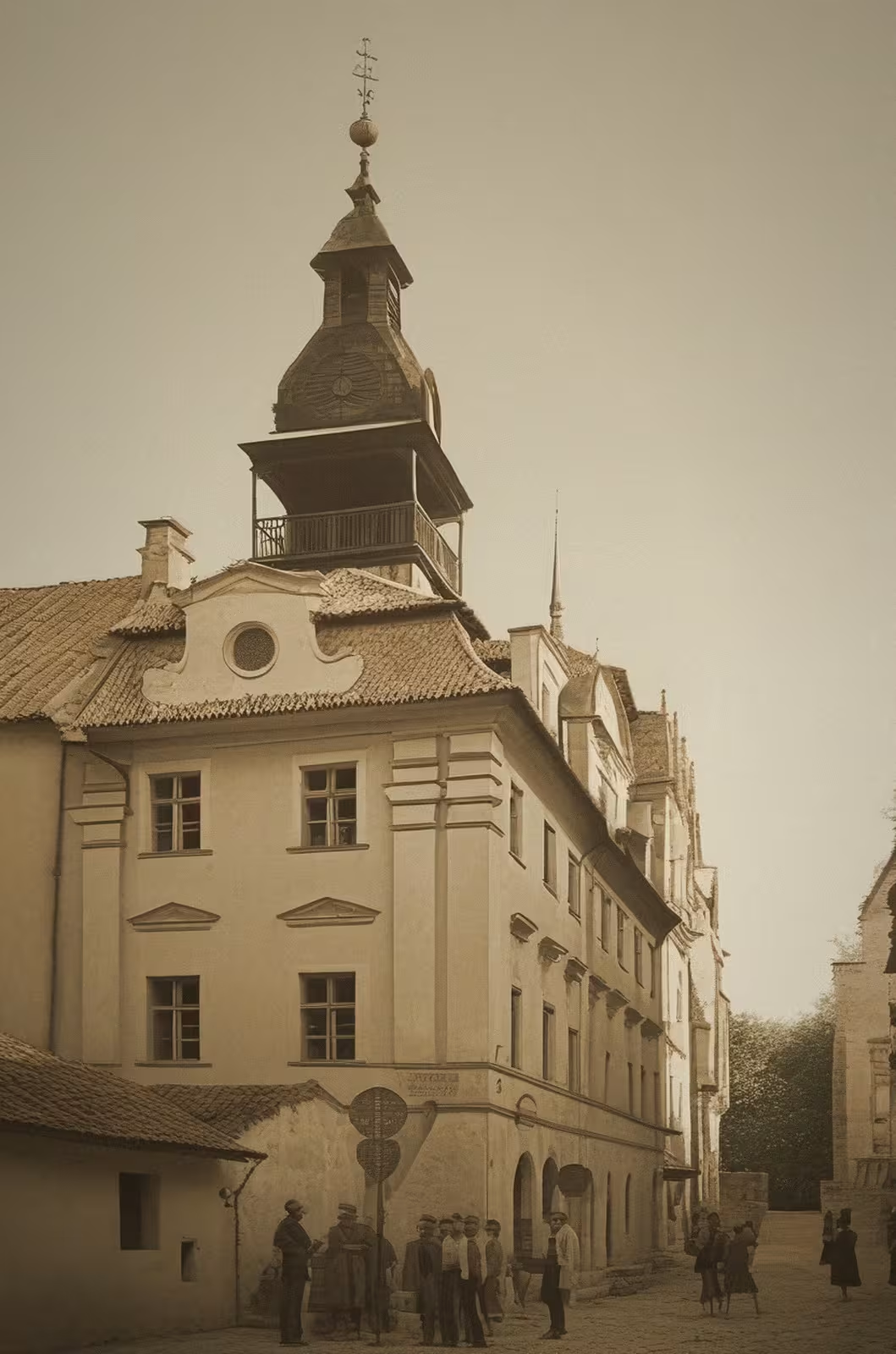
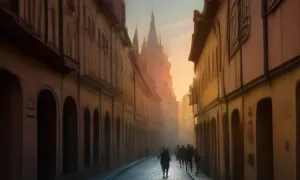
The historical appearance on the left is an AI-generated visualisation and serves as inspiration only.
Historical milestones
- 1577
- Built in the Renaissance style
- 1689
- Rebuilt after a fire
- 1754
- Rebuilt after a fire and acquired its current Baroque appearance
- 1908
- Expanded with a new building
Architectural development
The original building dates back to 1577 and was built in the Renaissance style. The building was rebuilt after a fire in 1689 and again after a fire in 1754, acquiring its current Baroque appearance. The new part of the town hall was added in 1908.
Historical events
First mentioned as 'Rathaus Jewish' in the 16th century, but its location is unknown. The building was rebuilt after a fire in 1689 and again after a fire in 1754.
The town hall was not demolished during the Prague demolition and was expanded with a new building in 1908.
Owners
Jewish community, Federation of Jewish Communities
Points of interest
– The Jewish Town Hall in Prague's Josefov was built in 1577 under the sponsorship of Mayor Mordechai Maisel, who was a wealthy and influential member of the Jewish community.
– The building's unique clock with Hebrew numerals was powered by a hand-wound clockwork from 1764 and is a rare example of a clock that moves in the opposite direction to the standard clock.
– The Jewish Town Hall has been rebuilt twice after fires, first in 1689 and then in 1754, acquiring its current Baroque appearance, which reflects the changing needs of the community over the centuries.
– The building's exterior was expanded and renovated in the 18th century, and a new building was added in the early 20th century, making it a notable feature of the Jewish Quarter.
– The Jewish Town Hall is currently closed to the public, but its unique clock and historical significance make it a notable landmark in the city, and it is home to a kosher restaurant and a rabbinical court.
Guide
This guide is narrated by a synthetic voice generated by artificial intelligence.
Show guide text
This text was created by artificial intelligence and has not been editorially reviewed. It may contain inaccuracies.
The Jewish Town Hall in Prague's Josefov is not a single building, but a collection of three structures of different ages. It is among the few objects that survived the redevelopment of Josefov. It is also called Maisel's Town Hall. The oldest corner section was financed by Mordechai Maisel, the chief of the Jewish ghetto at that time. He also paid for the neighboring High Synagogue, which remains closely connected to the town hall to this day.
The Jewish Town Hall appears in sources as early as the first half of the sixteenth century, but it is not known where it stood then. At the site of today's building there was apparently a tower-like structure of unknown purpose with a five-part rib vault. It may have been created in connection with the construction of the Old New Synagogue, and part of it has been preserved in the town hall's basement. Maisel's Town Hall was completed together with the High Synagogue in Renaissance style in fifteen seventy-seven.
The appearance of the town hall was then changed by fires in the Jewish Town. After the fire in sixteen eighty-nine, the first major early Baroque reconstruction took place. After another devastating fire in seventeen fifty-four, the town hall received its present Rococo facade and was structurally connected with a neighboring building that the community had purchased earlier. During the Prague redevelopment, neither the town hall nor the High Synagogue were demolished. The community acquired the cleared neighboring plot on the expanded Maisel Street, formerly Rabbi Street, and in nineteen oh-eight, builder Matěj Blecha added a new wing. Its neo-Rococo facade matches the appearance of the older building.
The oldest, three-story corner building stands at the corner of Red Street and Maisel Street. Behind the Rococo facade lies a Renaissance core. The building is crowned with a small tower and a clock. In addition to the usual dials, there is one with Hebrew numerals, and its hands move in the opposite direction. They are said to be an intentional reminder of the Old Town Hall Clock and an expression of the local Jews' Prague patriotism. They are powered by an original manually wound clock mechanism from seventeen sixty-four. The backwards-running clock was also made famous by Apollinaire in his poem Zone.
The town hall is today the seat of the Jewish community, the Federation of Jewish Communities, and the chief rabbi of Prague and Bohemia. A kosher restaurant has been operating on the ground floor of the new wing for nearly a hundred years. In the large assembly hall on the floor above, the rabbinical court bejt din sat until nineteen eighteen. The complex serves as a cultural center of the Prague Jewish community, where celebrations of holidays, weddings, and bar mitzvahs are held. Together with the High Synagogue, it is protected as a cultural monument.
Tips for visitors
The best time to visit the Jewish Town Hall in Prague's Josefov is during the spring and summer months when the weather is mild and sunny, making it ideal for taking photos.
You can check the current schedule on a journey planner website.
It's a good idea to bring a camera to capture the stunning architecture and intricate details of the building. The best spots for photography are the exterior façade and the interior courtyard.
The Jewish Town Hall is surrounded by other historic synagogues and buildings, making it a great starting point for a walking tour of the Jewish Quarter. Some nearby attractions include the Spanish Synagogue and the Pinkas Synagogue.
Families with children can enjoy a guided tour of the Jewish Town Hall, which offers a unique and educational experience. The tour guides are knowledgeable and can answer any questions the children may have.
Frequently asked questions
Can the monument be visited?
Religious buildings are usually open mainly during services; at other times a visit is normally arranged with the parish or the operator. We have not verified specific times.
Where is the monument?
Location: Praha 1, Hlavní město Praha. The map on this page shows the exact spot.
Why is the monument protected?
It is listed in the Central List of Cultural Monuments of the Czech Republic as a cultural monument (register no. 1000156774_0002). It is protected as part of a larger listed ensemble.
Businesses nearby
Do you run a restaurant, accommodation, shop, museum, rental, wellness or other visitor service near this monument? Show yourself directly to the people heading to it — this is how they will see you in the app and on the web:
Events nearby

Zdroj akcí: otevřená data měst a obcí ČR (Národní katalog otevřených dat) a kalendář akcí Národního památkového ústavu.
Nearby
Located in the heart of Prague's Jewish Quarter, surrounded by other historic synagogues and buildings.
Accommodation nearby
Trips and activities nearby
Guided tours, tickets and activities nearby from GetYourGuide
Affiliate link: if you buy from the partner, we may receive a commission. The price for you does not change.
Search tours and activities →Themed route
Jewish Town Hall in Prague-Josefov (synagogue)
1. Spanish Synagogue (synagogue) - worth visiting for its unique architecture and history, making it one of the most significant synagogues in Prague. 2. Pinkas Synagogue (synagogue) - is the second oldest synagogue in Prague and worth visiting for its unique architecture and history. 3. Old Jewish Cemetery (cemetery) - worth visiting for its unique history and architecture, as well as this unique perspective on the Jewish community in Prague.
Seasonal recommendations
Jaro
In the spring season, the atmosphere of the Jewish Town Hall in Prague-Josefov is influenced by mild weather and flowers beginning to bloom throughout the city. Windows and entrance doors are often open to allow air circulation and refreshing sunlight. We recommend visiting during early morning hours or late afternoon to avoid crowds of tourists and fully enjoy the atmosphere of this historic site.
Léto
The main summer season brings a large number of tourists to Prague, including the Jewish Town Hall in Prague-Josefov. We recommend visiting this landmark early in the morning to avoid crowds and immerse yourself in its history and atmosphere. Although it is open year-round, we suggest bringing an umbrella or sunglasses for sun protection.
Podzim
In autumn, the Jewish Town Hall in Prague-Josefov is surrounded by beautiful fall scenery with leafy trees and a tranquil atmosphere. We recommend visiting during late afternoon or early morning hours to avoid crowds of tourists and fully enjoy the atmosphere of this historic site. This period is also ideal for photography, as the light is soft and gentle.
Zima
We recommend visiting this landmark during early morning hours to avoid crowds and fully enjoy the atmosphere of this historic site. Don't forget to bring warm clothing and shoes for protection against the cold and wet conditions.
Visualizations and artistic views


The visualisations are generated by artificial intelligence and serve as inspiration.
Photos from the area
Real photos taken near the monument


Zdroj a licence jsou uvedeny u každého snímku.
Tips from visitors
No tips yet. Be the first!
Log in and add your tip.
Sources and literature
Photos: Martin Pauer (Power) / CC BY-SA 2.5 — Wikimedia Commons. The author and licence also appear when you hover over the image.
Faktickým podkladem tohoto textu byl článek na Wikipedii, jehož autory jsou přispěvatelé Wikipedie. Článek je dostupný pod licencí CC BY-SA 4.0.
Location on the map
More monuments – Praha 1
Show all in the municipality

Příběhy a pověsti
Legendy, pověsti a příběhy spjaté s touto památkou
Fotografie návštěvníků
Zatím žádné fotografie. Buďte první, kdo přidá fotografii z návštěvy!
Log in a přidejte svou fotografii nebo hodnoťte.
Za ověřenou návštěvu v aplikaci získáte víc bodů — poznáme podle GPS, že jste na místě.
Reviews and comments