



Židovský hřbitov v Humpolci Jewish cemetery
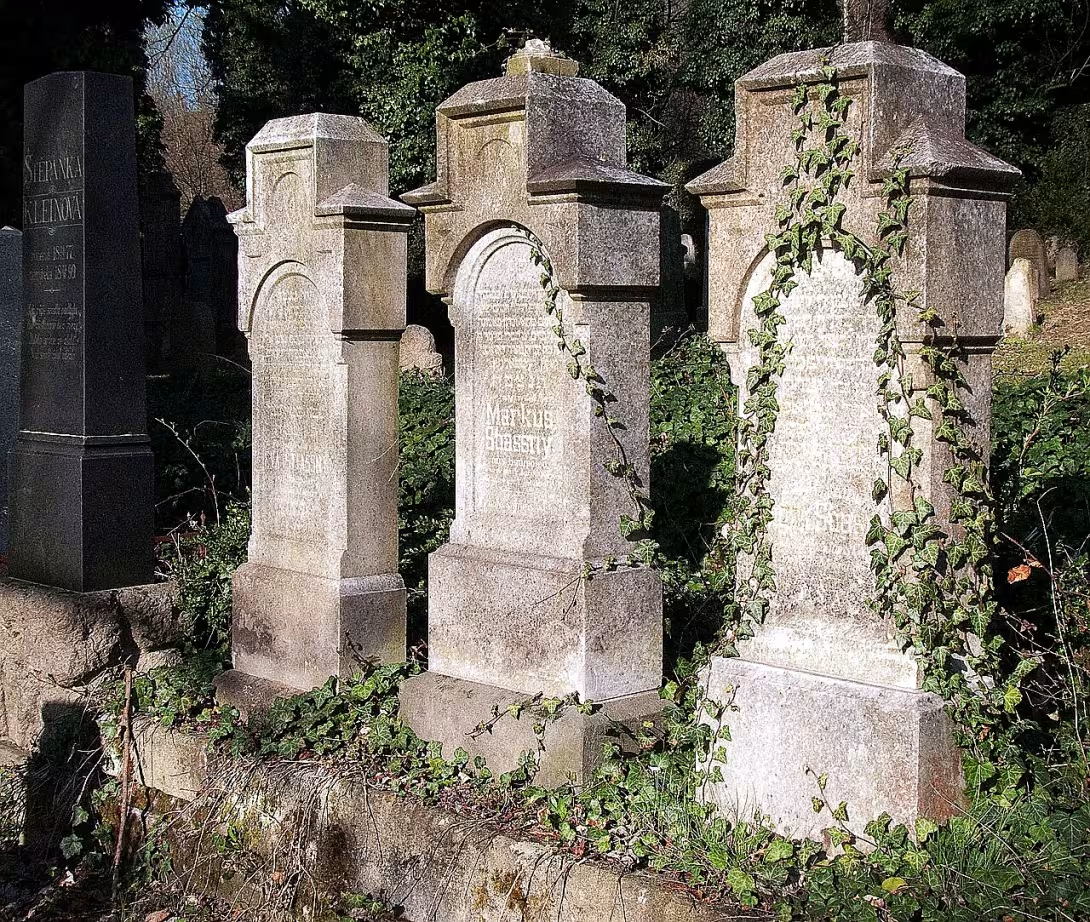
The Jewish cemetery in Humplica is located about 900 metres east of the town center in Pelhrimov district. It was founded in 1716 as the first Jewish burial ground in the area. He served as a resting place for Jewish residents not only from Humpolece, but also the surroundings. Its area is 3.65 hectares and contains approximately a thousand tombstones. The oldest dates back to the first half of the 18th century.
In the 19th century the cemetery was extended twice, making it an important historical and cultural monument. It retains unique architectural and artistic values.
The creation of the cemetery is linked to the need for an organised funeral ritual for a growing Jewish community. At that time baroque art developed in the Czech Republic, which affected the shape and style of tombstones. Aasymmetric shapes and baroque-classical details are typical, reflecting Eastern Bohemian sepulcral traditions. The most valuable tombstones come from the Baroque and Classicist aesthetics, often from the local stone.
The cemetery was originally well bounded, but during World War II it suffered considerable damage. The last funeral was here in 1942. After the war he was long abandoned and neglected, which led to the gradual destruction of many tombstones. Since 1958 he was protected as a monument, later in 1994 he was classified among the important landscape elements.
Today the cemetery is owned by the Jewish village in Prague. On it lies the ancestors of prominent personalities such as the grandparents of the music composer Gustav Mahler and the grandfather writer Franz Kafka. The tombstones were originally Hebrew, later German and Czech inscriptions.
There is a simple ceremonial hall with a memorial plate dedicated to Holocaust victims. The cemetery is accessible on a marked tourist path diverging from Podhrad Street. It is bounded by a wall and locked to protect it from vandalism. It is necessary to check with you in advance.
The cemetery is an important monument not only historically, but also because of its artistic and architectural importance. It is interesting that the ancestors of two important Czech artists lie here. The memory resembles the tragedy of the Holocaust and remembers the life of the Jewish community in the region.
Then and now
Drag the slider to compare how the landmark may have looked when it was built with the view today.
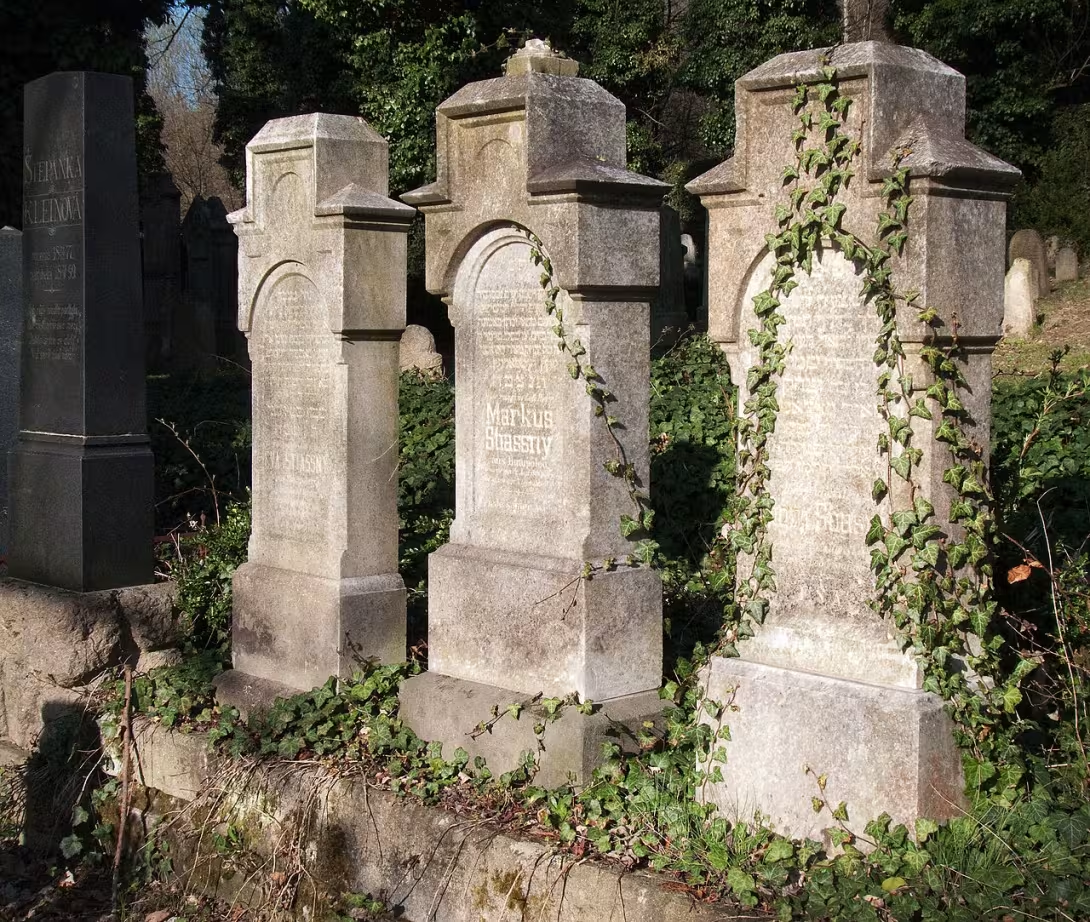
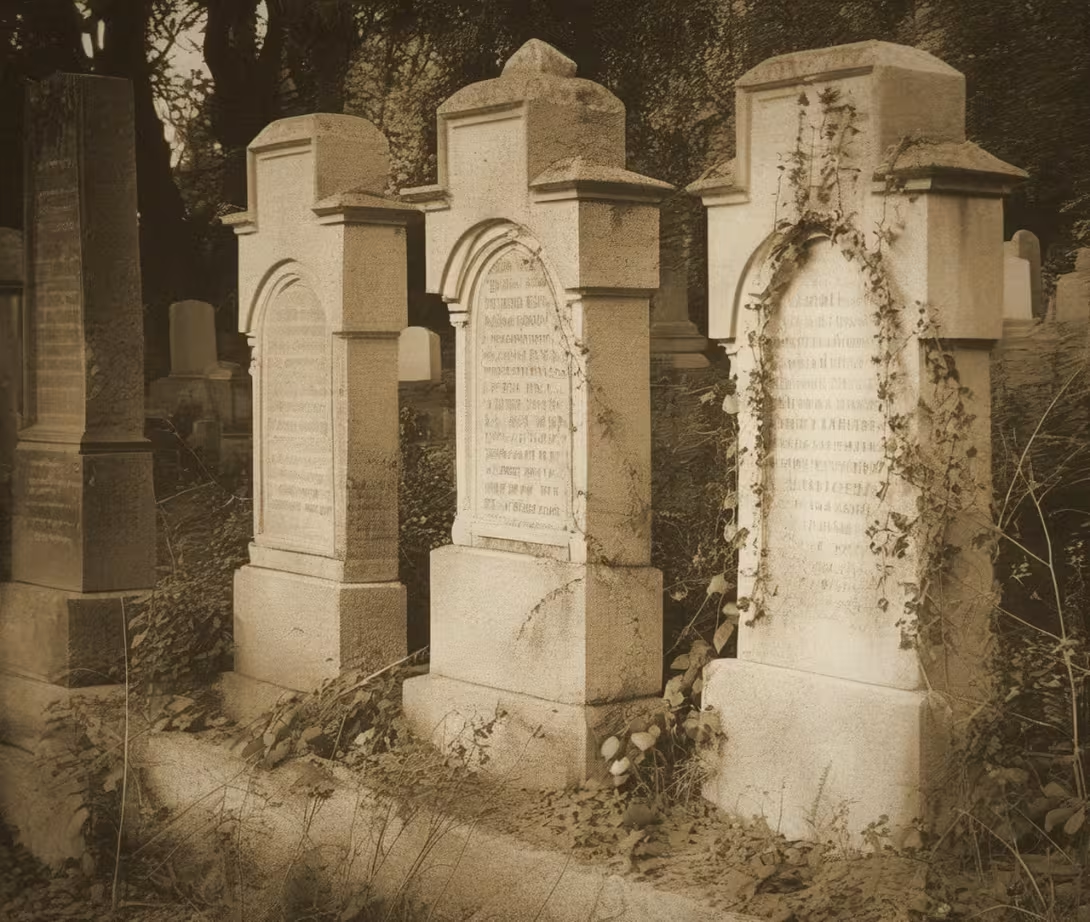
The historical appearance on the left is an AI-generated visualisation and serves as inspiration only.
Historical milestones
- 1716
- First foundation of the cemetery
- 1942
- Last funeral in the cemetery
- 1958
- Start of protection mode
- 1994
- Capture as a landscape element
Architectural development
The cemetery was established as the first stage in 1716 and subsequently extended twice in the 19th century. The tombstones are mainly of local stone, except for some baroque and classical elements. It is currently surrounded by a high wall and is locked, with a simple ceremonial hall with a memorial plate dedicated to Holocaust victims.
Historical events
- 1716
- Establishing the cemetery as the first Jewish burial ground in the area
- 1942
- The last funeral in the cemetery before its destruction during the Nazi occupation
- 1958
- Commencing state protection regime and leadership as a monument
- 1994
- Capturing the cemetery as an important landscape element
Owners
Jewish village in Prague (since 1958)
Points of interest
- The Jewish cemetery in Humplica was founded in 1716 as the first Jewish burial ground in the area.
- In the 19th century the cemetery was extended twice, making it an important historical and cultural monument.
- The oldest tombstones come from the first half of the 18th century and are typical of Baroque and Classicist style.
- At the time of its establishment it served as a resting place for the Jewish population not only from Humpolece, but also from the surroundings.
- There is a memorial hall with a plate dedicated to Holocaust victims.
Guide
Show guide text
This text was created by artificial intelligence and has not been editorially reviewed. It may contain inaccuracies.
Welcome to the place where time has stopped and where every stroked stone board tells its own silent story. You're standing in front of a Jewish cemetery in Humpolci. Do you feel the strange, deep calm atmosphere that immediately surrounded you as you entered this space? In front of you, an area exceeding three thousand six hundred fifty-eight square meters is spreading. It's not just an ordinary field or garden. It's a place of deep memory that carries traces of generations and teaches us humility over time.
Let's go back together to when this story began. Imagine the beginning of the 18th century. It is the year of the seventeenth sixteen and that is when this space was founded. It was an extremely important moment for the Jewish community because this cemetery became the very first Jewish burial ground in the whole wider area. It became a central place to say good-bye to loved ones not only for the people of Humpolka, but for the broad surroundings that were lying around the city. This place has served as a sacred country for many families for many decades.
Now that you're looking around, please pay attention to all the tombstones you see. There's about a thousand of them. A thousand different lives, a thousand different fates that are now written in stone. If you stop by one of them and look up close, you'll notice something very interesting. These tombstones are not just simple, flat blocks. They're characterized by their asymmetric form. Their shapes are not perfectly regular, but they have some dynamics and restlessness that might interest you.
Note also how different artistic directions are mixed in these stones. You can see in them traces of baroque richness, which manifests itself in some curvature and decoration, but at the same time you can feel the calm and order of classical style. This connection, this way that tombstones have been shaped and decorated, is very typical of the art of burying in this part of our country. It is part of the Eastern Bohemian artistic expression that has been written in history in these stones. The oldest of these stones that you can see right now come from the first half of the eighteenth century and are a testament to the deep roots of the Jewish community.
If you keep walking, remember that this space was not static. In the nineteenth century, the cemetery was extended twice. This means that, with the growing needs of the community and the increasing number of people, space had to be adapted. Thanks to these enlargements, it has become an important historical and cultural point for the whole region.
You may think it's just old stones in the field, but this cemetery is closely linked to names that the whole world knows. Even though we don't know the names of the architects themselves who designed these shapes, we know the names of the people whose ancestors rested here. In these places, in this country, both grandparents and uncles of the famous composer Gustav Mahler lived. It's a fascinating idea that right here, in this calm Humpola, was the roots of someone who changed the history of the world with his music. Similarly, there lies the ancestors and relatives of the famous writer Franz Kafka. So when you look at these tombstones, you're not just looking at the dead, but you're looking at the roots of the world's culture and the people who shaped human thought.
But is this history just about beauty and art? No, it's also history of sadness and sudden breaks. If you look at the timeline of this place, you're going to encounter a year of nineteen forty-two. That's the year the last funeral took place here. Since then, no one has been inherited here, and this sudden end of an era carries deep mystery and sadness. The place has become forgotten for a while, but history is constantly trying to restore memory.
In a thousand and nine hundred and fifty-eight, a protective regime was launched for this area to preserve what was left. And in the year one thousand nine hundred ninety-four, this place was officially recognized as an important element of our landscape. It's not just a cemetery anymore, it's part of our common heritage that we have a duty to protect.
Now I beg you to continue your peaceful walk. Let the atmosphere of this place drift. Look at the details of the tombstones that will address you, feel the silence and try to imagine the people who once lived here, worked and loved. Every stone, even the smallest and most worn out of time, has its meaning.
Thank you for spending this moment with us and for learning to know history through this quiet place. We wish you the pleasant rest of your journey and hope that you will carry this experience within you long after you have left these gates. Take a look at the rest of the monument in peace and with respect. Goodbye.
Tips for visitors
An ideal visit from April to September is when the weather is pleasant and nature is in full blooming power. In winter, the cemetery is quiet, but sunny days are suitable for photography. Avoid rainy days when tombstones can be wet and unaesthetic.
Židovský hřbitov v Humpolci is located in the heart of the city.
Change your comfortable shoes because most tombstones are on the ground. Add a small water container, sunglasses and sunscreen. It is advisable for families with children to carry small toys or books that entertain children in a quiet place. It is also appropriate to take a small trash can, because there is no waste site in the cemetery.
The best places for photography are tombstones with displayed symbols and texts that are often unique and historically significant. The best light is in the morning or afternoon hours when the light is softer and less shadows. Avoid shooting in the sun when shadows can be sharp and uncomfortable. It is important to respect privacy, so take photos only with permission or from a safe distance.
In the vicinity of the Jewish cemetery in Humpolci is worth a visit to Orlík Castle, which is located about 1.5 km to the northeast. This castle is an important historical monument and offers beautiful views of the surroundings. Around the castle there is a natural landscape with forests and field paths that are ideal for walking and hiking.
Frequently asked questions
Can the monument be visited?
Cemeteries and graves are usually accessible; please respect the dignity of the place. We have not verified the opening hours of this cemetery.
Where is the monument?
Location: Humpolec, Kraj Vysočina. The map on this page shows the exact spot.
Why is the monument protected?
It is listed in the Central List of Cultural Monuments of the Czech Republic as a cultural monument (register no. 1000152333).
Businesses nearby
Do you run a restaurant, accommodation, shop, museum, rental, wellness or other visitor service near this monument? Show yourself directly to the people heading to it — this is how they will see you in the app and on the web:
Events nearby
Zdroj akcí: otevřená data měst a obcí ČR (Národní katalog otevřených dat) a kalendář akcí Národního památkového ústavu.
Nearby
V okolí se nachází hrad Orlík (asi 1,5 km na severovýchod), který je významnou historickou památkou. V blízkosti se nachází také přírodní krajina s lesy a polními cestami, které jsou oblíbenou turistickou destinací.
Accommodation nearby
Themed route
Thematic cruise route: Židovský hřbitov v Humpolci and Orlík Castle
1. Židovský hřbitov v Humpolci - historical monument It is a unique preserved Jewish cemetery from the 17th century, which retains the rich history of the local Jewish community. The visit offers the opportunity to become acquainted with the traditions and symbolism of Jewish burial habits.
2. Castle Orlík - historical fortress Approximately 1.5 km from the cemetery is the castle Orlík, which was built in a strategic place above the river Vltava. Its Gothic and Renaissance architecture and views from the castle to the surrounding landscape are very impressive.
3. Natural Walk to Vltava - Natural Beauty After visiting the castle Orlík you can go to the river Vltava, which flows nearby. The surrounding area offers peaceful forest trails and the opportunity to observe nature in its natural beauty.
Seasonal recommendations
Spring: In the spring season, Židovský hřbitov v Humpolci appears in a beautiful flower dress when various kinds of flowers colour the surrounding meadows. Sun rays illuminate old tombs, which is ideal for photography. Visitors are advised to wear light clothes with the possibility to add a layer to colder days and come out early morning or late afternoon to avoid midday warm rays. Despite the increase in tourist interest, it is still possible to enjoy the peace and quiet of the cemetery.
Summer: For years, Židovský hřbitov v Humpolci has become a popular destination for visitors looking for shelter before the temperature and cold cities. Intense sunlight increases the attractiveness of old stone tombs, but also leads to increased traffic. It is recommended to come up with this earlier morning or later in the evening, when there are fewer people and the temperature is more tolerable. Don't forget the protective sunglasses and plenty of water.
Autumn: In autumn Židovský hřbitov v Humpolci becomes melancholic atmosphere when the leaves colour the surrounding forests. Sunshine days are still present, but the rain is more frequent and can deliver areas of romantic touch. This season it is recommended to wear layered clothes for rapid weather changes and take advantage of the opportunity to photograph with colour sheets in the background. Despite a slight increase in tourist interest, it is possible to enjoy a peaceful walk.
Winter: In winter, Židovský hřbitov v Humpolci is transformed into a place of peace and quiet, where snow covers old stone tombs. Sunshine days are rare, but they provide a beautiful contrast between white snow and black graves. Visitors are advised to wear warm clothes, including a coat or blanket, and come to the beginning of the daily program because the cemetery can be closed before cold weather. Despite limited lighting, the atmosphere is calm and resembles orphan beauty.
Visualizations and artistic views


The visualisations are generated by artificial intelligence and serve as inspiration.
Photos from the area
Real photos taken near the monument


Zdroj a licence jsou uvedeny u každého snímku.
Tips from visitors
No tips yet. Be the first!
Log in and add your tip.
Sources and literature
Photos: Jitka Erbenová (cheva) / CC BY-SA 3.0 — Wikimedia Commons. The author and licence also appear when you hover over the image.
Faktickým podkladem tohoto textu byl článek na Wikipedii, jehož autory jsou přispěvatelé Wikipedie. Článek je dostupný pod licencí CC BY-SA 4.0.
Location on the map



Příběhy a pověsti
Legendy, pověsti a příběhy spjaté s touto památkou
Fotografie návštěvníků
Zatím žádné fotografie. Buďte první, kdo přidá fotografii z návštěvy!
Log in a přidejte svou fotografii nebo hodnoťte.
Za ověřenou návštěvu v aplikaci získáte víc bodů — poznáme podle GPS, že jste na místě.
Reviews and comments